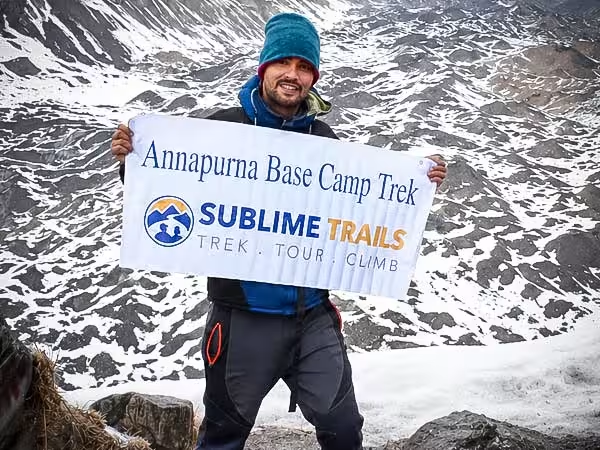
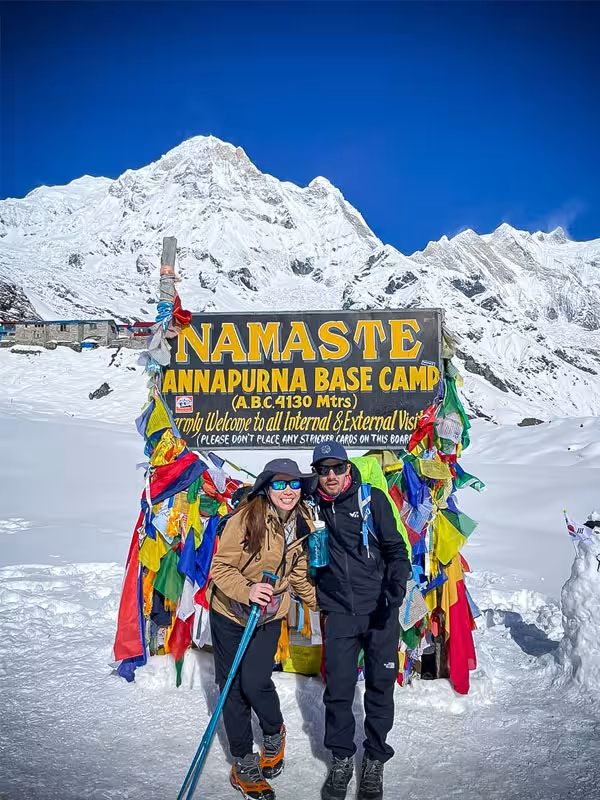
Unlike most Himalayan treks that reward you with distant viewpoints, the Annapurna Base Camp Trek gradually draws you into the mountains until they rise on every side. Beginning with a drive to Pokhara and the trailhead, the route climbs through stone staircases, rhododendron forests, and welcoming Gurung villages before reaching the famous sunrise viewpoint at Poon Hill. From there, the landscape changes with every step as the trail follows the Modi Khola through narrow valleys and alpine terrain toward the foot of the Annapurna massif.
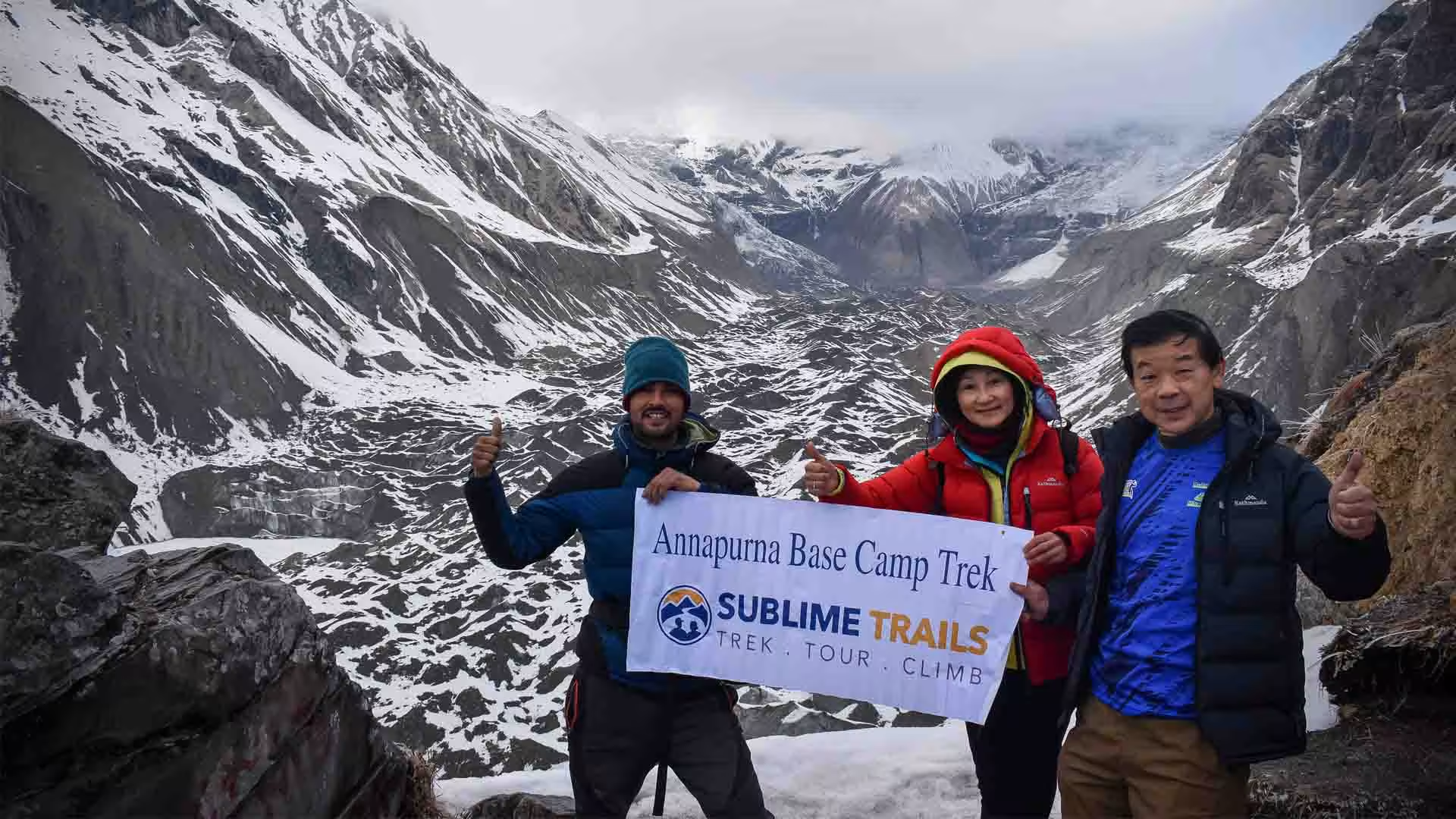
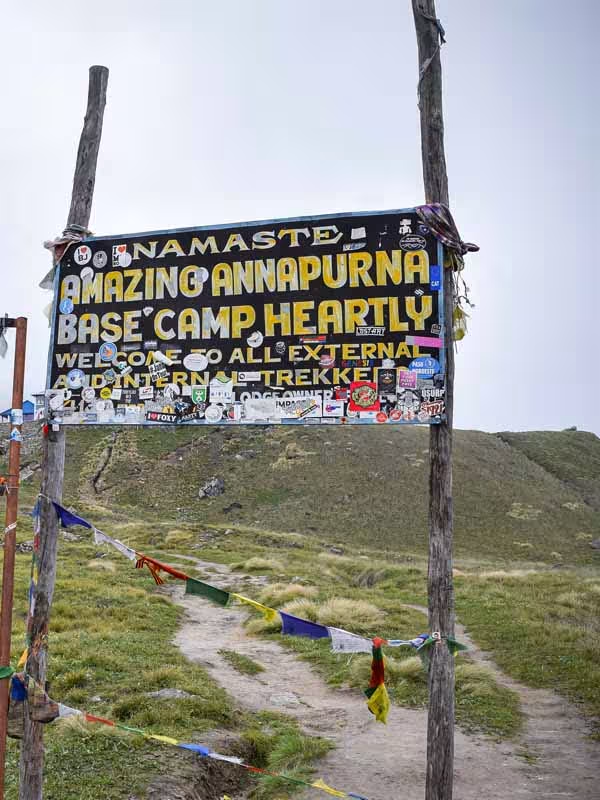
The destination is Annapurna Base Camp (4,130 m), where towering peaks including Annapurna I, Machhapuchhre, Gangapurna, Hiunchuli, and Annapurna South create one of the most dramatic mountain settings in the Himalayas. Rather than simply viewing the range from afar, you spend the final stage surrounded by its immense walls of rock, snow, and ice. At Sublime Trails, we preserve the character of this classic route while enhancing the experience with expert local guides, thoughtfully paced trekking days, and genuine mountain hospitality, allowing you to appreciate every moment of Nepal's most iconic base camp adventure.
No other major trek in Nepal ends the way this one does. Annapurna Base Camp sits inside a natural amphitheater called the Annapurna Sanctuary, a bowl of glacier and moraine completely ringed by peaks over 7,000 metres. You do not arrive at a viewpoint looking toward the mountains. You arrive inside them, with Annapurna I, Annapurna South, Gangapurna, and the sacred, unclimbed Machhapuchhre all rising directly around the camp itself.
A Mountain Nobody Is Allowed to Climb
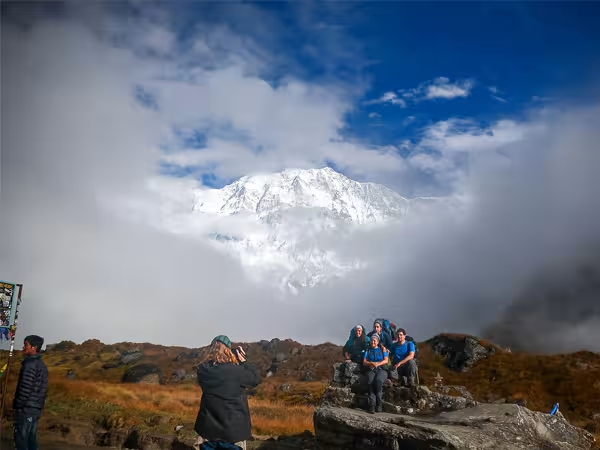
Machhapuchhre, the Fishtail peak that dominates the skyline for most of this trek, has never been officially summited. Nepal's government has kept it closed to climbing since a British expedition came within 150 metres of the top in 1957 and turned back, reportedly out of respect for the mountain's sacred status to local Gurung and Hindu communities, who consider it the home of Shiva. You will not climb it, but you will spend most of ten days walking in its direct line of sight, which is its own kind of experience most trekkers do not expect going in.
Why the Route Still Goes Through Poon Hill
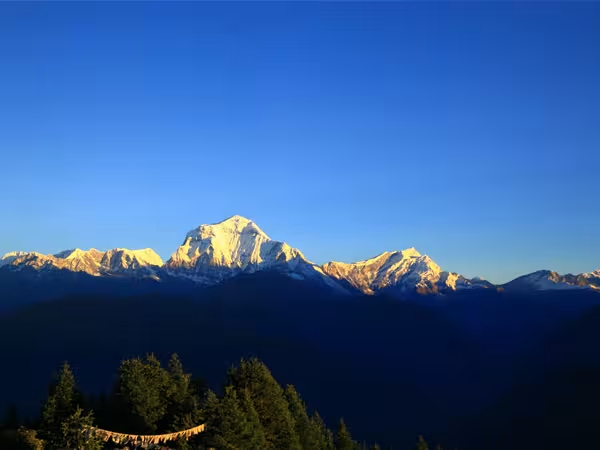
A more direct route to Annapurna Base Camp exists, skipping Ghorepani and Poon Hill entirely to save roughly a day. We keep them in this itinerary on purpose. Poon Hill's sunrise viewpoint delivers one of the widest Himalayan panoramas reachable by anyone with basic fitness, Dhaulagiri, Annapurna, Machhapuchhre, and Manaslu in one sweep, and Ghorepani and Ghandruk are two of the best preserved Gurung and Magar villages on any Annapurna route. Cutting them saves a day. It also cuts the two things that make the walk in as memorable as the destination itself.
Who This Trek Is Actually For
Fit beginners genuinely can complete this trek, and a meaningful share of our bookings each season are first time trekkers choosing Annapurna Base Camp specifically because it demands less altitude commitment than Everest Base Camp while still delivering a real high mountain destination. It also suits experienced trekkers who want a shorter, well rounded trip between longer expeditions. It does still involve real daily walking, including thousands of stone steps on a single early day, so general cardiovascular fitness matters more than any specific trekking background.
How This Compares to Everest Base Camp
The two treks get compared constantly, and the honest answer is that they reward different priorities rather than one simply being easier. Annapurna Base Camp tops out at 4,130m against Everest Base Camp's 5,364m, which genuinely does lower altitude sickness risk and shortens the trip by roughly a third. What Annapurna trades in raw altitude, it makes up in ecological range: this route moves through five distinct vegetation zones in ten days, subtropical forest, temperate rhododendron, alpine meadow, and finally the bare glacial moraine of the Sanctuary itself, a wider range than the Khumbu's more uniform high altitude terrain offers. Neither trek is the better choice in general terms. Trekkers chasing the highest point reachable without mountaineering gear choose Everest. Trekkers who want the fullest single trip through Nepal's ecological variety, with lower altitude risk and a shorter time commitment, tend to choose this one.
Five Ecological Zones in Ten Days
Few treks anywhere pack this much environmental change into so short a distance. The lower days through Tikhedhunga and Ulleri pass through genuinely subtropical forest, home to langur monkeys and, rarely, red panda at the higher forest margins. By Ghorepani, rhododendron forest dominates, spectacular in bloom through March and April. Past Chhomrong, bamboo and oak give way to alpine scrub, and above Deurali, the last trees disappear entirely. The final approach to Base Camp crosses open glacial moraine, a landscape closer to the high Arctic than anything seen on Day 1. This compressed ecological range is itself one of the trek's under discussed highlights.
This is a fully guided, lodge based trek to the Annapurna via the classic Ghorepani and Poon Hill route, running from Kathmandu with transport to and from Pokhara included, and one night spent at Annapurna Base Camp itself.