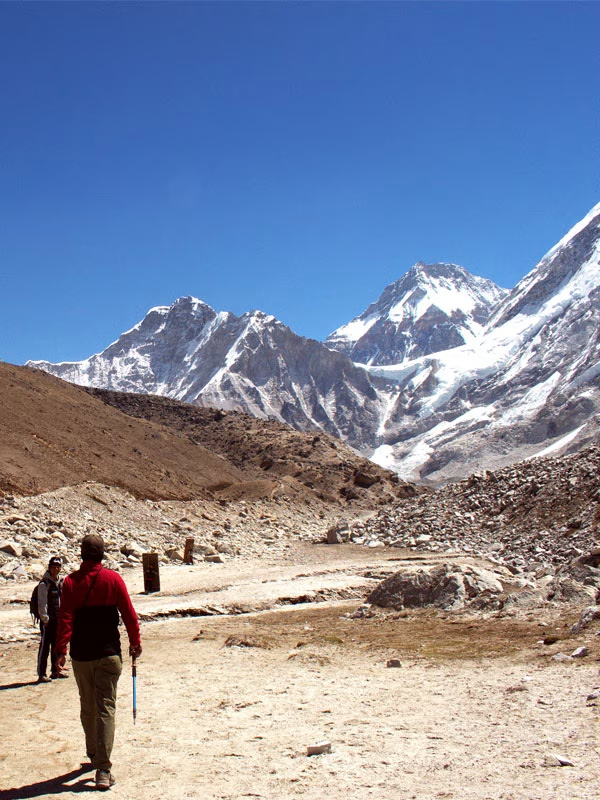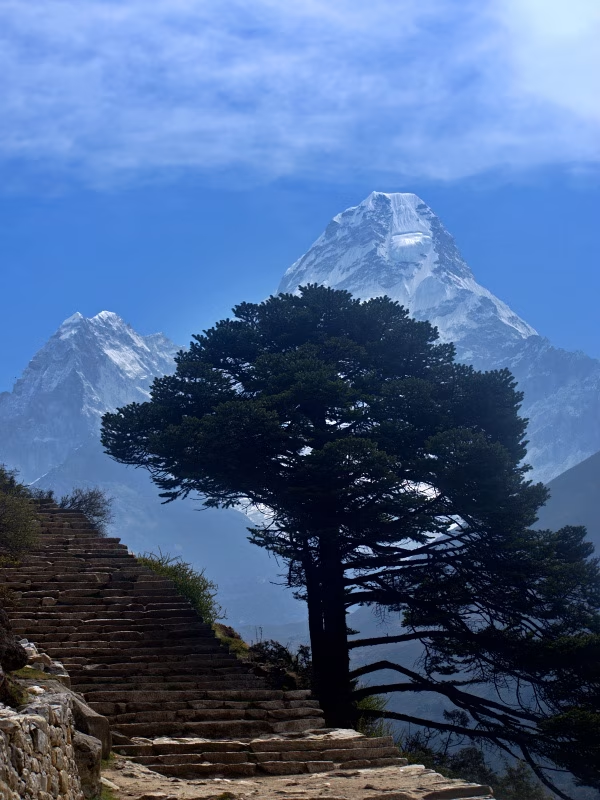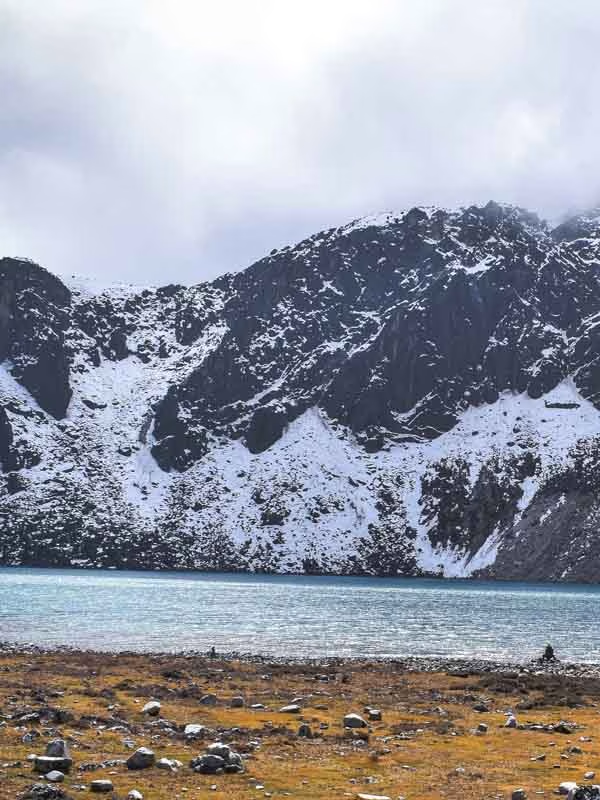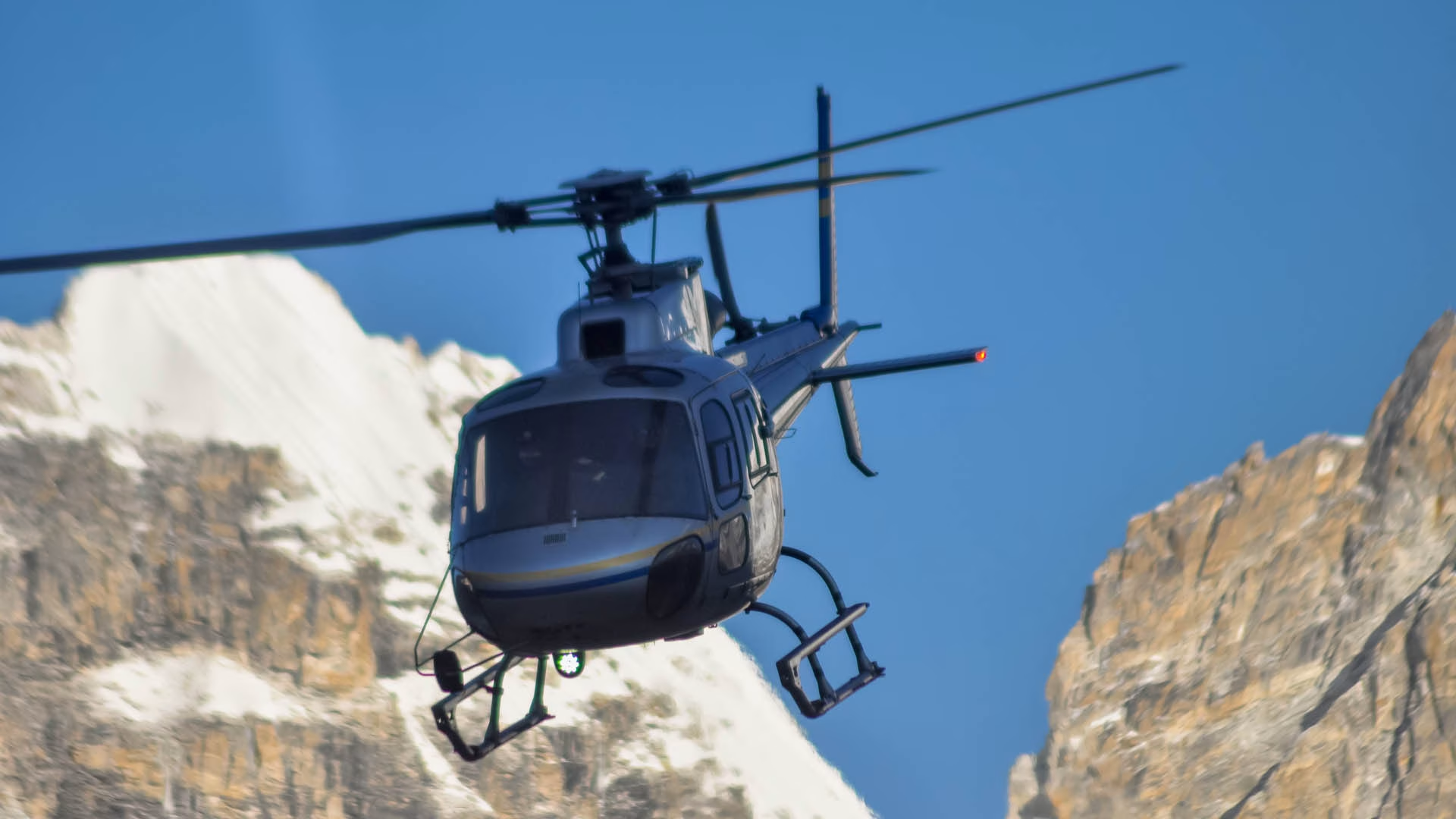
Walk to Everest Base Camp and fly back above the Himalayas. The Everest Base Camp Trek with Helicopter Return combines the satisfaction of completing the world's most famous trek with a spectacular helicopter flight from Gorak Shep. Avoid the long descent while enjoying breathtaking aerial views of Everest, Nuptse, Lhotse, Ama Dablam, glaciers, and deep Himalayan valleys. It's the perfect option for trekkers wanting maximum adventure with less time on the return journey.
Every Everest Base Camp trek asks the same question eventually: how much of the classic route do you actually need to walk, and how much of it is just retracing your own footsteps? This itinerary answers it by keeping the entire walk in every village, every acclimatization stop, the full 65 miles to Base Camp and cutting only the three-day walk back out, replaced by a single helicopter flight from Gorak Shep.
Where This Sits Among Your Other Everest Options
This is the itinerary for someone who wants the full, properly acclimatized classic trek not a compressed or transport-heavy version of it, but doesn't want to spend three additional days walking back down terrain they've already seen.
It keeps the single acclimatization day at Namche that the 14-Day Classic uses before its second rest day at Dingboche, which puts it in a clear middle position: more built-in safety margin than our 7-Day Short Trek, which carries no acclimatization days at all, and a more complete trekking experience than our 5-Day Tour or Luxury Trek, both of which cover a meaningful portion of the ascent by air rather than on foot.
Who This Is Actually Built For
Trekkers who've read about the compressed 7-day option and felt uneasy about skipping acclimatization entirely, but who also don't want to give up three extra days walking downhill through villages they've already passed through once. It's also a strong fit for anyone whose travel insurance or personal risk tolerance makes a full acclimatization schedule non-negotiable, while still wanting the time savings a helicopter return offers.
This is a fully guided, lodge-based trek covering the complete classic route to Everest Base Camp on foot, with one acclimatization day at Namche, followed by a helicopter return from Gorak Shep to Kathmandu.
Trip Highlights
Journey Highlights
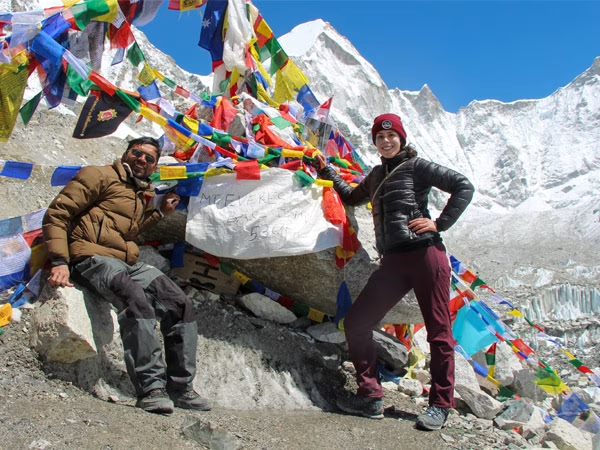
Everest Base Camp itself
Reached entirely on foot, following the complete classic route, at 5,364m beside the Khumbu Icefall
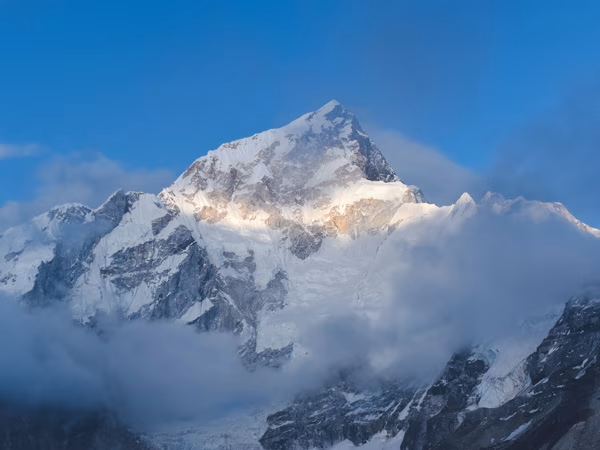
View From Kala Patthar
The trip's visual high point at 5,545m, with Everest, Nuptse, and Lhotse in full view
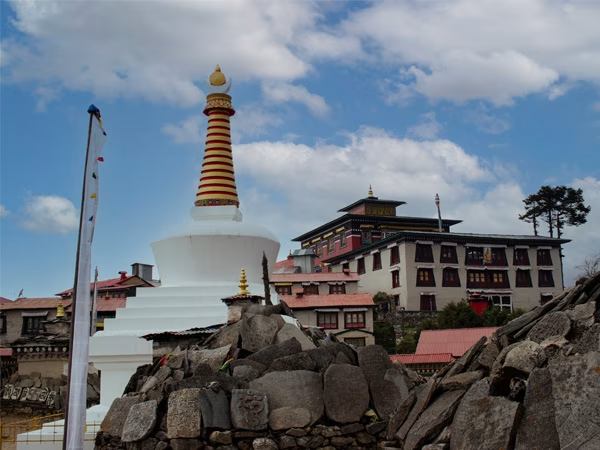
Tengboche Monastery
The spiritual center of the Khumbu, reached on Day 5 with Ama Dablam framing the walk in
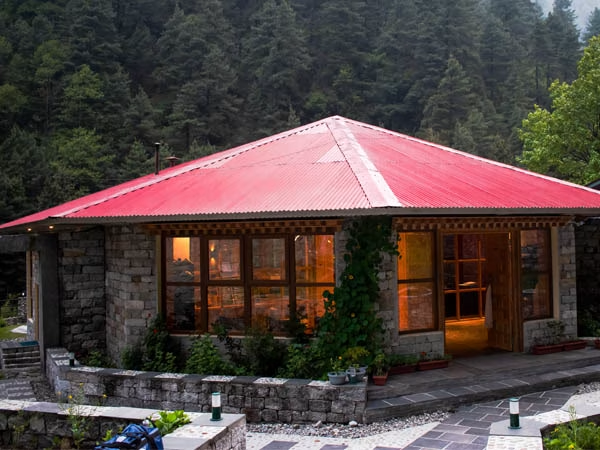
Acclimatization Day
A single, well-placed acclimatization day at Namche, positioned for maximum safety benefit on a 9-day schedule
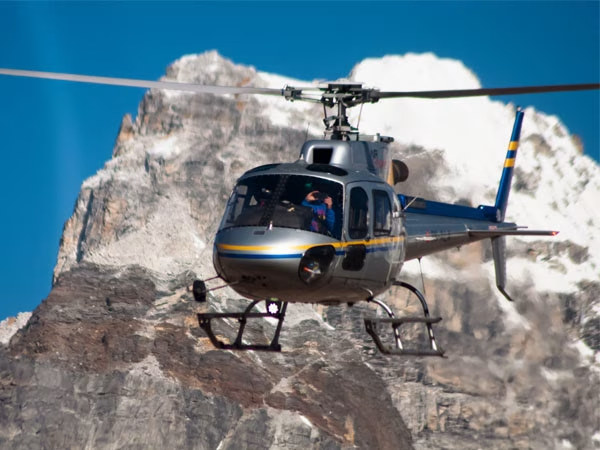
Helicopter Return
A same-day helicopter flight home from Gorak Shep, saving 3–4 days versus retracing the trekking route on foot
This itinerary is genuinely strenuous despite the one-day time saving from the helicopter. It covers the same distance and altitude gain as our 14-Day Classic in five fewer days, which means less recovery time between demanding stages. If you want the most conservative acclimatization schedule available, our 14-Day Classic with two full rest days is the safer choice. If you already have solid high-altitude experience and want the fastest possible itinerary, our 7-Day Short Trek covers the same route without any built-in rest days at meaningfully higher risk, which that page states plainly.
Safety & Altitude
Designed for Success at Altitude
Confidence. Not fear.
Cutting the walk-out doesn't cut corners on the way up. This itinerary keeps the acclimatization structure that actually matters for reaching Base Camp and Kala Patthar safely, and only removes the return leg, which offers no additional acclimatization benefit anyway since it's already downhill.
Acclimatization: one full rest day at Namche, positioned before the trail's steepest sustained climbing
Careful pacing: daily elevation gain from Namche onward follows standard high-altitude guidelines, unlike a compressed zero-rest-day schedule
Experienced local guides: every guide on this route has run both the 14-day and 9-day versions and understands exactly how the pacing differs
AMS awareness: daily oximeter checks from Namche onward, not just above 4,000m
Guide training: wilderness first aid and high-altitude rescue protocols, refreshed annually
Emergency response: a clear descent-or-evacuate decision process, with the scheduled helicopter also available to expedite emergency transport if needed
Essential Information
1. Porter and Weight Limitation
Each porter carries up to 20kg, shared between two trekkers. Keep your daypack separate for anything you want on hand during the day — water, camera, layers.
2. A Typical Day on the Trail
Mornings start with tea and a hot breakfast before the trail cools enough to walk comfortably. Most walking happens before early afternoon, with a lunch stop in a village along the way, and you'll typically reach the next lodge with daylight to spare for rest before dinner. It's a steady, repeatable rhythm most trekkers settle into by day three.
3. Helicopter Evacuation
If altitude symptoms or injury require it before Day 9, evacuation is arranged separately from the scheduled return flight, coordinated directly by your guide. Insurance covering high-altitude helicopter evacuation to at least 6,000m is mandatory.
Trip Gallery
See the Journey Through the Lens
Itinerary
Everest Base Camp Trek with Helicopter Return Detailed Itinerary
Day 1 - Flight to Lukla and Trek To Phakding
Your EBC Trek with Helicopter Return begins with a scenic morning flight to Lukla (2,860m). The flight takes 35 minutes from Kathmandu, but drops to a quick 20 minutes from Ramechhap during the peak trekking months of March–May and September–November. Once we land, we will lace up our boots for a gentle introductory hike downward through the valley. From there, we'll cross our first high suspension bridge and take a short walk uphill to wrap up our first day in a cozy teahouse in Phakding (2,610m).
Max Altitude: 2,610m (8,562ft)
Duration: 35-minute flight/3-4 hours trekking
Distance: ~7.8 km
Meals: BLD
Accommodation Type: Pine Forest Inn
Day 2 - Phakding to Namche Bazaar
Today we tackle our first major climb up to the bustling Sherpa capital of Namche Bazaar (3,440m). We will follow the riverbanks through small mountain villages, passing through Monjo where we officially enter the stunning Sagarmatha National Park. Next, we cross the iconic Hillary Suspension Bridge over the rushing Dudh Koshi River. From here, a steady uphill trek through the pine trees brings us to our vibrant home base for the next two nights.
Max Altitude: 3,440m (11,286ft)
Duration: 6-7 hours
Distance: ~11.3 km
Meals: BLD
Accommodation Type: Green Tara Lodge
Day 3 - Acclimatization day at Namche Bazaar
We will spend today acclimatizing at Namche Bazaar (3,440m) to help our bodies adjust naturally to the higher altitudes. To actively adapt, we take a scenic 3-4-hour hike up to the famous Everest View Hotel (3,880m) for our first glimpse of Mt. Everest. Alternatively, we can visit the nearby Sagarmatha National Park Museum to learn about Sherpa culture. This active rest day finishes with a free afternoon to explore the vibrant mountain town, grab a pastry at a local bakery, and relax at the Green Tara Lodge.
Max Altitude: 3,440m (11,286ft)
Duration: 3-4 hours
Distance: ~4.5 km (2.8 miles round-trip)
Meals: BLD
Accommodation Type: Green Tara Lodge
Day 4 - Namche to Tengboche
Today we climb out of Namche to a high ridge, rewarding us with stunning views of Everest and Ama Dablam as we hike toward Kyanjuma. Next, our trail drops steeply through forests to Phunki Thenga (3,250m) for a riverside lunch before tackling the day’s main challenge: a steady, 2-hour uphill trek. We will reach Tengboche (3,867m) just in time to explore the famous Tengboche Monastery, the spiritual heart of the Khumbu region, before settling into the cozy Tengboche Guest House for the night.
Max Altitude: 3,867m (12,687ft)
Duration: 5-6 hours
Distance: ~9.2 km
Meals: BLD
Accommodation Type: Tengboche Guest House
Day 5 - Tengboche to Dingboche
Today we hike downward through beautiful forests of birch and rhododendron before crossing the Imja Khola river bridge. From there, we will follow a gradual uphill path through the scenic villages of Pangboche and Shomare, where the towering peak of Ama Dablam feels close enough to touch. As we enter the high alpine Imja Valley, the trees disappear and give way to wide mountain views before arriving at the traditional Sherpa settlement of Dingboche (4,410m) to check into the Good Luck Inn.
Max Altitude: 4,410m (14,468ft)
Duration: 5-6 hours
Distance: ~10.5 km
Meals: BLD
Accommodation Type: Good Luck Inn
Day 6 - Acclimatization Day at Dingboche
Today is another rest day in Dingboche. We will take a scenic 3-4-hour hike up the steep ridges of Nangkartshang Peak (5,083m) for breathtaking views of Makalu, Lhotse, and Ama Dablam. Afterward, we will head back down to enjoy a relaxed afternoon exploring the village’s stone-walled fields before returning to the Good Luck Inn.
Max Altitude: 4,410m (14,468ft)
Duration: 3-4 hours
Distance: ~5 km
Meals: BLD
Accommodation Type: Good Luck Inn
Day 7 - Dingboche to Lobuche
Today we hike toward Lobuche (4,940m), starting with a gradual climb toward a high ridge overlooking the wide Pheriche Valley. After a brief descent to Thukla, we will tackle the day’s main challenge: a steep uphill climb to the Everest Climbers' Memorial at the top of the pass, a quiet place dedicated to lost mountaineers. From there, we will take a gentle walk alongside the massive Khumbu Glacier moraine to wrap up our trek at the Oxygen Lodge.
Max Altitude: 4,940m (16,207ft)
Duration: 4-5 hours
Distance: ~7.9 km
Meals: BLD
Accommodation Type: Oxygen Lodge
Day 8 - Lobuche to Gorak Shep and EBC, back to Gorakshep
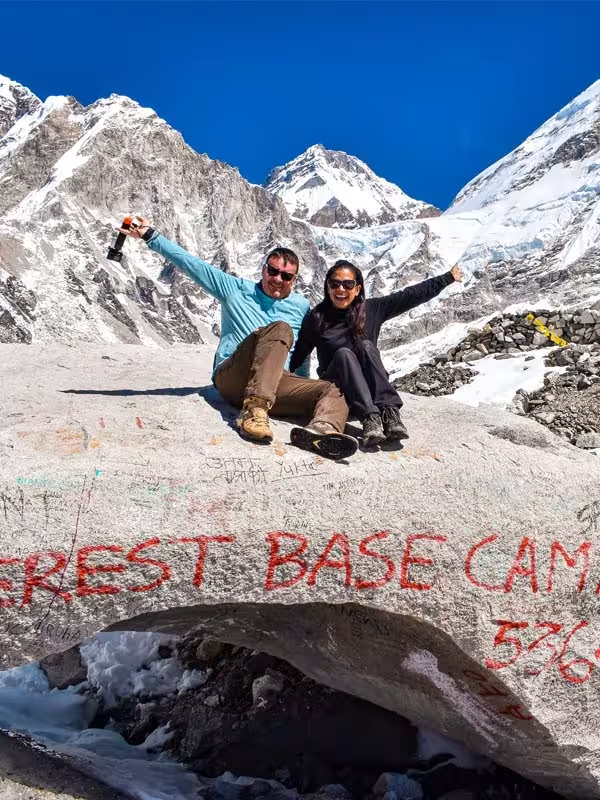
Today is the big day. We will follow the rocky edge of the Khumbu Glacier on a steady walk to Gorak Shep (5,164m), navigating rugged moraines and frozen glacial ponds. After a quick rest at the Himalaya Lodge, we will push onward through the rocks and streams to finally reach our ultimate goal: Everest Base Camp (5,364m). At Base Camp, we will celebrate, take photos by the famous milestone rock, and admire the massive Khumbu Icefall before hiking back to Gorak Shep to wrap up our incredible day.
Max Altitude: 5,164m (16,942ft)
Duration: 6-7 hours
Distance: ~12 km
Accommodation Type: Himalaya Lodge
Day 9 - Hike to Kala Patthar, Back to Gorak Shep, Helicopter Flight to Kathmandu
Before dawn, we will tackle a challenging 2-3 hour climb to Kala Patthar (5,545m)—the highest point of our trek—to watch a jaw-dropping sunrise over Mount Everest. After hiking back down to Gorak Shep, we will skip the long walk home and board a spectacular helicopter flight back to Kathmandu (1,400m). We will wrap up our unforgettable journey by checking into our 3-star hotel and sharing a celebratory farewell dinner tonight.
Max Altitude: 1,400m (4,593ft)
Meals: Breakfast & Farewell Dinner
Accommodation Type: 3-Star Hotel
Getting There
Kathmandu's Tribhuvan International Airport is served by direct and one-stop flights from most major hubs in Asia and the Gulf; travelers from the US, Europe, and Australia typically connect through Doha, Istanbul, Delhi, Singapore, or Bangkok. From Kathmandu, the trek begins with a short mountain flight to Lukla, or, during peak-season air traffic restrictions, a road transfer to Ramechhap followed by the same flight from there.
Sublime Trails representative will come to pick you at the airport. So we will be meeting at Tribhuvan International Airport to start the amazing journey.
Map And Altitude Chart
Everest Base Camp Trek with Helicopter Return Map and Altitude Chart
Interactive Map
Cost Details
Inclusions & Exclusions
What’s Included
Lukla flights both ways (or Ramechhap transfer if applicable)
All meals and teahouse accommodation for 7 nights
Scheduled helicopter return from Gorak Shep to Kathmandu
Licensed guide and porter (1 per 2 trekkers)
Sagarmatha National Park and Khumbu Rural Municipality permits
Guide and porter insurance
What’s Excluded
Travel and rescue insurance, including high-altitude helicopter evacuation coverage (mandatory, and separate from the scheduled return flight)
Nepal visa fee
Personal expenses beyond what's listed under What Elevates This Journey
Guide and porter tips
Local Guide
Meet Our Local Guide
Trekking Guide
Trekking Guide
Trekking Guide
Trekking Guide
Food and Accommodation
What You’ll Eat & Where You’ll Stay
Meals lean on dal bhat — rice, lentil soup, vegetables, and pickle, with free second helpings at most lodges — alongside porridge, eggs, pasta, noodle soups, and momos. Prices and variety narrow as you climb, since everything above Namche arrives by porter or yak.
Equipment list
Everest Base Camp Trek with Helicopter Return Equipment list

Know before you go! Some stuff we’ll provide, other things you’ll need to bring.
Reviews
Client’ Testimonials and their Experiences
S
Best Agent Tour in Nepal
This is my second time go Nepal trekking and Also second time choose Sublime Trail as my preferred agent tours. The boss Ram very nice and friendly, and the mountain guide Suman is the best mountain guide , very caring , responsible, and patience guide.
D
Simply the Very Best!!
Absolutely top-notch company!! I couldn't have asked for any better people or resources for my trekking experience. The owner of the company was involved from day one of planning until the last day of the trek itself. Our guide and porter were fabulous! Always smiling and helping in any and every way possible. Even when we decided to make changes to the trek they were more than willing to assist us in getting exactly what we wanted. I wholeheartedly recommend Sublime Trails without any reservation! Simply the very best!! Thanks to each and every one of the company that helped to make this trek a great success!!
J
Dream Come True
My long-cherished dream of witnessing Everest has finally come true, all thanks to Ram and his team. I don't have enough words to express how I felt throughout the journey. Ram made sure I had a fantastic window seat, which allowed me to revel in the stunning vistas of Everest and the Himalayas. It was a life-changing adventure, and I wholeheartedly recommend Sublime Trails for an unforgettable Everest experience.
Moments
Travel Moments
Highly Recommended Company Sublime Trails!
Essential
Know Everything Before You Go Everest Base Camp Trek with Helicopter Return
Currency & ATMs
Exchange currency in Kathmandu before departure. ATMs exist only in Lukla and Namche Bazaar along the route, and both charge a processing fee of roughly 3 to 8 percent on card withdrawals. Carry the local currency equivalent of at least US$200 in cash for personal spending beyond what this package includes.
Travel Insurance
Travel insurance is not legally required to enter Nepal or obtain a visa. It is required by us before you can start the Everest Base Camp Trek with Helicopter Return, the same as every itinerary we run.
Your policy needs high-altitude coverage to at least 6,000m and helicopter evacuation coverage. This surprises some guests, since a helicopter segment is already included from Gorak Shep to Kathmandu. That helicopter is scheduled transport, not emergency evacuation, and insurers treat the two differently. US-based trekkers commonly use UnitedHealthcare Global. European trekkers use Allianz or Europe Assist. Australian trekkers use Cover-More.
Nepal Visa
Most nationalities, including US, UK, EU, Australian, and Canadian citizens, can get a Nepal visa on arrival at Tribhuvan International Airport. You can also apply online in advance to save time at immigration. A 15 day visa comfortably covers this 9 day itinerary. Indian citizens don't need a visa at all. Bring a valid passport, one passport photo, and the visa fee.
Travel Etiquette
- Always pass mani walls, chortens, and prayer wheels on your left, walking clockwise. This is a real Buddhist observance, not a suggestion.
- Ask before photographing monks, ceremonies, or people directly. A smile and a gesture toward your camera is usually enough. A shaken head means no, and that's the end of it.
- Remove your shoes before entering a monastery prayer hall. Keep your voice low inside.
- Yield the trail to porters, yaks, and mule trains throughout your eight trekking days. Stay on the uphill side when you do.
- A small monastery donation is appreciated but never expected. Don't make a show of it either way.
- Ask permission before photographing other passengers during your helicopter segment from Gorak Shep. A shared cabin is a small space for a flight everyone on board is equally excited about.
- Tipping is customary for both your trekking guide and porter, and the helicopter crew separately. Ask your operator for a typical range rather than guessing.
Training for the Everest Base Camp Trek with Helicopter Return
- This itinerary walks the complete classic route to Base Camp on foot. It includes one acclimatization day rather than the two our 14-day trek includes. Train accordingly.
- Cardio, 3 to 4 times a week, building toward 75 to 90 minute sessions. You're covering the same ground as our 14-day trek in five fewer days. This means less rest between demanding stages.
- Load-bearing hikes with a daypack at 5 to 8kg, at least once weekly in your final month. The single acclimatization day here does real work. Arriving fit means you use it for genuine recovery rather than catching up on missed conditioning.
- This itinerary sits between our fastest and slowest Everest options. Our 14-day classic route with two rest days is the more conservative choice if you have no prior high altitude experience.
- Fitness doesn't prevent altitude sickness. One rest day helps, but it's not the same safety margin as two. No training block changes that fact.
Porter and Weight Limitation
Baggage allowance on the Lukla flight is capped at 15kg including hand luggage. One porter carries up to 25kg shared between two trekkers, so keep your personal duffel to around 12 to 13kg. This applies for the full eight days of trekking to Gorak Shep. Your gear travels with you the entire way in, unlike our shorter helicopter tour products.
Electricity & Connectivity
Electricity and phone charging are free up to Namche Bazaar. Beyond Namche, most teahouses charge a per-device fee that increases with altitude, so a power bank is worth carrying rather than relying on paid charging at every stop. Mobile data through NTC or Ncell works reliably as far as Tengboche, with NTC generally holding a signal furthest up the valley, including at Gorak Shep.
Lukla Flight Delays and Alternatives
This itinerary uses two different flights, and each carries its own weather consideration.
Your inbound flight to Lukla, at the start of the trip, is a standard fixed-wing flight. It carries the same delay risk as every itinerary we run. If it's delayed, a private helicopter charter is available as a faster alternative for trekkers willing to pay for it. This typically costs US$400 to $500 per person from Kathmandu to Lukla.
Your return flight from Gorak Shep to Kathmandu is different. This helicopter segment is already included in your package, replacing the three day walk out our 14-day classic route requires. It's genuinely weather dependent, since it departs from extreme altitude. If it can't fly on your scheduled morning, we hold you at Gorak Shep for the next available window rather than force an unsafe flight, and discuss your options directly if this affects your onward travel.