Book Now
Price from
US$1350

Everest Base Camp Trek

325 reviews in TripAdvisor
41 reviews in Google
Duration:14 Days
Trip Grade:Strenuous
Maximum Altitude:5,545m/18,192ft
Group Size:Up to 16 trekkers
Best Time:March-May and September-December
What Elevates This Journey?
  • Attached bathrooms
  • Free SIM card with data
  • Hot Shower
  • Exceptional heating system
Price Per Person
US$1350
$1400
Book This Trip

Secure Payment, Transparent Pricing

Ebc trek
  • Hosted by Himalayan Locals
  • Meaningful Human Connections
  • Carefully Designed for Altitude & Safety
  • Trusted by Global Travellers

Our 14-day Everest Base Camp Trek is for people who want to experience the Khumbu properly, rather than trying to fit the whole journey into the shortest possible itinerary. From Lukla, the trail climbs through Namche, Tengboche, Dingboche, Lobuche and Gorakshep, with acclimatization days built into the route where they matter most.

The higher you walk, the more you notice the difference. Days become slower, nights become colder, and even a short hike is enough to make you gasp for breath. The walks will take about several hours per day, but won't force you to walk at another person's speed. Your guide will observe your adaptation, assist you in the more difficult parts.

The additional days also provide you with one thing that a shorter trek won't: time to enjoy the trail. There is plenty of time to breakfast, time to stop by a mountain village to grab a cup of tea, time up the afternoon to visit Dingboche or just time outside to watch Ama Dablam. Alongside that you might be able to spot wildlife on the trails of everest region, if you are lucky enough.They are part of what makes trekking through the Khumbu different from simply reaching a destination.

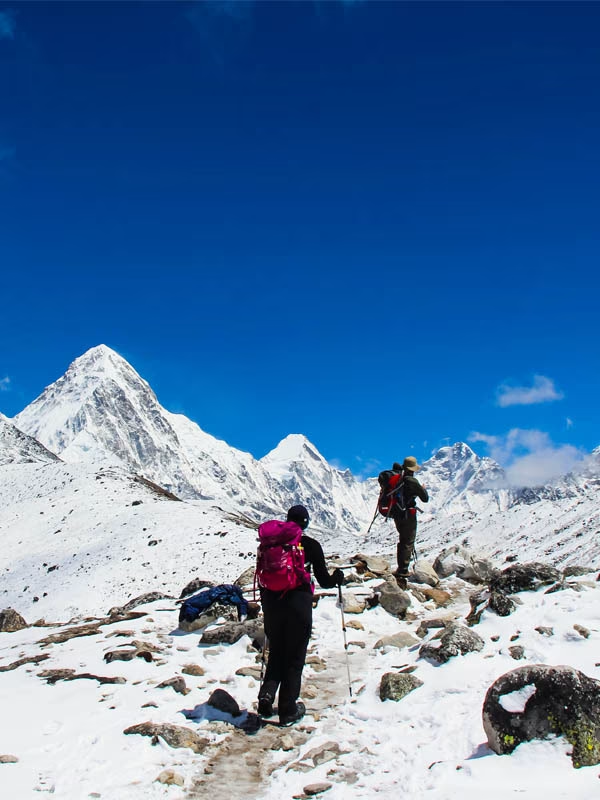
The trail eventually leads to Everest Base Camp (5,364 m) and then an early morning trek to Kala Patthar (5,545 m). The views of Everest, Nuptse, and Ama Dablam are spectacular from Kala Patthar which is also known as Black Rock. You can also see the northern flank and summit of Lhotse. Similarly, the panorama comprises Mt. Pumori, Changtse, Thamserku, and Kantega. By then, the distance you've walked, the villages you've stayed in and the people you've met are part of the achievement.

Reaching Everest Base Camp is a demanding journey, and giving yourself enough time can make the difference between rushing through it and truly enjoying the trail.

Everest Base Camp Trek at Glance

Trek Region

Everest / Khumbu
Everest Base Camp Elevation 5,364 m / 17,598 ft
Kala Patthar Elevation 5,545 m / 18,192 ft
Daily Walking Approximately 5–8 hours
Acclimatization Stops Namche Bazaar and Dingboche
Starting Point Kathmandu
Ending Point Kathmandu
Lukla Flight Kathmandu/Ramechhap to Lukla and return
Accommodation 3-star hotel + mountain lodges/teahouses
Meals During Trek Breakfast, Lunch & Dinner
Guide & Porter Local trekking guide + 1 porter for 2 trekkers
Permits & Fees Sagarmatha National Park + Khumbu Pasang Lhamu Rural Municipality Permit
Trek Style Guided teahouse trek
Highest Sleeping Elevation Gorakshep, approximately 5,164 m/ 16,942 ft

Why We Recommend 14 Days for Everest Base Camp Trek

14 days gives your body time to adjust to the altitude without turning the trek into a race. The itinerary includes dedicated acclimatization in Namche Bazaar and Dingboche, allowing you to gain elevation gradually before reaching Everest Base Camp at 5,364 m and Kala Patthar at 5,545 m. If you've read about our seven-day helicopter-return version, that itinerary trades those rest days for speed. This one doesn't, and for most first-time high-altitude trekkers, that trade isn't worth making.

The extra time also gives you room to enjoy the journey. You can walk at a steady pace, explore Sherpa villages, take in views of Mount Everest and Ama Dablam, and rest properly at key points along the route.

Our goal is simple: reach EBC safely, not simply as quickly as possible. Mountain weather and altitude can be unpredictable, so a 14-day Everest Base Camp Trek provides a more balanced pace while giving you time to acclimatize and enjoy the journey.

A Safe, Deliberate Rhythm Led by Locals on the Everest Base Camp Trek

Your trek is led by an experienced local guide who knows the Khumbu and the realities of walking at altitude. As you gain elevation, your guide keeps an eye on your pace, energy, oxygen levels, and any signs that you may be struggling with the altitude. Each day is planned around the conditions on the trail and how the group is actually doing, with the pace or itinerary adjusted when necessary. The aim is simple: to help you reach the higher sections safely without pushing your body beyond what it can handle.

Living the Culture of the Khumbu

As the landscape shifts from lush valleys to high alpine tundra, your home each night will be a handpicked, family-run Sherpa teahouse. After 5 to 8 hours of daily trekking on the Mount Everest standard route, you will gather by a warm fireplace. You can dry your gear, share stories, and enjoy fresh, hot meals. These meals are cooked to restore your strength. Whether you join alone or book a private group, our team welcomes you into a living culture. They know every stone on this mountain by heart.

Who This Everest Base Camp Trek Is Actually For

Trekking to Everest Base Camp does not require any prior mountaineering experience. You do need to be comfortable with long days on your feet, prepare your body before departure, and be mentally ready for the realities of walking at high altitude..

This journey is a good fit if you can.

  • Walk for 5 to 8 hours every day, including multiple consecutive hiking days.
  • Manage high climbs and descents on rough mountain trails.
  • Carry a daypack including water, layers, personal things, and basics.
  • Train before you go in Nepal, particularly with frequent walking, hiking, stair climbing, or other endurance exercises.
  • Listen to your guide on acclimatisation, pace, rest, water, and changes to the itinerary as needed.

You do not need to be fast. What matters more is being able to keep moving at a steady pace, recover well each evening, and communicate honestly with your guide when something does not feel right. The altitude is the part you cannot fully train for at home, which is why preparation and a sensible itinerary matter as much as fitness.

Who This Trek Isn't For

This 14-day trek is designed around a traditional teahouse experience, several hours of walking each day, and enough time for your body to adjust to altitude. It may not be the best fit if your expectations are different.

  1. You have limited time for trekking. The 14-day itinerary includes dedicated acclimatization in Namche Bazaar and Dingboche. If you cannot spare two weeks, a shorter Everest itinerary may be a better fit.
  2. You want to see Everest without a multi-day trek. Reaching Base Camp on foot requires several days of trekking from Lukla. If your priority is seeing Everest with minimal walking, an Everest Base Camp Helicopter Tour may suit you better.
  3. You have no flexibility around your travel dates. Lukla flights are affected by mountain weather and visibility. Delays can happen, so it is important to leave some buffer between your trek and any fixed international flight or other commitment.
  4. You are not prepared for high altitude. The trek reaches 5,364 m at Everest Base Camp and 5,545 m at Kala Patthar, with several nights above 3,000 m. Fitness helps, but altitude affects people differently, so you need to be prepared to walk steadily, rest properly, and communicate any symptoms to your guide.

If you have a heart, lung, mobility, or other health condition that may affect your ability to trek at altitude, speak with your doctor or a travel-medicine specialist before booking. Your guide can monitor you on the trail, but medical clearance and appropriate preparation should come first.

Trip Highlights

Journey Highlights

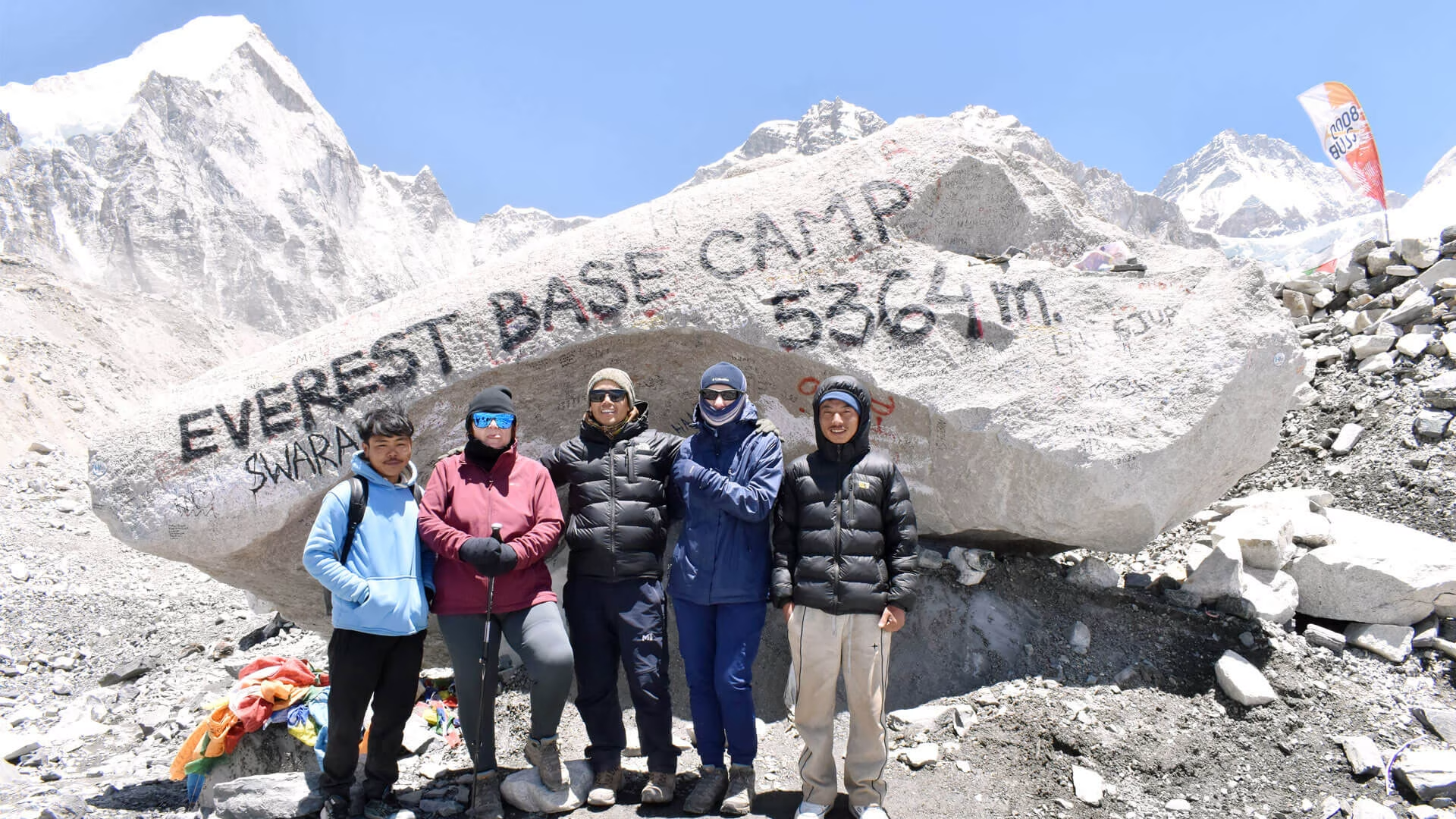
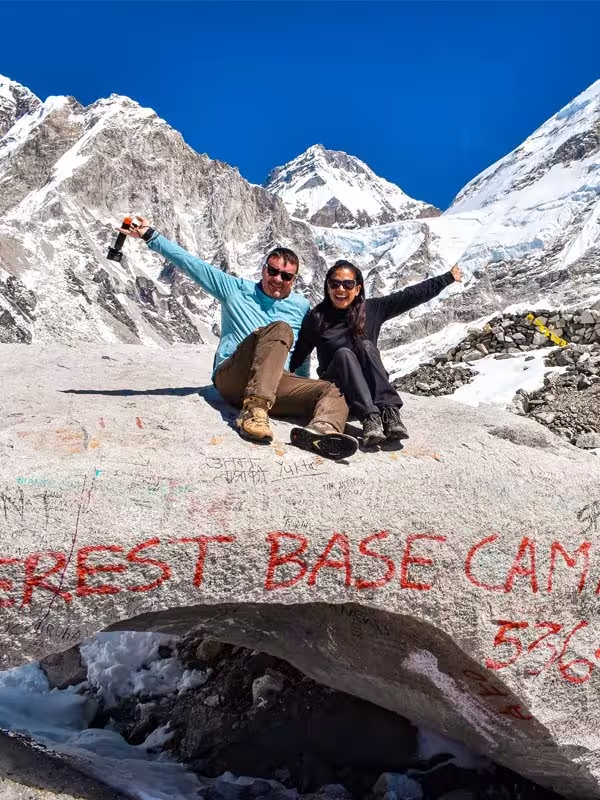
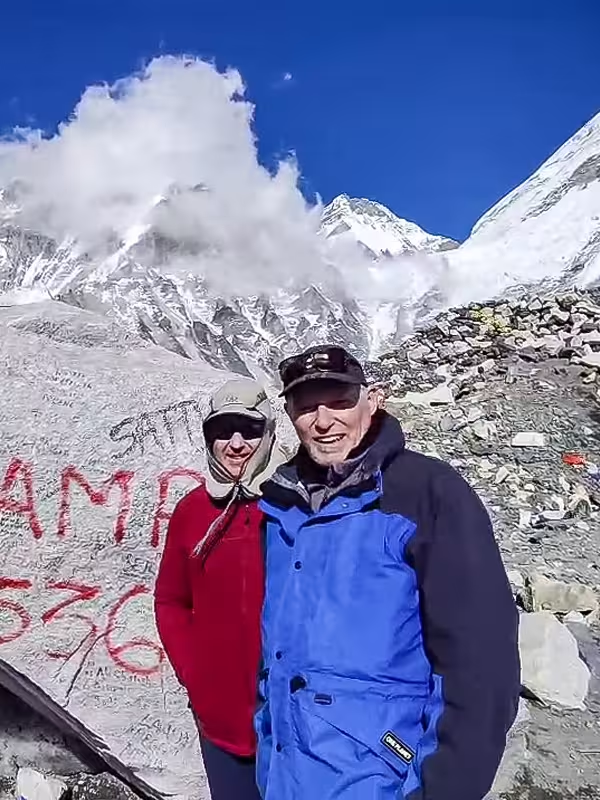
A proud moment as our experienced guides and guests reach the iconic Everest Base Camp stone together.
Everest Base Camp (5,364 m): The Ultimate Achievement

Standing at 5,364 meters directly on the rocky, moving ice of the Khumbu Glacier is a moment you will never forget. Being at the base of the world's highest peak rewards all your hard work and training with an incredible feeling of achievement.

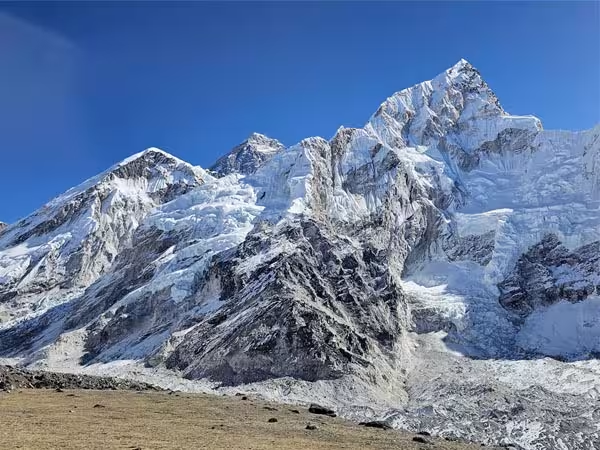
View of Mount Everest from Kala Patthar (5,545 m), the highest viewpoint of the Everest Base Camp Trek, offering the closest panoramic view of Mountains.
Kala Patthar (5,545 m): The Definitive View of Everest

You will hike up this rocky hill in the freezing cold before the sun comes up. From the top, you get the best view of Mount Everest's summit in the world. Watching the morning sun turn the highest peak on Earth into bright gold makes every difficult step worth it.

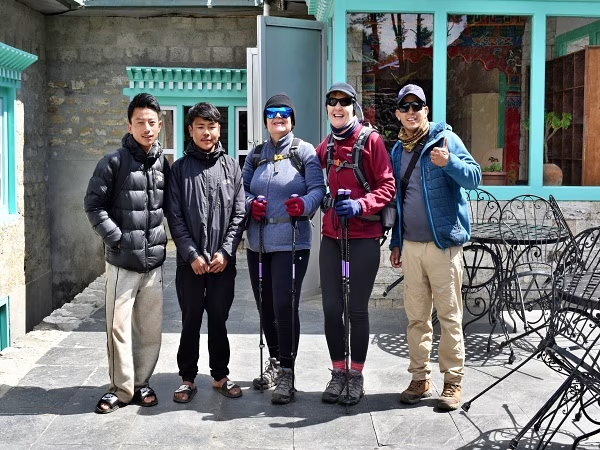
Our experienced guide shares a memorable moment with international trekkers in Namche Bazaar, the gateway to the Everest Base Camp Trek.
Namche Bazaar (3,440 m): The Vibrant Heart of Sherpa Culture

This beautiful town is shaped like a giant bowl carved into the mountainside. You will stay here for two nights to help your body get used to the thin air. It is a lively place filled with warm bakeries and small shops, tucked deep away in the high mountains.

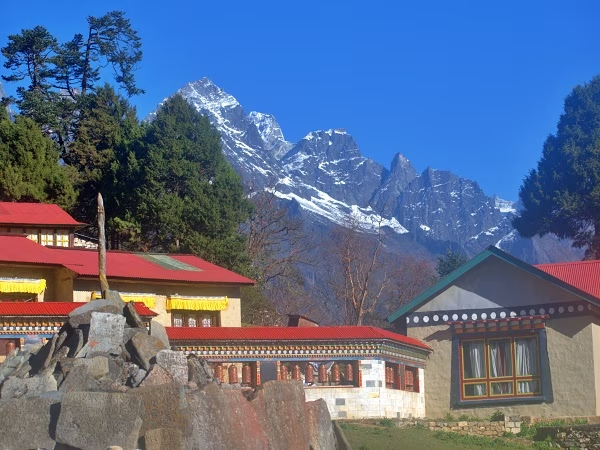
Tengboche Monastery, the spiritual heart of the Everest Base Camp Trek, sits beneath the towering peaks of Nepal's Khumbu region.
Tengboche Monastery (3,867 m): The Spiritual Awakening

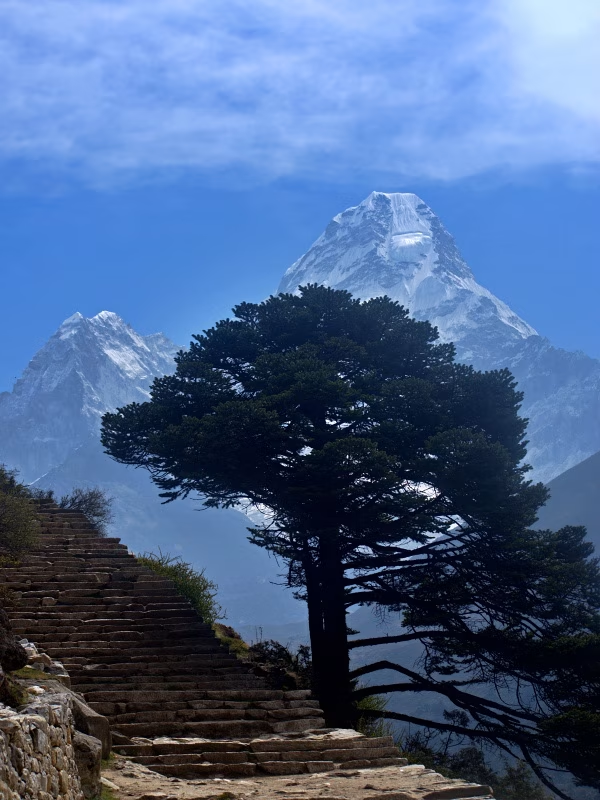
This peaceful monastery lies high on a ridge overlooking the magnificent Ama Dablam mountain in front. You will hear the monks chanting and smell the wonderful candles as you enter from the cold. That beautiful moment that makes your heart beat slow and steady.

Why Book the Everest Base Camp Trek with Sublime Trails?

Most agencies in Kathmandu can put together an Everest Base Camp itinerary. The real difference is who handles your trip day to day, and how honestly we talk to you when the mountain doesn't cooperate. Here is what you can expect when you book the Everest Base Camp trek with Sublime Trails, and if you want to hear it from past guests instead of us, our TripAdvisor reviews are the honest version.

Sherpa Cultural Experience on the Everest Base Camp Trek

From Khunde, Khumjung, Tengboche, Pangboche, Phortse, Thame, Dingboche, and Lobuche to Gorak Shep, the journey to Mount Everest base camp reveals the heart of Sherpa culture. Along this path, you'll encounter Sherpas carrying loads with seemingly effortless grace, hear stories of their legendary climbs, and witness their deep reverence for the mountains they call home. Each village tells a tale of Sherpas' resilience, spirituality, and the enduring bond between the people and their extraordinary surroundings in Nepal’s Everest region.

You reach the people actually planning your trek.

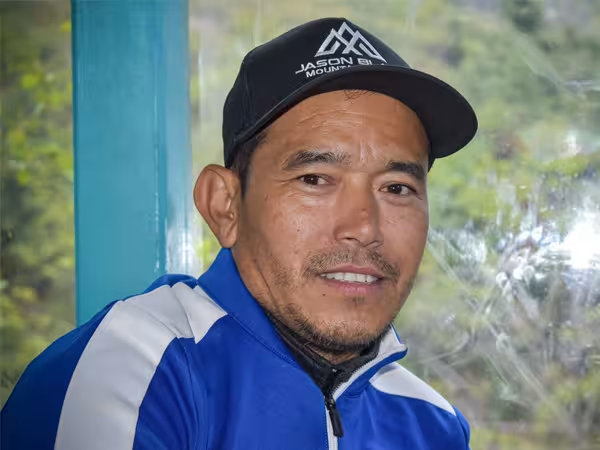
Ram, Kabiraj, and Bhanuka handle trips and tours together. Ram started as a porter in 2005, then became a guide and founded the company in 2013. Kabiraj and Bhanuka cover operations, guide coordination, and client communication alongside him. When you message us before your trek, one of the three is answering, not a booking desk.

Guides who have worked the Khumbu with us for years.

Bibek, Prakash, Suman and Dawa Dona Sherpa lead most of our Everest Base Camp departures, and they have been walking this route with our guests season after season, not job to job. Our team know which teahouse in Dingboche actually warms up at night, which morning to leave Gorak Shep for Kala Patthar, and which trekker needs slowing down before anyone says it out loud. Dawa Sona Sherpa is Khumbu-born, which helps in villages like Khumjung and Pangboche where the language and the connections open doors.

Small groups, not filled buses.

We cap our group sizes on Everest Base Camp so your guide can actually watch how each person is doing at altitude, adjust the pace, and change the plan if someone is struggling. Twenty-person groups on this trek are a logistics problem waiting to happen, so we don't run them.

Registered, taxed, and accountable.

We are registered with Nepal's Department of Tourism as Sublime Trails Pvt. Ltd., and we maintain VAT and PAN compliance. That matters when something goes wrong at 5,000 metres, because it means there is a real, legally accountable company standing behind the trip. 

A team that works the region beyond Everest.

We also run treks in Manaslu, Annapurna, Langtang, Bhutan,Tibet and other regions in Nepal. Guides who cross between these regions read weather, altitude, and route conditions differently than guides who only know one valley, and that experience feeds directly into how we plan your Khumbu itinerary.

You pay for what we quote, nothing surprise-added later.

The trek cost we send you is the full trek cost. Permits, guide and porter wages, teahouse rooms, and standard meals on the trail are inside the number. Where costs can genuinely change, mainly Lukla weather situations, we explain what those look like before you book, not on the day.

What Happens If My Lukla Flight Is Cancelled?

Lukla flight delays are the most common disruption on the Everest Base Camp Trek. It's worth understanding your options before you depart, not mid-trip.

When scheduled flights are delayed by weather, a private helicopter charter is often available as a faster alternative. This typically costs $500 per person from Kathmandu to Lukla. It's a genuine, commonly used option during peak-season backlogs, and we can arrange it directly if a delay puts your itinerary at risk.

Step 1: Flight cancelled. You will hear it early, usually by 6 or 7 in the morning at the domestic terminal, sometimes the night before. Your guide is at the airport with you when the call comes, so you are not standing in a queue trying to work out what just happened.

Step 2: Our team checks options. While you head back to the hotel for breakfast, our office is already on the phones. We know the Tara and Summit dispatchers by name, we know which helicopter operators have seats forming into shared charters that morning, and we know whether Ramechhap is flying when Kathmandu is not.

Step 3: We contact you. Ram, Kabiraj, or Bhanuka calls you directly. You will hear exactly how many flights are queued ahead of yours, what tomorrow's forecast looks like, and what we would honestly recommend. If the answer is wait, tomorrow looks better, we tell you that instead of pushing the more expensive option.

Step 4: Rebook, wait, or helicopter. Your choice. Rebooking costs you a day. Waiting costs a hotel night. A shared helicopter costs money but saves your summit at Kala Patthar. Whichever you pick, we make it happen the whenever you are ready.

Step 5: Adjust trek logistics. Your teahouse in Phakding needs to know. Your porter waiting in Lukla needs to know. We handle every one of those calls in the background, so when you land, your bed is ready and your team is where they should be.

Step 6: If flights remain grounded, we protect the rest of your trip. If weather or operating conditions keep Lukla flights cancelled for three or four days, waiting indefinitely can put the entire itinerary under pressure. In that situation, we will discuss an alternative with you, such as moving the trek to the Annapurna Base Camp or Langtang Valley region. This decision is made based on the current weather, trail conditions, available transport, and the time you have remaining in Nepal. The aim is not to force the original itinerary at any cost, but to make a practical decision that keeps your mountain experience safe, worthwhile, and realistic.

Who pays for what

Situation Who covers the cost
Standard Lukla fixed-wing flight (Kathmandu or Ramechhap) Included in your package
Rebooking the same fixed-wing ticket after cancellation Included, no extra charge
Teahouse rebooking and logistics changes on the trail  We handle it, no charge
Extra hotel night in Kathmandu/ Ramechhap due to delay You cover it, at cost
Helicopter charter (shared or private) You cover it

What is Refundable & Non-Refundable

  • The fixed-wing Lukla ticket itself is refundable per airline policy.
  • Permits already issued (Sagarmatha National Park, Khumbu Rural Municipality) are non-refundable once printed. This is a government rule, not ours.
  • Helicopter costs are non-refundable once the flight has taken off, since the operator bills us on departure.               
Itinerary

Everest Base Camp Trek Detailed Itinerary

Walk through the heart of the Khumbu Valley experiencing the Sherpa villages, Buddhist monasteries, and mountain landscapes of Sagarmatha National Park, spend acclimatization days in Namche Bazaar and Dingboche to Everest Base Camp at 5,364 m, and watch sunrise over Everest from Kala Patthar at approximately 5,545 m.

Follow the route before you trek: Explore our Everest Base Camp Trek route map to see the villages, major landmarks, trail sections, and altitude changes covered throughout this 14-day journey.

Sagarmatha National Park is a UNESCO World Heritage Site and combines dramatic mountains, glaciers and deep valleys with the living culture of the Sherpa communities. The park's vegetation changes substantially with altitude, from pine and hemlock forests to fir, birch, rhododendron and juniper before giving way to alpine terrain and bare rock.

This 14-day Everest Base Camp Trek is designed around gradual altitude gain, proper acclimatization and enough time to experience the trail, not simply reach the next overnight stop.

Day 1 - Arrival in Kathmandu

Tribhuvan International Airport → Kathmandu

Sleeping Altitude: 1,400 m / 4,593 ft
Activity: Airport transfer, trek briefing, and preparation
Walking: Minimal
Difficulty: Easy
Transportation: Private Car
Accommodation: 4-Star Hotel
Overnight: Kathmandu

Your Everest Base Camp adventure begins the moment you arrive at Tribhuvan International Airport in Kathmandu. A Sublime Trails representative will meet you at the airport and transfer you directly to your hotel. After checking in, you can rest following your international journey or explore the nearby streets of Thamel if you still have the energy.

Later, you will meet your trekking guide for a detailed pre-trek briefing. This is more than an introduction. Your guide will explain the route, daily walking rhythm, altitude progression, accommodation, meals, weather, and equipment. They will also collect any necessary copies of your passport or insurance documents required to finalize your park permits, and brief you on tomorrow’s flight schedule to the Everest region.

You will also have an opportunity to check your trekking equipment. Your guide will distribute your company duffel bag so you can pack your trekking essentials and arrange to leave your suitcase safely at the hotel storage. Kathmandu is the easiest place to replace, rent, or purchase any gear you may have forgotten.

The evening is intentionally relaxed. Your first early morning starts tomorrow. If the Lukla flight is operating, you'll leave Kathmandu before sunrise; if flights have shifted to Ramechhap, the road transfer starts even earlier.

Today's Highlights

  • Airport pickup and private transfer
  • Hotel check-in and settling in
  • Meet your trekking guide and team
  • Comprehensive trek and safety briefing
  • Equipment check and duffel bag distribution
  • Kathmandu exploration if time permits

Today's Challenge

There is no trekking challenge today. The priority is to recover from your long flight, organize your gear, and prepare properly for the altitude ahead.

Altitude Note

Kathmandu sits at approximately 1,400 m, so altitude sickness is not a concern today.

Guide Tip: Tell your guide exactly how you are feeling before the trek starts. If you have concerns about your fitness, equipment, sleep, or previous altitude experience, this is the safest and easiest place to discuss them.

Where You'll Sleep

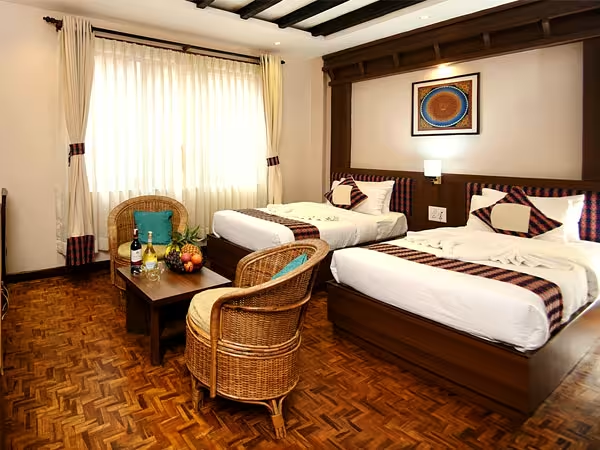
Skye Inn Kathmandu | Kathmandu

A modern 4-star boutique-style hotel on Mandala Street, offering a comfortable, peaceful base before you head into the Everest region.

A warm airport welcome from the Sublime Trails team before the Everest Base Camp trek.
Where You’ll Sleep

Day 2 - Flight to Lukla and Trek to Phakding

Lukla → Chaurikharka → Thado Koshi→Ghat → Phakding

Starting Destination: Lukla (2,860 m / 9,383 ft)
Final Destination: Phakding (2,610 m / 8,563 ft )
Sleeping Altitude: 2,610 m / 8,563 ft 
Elevation Gain: 1,210 m
Flight Time: 30–35 mins from Kathmandu/15–20 mins from Ramechhap
Walking Distance: ~8 km (5 miles) | 3–4 hours
Difficulty: Easy to Moderate
Transportation: Private Car and Plane
Accommodation: Tea House
Meals: Lunch and Dinner
Overnight: Phakding

An early start takes you toward Lukla, the traditional gateway to the Everest region. When flights operate directly from Kathmandu, the flight takes roughly 30–35 minutes. During peak trekking seasons when flights route through Ramechhap, you will travel by road from Kathmandu (approx. 4–5 hours) before taking the short 20-minute flight to Lukla.

After landing at Tenzing-Hillary Airport in Lukla, your guide and porter team will organize the luggage, check permits, and prepare for the trail. The walk gradually descends from Lukla through Chaurikharka, Cheplung, and into the Dudh Koshi Valley. You will pass small settlements, stone houses, prayer flags, and forested hills before reaching Ghat. From Ghat, the trail follows the river onward to Phakding.

This is intentionally a short first trekking day; there is no benefit in exhausting yourself early in the journey.

Along the Trail

Look for your first mani stones, prayer wheels, Buddhist inscriptions, suspension bridges, and traditional mountain homes.

Natural Observations

The lower Khumbu is greener than the high-altitude terrain you will encounter later. Pine and hemlock forests are characteristic of these lower elevations bordering Sagarmatha National Park.

Today's Challenge

The main adjustment today is transitioning directly from a mountain flight into a trekking environment.

Altitude Note

Although you land in Lukla at 2,860 m, you descend to 2,610 m at Phakding for the night. This net drop of ~250 meters gives your body a gentle, ideal introduction to higher elevations.

Guide Tip: Don't race the first day. Your guide will establish a comfortable walking rhythm that you can maintain throughout the trek.

Where You'll Sleep

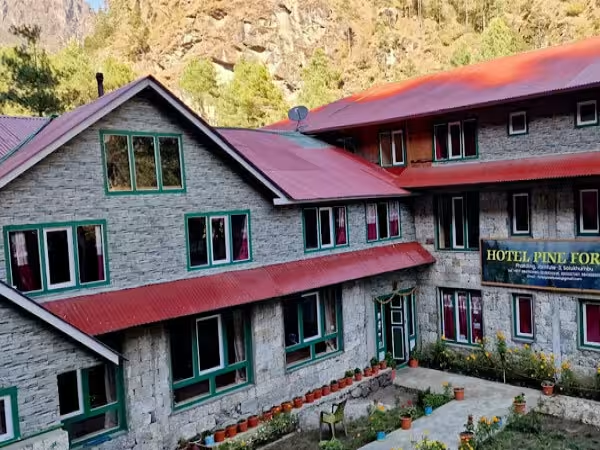
Hotel Pine Forest | Phakding

Your first overnight stay in the Khumbu Valley.

A small aircraft on the runway at Lukla Airport marks the exciting start of the Everest Base Camp Trek, before trekking through the Dudh Koshi Valley to Phakding.
Where You’ll Sleep
Hotel  Pine Forest
Facilities
  • Hot Shower 
  • En-suite bathroom 
  • Private Room
  • Heated dinning
  • Full board meal
  • Electric Blanket

Day 3 - Phakding to Namche Bazaar

Phakding → Toktok → Benkar → Monjo → Jorsale → Hillary Suspension Bridge → Namche Bazaar

Starting Destination: Phakding (2,610 m / 8,563 ft)
Final Destination: Namche Bazaar (3,440 m / 11,286 ft)
Sleeping Altitude: 3,440 m / 11,286 ft
Altitude Gain: 830 m
Walking Distance: ~10.5 km (6.5 miles) | 5–6 hours
Difficulty: Moderate 
Accommodation: Tea House
Meals: Breakfast, Lunch & Dinner
Overnight: Namche Bazaar

Today is where the climb into the Everest region really begins. After breakfast, you follow the Dudh Koshi River through Toktok and Benkar. The trail winds between pine- and rhododendron-covered hillsides as the valley gradually narrows.

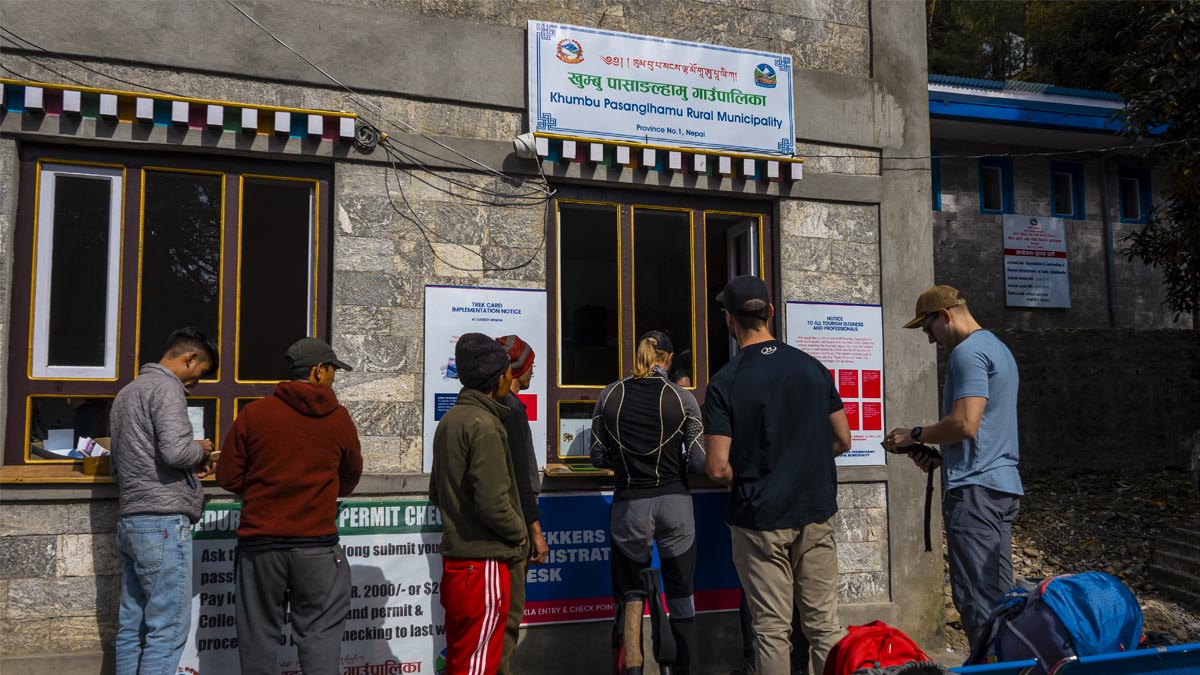
At Monjo, you enter Sagarmatha National Park, the protected landscape surrounding Mount Everest. The park was established in 1976 and became a UNESCO World Heritage Site in 1979. Here, your guide will process your national park permits.

Guest Showing Documents in Khumbu Pasanglamhu Rural Municipality
Guest showing their documents in Khumbu Pasang Lamhu Rural Municipality

From Monjo, the trail continues through Jorsale and along the river. You cross several suspension bridges before reaching the famous Hillary Suspension Bridge, one of the most recognizable landmarks on the route.

Beyond the bridge comes the main climb. The trail rises steadily through the forest toward Namche Bazaar. The climb is not technically difficult, but the approximately 830 m increase in sleeping altitude makes it a demanding day.

Halfway up the hill at the Topdanda rest stop, the forest opens to reveal your very first view of Mount Everest. Eventually, the trail curves around the hillside and Namche Bazaar comes into view.

Along the Trail

  • Key Waypoints: Toktok, Benkar, Monjo, and Jorsale
  • Natural Features: Dudh Koshi River, pine and rhododendron forests
  • Key Landmarks: Monjo Park Gate, Hillary Suspension Bridge, Topdanda Viewpoint

Himalayan Views

On clear days, look for:

  • Thamserku | 6,623 m
  • Kangtega | 6,779 m
  • Nuptse | 7,861 m
  • Lhotse | 8,516 m
  • Everest | 8,848.86 m

Today's Challenge

The final, relentless climb from the Hillary Bridge to Namche is the main physical challenge.

Altitude Note

You gain roughly 830 m in sleeping altitude today. That is why the itinerary deliberately gives you an acclimatization night in Namche before climbing higher.

Guide Tip: Slow down before you feel tired. At altitude, conserving energy is more useful than trying to maintain your normal walking speed. Always step to the hillside (inside wall) of the trail, never the cliff edge, when mule or yak trains pass by.

Where You'll Sleep

Hotel Namche | Namche Bazaar

Taking a break at the iconic Hillary Suspension Bridge on the way to Namche Bazaa
Where You’ll Sleep
Hotel Namche
Facilities
  • Mountain Views
  • Electric blanket
  • Full bedding
  • Ensuite bathroom
  • Full Board
  • Hot drinks
  • Heated Dinning

Day 4 - Acclimatization Day at Namche Bazaar

Namche →Sherpa Museum/National Park Visitor Center →Syangboche → Everest View Hotel → Khumjung/Kunde area → Namche

Sleeping Altitude: 3,440 m / 11,286 ft
Walking Distance: 3–4 hours of casual walking
Difficulty: Moderate
Accommodation: Tea House
Meals: Breakfast, Lunch & Dinner
Overnight: Namche Bazaar

Today is an active acclimatization day. Rather than spending the entire day inside the lodge, your guide takes you higher during the day before returning to Namche to sleep.

The route climbs past the historic Syangboche Airstrip toward the iconic Everest View Hotel (3,880 m). Here, the landscape opens dramatically to reveal your first panoramic view of Everest and Ama Dablam. Depending on conditions, the hike can continue to drop down into the traditional Sherpa villages of Khumjung and Khunde.

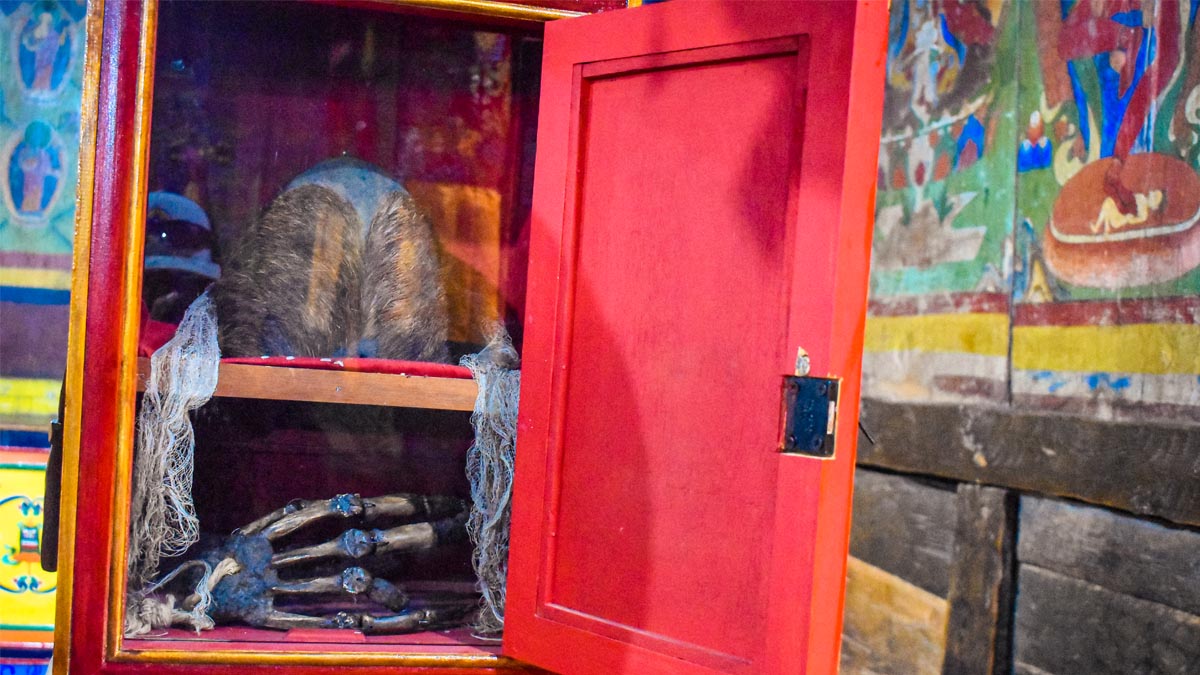
Khumjung lies beneath the sacred peak of Mt. Khumbila. Here, you can visit the local Hillary School and view the famous "Yeti scalp" kept inside the Khumjung Monastery.

Yeti Scalp Kept at Khumjung Monastery
Yeti Scalp at Khumjung Monastery

After exploring the area, you return to Namche for lunch and a relaxed afternoon.

Himalayan Views

  • Everest | 8,848.86 m
  • Lhotse | 8,516 m
  • Nuptse | 7,861 m
  • Ama Dablam | 6,812 m
  • Thamserku | 6,623 m
  • Kangtega | 6,779 m
  • Kongde Ri | 6,187 m
  • Island Peak (Imja Tse) | 6,189 m

Today's Challenge

The hike is shorter than a normal trekking day, but the uphill sections are noticeably harder at more than 3,400 m.

Altitude Note

The principle is simple: climb higher during the day, then return to sleep lower. This gives your body controlled exposure to higher elevation before the route climbs further.

Guide Tip: Tell your guide how you slept and how you feel before today's hike. A small headache or unusual fatigue is worth mentioning.

Today's Highlights

  • Active acclimatization & Syangboche Airstrip
  • Everest View Hotel terrace
  • Khumjung Hillary School & Yeti Scalp Monastery
  • Traditional Sherpa culture and architecture
  • Relaxed afternoon exploring Namche Bazaar

Where You'll Sleep

Hotel Namche | Namche Bazaar

Your second night here allows your body to acclimatize without packing and changing accommodation. You’ll climb higher during the day and return to a lower elevation to sleep. 

Enjoying the first clear views of Mount Everest from Namche Bazaar.
Where You’ll Sleep
Hotel Namche
Facilities
  • Mountain Views
  • Electric blanket
  • Full bedding
  • Ensuite bathroom
  • Full Board
  • Hot drinks
  • Heated Dinning

Day 5 - Namche to Tengboche

Namche → Kyangjuma → Sanasa → Phunki Tenga → Tengboche

Starting Destination: Namche Bazaar (3,440 m / 11,286 ft)
Final Destination: Tengboche (3,860 m / 12,664 ft)
Sleeping Altitude: 3,860 m / 12,664 ft
Elevation Gain: 420 m
Walking Distance: ~10 km (6.2 miles) | 5–6 hours
Difficulty: Moderate to Strenuous
Accommodation: Tea House
Meals: Breakfast, Lunch & Dinner
Overnight: Tengboche

The trail leaves Namche along one of the most scenic ridges of the Everest Base Camp route. The path contours high above the Imja Khola and Dudh Koshi valleys, passing through Kyangjuma and Sanasa. This smooth, winding stretch offers breathtaking panoramic views, with the iconic peak of Ama Dablam dominating the skyline ahead.

At Sanasa, you will pass the trail junction where the left path leads toward the Gokyo Valley while the right path continues toward Tengboche and Everest.

From the junction, the trail drops down into a series of switchbacks toward Phunki Tenga (3,250 m), a small riverside settlement with water-driven prayer wheels. Important: Phunki Tenga serves as the standard lunch stop and holds an Army checkpost. It is essential to refuel here, as there are no teahouses on the long uphill stretch ahead.

After lunch, you cross the river bridge and begin the day’s main challenge: a continuous 2 to 3-hour climb through forests of rhododendron, pine, fir, and birch.

As you top the ridge, the forest suddenly gives way to the open meadow of Tengboche. Positioned at the center of this mountain amphitheater is Tengboche Monastery (Dawa Choling Gompa), the spiritual heart of the Khumbu region. If timing permits, you can attend the late afternoon prayer ceremony inside the main hall.

Himalayan Views

  • Ama Dablam | 6,812 m
  • Thamserku | 6,623 m
  • Kangtega | 6,779 m
  • Lhotse | 8,516 m
  • Everest | 8,848.86 m

Natural Observations

Below Tengboche, the trail passes through forest where rhododendron, birch, fir and juniper become increasingly characteristic with elevation. In spring, rhododendrons can add colour to the hillsides.

Today's Challenge

The steep, sustained 600-meter climb from Phunki Tenga to Tengboche immediately after lunch requires patience and a steady pace.

Altitude Note

You are now sleeping close to 3,860 m, so your guide will continue monitoring how everyone is adapting.

Guide Tip: Walk at a slow, measured pace on the post-lunch ascent to Tengboche. Don't rush the climb; saving your legs today will make the higher altitude trekking over the coming days much easier.

Where You'll Sleep

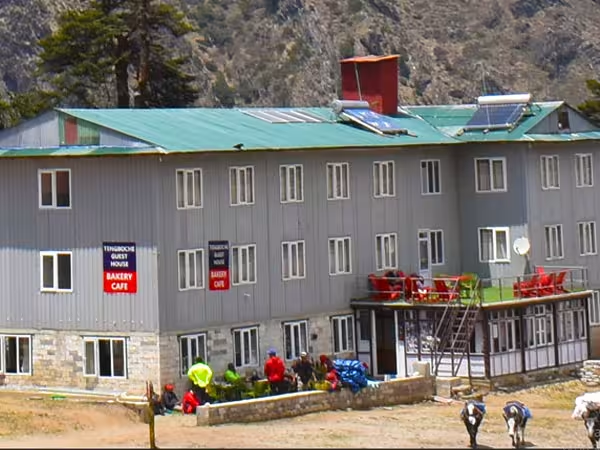
Tengboche Guest House | Tengboche

Your overnight stay surrounded by a 360-degree panorama of Himalayan giants.

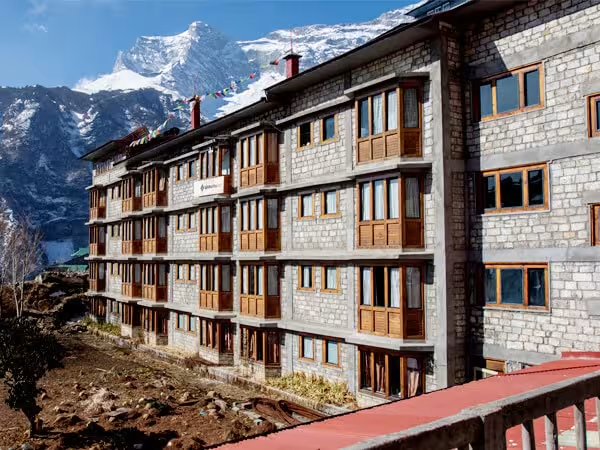
Tengboche Monastery stands amid the spectacular Himalayan landscape of Nepal's Khumbu region, offering trekkers a peaceful cultural highlight on the Everest Base Camp Trek.
Where You’ll Sleep
Tengboche guest house
Facilities
  • Hot Shower
  • Everest view
  • En-suite bathroom 
  • Private Room
  • Heated dinning
  • Full board meal
  • Electric Blanket

Day 6 - Tengboche to Dingboche

Tengboche → Deboche → Pangboche → Somare → Orsho → Dingboche

Starting Destination: Tengboche (3,860 m / 12,664 ft)
Final Destination: Dingboche (4,410 m / 14,468 ft)
Sleeping Altitude: 4,410 m / 14,468 ft
Elevation Gain: 550 m
Walking Distance: ~11 km (7.2 miles) | 5–6 hours
Difficulty: Moderate
Accommodation: Tea House
Meals: Breakfast, Lunch & Dinner
Overnight: Dingboche

The trail begins with a scenic morning descent through a damp rhododendron and birch forest to Deboche (3,820 m), home to a peaceful nunnery. After crossing a suspension bridge over the rushing Imja Khola, you make a brief climb up to Pangboche. Pangboche is one of the oldest permanent Sherpa settlements in the Khumbu region and houses the historic Pangboche Gompa, believed to be the oldest monastery in the valley.

Leaving Pangboche, the trees begin to thin rapidly. You continue ascending past Somare (4,040 m), the standard lunch stop for today. Passing the 4,000-meter threshold, you leave the tree line behind entirely, entering an alpine environment dominated by low juniper bushes and windswept scrub.

Beyond Somare and Orsho, the path reaches a trail junction where the left route leads to Pheriche and the right route continues into the wide Imja Valley. You take the right fork, crossing the river once more before entering Dingboche. Surrounded by stone walls built to protect barley and potato crops from cold winds, Dingboche sits nestled beneath the impressive faces of Lhotse, Ama Dablam, and Island Peak.

Along the Trail

  • Deboche village & nunnery
  • Imja Khola bridge crossing
  • Upper Pangboche & historic monastery
  • Somare (Lunch Stop at 4,040 m)
  • Tree line boundary & entry into the alpine tundra
  • Pheriche / Dingboche Trail Junction
  • Traditional stone-walled fields of Dingboche

Himalayan Views

  • Ama Dablam | 6,812 m
  • Lhotse | 8,516 m
  • Nuptse | 7,861 m
  • Taboche | 6,495 m
  • Cholatse | 6,440 m

Natural Observations

Today marks a distinct landscape transformation. Below 4,000 meters, birch, fir, and rhododendron predominate; above 4,000 meters, forest gives way to high-altitude alpine scrub, dwarf juniper, and vast open space exposed to the elements.

Today's Challenge

At this altitude, the terrain itself is not steep or technical, but the thinner air makes every steady gradient feel significantly more demanding.

Altitude Note

Sleeping at 4,410 meters puts you well into high-altitude territory. Tomorrow is a mandatory acclimatization day spent exploring higher ridges around Dingboche before pushing toward Lobuche.

Guide Tip: Don't compete with anyone's pace. At 4,400+ meters, two trekkers walking side by side can have completely different responses to the altitude.

Where You'll Sleep

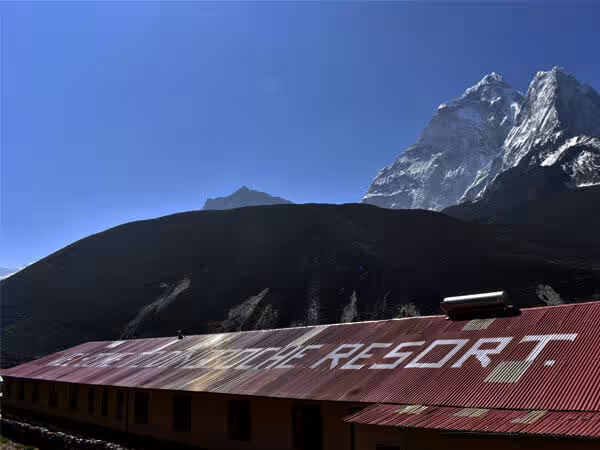
Dingboche Resort | Dingboche

Arriving in Dingboche beneath the towering Ama Dablam
Where You’ll Sleep
Dingboche Resort
Facilities
  • Hot Shower 
  • En-suite bathroom 
  • Private Room
  • Heated dinning
  • Full board meal
  • Electric Blanket

Day 7 - Acclimatization at Dingboche

Dingboche → Nangkartshang/Nagarjun Hill area → Dingboche

Starting Destination: Dingboche (4,410 m / 14,468 ft)
Final Destination: Dingboche (4,410 m / 14,468 ft)
Sleeping Altitude: 4,410 m / 14,468 ft
Walking Distance: ~4–5 km (2.5–3 miles) round trip | 3–5 hours
Difficulty: Challenging (steep slope at high elevation)
Accommodation: Tea House
Meals: Breakfast, Lunch & Dinner
Overnight: Dingboche

Today is your second dedicated acclimatization day, following the core mountain rule: "climb high, sleep low." The goal is not passive rest, but active adaptation to prepare your body for the 5,000-meter elevations ahead.

After an early breakfast, you begin a steep, zigzagging climb up the ridge directly behind Dingboche toward Nangkartshang Peak (Nagarjun Hill). As you gain elevation, the views open up dramatically into a 360-degree Himalayan panorama.

The trail passes stone chortens and prayer flags. You do not need to reach the very summit (~5,080 m) for the day to be effective; reaching the lower viewpoint or prayer flag station (~4,700 m–4,900 m) provides excellent acclimatization benefits. Your guide will assess weather, wind conditions, and group stamina to decide the ideal turnaround point.

After taking in the panoramic views across the Imja, Chukung, and Pheriche valleys, you descend back to Dingboche for lunch. The afternoon is reserved for resting, rehydrating, and packing your gear for tomorrow's trek toward Lobuche.

Himalayan Views

  • Ama Dablam | 6,812 m
  • Lhotse | 8,516 m
  • Nuptse | 7,861 m
  • Island Peak | 6,189 m
  • Cholatse | 6,440 m
  • Taboche | 6,495 m

Today's Challenge

This is the most demanding acclimatization hike of the trek because of the elevation.

Altitude Note

You are sleeping at 4,410 m while spending part of the day significantly higher. This is intentional acclimatization rather than an unnecessary race for altitude.

Guide Tip: Nangkartshang is not a test you have to pass. If your body is telling you to stop lower, tell your guide. Good acclimatization is about adaptation, not collecting a number.

Today's Highlights

  • Active acclimatization
  • Nangkartshang/Nagarjun Hill
  • Imja Valley panorama
  • High-altitude mountain views
  • Second night in Dingboche

Where You'll Sleep

Dingboche Resort | Dingboche

Panoramic views over Dingboche Valley from the acclimatization viewpoint
Where You’ll Sleep
Dingboche Resort
Facilities
  • Hot Shower 
  • En-suite bathroom 
  • Private Room
  • Heated dinning
  • Full board meal
  • Electric Blanket

Day 8 - Dingboche to Lobuche

Dingboche → Thukla → Thukla Pass/Memorial Area → Lobuche

Starting Destination: Dingboche (4,410 m / 14,468 ft)
Final Destination: Lobuche (4,910 m / 16,109 ft)
Sleeping Altitude: 4,910 m / 16,109 ft
Elevation Gain: 500 m
Walking Distance: ~8 km (5 miles) | 4–5 hours
Difficulty: Moderate to Challenging
Accommodation: Tea House
Meals: Breakfast, Lunch & Dinner
Overnight: Lobuche

After two nights of crucial acclimatization in Dingboche, the trail continues up into the stark, high-alpine country. The route contours high above the Pheriche valley floor, offering expansive wilderness views before dropping slightly into the small settlement of Thukla (Dughla), the universal stopping point for a hot lunch before the big climb.

After lunch, you tackle the Thukla Pass (Thukla La). This is a short but notoriously steep, rocky switchback that demands a slow, deliberate pace. 

At the top of the pass sits Chukpi Lhara, home to more than a hundred stone memorials dedicated to climbers and Sherpa mountaineers who lost their lives in the high Himalayas, including monuments to Scott Fischer and Babu Chiri Sherpa. Walking through this quiet, emotional section provides a powerful reminder of the raw power of these mountains.

Beyond the memorials, the landscape becomes entirely barren as you cross the threshold of the Arctic zone. Trees and shrubs disappear completely; raw rock, glacial moraine, and towering snow peaks dominate your entire field of vision.

The path flattens out, guiding you alongside the massive, debris-covered lateral moraine of the mighty Khumbu Glacier. Following this glacial highway brings you to Lobuche, a small, bustling high-altitude settlement nestled directly beneath the dramatic walls of Nuptse and Lobuche East.

Himalayan Views

  • Pumori | 7,161 m
  • Nuptse | 7,861 m
  • Khumbutse | 6,636 m
  • Lingtren | 6,749 m
  • Lobuche East | 6,119 m

Today's Challenge

The distance is relatively short, but you are approaching 5,000 m. Every uphill section requires more patience.

Altitude Note

Sleeping at 4,910 meters puts you just below the 5,000-meter mark. Temperatures drop well below freezing overnight, and you will notice your body working harder even during rest. Keep hydration high.

Guide Tip: Shorten your stride as the trail gains elevation. Maintaining a slow, metronome-like walking rhythm is infinitely more sustainable than taking large, hurried steps that force you to stop and gasp for air.

Today's Highlights

  • Thukla
  • Mountaineering memorials
  • Khumbu highlands
  • Pumori views
  • Arrival at Lobuche

Where You'll Sleep

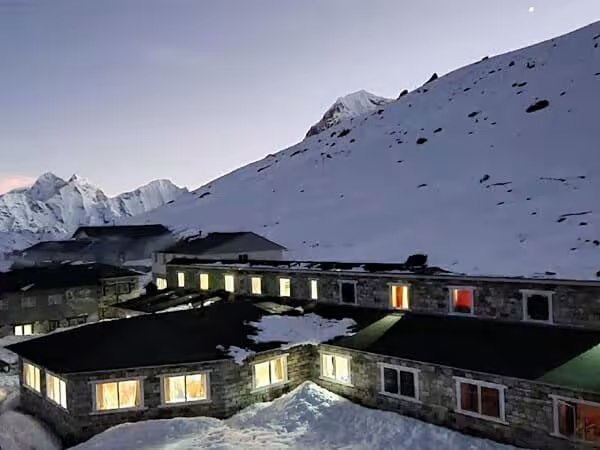
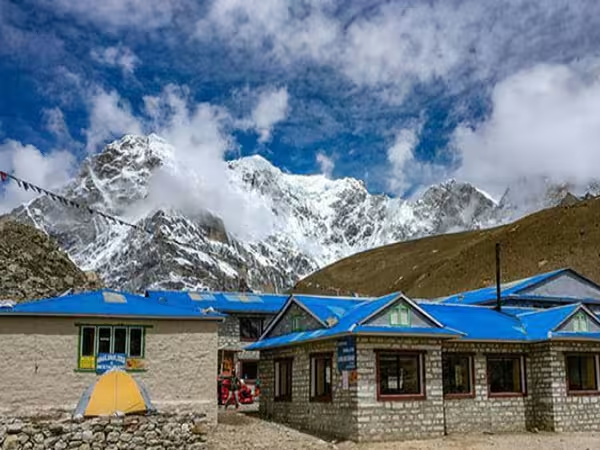
Oxygen Home | Lobuche

Nuptse glows in the evening light above Lobuche after trekkers reach the village, marking a spectacular moment along the Everest Base Camp Trek in Nepal's Khumbu region.
Where You’ll Sleep
Oxygen Home
Facilities
  • Mountain Views
  • Full bedding
  • Common bathroom
  • Private room
  • Full Board
  • Hot drinks
  • Heated Dinning

Day 9 - Lobuche to Gorak Shep & Everest Base Camp

Lobuche → Gorak Shep → Everest Base Camp → Gorak Shep

Starting Destination: Lobuche (4,910 m / 16,109 ft)
Final Destination: Gorak Shep (5,164 m / 16,942 ft)
Sleeping Altitude: 5,164 m / 16,942 ft
Elevation Gain: 254 m
Walking Distance: ~12 km (7.4 miles) | 7–8 hours total
Difficulty: Challenging
Accommodation: Tea House (Gorak Shep)
Meals: Breakfast, Lunch & Dinner
Overnight: Gorak Shep

Today is the milestone day of your trek. You leave Lobuche early, navigating the rocky moraine of the Khumbu Glacier to reach Gorak Shep (5,164 m) after roughly 3 hours. At Gorak Shep, you will check in, drop your heavy gear, and eat lunch. Carrying only light daypacks, you begin the afternoon push across an unstable glacial trail to Everest Base Camp (5,364 m).

Standing beside the flag-draped Base Camp rock, you are directly at the base of the massive Khumbu Icefall. (Note: Everest’s actual summit is hidden behind the Nuptse wall from here, but the surrounding ice towers are spectacular). During spring, Base Camp hosts a vibrant tent city of climbers; in autumn, it is a stark, peaceful expanse of stone and ice.

After photos and celebrating with your team, you retrace your steps over the moraine back to Gorak Shep for dinner.

Himalayan Views

  • Everest | 8,848.86 m
  • Nuptse | 7,861 m
  • Pumori | 7,161 m
  • Lingtren | 6,749 m
  • Khumbutse | 6,636 m

Along the Trail

Today's route follows the Khumbu Glacier and its moraine, one of the defining landscapes of the Everest region.

Today's Challenge

The altitude is the biggest challenge. You will spend several hours walking above 5,000 m.

Altitude Note

Everest Base Camp is at 5,364 m, but you do not sleep there. You return to Gorak Shep (5,164 m) to sleep at a slightly lower elevation.

Guide Tip: Don't rush the final approach because Base Camp is close. Your guide will prioritize a steady pace and enough energy for the return to Gorak Shep.

Today's Highlights

  • Gorak Shep
  • Khumbu Glacier
  • Everest Base Camp
  • Pumori
  • Nuptse
  • High-altitude Himalayan landscape

Where You'll Sleep

Hotel Himalayan | Gorak Shep

Reaching the iconic Everest Base Camp milestone.
Where You’ll Sleep
Hotel  Himalayan Gorakshep
Facilities
  • Private Room
  • Heated dinning
  • Full board meal
  • Electric Blanket

Day 10 - Gorak Shep to Kala Patthar Peak & Descend to Pheriche

Gorak Shep → Kala Patthar → Gorak Shep → Lobuche → Thukla → Pheriche

Starting Destination: Gorak Shep (5,164 m / 16,942 ft)
Final Destination: Pheriche (4,371 m / 14,340 ft)
Kala Patthar Altitude: 5,545 m / 18,192 ft
Sleeping Altitude: 4,371 m / 14,340 ft
Elevation Loss: -793 m
Walking Distance: ~13 km (8 miles) total distance | 6–7 hours
Difficulty: Challenging
Accommodation: Tea House
Meals: Breakfast, Lunch & Dinner
Overnight: Pheriche

Today begins before sunrise. With warm layers, headlamps, and your guide, you begin the climb toward Kala Patthar, the highest point of the itinerary. The climb is steep in sections. At more than 5,500 m, even a short uphill section requires patience. Then the eastern sky begins to brighten.

As the first sunlight reaches the Himalayas, Everest, Lhotse, Nuptse and Pumori begin to glow above the surrounding valleys and glaciers. At approximately 5,545 m, Kala Patthar offers one of the most famous viewpoints in the Everest region.

After spending time at the viewpoint, you descend to Gorak Shep for breakfast before retracing the trail toward Lobuche and Thukla. The trail then continues down toward Pheriche. The difference is immediate. The air feels thicker, the landscape becomes greener, and your body gets a welcome break from the extreme altitude.

Himalayan Views

From Kala Patthar, clear conditions can reveal:

  • Everest | 8,848.86 m
  • Lhotse | 8,516 m
  • Nuptse | 7,861 m
  • Pumori | 7,161 m
  • Changtse | 7,543 m

Today's Challenge

The pre-dawn start, steep climb, and extreme altitude make this one of the hardest mornings of the trek.

Altitude Note

You reach the highest point of the entire itinerary, approximately 5,545 m, before descending more than 1,300 m to Pheriche.

Guide Tip: Keep your warmest clothing in your daypack. Temperatures before sunrise at Kala Patthar can be dramatically colder than later in the day.

Today's Highlights

  • Pre-dawn departure
  • Kala Patthar
  • Everest sunrise
  • High Himalayan panorama
  • Descent through Lobuche and Thukla
  • Return to Pheriche

Where You'll Sleep

Himalaya Lodge | Pheriche

Reaching Kala Patthar, the highest viewpoint of the Everest Base Camp trek
Where You’ll Sleep
Himalaya lodge  Pheriche
Facilities
  • Mountain Views
  • Full bedding
  • Attached bathroom
  • Full Board
  • Hot drinks
  • Heated Dinning

Day 11 - Trek From Pheriche to Namche

Pheriche → Pangboche → Tengboche → Phunki Tenga → Sanasa → Kyangjuma → Namche Bazaar

Starting Destination: Pheriche (4,240 m / 13,911 ft)
Final Destination: Namche Bazaar (3,440 m / 11,286 ft)
Sleeping Altitude: 3,440 m / 11,286 ft
Elevation Loss: -800 m
Walking Distance: ~14 km (8.6 miles) | 6–7 hours
Difficulty: Moderate
Accommodation: Tea House
Meals: Breakfast, Lunch & Dinner
Overnight: Namche Bazaar

After the extreme altitude of the previous days, today's descent feels different. You retrace the route through Pangboche and Tengboche, but the landscape looks different from the return direction.

You descend through forests toward Phunki Tenga before climbing again toward Sanasa and Kyangjuma. The trees become thicker as you lose altitude. Eventually, the familiar rooftops of Namche Bazaar appear across the valley.

After several nights in remote high-altitude settlements, Namche's bakeries, cafes, and warm lodges can feel like a return to civilization.

Along the Trail

  • Pheriche Valley
  • Pangboche
  • Tengboche
  • Phunki Tenga
  • Sanasa
  • Kyangjuma
  • Namche Bazaar

Natural Observations

The vegetation changes quickly as you descend. The barren high-altitude landscape gives way to alpine vegetation and eventually the forests of the lower Khumbu. Sagarmatha National Park is notable for this dramatic ecological transition.

Today's Challenge

Although you are descending overall, the trail still contains several uphill sections.

Altitude Note

You lose roughly 800 m of sleeping altitude, giving your body considerable relief.

Guide Tip: Take the downhill sections seriously. Tired legs and uneven stone trails can make the descent harder on your knees than the climb was.

Today's Highlights

  • Pheriche Valley
  • Pangboche
  • Tengboche
  • Forest trails
  • Dudh Koshi Valley
  • Return to Namche

Where You'll Sleep

Hotel Namche | Namche Bazaar

Pheriche Village with astonishing mountain views

Day 12 - Trek From Namche to Lukla

Namche → Jorsale → Monjo → Benkar → Phakding → Ghat → Lukla

Starting Destination: Namche Bazaar (3,440 m / 11,286 ft)
Final Destination: Lukla (2,860 m / 9,383 ft)
Sleeping Altitude: 2,860 m / 9,383 ft
Elevation Loss: -580 m
Walking Distance: ~18.5 km (11.5 miles) total length | 7–8 hours
Difficulty: Moderate
Accommodation: Tea House
Meals: Breakfast, Lunch & Dinner
Overnight: Lukla

Your final day on the Everest trekking trail begins with a steep, winding descent out of Namche Bazaar. Sweeping down through pine forests, you cross the high Hillary Suspension Bridge over the roaring Dudh Koshi River and continue past Jorsale to Monjo, where you officially exit Sagarmatha National Park.

The trail follows the river valley back through Benkar and Toktok before arriving in Phakding, your familiar first-night stop, which serves as an ideal lunch break. Crossing several more suspension bridges decorated with prayer flags, the landscape grows increasingly lush. After passing Cheplung, save enough energy for the final stretch: a steady, uphill push ascending back toward Lukla.

Passing through the Pasang Lhamu Memorial Gate, your trekking journey officially comes to a close. Celebrating with your guide and porter team in Lukla, there is a profound sense of achievement in knowing you have walked to over 5,500 meters and back.

Today's Challenge

Distance is the main challenge. After the high-altitude days, an approx. 18.5 km trekking day can feel longer than expected.

Altitude Note

Returning to 2,860 meters brings full acclimatization relief. Oxygen levels are abundant, making breathing effortless compared to the high passes.

Guide Tip: Keep your footing secure on the wet, smooth stones during the early downhill section near Namche, and don't burn all your energy before the final uphill incline into Lukla.

Today's Highlights

  • Dudh Koshi Valley
  • Phakding
  • Monjo
  • Suspension bridges
  • Lower Khumbu forests
  • Final trekking day

Where You'll Sleep

Hotel Ganesh Himal | Lukla

Where You’ll Sleep
Hotel Namche
Facilities
  • Mountain Views
  • Electric blanket
  • Full bedding
  • Ensuite bathroom
  • Full Board
  • Hot drinks
  • Heated Dinning

Day 13 - Lukla to Kathmandu

Lukla → Kathmandu

Starting Destination: Lukla (2,860 m)
Final Destination: Kathmandu (1,400 m)
Sleeping Altitude: 1,400 m
Elevation Loss: 1,460 m
Flight Time: ~30–35 minutes, depending on the operating airport
Difficulty: Easy
Accommodation: 4-Star Hotel
Meals: Breakfast & Dinner
Overnight: Kathmandu

After breakfast, you head toward Tenzing-Hillary Airport for your return flight.

When flights operate directly to Kathmandu, the journey takes roughly 30–35 minutes. During periods when Lukla flights route through Manthali/Ramechhap, the flight itself is shorter but is followed by a road journey back to Kathmandu. Current published itineraries from major operators explicitly account for this seasonal operational variation.

Mountain flights are highly dependent on weather and local operational conditions, so exact departure times cannot always be guaranteed. Once you arrive in Kathmandu, your Sublime Trails representative will meet and transfer you directly to your hotel.

The afternoon is entirely yours. You can rest, explore the streets of Thamel, enjoy a proper hot shower, shop for souvenirs, or simply appreciate being back in the city.

Today's Challenge

The main challenge is logistical rather than physical. Lukla flights can be affected by weather and visibility.

Altitude Note

You descend from 2,860 m back to approximately 1,400 m.

Guide Tip: Keep some flexibility in your international travel plans. A buffer after an Everest Base Camp trek is wise because mountain flight schedules can change.

Today's Highlights

  • Lukla airport
  • Himalayan flight
  • Return to Kathmandu
  • Rest and recovery
  • Farewell celebration

Where You'll Sleep

Kathmandu Marriott Hotel | Kathmandu

An aircraft departs from Lukla's iconic Tenzing-Hillary Airport runway, returning to Kathmandu after completing its Everest base camp trek
Where You’ll Sleep

Day 14 - Departure

Kathmandu hotel → Tribhuvan International Airport

Kathmandu Altitude: 1,400 m
Activity: Airport transfer
Difficulty: Easy
Overnight: None

Your Everest Base Camp adventure comes to an end today. After breakfast, your Sublime Trails representative will arrange your transfer to Tribhuvan International Airport according to your international flight schedule.

Over the previous two weeks, you have travelled from Kathmandu into the Khumbu, crossed suspension bridges over the Dudh Koshi, walked through Sherpa villages, entered Sagarmatha National Park, visited Tengboche Monastery, acclimatized above 4,000 m, reached Everest Base Camp at 5,364 m, and climbed Kala Patthar at approximately 5,545 m.

The trail ends here. The memories do not.

Today's Challenge

There is no trekking challenge today. Allow enough time for airport check-in and security procedures.

Altitude Note

You are back at approximately 1,400 m in Kathmandu.

Guide Tip: Before leaving the hotel, check your passport, flight documents, luggage, and personal belongings.

Today's Highlights

  • Final Kathmandu morning
  • Airport transfer
  • Departure from Nepal
Max Altitude: 1,400m (4,593ft)
Make Your Own Itinerary
Getting There

Kathmandu's Tribhuvan International Airport is served by direct and one-stop flights from most major hubs in Asia and the Gulf. Trekkers from the US, Europe, and Australia typically connect through Doha, Istanbul, Delhi, Singapore, or Bangkok. From Kathmandu, the trek begins with a short mountain flight to Lukla, or, during peak-season air traffic restrictions (mid-March to mid-May and mid-September to mid-November), a road transfer to Ramechhap followed by the same flight from there; we'll confirm which applies to your exact dates closer to departure.

Sublime Trails representative will come to pick you at the airport. So we will be meeting at Tribhuvan International Airport to start the amazing journey.

Map And Altitude Chart

Everest Base Camp Trek Map and Altitude Chart

Interactive Map
StartMid DaysEnd
Cost Details

Inclusions & Exclusions

What’s Included

Accommodation

  • 3-star Kathmandu hotel for 2 nights
  • Accommodation at selected mountain lodges throughout the Everest trail, with attached bathrooms where specified
  • Twin-sharing rooms throughout the trek

Transportation

  • Private airport transfers
  • Kathmandu–Lukla–Kathmandu regular flight
  • Flight arrangements and logistical support

Meals & Drinking Water

  • Breakfast, lunch and dinner during the trek
  • Fresh seasonal fruit during the trek
  • Safe boiled drinking water, up to 3 liters per day
  • Farewell dinner in Kathmandu

Guides & Porters

  • Experienced local trekking guide
  • Assistant guide where required by group size
  • 1 porter for every 2 trekkers
  • Porter capacity up to 25 kg
  • Guide and porter salaries, meals and accommodation

Permits & Government Fees

  • Sagarmatha National Park entry fee
  • Local government fees
  • Required government paperwork and documentation
  • Applicable taxes

Trekking Gear

  • Down jacket rated to approximately −20°C
  • Sleeping bag
  • Sublime Trails duffel bag
  • Sublime Trails T-shirt

Connectivity & Safety

  • Oximeter for altitude monitoring
  • Comprehensive first-aid kit
  • Emergency communication support
  • Guide-led altitude monitoring

Pre-Trek & Support

  • Pre-trek briefing
  • Trek preparation guidance
  • Equipment/checklist guidance
  • Local logistical support throughout the trek
  • Assistance with Lukla flight disruptions
What’s Excluded

Travel & Insurance

  • Travel and rescue insurance, including high-altitude helicopter evacuation coverage.
  • Medical expenses and treatment beyond the services provided by the trekking team
  • Costs arising from personal evacuation or repatriation

Flights & Transportation

  • International flights to and from Nepal
  • Additional domestic flight costs caused by personal itinerary changes
  • Transportation or accommodation costs resulting from personal delays or missed flights

Accommodation

  • Extra nights in Kathmandu beyond the 2 included nights
  • Additional accommodation required because of personal itinerary changes

Food & Drinks

  • Alcoholic and non-alcoholic drinks
  • Bottled mineral water
  • Personal snacks and specialty food
  • Meals outside the included trek itinerary

Personal Expenses

  • Wi-Fi and charging fees 
  • Personal shopping and souvenirs
  • Laundry
  • Personal trekking equipment not listed under inclusions

Tips

  • Tips for guides, assistant guides and porters

Other

  • Costs caused by itinerary changes requested by the trekker
  • Any services not specifically mentioned under What's Included
Extensions

Take your adventure to the next level

Our package already include all the essentials like permits, safe routes, proper rest days, and experienced local guide support to make sure you have a safe and smooth journey. But after guiding thousands of trekkers through these mountains, we know everyone’s needs are a little different. That’s why we offer these optional add ons, giving you full control to adjust your travel plans so your trip fits you perfectly.

How it Works:

Use the + and - controls in booking section to add specialized services or adjust quantities for your party prior to checkout.

Electric blanket during the 10 nights trek
Per blanket
US$150
Kathmandu to Lukla direct Helicopter flight
Subject to Availability
Per person
US$500
Upcoming Trip

Dates & Availablity

Cancellation Policy
Secure Payment
Friday
11 Sep 2026
to
Thursday
24 Sep 2026
Status
Guaranteed
US$1350
US$1400
Saturday
12 Sep 2026
to
Friday
25 Sep 2026
Status
Guaranteed
US$1350
US$1400
Sunday
13 Sep 2026
to
Saturday
26 Sep 2026
Status
Guaranteed
US$1350
US$1400
Monday
14 Sep 2026
to
Sunday
27 Sep 2026
Status
Guaranteed
US$1350
US$1400
Wednesday
16 Sep 2026
to
Tuesday
29 Sep 2026
Status
Guaranteed
US$1350
US$1400
Friday
18 Sep 2026
to
Thursday
01 Oct 2026
Status
Guaranteed
US$1350
US$1400
Saturday
19 Sep 2026
to
Friday
02 Oct 2026
Status
Guaranteed
US$1350
US$1400
Sunday
20 Sep 2026
to
Saturday
03 Oct 2026
Status
Guaranteed
US$1350
US$1400
Monday
21 Sep 2026
to
Sunday
04 Oct 2026
Status
Guaranteed
US$1350
US$1400
Wednesday
23 Sep 2026
to
Tuesday
06 Oct 2026
Status
Guaranteed
US$1350
US$1400
Friday
25 Sep 2026
to
Thursday
08 Oct 2026
Status
Guaranteed
US$1350
US$1400
Saturday
26 Sep 2026
to
Friday
09 Oct 2026
Status
Guaranteed
US$1350
US$1400
Monday
28 Sep 2026
to
Sunday
11 Oct 2026
Status
Guaranteed
US$1350
US$1400
Wednesday
30 Sep 2026
to
Tuesday
13 Oct 2026
Status
Guaranteed
US$1350
US$1400

Book at least 4 to 6 weeks ahead in peak season, March to May and September to December, since lodge space along the route fills quickly and permit processing takes time. If none of the listed dates fit your schedule, propose a preferred date directly. Private trips are organized around your calendar.

Fixed departures run every 1 to 3 days year round, shown as guaranteed dates in our booking calendar rather than a fixed monthly schedule. Private departures can be arranged for any date.

Didn’t find a suitable date?
Don’t miss last minute deals
Ask For last minute stops
Local Guide

Meet Our Local Guide

Ganesh Adhikari (Prakash)
Trekking Guide
Language:English
Experience:25 Years
Guided Places:All Region in Nepal
Mr. Suman Khadka
Trekking Guide
Language:English
Experience:14 Years
Guided Places:Every Region in Nepal
Dawa Sona Sherpa
Trekking Guide
Language:English
Experience:15 Years
Guided Places:High Altitude Region above 4000
Bibek Khadka
Trekking Guide
Language:English
Experience:9 Years
Guided Places:Tibet and Every Region in Nepal
Safety & Altitude

Safety & Altitude

Altitude Monitoring: How Your Guide Tracks Your Condition

From Day 3 of the trek onward, once the route pushes past 3,000 meters, your guide checks your blood oxygen saturation and pulse each morning using a fingertip pulse oximeter. This takes about thirty seconds and becomes a normal part of breakfast, not a medical exam.This helps the team notice changes early and adjust the itinerary when needed. For a deeper look at altitude, acclimatization, and the symptoms of altitude sickness, read our guide to Everest Base Camp elevation and altitude sickness. What matters is not any single reading but the trend across several days. A trekker whose oxygen saturation drops noticeably from one morning to the next is treated as a signal worth acting on, even if that person feels completely fine.

This is deliberate. Acute Mountain Sickness (AMS) can develop as you ascend, and symptoms do not always appear in the same way for every trekker. Your guide considers what you report alongside your pace, coordination, appetite, sleep and other observable signs. If your condition suggests that you are not adapting well, the response is to slow down, rest or descend rather than simply continue because the itinerary says you should.

Guides also watch for signs you might not report yourself: a slower pace than usual, unusual quietness in someone normally talkative, difficulty maintaining balance, or a noticeable change in coordination. These observations are not a diagnosis on their own, but they can help your guide recognize when something needs closer attention.

Acclimatization: Why the Itinerary Includes Namche and Dingboche

Namche Bazaar (3,440m) and Dingboche (4,410m) are not scenic stopovers added for convenience. They sit at the two elevations where "climb high, sleep low" acclimatization does the most good, and skipping either one is where most preventable AMS cases on this trek originate.

At Namche, we spend two nights, using the extra day for a walk up to Hotel Everest View (3,880m) or Khumjung before returning to sleep at Namche's lower elevation. This teaches your body to function with less oxygen without asking it to sleep at that harder elevation right away. The same logic repeats at Dingboche, where a hike partway up Nangkartshang Peak (around 5,100m) precedes a second night at Dingboche's lower altitude.

The gap between these two rest stops matters as much as the stops themselves. From Namche to Dingboche, daily elevation gain stays close to 300 to 500 meters, the range most high altitude medicine guidance points to as sustainable for the majority of trekkers. Above Dingboche, the itinerary continues upward through Lobuche and Gorak Shep while keeping the highest sleeping elevations and the summit-day schedule in mind. You reach Everest Base Camp at 5,364 m and Kala Patthar at approximately 5,545 m, then descend rather than spending the night at your highest point.

Everest is more than an altitude number. Its summit rises to 8,848.86 m, while this trek takes you into the high-altitude environment around its base. If you want to know more about the mountain itself, explore our guide to interesting facts about Mount Everest, including its history, climbing records, Sherpa heritage and remarkable natural environment.

If a trekker is still struggling by the second night at either stop, we do not lock the schedule in place. An extra day at Namche or Dingboche costs very little against a 12 to 16 day itinerary. Continuing upward against a body that hasn't adjusted costs considerably more.

Note: Many altitude-related issues can be mitigated with progressive acclimatization, sensible pacing, hydration, and early recognition of symptoms, but altitude illness can still affect physically healthy trekkers.

Emergency Communication: Staying Connected Above Namche

Mobile network coverage can be inconsistent as you move higher into the Khumbu, so we do not rely on a mobile phone as our only means of communication. Every guide on our treks carries a satellite communication device from Namche onward, giving a direct, weather-independent link to our operations team in Kathmandu regardless of where the group is on the trail.

This matters in an emergency, but it is also useful when a guide wants to discuss a developing situation with our operations team. A symptom, change in condition or evacuation concern can be communicated without waiting to reach a village with reliable phone coverage.

If a trekker develops symptoms that suggest High Altitude Cerebral Edema (HACE) or High Altitude Pulmonary Edema (HAPE), such as confusion, loss of coordination, severe breathlessness at rest or a persistent cough, the priority is immediate descent. These are medical emergencies, and someone with serious altitude illness should not continue ascending.

Your guide stays with the affected trekker while the rest of the team handles communication and logistics where possible. Descent may begin on foot if the trekker can safely walk with support, while further assistance is arranged. The exact response depends on the symptoms, location, weather and the trekker's ability to move safely.

If a trekker cannot descend safely on foot or requires faster evacuation, helicopter rescue may be arranged where operationally possible and weather and landing conditions permit. Helicopter access in the Himalayas is highly dependent on visibility, wind, location and aircraft operating conditions, so evacuation should never be described as guaranteed or instantaneous.

Emergency Response: What Happens If a Trekker Becomes Seriously Ill

If a trekker develops symptoms that suggest High Altitude Cerebral Edema (HACE) or High Altitude Pulmonary Edema (HAPE), confusion, loss of coordination, persistent coughing, or breathlessness at rest, the response is immediate and does not wait for the symptoms to be confirmed by anything beyond the guide's own assessment. Descent begins right away, on foot if the trekker can walk with support, since even a modest drop in elevation can meaningfully ease symptoms while further help is arranged.

At the same time, your guide contacts our operations team by satellite device to report the situation and begin coordinating next steps, whether that means arranging a helicopter, alerting a health post along the route, or simply confirming the descent plan with someone who has the full context of the trek. The trekker is never left to manage a serious symptom alone while the guide handles logistics elsewhere. One guide stays with the patient at all times; a second guide or porter, where available, handles communication and coordination.

We would rather turn back a trekker who insists they're fine than gamble on a symptom we've been trained to take seriously. This is not a judgment call left to the trekker in the moment, since AMS itself can impair the kind of judgment needed to make that call accurately.

Evacuation: How Helicopter Rescue and Insurance Work

If descent on foot isn't fast enough, or if the trekker cannot walk safely, helicopter evacuation is available from most points along the route, including Namche, Dingboche, Lobuche, and Gorak Shep, weather permitting. Once a helicopter is dispatched, the flight to Kathmandu typically takes under an hour, though visibility and wind can delay departure, particularly in the afternoon when cloud cover builds over the Khumbu.

Here is what you need to have in place before you arrive: comprehensive travel insurance that explicitly covers helicopter evacuation above 5,000 meters. This detail catches people off guard more than any other part of trip planning, because many standard travel insurance policies exclude high altitude rescue entirely or cap coverage well below what this trek requires. Some rescue providers in Nepal will confirm insurance coverage before a helicopter is dispatched, so a policy that doesn't cover this altitude can genuinely delay your own evacuation. We're happy to point you toward insurers that specifically cover trekking above 5,000 meters if you're unsure where to look.

Guide Licensing and Training

Nepal has required every foreign trekker to travel with a licensed guide, a rule now fully enforced across the Everest region alongside the rest of the country's major trekking areas. Every guide leading our treks holds this license, earned through a government approved course covering wilderness first aid, high altitude physiology, and mountain rescue procedure, with written and practical exams before certification.

We build on that baseline with additional training specific to this route: AMS recognition, pulse oximeter use, and satellite communication protocol. Just as importantly, our lead guides have walked this trail dozens or hundreds of times and have managed real AMS cases under real conditions. That kind of pattern recognition, the ability to notice a trekker who's gone a little too quiet, often catches a problem before any device does.

Getting Your Body Ready Before You Fly to Lukla

Cardiovascular fitness makes the trek more comfortable, but it does very little to protect you from altitude illness, since the two systems, aerobic endurance and altitude adaptation, work independently of each other. Start training two to three months out anyway, since a body that isn't fighting fatigue has more attention left over for noticing early symptoms.

Pack for significant temperature changes, especially above Dingboche, where sunny afternoons can give way to very cold nights. Your guide will also help you adjust your pace as the altitude increases. The goal is not to prove how fast you can walk. The goal is to reach Base Camp feeling strong enough to enjoy the journey.

Food and Accommodation

What You’ll Eat & Where You’ll Stay

Across this trek, you'll eat around forty meals between Lukla and Base Camp. The teahouses along the route serve simple, filling food built for people burning close to 2,000 calories a day at altitude. Nothing fancy, everything hot, and more of it than you probably expect. Prices and variety narrow as you climb.

Vegetarian? Vegan? Food allergy?

Tell us before you leave Kathmandu, ideally at your pre-trek briefing, and we handle it from there.

  • Vegetarian is easy as most teahouse menus above Namche are already meat-free by default, since fresh meat has to be carried up the trail on someone's back.
  • Vegan is doable where we brief your guide so eggs, butter, cheese, and milk get swapped out at every stop without you having to explain it three times a day.
  • Gluten-free, nut allergy, lactose intolerance, or anything else, write it on your booking form or message us before departure. Your guide carries the list and speaks to the kitchen at every teahouse before you sit down.

Water, tea, and coffee are on every menu. Bring your own reusable bottle, we help you fill it with boiled or filtered water along the way so you are not buying plastic at 5,000 metres.

A note from the guides and porters: Most of them eat Dal Bhat twice a day, every day, and there is a reason. The refills are free, the rice and lentils digest well at altitude, and it is the one meal every teahouse cook makes properly because they have made it their whole life.

The items listed below are the common foods available in the Khumbu Region.

Meals Include
Breakfast
  • Porridge, oats, muesli, or cornflakes
  • Tibetan bread, chapati, or toast with jam, honey, or peanut butter
  • Pancakes and French toast
  • Eggs any style, omelette, and hashed potatoes
Lunch
  • Dal bhat (rice, lentils, curry, unlimited refills)
  • Fried rice and fried noodles
  • Momo (steamed or fried) and thukpa
  • Sherpa stew, macaroni or pasta, and potato dishes
  • Soups, including garlic soup for acclimatization
Dinner
  • Dal bhat
  • Sherpa stew and thukpa
  • Fried rice, noodles, and pasta or macaroni
  • Pizza and potato dishes
  • Soups (garlic, tomato, vegetable)
  • Simple desserts like rice pudding or apple pie
Equipment list

Everest Base Camp Trek Equipment list

equipment
Know before you go! Some stuff we’ll provide, other things you’ll need to bring.

Training & Preparation

Training for the Everest Base Camp Trek

You don't need to be an athlete, but you do need a real training block. Below are a few essential tasks you can complete before arriving in Nepal to improve your fitness, endurance, and overall physical preparation for the 14 day Everest Base Camp Trek. Starting your training early will help you feel stronger and more comfortable throughout the trek, especially during long days of walking at high altitude.

  • Cardio, 3 to 4 times a week. Hiking, running, cycling, or the stair machine, building toward sessions of 60 to 90 minutes. The goal isn't speed. It's sustaining effort for hours, which is what most days on the Everest Base Camp Trek actually ask of you.
  • Load-bearing hikes. Walk with a daypack holding 5 to 8kg at least once a week before you leave. Carrying weight changes how your body handles hills. There's no substitute for practicing it.
  • Stairs and hills specifically. This trek is almost entirely up or down, rarely flat. Use a stadium, a parking garage, or a steep local trail if you have access to one.
  • Leg strength matters more for descents than ascents. Squats and lunges, twice a week. Sore quads on Day 10 are usually a training gap, not an altitude problem.
  • Break in your boots properly. Walk at least 30 to 40km in them before you fly, not just around the house.
  • Fitness doesn't prevent altitude sickness. Worth saying plainly: a strong training block improves your experience and lowers injury risk. It does not protect you from AMS, which depends on acclimatization pace and individual physiology, not fitness level. Don't let good training create false confidence about skipping rest days.

Check our full detailed article about how to train for everest base camp trek before starting your journey to Nepal.

Reviews

Client’ Testimonials and their Experiences

B
Trekking to Everest Base Camp is a dream adventure

Trekking to Everest Base Camp is a dream adventure. Having a competent travel agent Sublime Trails can make all the difference

Billy NG - Malaysia
April 18, 2026
C
Awesome trekking to EBC

We recently completed the Everest Base Camp trek with Sublime Trails, and the experience exceeded all expectations. From the moment we arrived in Kathmandu, the team was organized, professional, and incredibly supportive.

Our guide was knowledgeable, patient, and deeply familiar with the trail, local culture, and altitude-related concerns. He ensured we were safe, well-acclimatized, and comfortable every step of the way. The porters were equally impressive — always cheerful and reliable despite the challenging terrain.

Logistics were seamless — airport pickups, teahouse accommodations, permits, and meals were all taken care of smoothly. Sublime Trails also stood out in how they balanced professionalism with a personal touch. We never felt rushed, and every question or concern was met with genuine care.

The Everest region is breathtaking, and having a dependable agency like Sublime made the entire trek even more enjoyable. I highly recommend them to anyone planning this once-in-a-lifetime adventure.

Chin See - Singapore
May 09, 2025
H
Unforgettable EBC hiking

Sublime provides very good service from the moment you land in Kamanthu for the trek. We are very fortunate to have a good guide, Ajit, which provide very detailed route every day for the hike. He is friendly and advised us what to expect during the hike and the good spots to take good photos.

Henry Toh - Singapore
May 08, 2025
Moments

Travel Moments

Luxury Everest base camp trek reviews
Highly Recommended Company Sublime Trails!
Friendly and Caring Sublime Team
Jousha Everest Base Camp Trek
Sublime, Really Good Job | Thank You Very Much.
Thank you for being with us
Everest Base Camp 14 Days Review
This is my Second Time, and This Has Proven That Sublime Trails Has Provided a Very Good Service.
That's why I'm coming back for a second time
Essential

Know Everything Before You Go Everest Base Camp Trek

Please read the information below carefully before you set off on your trek in Nepal. It has important practical information on weather, currency and ATMs, travel insurance, Nepal visa requirements, local etiquette, porter weight limits, electricity and connectivity so that you can prepare well for your trip.

Currency & ATMs in EBC Route

Exchange currency in Kathmandu before departure. ATMs exist only in Lukla and Namche Bazaar along the route, and both charge a processing fee of roughly 3 to 8% on card withdrawals, so carry the local-currency equivalent of at least US$250 in cash for personal spending beyond what this package includes.

Travel Insurance

Travel insurance is mandatory for this trek because you will be walking through a remote mountain region at high altitude, where conditions can change quickly and unexpected situations can arise. Even with careful planning, proper acclimatization, and an experienced local guide, altitude-related illness, injury, severe weather, or other emergencies cannot always be predicted.

Your policy needs three specific things. First, high-altitude coverage to at least 6,000m. Most standard travel policies cap out around 2,500m to 3,000m and won't pay out above that, so a policy that looks fine on paper can be worthless exactly when you need it. Confirm your specific policy covers high-altitude helicopter evacuation to at least 6,000m before you travel, regardless of provider. Second, helicopter evacuation coverage. A rescue from Gorak Shep or Everest Base Camp to Kathmandu typically costs US$5,000 to $15,000 out of pocket without it. Third, trip interruption coverage that specifically names Lukla flight delays, the single most common disruption on this trek.

Buy your policy before you leave home. Insurers generally treat coverage bought after departure as higher risk, and some exclude pre-existing conditions or early symptoms entirely if the policy started after you'd already begun traveling.

One practical detail worth knowing: in the Khumbu, helicopter operators sometimes want proof of coverage before they'll dispatch for a non-life-threatening case. Look for a policy with a genuine 24/7 multilingual emergency line and direct billing arrangements with Nepali rescue operators, that avoids being stuck negotiating from 5,200m while someone else with confirmed coverage gets the helicopter first.

Nepal Visa & Arrival

Most nationalities, including US, UK, EU, Australian, and Canadian citizens, can get a Nepal visa on arrival at Tribhuvan International Airport. You can also apply online in advance to save time at immigration. A 15-day visa is enough if this trek is your only reason for visiting. Choose 30 or 90 days if you're staying longer or combining this with other travel in Nepal. Indian citizens don't need a visa at all. Bring a valid passport, one passport photo, and the visa fee. Your passport should be valid for at least 6 months.

Local Customs & Etiquette

  • Always pass mani walls, chortens, and prayer wheels on your left, walking clockwise. This is a real Buddhist observance, not a suggestion.
  • Ask before photographing monks, ceremonies, or people directly. A smile and a gesture toward your camera is usually enough. A shaken head means no, and that's the end of it.
  • Remove your shoes before entering a monastery prayer hall. Keep your voice low inside.
  • Yield the trail to porters, yaks, and mule trains. Stay on the uphill side when you do. Loaded porters and animals have the right of way on the Everest Base Camp Trek — they're working, you're not.
  • A small monastery donation is appreciated but never expected. Don't make a show of it either way.
  • Dress modestly in villages, even in trekking gear. Covered shoulders and knees matter to local families whose homes double as your teahouse.
  • Tipping is customary, not mandatory, and matters more than it might seem. Guides and porters rely on it as real income. Ask your operator for a typical range rather than guessing.

If you’re planning a trip to Nepal, learn how to travel respectfully and connect with local communities through our guide to Travel Etiquette and Cultural Sensitivity in Nepal.

Porter Support and Weight Limitation

Baggage allowance on the Lukla flight is capped at 15kg including hand luggage. Since one porter carries up to 25kg shared between two trekkers, keep your personal duffel to around 12 to 13kg to stay within that shared limit comfortably.

Electricity & Connectivity in EBC Trek

Electricity and phone charging are free up to Namche Bazaar. Beyond Namche, most teahouses charge a per-device fee that increases with altitude, so a power bank is worth carrying rather than relying on paid charging at every stop. Mobile data through NTC or Ncell works reliably as far as Tengboche, with NTC generally holding a signal furthest up the valley, including at Gorak Shep.

Everest Region Weather

The Everest Base Camp trek has two reliable trekking seasons: pre-monsoon spring (March to May) and post-monsoon autumn (late September to November). Both offer stable weather and the clearest mountain views of the year, which is also why Lukla flights run with the fewest delays during these windows. October in particular is considered the most dependable month for flying into Lukla, followed closely by April.

Temperature drops fast as you climb. Expect daytime highs around 15 to 20°C in the lower forested villages, falling to 0 to 10°C by Namche Bazaar (3,440m), and down to between -5°C and 5°C in daytime near Base Camp depending on the season, with nights regularly reaching -10°C to -15°C at higher elevations even in spring and autumn. Pack in layers rather than for one temperature, since you'll move through several climate zones in a single day.

Winter (December to February) brings clear, often bright skies but genuinely harsh cold, with nighttime temperatures near Base Camp dropping to -20°C or lower. It's doable with the right gear, a sleeping bag rated to at least -20°C and a solid down jacket are non-negotiable, but it's a different trek than spring or autumn.

Monsoon (June to August) is the one season we'd steer most trekkers away from. Daily afternoon rain turns trails muddy, cloud cover hides the mountains you came to see, and Lukla flight delays and cancellations become far more common due to poor visibility. The Khumbu does sit in a partial rain shadow, so it fares slightly better than regions like Annapurna during monsoon, but it's still the least reliable season for both walking and flying.

Because Lukla's short mountain runway only operates in clear morning visibility, weather delays are possible in any season, not just monsoon. Build at least 2 buffer day into your Kathmandu schedule on both ends of the trek, one in case your inbound flight is delayed, and one before any onward international connection.

FAQ

Frequently Asked Questions

Booking & Payments

What's included in the price?

Accommodation, meals on the trail, your guide and porter, every permit, airport transfers, and a farewell dinner. Travel insurance and personal spending are on you.

What's the cancellation policy?

Rescheduling within 12 months is free if you give us enough notice. Cancel closer to departure and a tiered fee scale kicks in.

For the exact refund amount and applicable cancellation charges, please check the cancellation terms provided with your booking confirmation or contact Sublime Trails before making a cancellation request.

How far ahead should I book?

Give it 4 to 6 weeks during peak season, March through May and September through December, since lodges fill up fast.

How much does the Everest Base Camp Trek cost in 2026?

US$1,350 per person. That covers your, guide, porter, permits, teahouse accommodation, and meals during the trek.

What deposit do I need to book the Everest Base Camp Trek?

A 30% deposit of the total trek cost is required to confirm your Everest Base Camp Trek booking. The remaining balance can be paid according to the payment terms provided with your booking confirmation.

Basic Trek Information

How long is the trek to Everest Base Camp?

14 days, start to finish, including two full acclimatization days and a Lukla flight on both ends. We also run shorter and longer versions depending on your fitness and time.

What is the best time to trek to Everest Base Camp?

March through May and September through December give you the clearest skies and the most reliable trails. Steer clear of monsoon season, June through August, when visibility drops and leeches show up in the lower forest.

Do I need a visa to trek to Everest Base Camp?

You do, but it's straightforward. Most nationalities, including US, UK, EU, Australian, and Canadian citizens, can pick one up on arrival at Tribhuvan International Airport or apply online beforehand. Indian citizens do not need a visa to enter Nepal for the Everest Base Camp Trek. However, you should carry valid identification documents, such as a passport or Voter ID, throughout your journey. 

What is the Everest Base Camp Trek?

A 14 day guided trek from Kathmandu through Sherpa villages to Everest Base Camp at 5,364m, with a climb to Kala Patthar for the closest full view of Everest itself.

Trek Difficulty and Fitness

How difficult is the Everest Base Camp Trek?

We rate it Strenuous. Expect five to seven hours of walking most days, and the real challenge is the thin air, not the terrain underfoot.

Is it genuinely hard to breathe at Base Camp?

Yes, for almost everyone, at least a little. Oxygen at 5,364m is meaningfully thinner than at sea level, so getting winded during exertion is completely normal, even if you're in great shape.

Do I need prior trekking experience for this trek?

Not really. Being able to walk five to seven hours a day matters far more than any trekking history you do or don't have.

Is there an age limit for this trek?

We take trekkers aged 10 and up. General fitness and health matter more than the number on your birth certificate.

Do I normally need supplemental oxygen for the Everest Base Camp Trek?

Supplemental oxygen is not routinely required for healthy trekkers on the standard itinerary. However, serious altitude illness can require emergency treatment, including oxygen and descent. Your guide will assess your condition if symptoms develop.

Will I lose weight during the trek?

Some trekkers notice changes in appetite or body weight during the trek because of increased activity and altitude. Individual changes vary considerably, so maintaining regular meals and adequate hydration is more important than focusing on weight.

Equipment

Do I need crampons for this Himalayan high-altitude trek?

Usually not. The trail stays well defined with few icy or technical stretches outside of winter and early spring.

What gear is provided versus what should I bring?

We provide a down jacket, sleeping bag, and duffel bag. Everything else, base layers, boots, the rest of your kit, is on you to bring or rent.

Can I rent trekking gear in Kathmandu?

Yes, easily. Thamel is full of shops renting sleeping bags, down jackets, poles, and backpacks at fair prices.

Do I need a water purification system?

It helps a lot. Teahouses boil water for you, but carrying a filter or purification tablets gives you a backup and means you rely less on bottled water.

Health and Safety

What happens if I get altitude sickness?

Your guide checks in on your symptoms daily and can call for descent, rest, or evacuation. Mild symptoms are common and manageable. Severe ones mean coming down immediately.

Is travel insurance required?

Yes, and this one is non-negotiable. Your policy needs to cover high-altitude helicopter evacuation to at least 6,000m, since most standard policies leave that out entirely.

What happens if my Lukla flight is delayed by weather?

This is the single most common hiccup on this trek. Give yourself at least one buffer day on your international return flight, since a delay can push everything back a day or more.

Can helicopter evacuation happen at any point on the trail?

Helicopter evacuation may be arranged from suitable locations when medically necessary and weather, visibility and operational conditions permit. Your guide and operations team coordinate the evacuation with the helicopter provider and your insurer.

Food, Accommodation, and Connectivity

Do I get to sleep overnight at Everest Base Camp itself?

No, this itinerary brings you back to Gorak Shep each night. Base Camp itself doesn't have permanent facilities outside expedition season. If you want to sleep overnight, then check our Everest overnight package.

What food is available on the trail?

A genuine mix of Nepali, Tibetan, and Western dishes: dal bhat, momos, thukpa, even pasta and pizza lower down. The menu narrows the higher you climb, especially past Dingboche.

Can I get Wi-Fi the whole way to Base Camp?

Paid Wi-Fi is available most of the way, up to Gorak Shep. Just know that speed and reliability both drop noticeably once you pass Dingboche.

What are the accommodation options along the trail?

Twin-share teahouse rooms the whole way. Attached bathrooms get rare above Dingboche, but hot showers are usually available for a small fee.

What are the notable Sherpa villages on the trail?

Namche Bazaar, Khumjung, Khunde, Pangboche, and Dingboche are the big ones. Each feels genuinely different despite sitting on the same route.

Does cell phone coverage work along the whole route?

Not really. NTC and Ncell both hold up reliably as far as Tengboche, with NTC generally reaching furthest, even to Gorak Shep. Past that, coverage gets unpredictable.

How do bathrooms and hot showers work on this EBC guided trek Nepal?

Attached bathrooms are common up to Dingboche, then become the exception. Hot showers cost a small fee at most stops, though how reliable they are drops with altitude.

Permits and Documentation

What permits do I need for the Everest Base Camp Trek?

Two: the Sagarmatha National Park Entry Permit and the Khumbu Pasang Lhamu Rural Municipality Permit. We handle both as part of your package.

How much do the Everest Base Camp permits cost?

The mandatory permit fees for the Everest Base Camp Trek cost a total of NRs. 6,000 per person (approximately $45 USD). This fee is split equally between two required regional permits collected at trail checkpoints:

- Sagarmatha National Park Entry Permit: NRs. 3,000 per person

- Khumbu Pasang Lhamu Rural Municipality Entrance Permit: NRs. 3,000 per person

What documents should I carry during the trek?

Your passport, two passport photos, and your travel insurance details. Registration runs off your passport directly, so bring the original, not a copy.

Group Size and Trip Customization

What's the group size for this trek?

Up to 16 people. Once a group passes 7 trekkers, we bring on a second guide.

Can I book this trek as a private trip instead of joining a group?

Absolutely, on whatever date works for you, though the per-person rate runs differently than our fixed group departures.

Can the itinerary be customized?

Within reason, yes. Extra rest days, a slower pace, side hikes tacked on, all of that is workable. Just talk to us before you book so we can plan around it.

Can I join solo, or do I need a travel companion?

Joining solo is completely fine. Plenty of our trekkers come alone specifically to have company once they're on a group departure.

Culture, Communication, and Staying in Touch

Do I get a certificate for completing the trek?

You do. We hand it over at your farewell dinner in Kathmandu, with your guide and the rest of the crew there too.

Can my family reach me during the trek?

In a real emergency, yes, through your guide's satellite phone. For ordinary contact, paid Wi-Fi covers most teahouses, though it gets patchier past Dingboche.

What cultural customs should I know before I go?

Buddhist tradition runs through the whole Khumbu. Pass mani walls and prayer wheels on your left, ask before photographing monks or ceremonies, and take your shoes off before stepping into a monastery. Our Travel Etiquette section goes deeper on this.

Will I have a chance to interact with local Sherpa communities?

Genuinely, yes, more than you might expect. Namche's Saturday market, Tengboche Monastery, and everyday teahouse life all give you real contact with Sherpa culture, not something staged for visitors.

Comparison Questions

How does this compare to the Everest Base Camp Short Trek?

Same destination, same guides, but the Short Trek strips out both acclimatization days to fit seven days instead of fourteen. For most first timers at altitude, this itinerary is the safer bet.

How does this compare to the Annapurna Base Camp Trek?

Everest climbs meaningfully higher, 5,364m against 4,130m, and needs those two rest days that Annapurna simply doesn't. If this is your first big Himalayan trek, Annapurna is the gentler start.

Should I do Everest or Manaslu first?

Everest, most of the time. Better infrastructure, more departure dates, and faster help if something goes wrong. Manaslu is better saved for once you already have one major trek under your belt.

Enough Dreaming About It
One simple step to start your Himalayan journey. Select your trek, select your dates and book your space with Sublime Trails in minutes. Bookings include expert local guides, permits and personalized itinerary support. Flexibility in rescheduling and open pricing.
Book Now
Tell Us Your Version
Every Sublime Trails experience is made for you. Extend your journey, include a cultural stay, improve your lodging or combine several regions into one unforgettable expedition. Tell us how you want to experience and we will make an itinerary that suits your pace, budget and dreams.
Customize

You May Also Like

Stunning Mount Everest view behind a lone tree on the Everest Base Camp Short Trek 7 Days

Everest Base Camp Short Trek

Duration:7 Days
Grade:Strenuous
Price From
US$1950
Woman at the Everest Base Camp and Kala Patthar signpost during the Everest Base Camp Trek with Helicopter Return in Nepal.

Everest Base Camp Trek with Helicopter Return

Duration:9 Days
Grade:Strenuous
Price From
US$2150
Trekkers hiking across a snowy mountain trail during the Everest Three High Passes Trek in Nepal

Everest Three High Passes Trek

Duration:20 Days
Grade:Strenuous
Price From
US$1850
Couple posing in front of a helicopter before the Everest Base Camp Helicopter Tour in Lukla.

Everest Base Camp Helicopter Tour

Duration:1 Days
Grade:Easy
Price From
US$1450
noimage

Kathmandu Sightseeing Tour

Duration:1 Days
Grade:Leisure
Price From
US$70
Need Help? Call Us+977 9851183278
Everest Base Camp Trek 14 Days | Itinerary, Cost & Guide