Book Now
Price from
US$490

Short Annapurna Base Camp Trek 5 Days

325 reviews in TripAdvisor
41 reviews in Google
Duration:5 Days
Trip Grade:Moderately Difficult
Maximum Altitude:4,130 m / 13,550 ft (Annapurna Base Camp)
Group Size:1 to 12 (private or joining group)
Best Time:March to May and September to November
What Elevates This Journey?
  • The Fast Track, Done Right
  • One Night at Base Camp
  • Jeep to the Trailhead
  • A Hot Spring at the End
Price Per Person
US$490
Book This Trip
Annapurna Base Camp Trek 5 Days
  • Nepal Government Registered
  • Experienced Himalayan Experts
  • Real Emergency Support
  • Reviews from actual travelers

Short Annapurna Base Camp Trek – 5 Days is designed for trekkers who want to stand beneath the Annapurna massif without spending a week or more on the trail.

Starting from Pokhara, the journey takes you by road to Jhinu Danda, from where you begin walking into the heart of the Annapurna Sanctuary. In just a few days, the landscape changes dramatically, from subtropical forest and terraced hillsides to bamboo forests, alpine terrain, and the high mountain amphitheater surrounding Annapurna Base Camp.

The route passes through Chhomrong, Sinuwa, Bamboo, Dovan, Himalaya, Deurali, and Machhapuchhre Base Camp before reaching Annapurna Base Camp at 4,130 m.

The highlight comes on the morning after reaching Annapurna Base Camp. As the first sunlight touches Annapurna I, Annapurna South, Hiunchuli, Gangapurna and Machhapuchhre, you wake up inside one of Nepal's most spectacular mountain sanctuaries.

This is a fast itinerary, however. Unlike a longer Annapurna Base Camp trek, the 5-day version gains altitude relatively quickly and includes several long walking days. It is best suited to travelers who are already comfortable hiking for several hours a day and who understand that a short itinerary requires a stronger, steadier pace.

The goal is not to rush you. Sublime Trails guide will manage the walking rhythm, breaks, hydration, and pace according to the group's condition and the trail conditions.

Short Annapurna Base Camp Trek at a Glance

Trek Information Details
Region Annapurna / Annapurna Sanctuary
Maximum Altitude 4,130 m / 13,550 ft
Starting Point Jhinu Danda, after a drive from Pokhara
Ending Point Pokhara
Trek Duration 5 Days
Daily Walking Approximately 4–7 hours
Total Trekking Distance Approximately 51–53 km
Difficulty Moderate to challenging
Highest Overnight Stay Annapurna Base Camp
Accommodation Local teahouses/mountain lodges
Meals Breakfast, lunch, and dinner during the trek
Guide Experienced local trekking guide
Porter 1 porter for every 2 trekkers
Permits Annapurna Conservation Area Permit + TIMS
Trek Style Guided teahouse trek
Best Seasons March–May and September–November
Main Mountain Views Annapurna I, Annapurna South, Annapurna III, Hiunchuli, Gangapurna and Machhapuchhre

The 5-day route is approximately 51–55 km depending on the exact trail and road conditions. The highest point is Annapurna Base Camp at 4,130 m.

Why Choose the Short Annapurna Base Camp Trek?

The standard Annapurna Base Camp journey can take considerably longer, allowing trekkers more time to explore villages and gain altitude gradually. The 5-day Annapurna Base Camp itinerary takes a more direct approach.

That makes it particularly useful for travelers who:

  • Have only 5 days available for trekking.
  • Are already comfortable with long hiking days.
  • Want to experience Annapurna Base Camp without committing to a longer itinerary.
  • Prefer a direct route from Pokhara into the Annapurna Sanctuary.
  • Want to combine the trek with other Nepal destinations.
  • Do not require technical mountaineering skills but are prepared for steep climbs and descents.

The short itinerary reaches Base Camp on Day 3, spends the night at the sanctuary, and then retraces the trail toward Jhinu Danda and Pokhara.

If you have more time, a longer ABC itinerary is a better option for slower acclimatization and a more relaxed experience.

A Fast Route Through the Annapurna Sanctuary

The trek begins among green hills and villages before entering dense forests of rhododendron, bamboo and oak.

As you ascend through the valley narrows the mountains become increasingly dominant. The trail follows the Modi Khola corridor through Bamboo, Dovan and Himalaya before reaching Deurali.

From Deurali, the scenery changes again.

The forest begins to thin, the valley opens, and the enormous walls of the Annapurna range begin to surround you. Machhapuchhre Base Camp at approximately 3,700 m is one of the defining points of the journey.

From here, the trail continues toward Annapurna Base Camp.

At 4,130 m, the landscape becomes a natural mountain amphitheater, with enormous peaks rising around the sanctuary.

Life Along the Annapurna Mountain Trail

The Annapurna Base Camp trail is more than a route through the mountains. It is also a trail through villages where people continue to live, farm, keep animals, run teahouses, and welcome trekkers as part of everyday mountain life.

Around Chhomrong and the surrounding villages, you will see traditional Gurung communities and hillside settlements built around the steep terrain. Stone steps connect houses, fields, teahouses, and trails, and local people often move between villages on the same paths used by trekkers. During the walk, you often see porters carrying supplies, farmers working on the hillsides, and herders moving livestock along sections of the trail.

The higher villages have a different rhythm. Teahouses become important resting places where trekkers, guides, porters, and local families gather around a warm dining room after a day on the trail. A simple meal of dal bhat, noodles, momos, soup, or fried rice can feel especially satisfying after several hours of walking. Conversations often begin between people who arrived from different countries but are sharing the same table and the same mountain experience.

As the trail climbs toward Deurali and Machhapuchhre Base Camp, permanent settlements become fewer, and the environment becomes more rugged. The people you meet along the way- guides, porters, teahouse staff, herders, and other trekkers—become an important part of the journey. Their presence gives the trail a human character even when the surrounding mountains feel vast and remote.

This is one of the special qualities of trekking in the Annapurna region. You are not simply visiting a viewpoint and returning to the city. You are moving slowly through the landscape, passing through communities, sharing trails with local people, and experiencing the mountains at walking pace.

The Feeling of Reaching Annapurna Base Camp

When you reach Machhapuchhre Base Camp, the landscape opens up. The trail continues toward the Annapurna Sanctuary, with massive mountain walls surrounding the valley. The final walk to Annapurna Base Camp is not technically difficult, but the altitude makes every step more noticeable. You walk steadily, take breaks when needed, and allow the mountain environment to set the pace.

Then Annapurna Base Camp appears at 4,130 meters.

For many trekkers, the arrival is a quiet moment rather than a dramatic one. You have reached the destination after walking for 5 days, and suddenly the peaks that appeared in the distance on the lower trail surround you. Annapurna I, Annapurna South, Hiunchuli, Machhapuchhre, and other Himalayan summits rise above the sanctuary.

Early in the morning, the mountains gradually catch the first light while the valley remains in shadow. At sunset, the changing light can transform the faces of the surrounding peaks. After the noise and movement of the lower trail, the stillness of the Annapurna Sanctuary makes the moment feel even more significant. And as the trek ends, you return with more than photographs; you carry the memory of the trail, the people you met, the effort of the climb, and the feeling of standing among the Annapurna mountains.

Who Is This Short Annapurna Base Camp Trek For?

You do not need previous mountaineering experience to complete the Short Annapurna Base Camp Trek. You should, however, be prepared for consecutive days of hiking, steep stone staircases, and a rapid increase in elevation.

This trek is a good fit if you can:

  • Walk for approximately 5–7 hours on trekking days.
  • Handle continuous uphill and downhill sections.
  • Walk comfortably on stone steps and uneven mountain trails.
  • Carry a daypack containing water, clothing, and personal essentials.
  • Maintain a steady pace rather than relying on speed.
  • Train your legs and cardiovascular endurance before arriving in Nepal for the trek.
  • Follow your guide's advice about pace, hydration, rest, and altitude.

You do not need to be an athlete.

What matters more is your ability to keep walking steadily for several hours, recover between trekking days, and communicate honestly with your guide if you feel unwell.

Trip Highlights

Journey Highlights

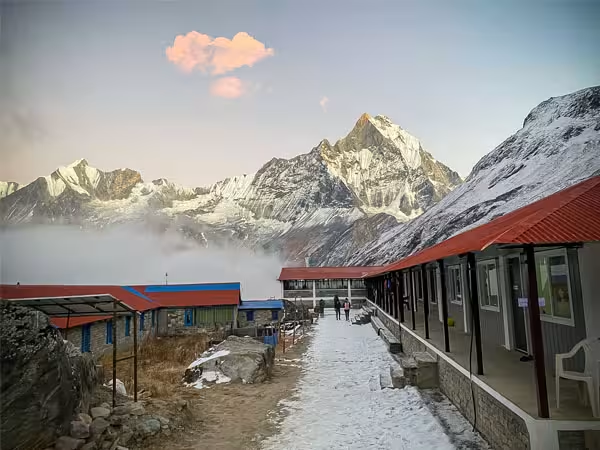
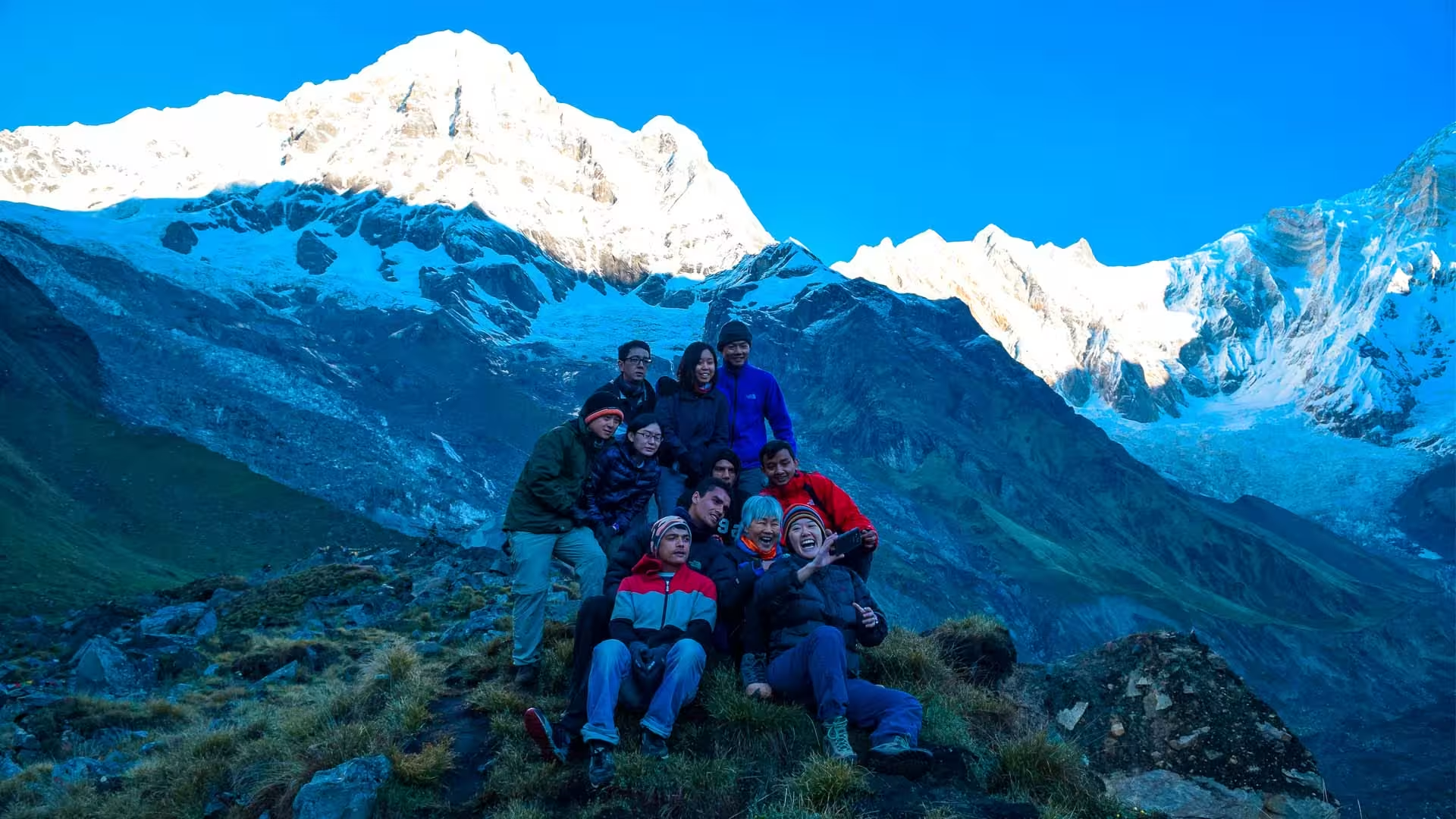
View of Annapurna Base camp and Fishtail Mountain in the Background
Annapurna Base Camp – 4,130 m: Standing Beneath the Himalayas

Reaching the base camp after climbing from the lower valleys is one of the defining moments of the trek.

At 4,130 m, Annapurna Base Camp is surrounded by some of the most dramatic mountains in the region. The amphitheater includes Annapurna I, Annapurna South, Hiunchuli, Gangapurna, and Machhapuchhre.

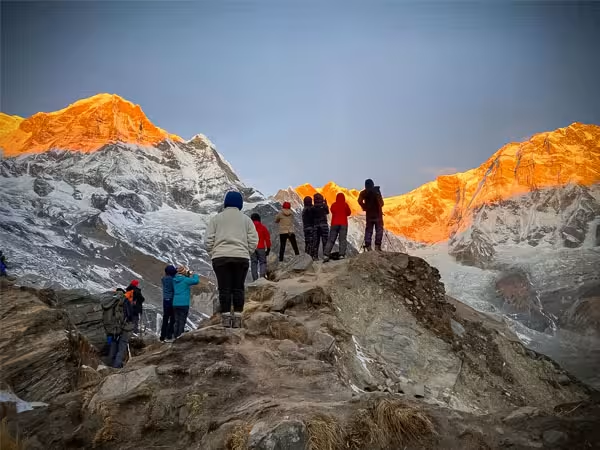
The changing colors of the Annapurna range
Sunrise Inside the Annapurna Sanctuary

The early morning at Annapurna Base Camp is one of the experiences that makes the trek worthwhile.

Wake before sunrise and step outside as the first light reaches the surrounding peaks.

The changing colors of the Annapurna range create a spectacular Himalayan panorama while the valley below remains in shadow.

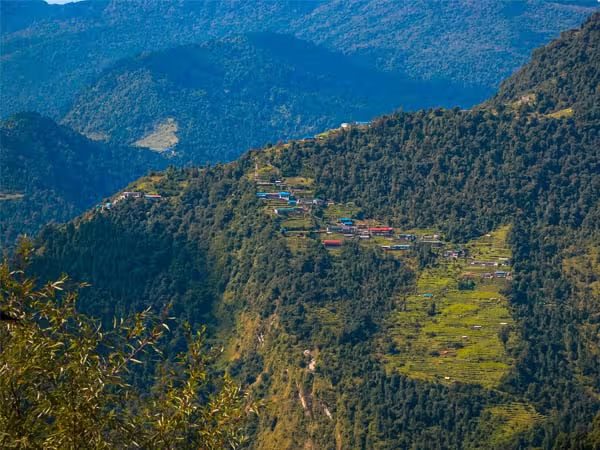
Chomrong Village on the way to Short Annapurna Base camp Trek
Gurung Culture and Himalayan Villages

The route passes through communities where Gurung and other Himalayan communities have lived for generations.

You will encounter traditional villages, stone stairways, terraced fields, prayer flags, suspension bridges, and locally operated teahouses.

The Annapurna trek is therefore more than a mountain walk. It is also an opportunity to experience the communities and landscapes surrounding the sanctuary.

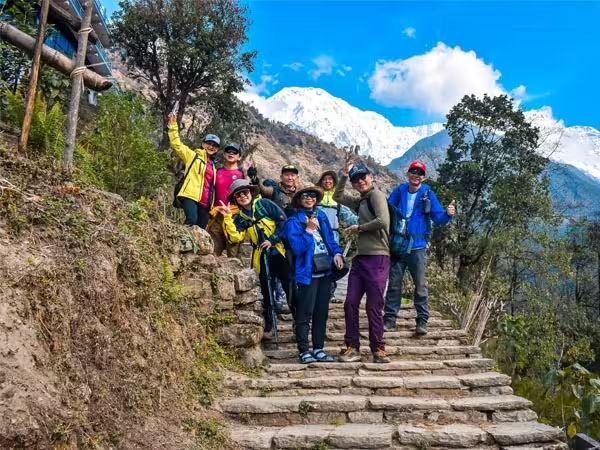
Jhinu Danda on the way to ABC 5 days trek
Jhinu Danda and Natural Hot Springs

The final section of the trek passes through Jhinu Danda, where trekkers can take a short walk to the natural hot springs.

After several days on the trail, the warm spring is an ideal place to relax before continuing by road to Pokhara.

What Makes the Annapurna Region Different?

The Annapurna region compresses an extraordinary range of environments into a relatively short distance.

At the beginning of the trek, you walk through green hills, farmland, and subtropical vegetation. Higher up, the trail enters dense bamboo and rhododendron forests.

Above Deurali, the forest gradually gives way to alpine terrain.

Finally, at Annapurna Base Camp, the landscape becomes a high Himalayan sanctuary surrounded by enormous peaks.

This rapid change in scenery is one of the defining characteristics of the Annapurna Base Camp Trek.

The wider Annapurna Conservation Area also contains rich biodiversity, with forests, alpine landscapes, and a variety of Himalayan wildlife.

Why Book the Short Annapurna Trek with Sublime Trails?

Experienced Local Mountain Guides

Your trek is led by an experienced local guide familiar with the Annapurna trails, teahouses, weather patterns, and altitude considerations.

The guide's job is not simply to show you the way.

They manage the daily pace, coordinate accommodation, communicate with teahouses, monitor how the group is adapting, and respond when trail conditions change.

Sublime Trails' guide team includes experienced professionals who have worked throughout Nepal's major trekking regions.

Local Teahouses and Mountain Hospitality

Your accommodation is provided in locally operated teahouses along the trail.

Rooms are generally simple, clean, and designed for trekkers. Most have twin-sharing arrangements, while bathrooms may be shared depending on the location.

The dining room becomes the social center of the evening, where trekkers eat, warm themselves, and prepare for the next day's walk.

Facilities become simpler as you climb higher.

Guides Who Understand the Annapurna Trail

A short trek requires good logistics.

Your guide needs to know where the group should stop, when to leave, how long the next section will take, and where accommodation is available.

Sublime Trails' guides have extensive experience across Nepal, including the Annapurna region.

Safety Comes Before Speed

Although the itinerary is short, reaching 4,130 m in three days requires attention to altitude.

Your guide monitors how you are feeling throughout the trek and can adjust the pace or rest periods when necessary. However, you should immediately report symptoms such as:

  • Persistent headache
  • Unusual dizziness
  • Nausea
  • Severe fatigue
  • Difficulty breathing
  • Loss of coordination
  • Unusual confusion

Fitness does not eliminate altitude sickness. Your ability to handle altitude depends on individual physiology and the speed at which your body adapts.

What Happens If Trail Conditions Change?

Mountain weather can change quickly.

Rain, snow, landslides, or winter conditions may affect sections of the trail, particularly around higher elevations.

Your guide assesses conditions locally and coordinates with teahouses and the trekking team.

If conditions make a particular section unsafe, the itinerary may need to be adjusted.

The priority is always to complete the trek safely rather than follow the itinerary blindly.

Itinerary

Short Annapurna Base Camp Trek 5 Days Detailed Itinerary

5 days Annapurna Base Camp Trek is short. But the experience is something that will last for a lifetime. 

From the green hills around Pokhara to the stone staircases of Chhomrong, from bamboo forests and mountain rivers to the high alpine landscape of the Annapurna Sanctuary, this trek takes you through an extraordinary range of Nepal's landscapes.

Then comes the moment at 4,130 meters. You stand beneath Mt. Annapurna. The mountains that seemed impossibly distant from Pokhara now surround you. And after watching the sunrise at Annapurna Base Camp, you begin the descent through the same valley—carrying the memory of one of Nepal's most spectacular Himalayan journeys back to Pokhara.

Day 1 - Drive from Pokhara to Jhinu Danda and Trek to Lower Sinuwa

Pokhara → Nayapul → Samrung → Jhinu Danda → Taulung → Chhomrong → Lower Sinuwa

Starting Destination: Pokhara (822 m / 2,697 ft)
Final Destination: Lower Sinuwa (2,300 m / 7,546 ft)
Sleeping Altitude: 2,300 m / 7,546 ft
Elevation Gain: ~1,480 m from Pokhara
Walking Distance: ~8–10 km | 5 hours
Difficulty: Moderate
Accommodation: Tea House
Meals: Breakfast, Lunch & Dinner
Overnight: Lower Sinuwa 

The first day starts with a scenic drive from Pokhara to the Samrung/Jhinu Danda roadhead—switching smoothly to a 4WD local Jeep at Nayapul if mountain roads require it. After crossing Jhinu’s soaring suspension bridge, we put our trekking poles to work with an energizing climb up stone staircases into Chhomrong (2,170 m) for lunch with front-row views of Machhapuchhre (Fishtail). We then drop down to cross the Chhomrong Khola (river) before a final, steady climb brings us to our cozy lodge in Lower Sinuwa, giving you a full, immersive day on the trails right from the start. 

Day 2 - Trek from Lower Sinuwa to Deurali

Lower Sinuwa → Upper Sinuwa → Bamboo → Dovan → Himalaya → Deurali

Starting Destination: Lower Sinuwa (2,300 m / 7,546 ft)
Final Destination: Deurali (3,200 m / 10,499 ft)
Sleeping Altitude: 3,200 m / 10,499 ft
Elevation Gain: 900 m
Walking Distance: 10–12 km | 6 hours
Difficulty: Moderate to Challenging
Accommodation: Tea House
Meals: Breakfast, Lunch & Dinner
Overnight: Deurali

Today the trail enters deeper into the Annapurna Sanctuary corridor. From Lower Sinuwa, you walk toward Bamboo, descending and ascending through dense forest. The route continues toward Dovan and Himalaya, following the river valley.

As the elevation increases, the vegetation begins to change. After passing Himalaya, the trail climbs toward Deurali. This is one of the more important days of the trek because you move from the lower forest environment toward the high-altitude zone.

Today's Highlights

  • Bamboo forests
  • Modi Khola valley
  • Dovan
  • Himalaya
  • Changing vegetation
  • Increasingly dramatic mountain landscape
  • Arrival at Deurali

Altitude Note

You sleep at approximately 3,200 m tonight. Drink plenty of water, walk steadily, and tell your guide if you experience unusual symptoms.

Day 3 - Deurali to Machhapuchhre Base Camp and Annapurna Base Camp

Deurali → Bagar → Machhapuchhre Base Camp → Annapurna Base Camp

Starting Destination: Deurali (3,200 m / 10,498 ft)
Final Destination: ABC (4,130 m / 13,550 ft)
Sleeping Altitude: 4,130 m / 13,550 ft
Elevation Gain: 930 m / 3,051 ft
Walking Distance/Duration: ~7.8 km (4.85 miles) | 4 to 5 hours
Difficulty: Moderate to Strenuous
Accommodation: Tea House
Meals: Breakfast, Lunch & Dinner
Overnight: ABC

Today brings the ultimate rewards as the valley opens into the breathtaking Annapurna Sanctuary, guiding us alongside riverbeds and glacial moraines to Machhapuchhre Base Camp (3,700 m) for lunch beneath Fishtail's double-fluted peak. A measured, awe-inspiring two-hour afternoon walk across open terrain leads directly into Annapurna Base Camp (4,130 m), where you are wrapped in a 360-degree amphitheater of 7,000-meter and 8,000-meter giants —just in time to watch sunset turn the glaciers to gold. 

Day 4 - Sunrise at Annapurna Base Camp and Descend to Bamboo

ABC → MBC → Deurali → Himalaya → Dovan → Bamboo

Starting Destination: ABC (4,130 m / 13,549 ft)
Final Destination: Bamboo (2,400 m / 7,874 ft)
Sleeping Altitude: 2,400 m / 7,874 ft
Elevation Loss: 1730m
Walking Distance/Duration: ~14.5 km (9.0 miles) | 6 to 7 hours
Difficulty: Strenuous
Accommodation: Tea House
Meals: Breakfast, Lunch & Dinner
Overnight: Bamboo

Wake early at Annapurna Base Camp. The first light of morning gradually reaches the surrounding peaks, creating one of the most memorable scenes of the trek.

After sunrise and breakfast, you begin the descent.

You retrace the trail through Machhapuchhre Base Camp, Deurali, Himalaya and Dovan. Although descending is generally easier on the lungs, the long downhill sections and stone steps can be demanding on your knees and legs.

Lunch is normally taken around Dovan before continuing toward Bamboo. By late afternoon, you reach Bamboo and settle into the teahouse.

Today's Highlights

  • Annapurna sunrise
  • Mountain photography
  • Machhapuchhre Base Camp
  • Deurali
  • Himalaya
  • Dovan
  • Bamboo forest

Today's Challenge

This is a long descending day. Trekking poles can be particularly useful for reducing pressure on your knees.

Day 5 - Bamboo to Jhinu Danda and Drive to Pokhara

Bamboo → Upper Sinuwa → Lower Sinuwa → Chhomrong Khola → Chhomrong → Taulung → Jhinu Danda Hot Springs → Samrung Jeep Station → Birethanti → Nayapul → Hemja → Pokhara

Starting Destination: Bamboo (2,400 m / 7,874 ft)
Final Destination: Pokhara (822 m / 2,697 ft)
Sleeping Altitude: 822 m / 2,697 ft
Elevation Loss: -1,579m 
Walking Distance/Duration: ~9.5 km (5.9 miles) walk + 3-hour drive | 8 to 9 hours total 
Difficulty: Strenuous
Accommodation: 3-Star Hotel
Meals: Breakfast & Lunch

Our final morning on the trail takes us up the stone steps to Upper Sinuwa for one last panoramic look at Fishtail, followed by a scenic descent through Chhomrong toward Jhinu Danda. Here, you'll have time to take a short walk down to the riverbank and soak your tired legs in the natural Tato Pani (hot springs) right beside the roaring Modi Khola, before our private transport whisks us back to Pokhara in time for a celebratory cold drink by Phewa Lake. 

Make Your Own Itinerary
Getting There

Kathmandu's Tribhuvan International Airport is served by direct and one stop flights from most major hubs in Asia and the Gulf. Travelers from the US, Europe, and Australia typically connect through Doha, Istanbul, Delhi, Singapore, or Bangkok. This trek begins in Pokhara, reachable from Kathmandu by a scenic road journey or a short domestic flight, both available as an addon to this package.

Sublime Trails representative will come to pick you at the airport. So we will be meeting at Pokhara to start the amazing journey.

Map And Altitude Chart

Short Annapurna Base Camp Trek 5 Days Map and Altitude Chart

Interactive Map
StartMid DaysEnd
Cost Details

Inclusions & Exclusions

What’s Included

Accommodation

  • 4 nights of teahouse accommodation during the trek
  • Twin-sharing accommodation is available

Transportation

  • Pokhara to Jhinu Danda
  • Jhinu Danda to Pokhara
  • Necessary local transportation during the itinerary

Meals

  • Breakfast during the trek
  • Lunch during the trek
  • Dinner during the trek

Guide and Porter

  • Experienced local trekking guide
  • 1 porter for every 2 trekkers
  • Guide and porter accommodation and meals

Permits and Documentation

  • Annapurna Conservation Area Permit
  • TIMS
  • Required government paperwork
  • Applicable government taxes

Safety and Support

  • First-aid support for minor injuries
  • Trekking guidance
  • Local logistical support
  • Emergency coordination
What’s Excluded

Travel Insurance

  • Travel insurance
  • Emergency helicopter evacuation
  • Medical treatment
  • Repatriation

Personal Expenses

  • Wi-Fi
  • Charging fees
  • Laundry
  • Phone calls
  • Personal shopping
  • Snacks
  • Alcoholic drinks
  • Soft drinks
  • Bottled water
  • Hot showers where charged separately

Equipment

  • Personal trekking clothing
  • Trekking boots
  • Backpack
  • Trekking poles
  • Personal sleeping bag unless specifically included in your booking

Accommodation

  • Hotel accommodation in Pokhara
  • Extra nights in Pokhara caused by delays or personal itinerary changes

Other

  • Nepal visa fee
  • Tips for guides and porters
  • Personal expenses
  • Any service not specifically mentioned under inclusions
Trip Departure

Dates & Booking

Cancellation Policy
Secure Payment
Sunday
20 Sep 2026
to
Thursday
24 Sep 2026
Status
Guaranteed
US$490
Monday
21 Sep 2026
to
Friday
25 Sep 2026
Status
Guaranteed
US$490
Wednesday
23 Sep 2026
to
Sunday
27 Sep 2026
Status
Guaranteed
US$490
Friday
25 Sep 2026
to
Tuesday
29 Sep 2026
Status
Guaranteed
US$490
Saturday
26 Sep 2026
to
Wednesday
30 Sep 2026
Status
Guaranteed
US$490
Sunday
27 Sep 2026
to
Thursday
01 Oct 2026
Status
Guaranteed
US$490
Monday
28 Sep 2026
to
Friday
02 Oct 2026
Status
Guaranteed
US$490
Wednesday
30 Sep 2026
to
Sunday
04 Oct 2026
Status
Guaranteed
US$490

Book at least 1 to 2 weeks ahead for permit processing. This itinerary has less schedule buffer than our longer treks by design, so build one extra day into your Pokhara stay if your onward travel plans allow it. Fixed group departures run weekly year round, given this trek's lower altitude and reduced weather sensitivity compared to our Everest and Manaslu products. Private departures are available on any date.

Didn’t find a suitable date?
Don’t miss last minute deals
Ask For last minute stops
Local Guide

Meet Our Local Guide

Mr. Suman Khadka
Trekking Guide
Language:English
Experience:14 Years
Guided Places:Every Region in Nepal
Bibek Khadka
Trekking Guide
Language:English
Experience:9 Years
Guided Places:Tibet and Every Region in Nepal
Kamal Dhakal
Trekking Guide
Language:English
Experience:7 Years
Guided Places:Annapurna, Langtang, Manaslu, Mardi
Safety & Altitude

Safety & Altitude

Altitude Awareness

The biggest consideration on this 5-day Annapurna Base Camp trek is the relatively rapid ascent.

You reach more than 3,000 m on Day 2 and Annapurna Base Camp at 4,130 m on Day 3. Altitude sickness can affect anyone, regardless of age or physical fitness.

For this reason:

  • Walk slowly and consistently.
  • Drink enough water.
  • Avoid alcohol.
  • Get adequate sleep.
  • Tell your guide immediately if you feel unwell.
  • Never hide symptoms because you want to finish the itinerary.

Your guide will also monitor your condition and help determine whether you should continue, rest, or descend.

Emergency Support and Evacuation

Emergency support is available in the Annapurna region, including helicopter rescue services coordinated from the Pokhara area.

Travel insurance with high-altitude emergency evacuation coverage is mandatory for this trek.

Your insurance should specifically cover trekking at approximately 4,000 m or above and emergency helicopter evacuation.

If a serious medical situation occurs, your guide and the local support team can coordinate with the appropriate rescue and medical services.

Food and Accommodation

What You’ll Eat & Where You’ll Stay

You will eat three meals a day during the trekking portion of the journey. Teahouses serve a mixture of Nepali, Tibetan, and simple Western dishes.

Dal bhat remains one of the most practical meals on the trail because it provides carbohydrates, protein, and plenty of energy for long trekking days.

Vegetarian options are also widely available.

Note: If you have dietary restrictions or food allergies, tell us before departure so your guide can coordinate with the teahouses.

Water and Hydration

Water is available throughout the trekking route.

You can purchase bottled water, but carrying a reusable bottle and using treated, boiled, or filtered water is a more practical and environmentally responsible approach.

Bring a reliable water purification method if you prefer additional protection.

Aim to drink regularly throughout the day, particularly as you gain elevation.

Meals Include
Breakfast
  • Porridge
  • Oats
  • Muesli
  • Eggs
  • Pancakes
  • Tibetan bread
  • Toast
  • Chapati
  • Tea
  • Coffee
Lunch
  • Dal bhat
  • Fried rice
  • Fried noodles
  • Momos
  • Thukpa
  • Pasta
  • Potato dishes
  • Soups
Dinner
  • Dal bhat
  • Sherpa stew
  • Thukpa
  • Pasta
  • Noodles
  • Fried rice
  • Vegetable dishes
  • Soup
  • Simple desserts
Equipment list

Short Annapurna Base Camp Trek 5 Days Equipment list

equipment
Know before you go! Some stuff we’ll provide, other things you’ll need to bring.

Training & Preparation

You don't need to be an elite athlete, but you should prepare properly.

Cardio

Train 3–4 times per week through:

  • Hiking
  • Brisk walking
  • Running
  • Cycling
  • Stair climbing

Build toward longer sessions rather than focusing purely on speed.

Stairs and Hills

The Annapurna trail contains many stone stairs.

Practice uphill and downhill walking before arriving in Nepal.

Leg Strength

  • Include:
  • Squats
  • Lunges
  • Step-ups
  • Calf raises

Downhill walking can be particularly demanding on the legs.

Train With a Daypack

Practice walking with the approximate weight you expect to carry on the trek.

Don't Ignore Recovery

The trek is only five days, but your body still needs recovery.

Good sleep, hydration, and nutrition are important before and during the trek.

Reviews

Client’ Testimonials and their Experiences

C
Incredible 5-Day Trek with the Best Team!

Absolutely the best experience of my life! I was traveling solo and wanted to join a group for the 5-day Annapurna Base Camp trek. Sublime Trekking matched me with a group departing the same day and welcomed me in so warmly—it made the entire journey truly unforgettable. Our guide, Suman, was phenomenal—knowledgeable, organised, and attentive to everyone’s well-being. He made sure we had regular breaks and stayed on track, all while creating a fun, supportive atmosphere. We shared so many laughs, captured incredible memories, and formed bonds that will last forever. Completing the trek in just five days was definitely challenging, but absolutely worth it. Don’t think twice about booking with this company—they’ll take amazing care of you and give you the adventure of a lifetime.

Camille Peterson - Portugal
May 01, 2025
A
Incredible experience

The Annapurna Base Camp Trek was an unforgettable experience, largely thanks to the amazing team that accompanied us. Our guide, Suman, was more than just a guide — he was a true trekking companion. Always available, attentive, and with an uplifting energy, he made each step feel lighter (even when our legs were giving up!).

A huge thank you also to our porters, without a doubt the true heroes of this journey. Their strength, generosity, and constant support were essential — we couldn’t have reached the top without them.

A challenging adventure, full of personal victories, made all the more memorable thanks to these incredible people who walked by our side.

Andreia - Portugal
May 01, 2025
P
Great ABC 5 days trek

I did a short 5 days trek organised by Sublime Trails to reach Annapurna Base Camp, with Kiran as a guide. I had a very strict and tight schedule for my vacation in Nepal and the trek needed to be planned ahead for this reason. I felt safe and in very good hands as the agency was always very reactive to my emails and whatsapp messages beforehand. My guide Kiran was very kind and very thoughtful and could answer all my requests, and I learnt a lot about the nepali culture during this trek thanks to him. I recommand 100%

Pauline Heyte - France
October 24, 2023
Moments

Travel Moments

Annapurna Base Camp Trek Review with Guide Suman
We Always Get Excellent Guides
Actually go with Sublime Trails.
Essential

Know Everything Before You Go Short Annapurna Base Camp Trek 5 Days

Most nationalities, including US, UK, EU, Australian, and Canadian citizens, can obtain a Nepal visa on arrival at Tribhuvan International Airport or apply online in advance. ATMs are available in Pokhara but not beyond the trailhead, so carry sufficient cash for the full trek.

Trek Difficulty

The Short Annapurna Base Camp Trek is considered moderately challenging. Although the itinerary is relatively short, it includes long ascents, thousands of stone steps, forest trails, and high-altitude hiking above 4,000 metres. A reasonable level of fitness and prior hiking experience will make the trek more enjoyable.

Accommodation and Facilities

Accommodation is provided in traditional mountain tea houses. Most lodges offer:

  • Shared twin rooms
  • Shared bathrooms
  • Dining halls with freshly prepared meals
  • Hot showers (extra charge)
  • Wi Fi (available in most villages for a fee)
  • Charging facilities (extra charge)

Facilities become more basic as you approach Annapurna Base Camp.

Communication and Electricity

Mobile coverage is generally reliable up to Bamboo. Beyond this point, especially around Deurali, Machhapuchhre Base Camp, and Annapurna Base Camp, the signal may become weak or unavailable.

Most tea houses have hydropower electricity, although charging electronic devices usually requires an additional payment.

Best Time to Trek

The best seasons for the Short Annapurna Base Camp Trek are:

  • Spring (March to May): Blooming rhododendron forests, clear mountain views, and comfortable temperatures.
  • Autumn (September to November): Stable weather, crisp skies, and excellent visibility of the Annapurna range.

Temperature

Expect significant temperature differences between day and night.

  • Daytime: Approximately 5°C to 12°C near Annapurna Base Camp
  • Night: Around –5°C or colder at higher elevations

Permits Required

You'll need the following permits before starting the trek:

  • Annapurna Conservation Area Permit (ACAP)
  • Trekkers' Information Management System (TIMS) Card

Water Availability

Safe drinking water is available throughout the trek. Most tea houses provide boiled or filtered water for a small fee. Carrying a reusable water bottle and purification tablets or a filter is recommended, while purchasing bottled water is discouraged to help reduce plastic waste in the Annapurna Conservation Area.

Trail Conditions

The trail is well maintained and clearly marked, passing through rhododendron forests, traditional villages, stone staircases, suspension bridges, and alpine valleys. Sections near Deurali may become icy during winter and can be exposed to seasonal avalanche risk after heavy snowfall, so it's important to follow your guide's advice and current trail conditions.

Altitude Considerations

Although this is a short itinerary, you still ascend above 4,000 metres. Altitude sickness can affect anyone above 3,000 metres regardless of fitness level. Walking at a steady pace, staying hydrated, and informing your guide of any symptoms are essential for a safe and enjoyable trek.

Why the 5-Day Trek Is Different From the Classic ABC Trek

5-Day Short ABC Longer ABC Trek
Faster itinerary More relaxed pace
Starts from Jhinu May begin from different lower trailheads
ABC on Day 3 More gradual ascent
Approximately 51–53 km Longer overall route
Best for limited time Better for slower travel
More demanding daily schedule More flexibility
Less time in villages More cultural exploration
Rapid altitude gain  

Best Time for the 5-Day Annapurna Base Camp Trek

Spring — March to May

Spring is one of the best seasons for the Annapurna region.

You can expect:

  • Comfortable trekking temperatures
  • Rhododendron blooms
  • Good mountain visibility
  • Green lower valleys
  • Increasingly warm days

Autumn — September to November

Autumn is another excellent trekking period.

The monsoon has generally cleared the atmosphere, producing crisp mountain views.

September can still experience some post-monsoon rainfall, while October and November are typically among the clearest periods.

Winter — December to February

Winter brings colder temperatures and potential snow at higher elevations.

The lower trail can remain pleasant during the day, but nights at ABC can be very cold.

Snow and ice can affect the upper trail, so conditions should be checked before departure.

Monsoon — June to August

The Annapurna region receives significant rainfall during the monsoon.

Expect:

  • Wet trails
  • Mud
  • Leeches at lower elevations
  • Cloudy mountain views
  • Possible landslides and road disruption

The trek is possible in some conditions, but it is not the preferred season for this itinerary.

Permits Required

2 main trekking documents are required:

Annapurna Conservation Area Permit (ACAP)

The trek passes through the Annapurna Conservation Area, so an ACAP permit is required.

TIMS Card

The Trekkers' Information Management System (TIMS) card is also required for the trek.

Note: Sublime Trails handles the required permit arrangements and government paperwork included in the package.

Porter Support

We provide one porter for every two trekkers.

Porters carry the main trekking luggage while you carry a smaller daypack with items such as:

  • Water
  • Camera
  • Snacks
  • Rain layer
  • Warm layer
  • Sunscreen
  • Personal essentials

Our porter system is designed to reduce the physical burden on trekkers while maintaining responsible load limits.

Trail Information

The Annapurna Base Camp trail is one of Nepal's most established trekking routes.

Expect:

  • Stone staircases
  • Forest trails
  • Suspension bridges
  • River crossings
  • Uneven rocky sections
  • Mud during wet weather
  • Snow and ice during winter
  • Seasonal avalanche-prone sections around the higher parts of the trail

Trail conditions can change with weather. The section above Deurali requires particular attention during periods of heavy snowfall. Your guide assesses local conditions and makes decisions based on safety rather than simply following a fixed schedule.

Accommodation on the Short Annapurna Trek

The trek uses local mountain teahouses. Most rooms are simple twin-sharing rooms with beds and blankets. Bathrooms may be inside the building or shared depending on the lodge and altitude.

The communal dining room is generally the warmest part of the teahouse and becomes the main gathering place in the evening.

At higher elevations, accommodation becomes more basic, and availability can be limited during busy trekking seasons.

Hot showers, Wi-Fi, and charging are commonly available at lower and mid-elevation settlements for an additional fee, although services become more limited as you approach ABC.

FAQ

Frequently Asked Questions

Basic Trek Information

What is the highest altitude reached on the Annapurna Base Camp Trek?

The highest point of the trek is Annapurna Base Camp at approximately 4,130 meters (13,550 ft) above sea level. The increasing altitude is one of the main factors that makes gradual trekking and proper acclimatization important.

How long is the Annapurna Base Camp Trek and how many days does it take?

The trek typically takes around 5–12 days, depending on the chosen itinerary, transportation, acclimatization schedule, and starting point. The total trekking distance varies by route, so your exact distance will depend on the package you choose.

Where does the Annapurna Base Camp Trek start and end?

The exact starting and ending points depend on the itinerary. Most routes approach the sanctuary from the Pokhara side, with road transportation used to reach the trailhead. Your package itinerary will clearly specify the transportation, trekking starting point, and return route.

When is the best time to trek to Annapurna Base Camp?

The best seasons are generally spring (March–May) and autumn (September–November), when the weather is more stable, and mountain views are usually excellent. Winter can offer clear skies but colder conditions, while the monsoon season brings more rain and potentially slippery trails.

Do I need a guide or porter for the Annapurna Base Camp Trek?

A guide is highly recommended for safety, navigation, local knowledge, and assistance during the trek. A porter can also make the journey more comfortable by carrying your main luggage. Requirements for guides and permits can change, so we arrange your trek according to the latest applicable regulations.

Can I trek to Annapurna Base Camp independently?

Independent trekking options have changed over time due to Nepal's trekking regulations. It is best to check the current rules for your specific route and nationality. Booking with a registered trekking agency provides support with permits, accommodation, transportation, guides, and emergencies.

Border, Permits & Legal Documents

What permits are required for Annapurna Base Camp?

Permit Type

Cost (Foreigners)

Cost (SAARC / Indian Citizens)

Main Purpose

ACAP (Annapurna Conservation Area Permit)

NPR 3,000 (~$23 USD)

NPR 1,000 (~$8 USD)

Conservation & track/trail infrastructure.

TIMS Card (Trekkers' Information Management System)

NPR 2,000 (~$15 USD)

NPR 1,000 (~$8 USD)

Safety tracking and emergency rescue data.

Note: Children under 10 years old are exempt and do not need to pay for permits. (Source: epermit.ntnc.org.np)

Altitude, Acclimatization & Safety

Is altitude sickness a concern at 4,130 meters?

Yes, altitude sickness (AMS) is possible at Annapurna Base Camp because of the elevation. However, it does not affect everyone. Our itinerary is planned with a gradual ascent, and trekkers should stay hydrated, maintain a steady pace, and inform their guide immediately if they experience symptoms such as headache, dizziness, nausea, or unusual fatigue

Difficulty & Fitness

How difficult is the Short Annapurna Base Camp Trek for beginners?

The Short Annapurna Base Camp Trek is considered a moderate trek and is suitable for beginners with a reasonable level of fitness. You do not need previous high-altitude trekking experience, but you should be comfortable walking for several hours a day on uneven and uphill terrain.

Do I need technical climbing skills or special equipment for Annapurna Trek?

No technical climbing or mountaineering skills are required for the Annapurna Base Camp Trek. A good pair of trekking shoes, warm clothing, a comfortable backpack, trekking poles, and other basic trekking gear are generally sufficient. Your trekking agency can provide a complete packing list before departure.

How many hours do I walk each day?

You will generally walk around 5–7 hours per day, depending on the route, altitude, trail conditions, and pace of the group. Some days are shorter, while longer days may involve more uphill and downhill walking.

Are there many stairs and steep sections on the trail?

Yes. The trail includes numerous stone steps, steep uphill sections, and descents, particularly around villages and river valleys. However, the trek is designed to be completed at a gradual pace, with regular breaks and acclimatization stops along the way.

Enough Dreaming About It
One simple step to start your Himalayan journey. Select your trek, select your dates and book your space with Sublime Trails in minutes. Bookings include expert local guides, permits and personalized itinerary support. Flexibility in rescheduling and open pricing.
Book Now
Tell Us Your Version
Every Sublime Trails experience is made for you. Extend your journey, include a cultural stay, improve your lodging or combine several regions into one unforgettable expedition. Tell us how you want to experience and we will make an itinerary that suits your pace, budget and dreams.
Customize Trip

You May Also Like

Annapurna Base Camp Trek 10 Days

Annapurna Base Camp Trek

Duration:10 Days
Grade:Moderate
Price From
US$950
14 Days. Four Valleys. One Legendary Pass.
Annapurna Circuit Trek Sublime Trails

Annapurna Circuit Trek

Duration:14 Days
Grade:Strenuous
10 Days. Modern Route. Most Road Avoided.
Annapurna Circuit Trek by Modern Route

Annapurna Circuit Trek 10 Days, Modern Route

Duration:10 Days
Grade:Strenuous
Need Help? Call Us+977 9851183278
Annapurna Base Camp Short Trek: 5 Days | Sublime Trails