Everest Base Camp Trek with Helicopter Return

  • Satisfied clients
  • Safety measures
  • No booking fees
Trip Overview
  • Duration: 9 Days
  • Trip Grade: Strenuous
  • Trip Start and End: Kathmandu to Kathmandu
  • Trip Area: Everest Base Camp
  • Trip Style: Active/Adventure Trekking
  • Age Group: 15 or Above
  • Trip Type: Private and group
  • Trip Method: Guided
  • Booking Type: Instant Booking
  • Max. Altitude: 5367m
  • Best Season: March - May/September - December
  • Foot Print:Carbon Neutralleaf

EBC Trek with Helicopter Return Highlights

  • Complete the full ascent from Lukla to Everest Base Camp and Kala Patthar on foot, following a proven acclimatization profile used on classic Everest Base Camp treks.

  • Exit the Khumbu efficiently by helicopter from Gorak Shep, eliminating the 65-kilometer return descent while preserving the full ascent experience.

  • Follow an itinerary with two dedicated acclimatization days above 4,000 meters to support safe and effective altitude adaptation.

  • Gain an aerial perspective of the Khumbu Icefall, glacial lakes, and high valleys during the helicopter return—terrain that cannot be appreciated from the trail.

  • Reduce exposure to Lukla’s fixed-wing flight delays through a direct helicopter transfer back to Kathmandu.

Short Everest Trek with Heli Return – Trip Overview

The Everest Base Camp Trek with Helicopter Return combines the complete experience of Nepal’s most iconic trek with a carefully planned and efficient conclusion. You complete the entire ascent—from Lukla through the heart of the Khumbu—experiencing the landscapes, culture, and gradual altitude progression exactly as on a traditional Everest Base Camp trek.

The journey begins with a dramatic flight into Lukla, followed by days of trekking through rhododendron forests, suspension bridges, and Sherpa villages that have supported Himalayan expeditions for generations. In Namche Bazaar, the cultural and commercial center of the region, you gain insight into Sherpa life before continuing higher into alpine terrain.

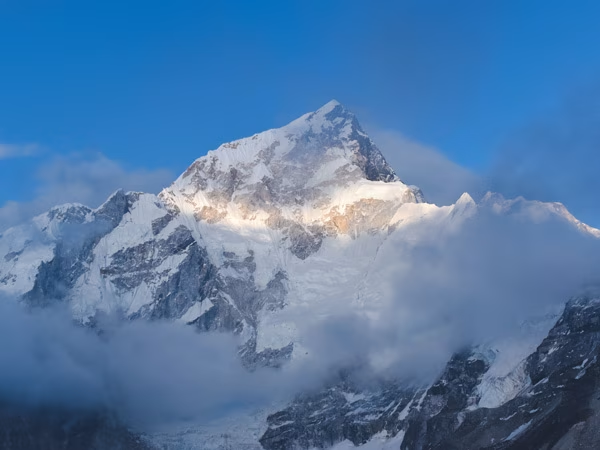
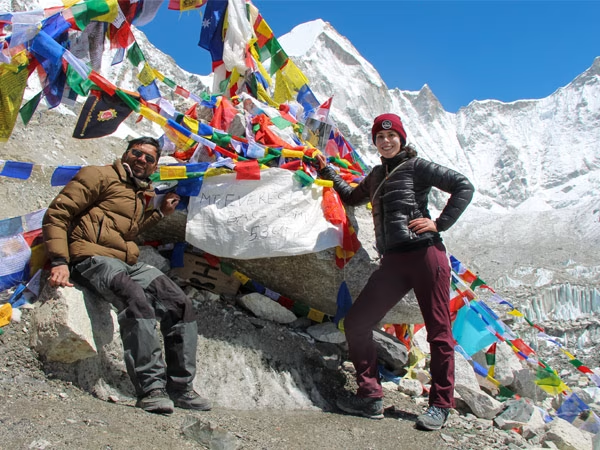
As elevation increases, the environment becomes more stark and expansive. Glacial valleys replace forests, and the mountains dominate the skyline. Reaching Everest Base Camp (5,364 m) places you directly at the foot of the Khumbu Icefall—an achievement reached entirely on foot. The following morning, the climb to Kala Patthar (5,644 m) rewards you with the most complete and unobstructed view of Everest’s south face.

Rather than retracing the same trail, the trek concludes with a helicopter return from Gorak Shep. Within minutes of takeoff, the route you spent days climbing reveals itself from above—glaciers, icefalls, and hidden valleys laid out in full perspective. The flight delivers you directly back to Kathmandu, marking a clean and memorable conclusion to a demanding high-altitude journey.

4. Why Choose the EBC Trek with Helicopter Return?

  • Strategic Use of Time: This itinerary condenses the traditional Everest Base Camp journey into 9 focused days without altering ascent pacing or reducing acclimatization. By removing the return walk, you gain efficiency while maintaining safety and experience.

  • Reduced Physical Strain: The descent from Everest Base Camp is long and repetitive, placing sustained stress on knees and joints. The helicopter exit removes this impact-heavy section, allowing you to finish the trek feeling strong rather than depleted.

  • Operational Reliability: Returning by helicopter avoids the congestion and weather-related delays common at Lukla airport. This improves schedule predictability—an important consideration for travelers with onward international flights.

  • Unchanged Cultural and Trekking Integrity: Every village, monastery, and landmark on the classic Everest Base Camp route is still experienced on foot. The helicopter is used only after all trekking objectives are completed, preserving the authenticity of the journey.

5. The Helicopter Return – A Strategic and Safe Exit

The helicopter's return from Gorak Shep (5,164m) is a deliberate logistical choice designed to conclude the trek efficiently while maintaining strict safety standards. By exiting from the upper Khumbu, trekkers avoid several additional days of descent through the same valleys, reducing cumulative physical stress and prolonged exposure to extreme altitude.

Helicopter operations in the Everest region follow established high-altitude aviation protocols. Flights are planned with careful attention to weather windows, payload limits, and landing conditions. Weight management is strictly enforced, and when necessary, shuttle rotations are used to ensure safe takeoff performance at altitude.

Beyond logistics, the flight provides a rare aerial perspective of the region. The Khumbu Icefall, glacial lakes, and surrounding peaks are visible in a way that is impossible to appreciate from the trail. The transition from remote mountain terrain to Kathmandu occurs within a single day, allowing trekkers to recover comfortably after completing their objectives.

The helicopter component is not a sightseeing add-on, nor a shortcut. It is a controlled, professional exit strategy that complements the physical and environmental demands of the trek.

6. Acclimatization, Safety & Risk Management

a. Designed for Altitude, Not Just Speed: A shorter itinerary does not mean cutting corners. This Everest Base Camp Trek with Helicopter Return is carefully structured to respect altitude while optimizing time. Daily elevation gains are gradual, and the route includes essential acclimatization stops to support your body’s natural adjustment to thinner air.

This structure follows established Himalayan guiding practices commonly used on responsible Everest Base Camp expeditions.

b. Acclimatization That Actually Works: Instead of rushing higher, key rest days in Namche Bazaar and Dingboche allow for proper adaptation. During these stops, you’ll take guided hikes to higher viewpoints before descending to sleep lower—a proven strategy known as climb high, sleep low. This method is a cornerstone of every responsible Short Everest Trek with Heli Return.

c. Daily Health Monitoring on the Trail: Your safety is actively managed, not assumed. Experienced high-altitude trekking guides conduct daily health checks, including oxygen saturation monitoring and symptom assessment. Early detection of altitude-related issues allows for fast, informed decisions—rest, descent, or evacuation if necessary.

d. Helicopter Support as a Safety Advantage: The helicopter component of this itinerary isn’t just about comfort—it’s a strategic safety layer. In the upper Khumbu, where trails are remote and conditions can change quickly, access to aerial evacuation provides critical peace of mind. Clear protocols for weather assessment, weight management, and landing coordination ensure operations remain safe and reliable.

e. Prepared for the Unexpected: From first-aid readiness to emergency response planning, every aspect of this trek follows established mountain safety standards. Combined with experienced leadership and helicopter access, the journey offers a balanced approach to challenge and risk management—allowing you to trek with confidence and focus on the experience itself.

Everest Base Camp Trek with Helicopter Return Gallery

Everest Base Camp Trek with Helicopter Return Itinerary

  • Day 1:Flight to Lukla and Trek To PhakdingAltitude: 2804m, Duration: 4 hours
  • Day 2:Phakding to Namche BazaarAltitude: 3,441m, Duration: 6-7 hours
  • Day 3:Acclimatization day at Namche BazaarAltitude: 3,800m, Duration: 3 hours
  • Day 4:Namche to TengbocheAltitude: 3,860 meters, Duration: 5-6 hours
  • Day 5:Tengboche to DingbocheAltitude: 4,400 meters, Duration: 5-6 hours
  • Day 6:Acclimatization day at DingbocheAltitude: 4710 meters, Duration: 4-5 hours
  • Day 7:Dingboche to LobucheAltitude: 4,900 meters, Duration: 5-6 hours
  • Day 8:Lobuche to Gorak Shep and EBC, back to GorakshepAltitude: 5,180 meters, Duration: 7-8 hours
  • Day 9:Gorak Shep to Kala Patthar, back to Gorak Shep, fly back to Kathmandu By HelicopterAltitude: 5550 meters, Duration: 4 Hours

Day 1:Flight to Lukla and Trek To Phakding

  • Max Altitude2804m
  • AccommodationPine Forest Inn (Attached bathroom and Hot Shower)
  • MealsBLD

You take an early morning flight to Lukla (2,860m). The 35-minute flight offers your first views of the Himalayan landscape. During peak seasons—April, May, October, and November—flights operate from Ramechhap instead of Kathmandu.

After landing in Lukla, the trek begins. The trail descends toward the Tharo Koshi River, also known as Kusum Kangru Khola. After crossing a suspension bridge, you walk uphill to reach Phakding.

Day 2:Phakding to Namche Bazaar

  • Max Altitude3,441m
  • AccommodationGreen Tara Lodge (Attached bathroom and Hot Shower)
  • MealsBLD

Today’s destination is Namche Bazaar. The trail descends from Phakding and crosses a suspension bridge over the Dudh Koshi River. The route includes several short ascents and descents along the riverbank.

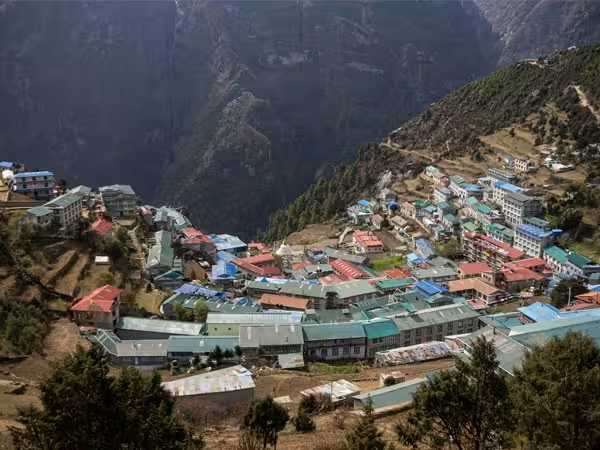
You pass through the village of Monjo, where you enter Sagarmatha National Park. From here, the trail climbs steadily to Namche Bazaar, the main trading hub of the Khumbu region.

Day 3:Acclimatization day at Namche Bazaar

  • Max Altitude3,800m
  • AccommodationGreen Tara Lodge (Attached bathroom and Hot Shower)
  • MealsBLD

This day is set aside for acclimatization. You may take a short hike to viewpoints above Namche or visit the Sagarmatha National Park Museum.

The museum provides insight into Himalayan geography, Sherpa culture, and the history of mountaineering in the Everest region. The afternoon is free to rest and prepare for higher altitudes.

Day 4:Namche to Tengboche

  • Max Altitude3,860 meters
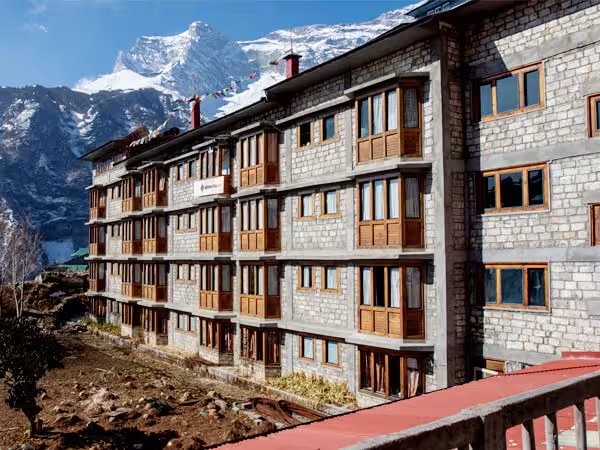
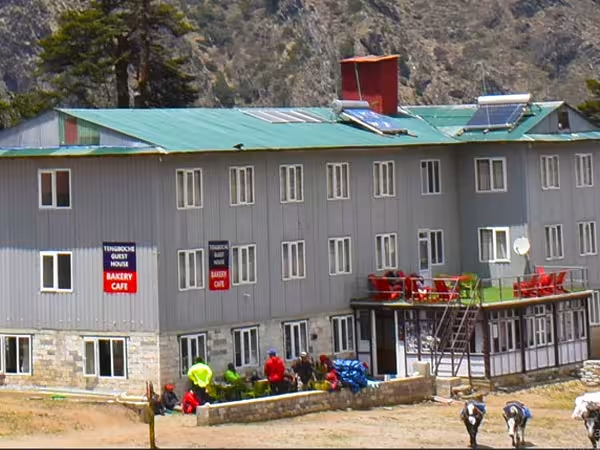
  • AccommodationTengboche Guest House (Attached bathroom and Hot Shower)
  • MealsBLD

You begin the day with a short uphill walk to a ridge above Namche. The trail then descends gently toward Phungitenga (3,250m).

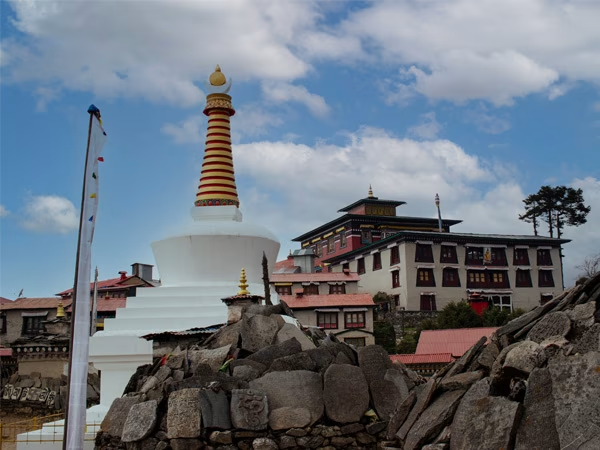
From Phungitenga, the route climbs steadily for about two hours to reach Tengboche. The village is home to the famous Tengboche Monastery, the spiritual center of the Khumbu region.

Day 5:Tengboche to Dingboche

  • Max Altitude4,400 meters
  • AccommodationGood Luck Inn (Attached bathroom and Hot Shower)
  • MealsBLD

The trail descends through forests of birch, fir, juniper, and rhododendron. After crossing a river, the path climbs gradually toward Pangboche village (3,900m).

Continuing onward, you pass through Shomare, where views of Ama Dablam become more prominent. The trail then leads into the Imja Tse Valley and onward to Dingboche, a traditional Sherpa settlement.

Day 6:Acclimatization day at Dingboche

  • Max Altitude4710 meters
  • AccommodationGood Luck (Attached bathroom and Hot Shower)
  • MealsBLD

Today is reserved for acclimatization. You can take short walks around the village or hike to nearby viewpoints. These activities help your body adjust to the increasing altitude while allowing time to rest and recover.

Day 7:Dingboche to Lobuche

  • Max Altitude4,900 meters
  • AccommodationOxygen Lodge (Common Bathroom Washing hot water)
  • MealsBLD

The trail climbs gradually toward a ridge marked with prayer flags, offering views over Pheriche Valley. You then descend slightly before reaching Thukla. From Thukla, the route ascends steeply to the memorials at Thukla Pass. After a short walk along the ridge, you continue to Lobuche.

Day 8:Lobuche to Gorak Shep and EBC, back to Gorakshep

  • Max Altitude5,180 meters
  • AccommodationHimalaya Lodge (Common Bathroom Washing hot water)
  • MealsBLD

You begin with a gradual walk toward Gorak Shep, following the edge of the Khumbu Glacier. The trail includes rocky moraine sections with views of glacial ponds and ice formations.

After reaching Gorak Shep and taking a short rest, you continue to Everest Base Camp (5,364m). The terrain consists of rocky paths, moraine, and small streams. After spending time at Base Camp, you return to Gorak Shep for the night.

Day 9:Gorak Shep to Kala Patthar, back to Gorak Shep, fly back to Kathmandu By Helicopter

  • Max Altitude5550 meters
  • AccommodationChoose your own hotel
  • MealsBreakfast, Dinner

Early in the morning, you hike to Kala Patthar. The climb takes about an hour and offers clear views of Everest, Pumori, Nuptse, Lhotse, and surrounding peaks.

After descending to Gorak Shep, you board a helicopter for the return journey. The flight takes you back to Kathmandu, offering a final aerial view of the Everest region. You arrive in time to relax and celebrate the completion of your trek.

Love doing it your way?

Trip Map

Everest Base Camp Trek with Helicopter Return Map

Cost Details

Included

  • Domestic airport drop and pick-up
  • 8 nights of Mountain Lodge accommodation 
  • Vegetarian breakfast, lunch, and dinner on the trek
  • Group Sharing Helicopter return flight from Gorekshep to Kathmandu
  • Flight fare from Kathmandu or Ramechhap to Lukla
  • Well-experienced guide and porters (1 porter sharing between 2 trekkers)
  • National park entrance fees, TIMS card fees, and local government permit fee
  • Necessary paperwork with the Government of Nepal and the Tax Department
  • All essential private land transport as per itinerary
  • Sleeping bag, down jacket, and duffel bag to use for the trekking
  • First Aid kit carried by our guide

Excluded

  • Lunch and dinner in Kathmandu during your stay.
  • Travel insurance and health treatment service
  • Extra night accommodation in Kathmandu due to early arrival and late departure
  • Personal expenses (phone calls, internet, laundry, bar bills, battery recharge, extra porters, cold drinks, bottled or boiled water, hot shower, etc.)
  • All alcoholic and non-alcoholic drinks including mineral water
  • Nepal entry visa fee
  • Tipping for guide and porters

Dates, Prices & Booking

Select Month and Year
Start DateEnd DatePriceStatus 
Start DateStart: FridayApr 10, 2026End DateEnd: SaturdayApr 18, 2026PricePriceUS$1900StatusStatusAvailable
Start DateStart: SaturdayApr 11, 2026End DateEnd: SundayApr 19, 2026PricePriceUS$1900StatusStatusAvailable
Start DateStart: SundayApr 12, 2026End DateEnd: MondayApr 20, 2026PricePriceUS$1900StatusStatusAvailable
Start DateStart: MondayApr 13, 2026End DateEnd: TuesdayApr 21, 2026PricePriceUS$1900StatusStatusAvailable
Start DateStart: WednesdayApr 15, 2026End DateEnd: ThursdayApr 23, 2026PricePriceUS$1900StatusStatusAvailable
Start DateStart: FridayApr 17, 2026End DateEnd: SaturdayApr 25, 2026PricePriceUS$1900StatusStatusAvailable
Start DateStart: SaturdayApr 18, 2026End DateEnd: SundayApr 26, 2026PricePriceUS$1900StatusStatusAvailable
Start DateStart: SundayApr 19, 2026End DateEnd: MondayApr 27, 2026PricePriceUS$1900StatusStatusAvailable
Start DateStart: MondayApr 20, 2026End DateEnd: TuesdayApr 28, 2026PricePriceUS$1900StatusStatusAvailable
Start DateStart: WednesdayApr 22, 2026End DateEnd: ThursdayApr 30, 2026PricePriceUS$1900StatusStatusAvailable
Start DateStart: FridayApr 24, 2026End DateEnd: SaturdayMay 02, 2026PricePriceUS$1900StatusStatusAvailable
Start DateStart: SaturdayApr 25, 2026End DateEnd: SundayMay 03, 2026PricePriceUS$1900StatusStatusAvailable
Start DateStart: SundayApr 26, 2026End DateEnd: MondayMay 04, 2026PricePriceUS$1900StatusStatusAvailable
Start DateStart: MondayApr 27, 2026End DateEnd: TuesdayMay 05, 2026PricePriceUS$1900StatusStatusAvailable
Start DateStart: WednesdayApr 29, 2026End DateEnd: ThursdayMay 07, 2026PricePriceUS$1900StatusStatusAvailable

Trip Essential Information

Useful Information

i. Food: The food in the Khumbu is a surprising highlight. You’ll be fueled by Dal Bhat (lentil soup, rice, and curry)—the local secret for trekking energy—alongside various pasta, potato, and noodle dishes. Because you are flying back, you don’t have to worry about saving your appetite; enjoy the local bakery items in Namche Bazaar.

Pro Tip: We recommend sticking to a vegetarian diet once you get above Namche to ensure your digestion stays on track at high altitudes.

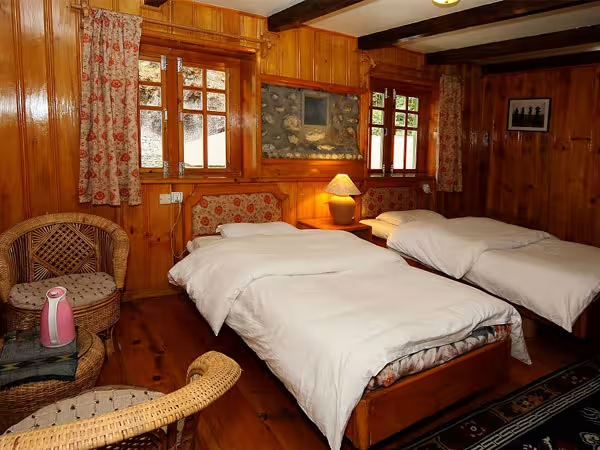
ii. Accommodation: You’ll stay in traditional Sherpa teahouses. These are cozy, family-run lodges that offer a warm communal dining hall and twin-sharing bedrooms. While the rooms are basic and unheated, the hospitality is world-class. On this itinerary, we prioritize teahouses known for the best views and cleanest facilities.

iii. Drinking Water: Staying hydrated is the number one way to prevent altitude sickness. You can buy bottled water, but we encourage using a reusable bottle with purification tablets or a Steripen. It’s better for the environment and your wallet. Aim for 3–4 liters a day.

iv. Electricity and Communication: Most teahouses offer charging stations for a small fee (usually $2–$5). As for staying connected, Ncell and Everest Link (Wi-Fi) are available in most villages. However, treat the higher altitudes as a chance to unplug—the mountains look better than a screen anyway.

v. Flights and Mountain Logistics: This trek involves two distinct flight experiences. First, the fixed-wing flight to Lukla (an adventure in itself). Second, the helicopter return from Gorak Shep. Logistics are handled by our experienced ground team to ensure weight limits are respected and weather windows are maximized.

vi. Best Time: The Everest region experiences four distinct seasons, each offering a completely different atmosphere. While you can technically trek year-round, Spring and Autumn are widely considered the Gold Standard for this specific itinerary.

Season

Months

Specialties & Highlights

Flight Reliability

Spring (Best Time)

March – May

The Climbing Season: See the legendary Yellow Tent city at Base Camp. Trails are lined with blooming pink and red rhododendrons.

High: Stable morning weather makes for the most reliable helicopter windows.

Autumn (Best Time)

Sept – Nov

Peak Visibility: The post-monsoon air is washed clean, offering the sharpest, most high-definition views of Everest's south face.

Excellent: Clear blue skies and minimal wind provide the smoothest aerial experience.

Winter

Dec – Feb

Solitude & Clarity: The trails are empty, and the skies are incredibly blue. The landscape transforms into a dramatic, snowy winter wonderland.

Moderate: High winds and extreme cold can occasionally delay morning flights.

Summer / Monsoon

June – Aug

Lush Greenery: The Khumbu becomes a vibrant green paradise with waterfalls in full flow. Ideal for those who enjoy misty, moody mountain scenes.

Lower: Frequent cloud cover and rain often lead to flight delays or cancellations.

vii. What Makes This Trek Different from the Standard EBC Trek

The traditional Everest Base Camp trek emphasizes endurance through a full round-trip journey. This itinerary preserves the complete ascent while rethinking how the trek concludes.

Key Differences at a Glance:

  • No Extended Return Descent: The multi-day downhill walk is replaced with a helicopter exit.

  • Same Acclimatization Profile: You follow the same gradual ascent and rest-day structure as the classic trek.

  • Energy Allocation: Physical effort is focused on reaching Base Camp and Kala Patthar, not on the return.

  • Aerial Perspective: The journey ends with a panoramic flight over the Khumbu rather than a retraced trail.

  • Improved Return Reliability: Helicopter operations are often less affected by conditions that disrupt Lukla flights.

You still earn Everest Base Camp on foot. What changes is how the journey ends—and how you feel when it does.

viii. Packing List with Weight Management Tips

Since you are flying by helicopter, weight management is vital (usually a 15kg/33lb limit including your daypack).

  • The Essentials: Broken-in hiking boots, a -15°C rated sleeping bag, and a down jacket.

  • Layering is Key: Think moisture-wicking base layers, a fleece mid-layer, and a waterproof shell.

  • Weight Tip: Wear your heaviest items (like your boots and jacket) on the flight to Lukla to keep your duffel bag light.

  • Don't forget: High-SPF sunscreen and polarized sunglasses—the high-altitude sun is no joke.

ix. Permits for the Short Everest Trek with Heli Return

To legally trek in the Everest region, you'll need two main permits. Despite the helicopter return, the entry requirements remain the same as a standard trek because you are still walking into the Khumbu region and the Sagarmatha National Park.

Here is the breakdown of the permits and costs for foreign trekkers:

Permit Name

International Travelers

SAARC Nationals

Nepali Citizens

Sagarmatha National Park

NPR 3,000

NPR 1500

NPR 100

Khumbu Pasang Lhamu Rural Municipality

NPR 3,000

NPR 2000

Free / N/A

Expert’s Choice: Which season is for you?

  • Choose Spring if you want to feel the Everest Fever. This is the only time of year when the world's elite mountaineers are at Base Camp, and the energy in the Khumbu is electric.

  • Choose Autumn if your priority is photography. You are almost guaranteed the iconic high-definition views you see in magazines, with crisp air and predictable flight schedules.

A Note on the Heli-Return: One major advantage of this trip is that helicopters can often fly in visibility conditions that would ground the small planes in Lukla. This makes the Autumn and Spring seasons even more reliable for getting you back to Kathmandu on time for your international flight.

x. Travel Insurance: Protecting Your Investment & Safety

While the Helicopter Return trek offers modern convenience and a shorter timeframe, the remote nature of the Himalayas remains the same. Because this premium itinerary involves pre-booked helicopter logistics and higher operational costs, comprehensive travel insurance is a mandatory requirement for all trekkers.

To ensure your policy is fit for this specific journey, it must include these two critical components:

  • Mountain Rescue vs. Luxury Return: It is important to understand that your itinerary includes a planned helicopter return. However, your insurance must specifically cover Emergency Medical Evacuation up to 6,000 meters. In the event of altitude sickness, a medical evacuation is a separate flight to a hospital in Kathmandu, and your insurance provider will need to coordinate this directly.

  • Trip Cancellation Protection: Because this is a high-value adventure with significant non-refundable deposits for helicopter seating and permits, we strongly recommend a policy that includes Trip Cancellation and Interruption. This protects your investment if you are forced to cancel due to unforeseen medical or personal reasons before the trek begins.

The Expert’s Advice: Always check the Fine Print of your policy. Ensure Mountaineering or Trekking is not listed as an exclusion. For this route, you simply need coverage for High Altitude Trekking up to 6,000m—no technical climbing or ropes are involved.

xii. Tourist Visa Requirements for Nepal

How to Streamline Your Arrival

Most travelers can obtain a Visa on Arrival at Tribhuvan International Airport (KTM) in Kathmandu. Because your trek is a condensed 9-day itinerary, the process is straightforward, but efficiency at the airport is key to ensuring a smooth start to your adventure.

Visa Duration

Cost (USD)

Recommended For

15 Days

$30 USD

Perfect for this 9-Day itinerary.

30 Days

$50 USD

Recommended if you plan to stay longer in Kathmandu or Pokhara.

90 Days

$125 USD

For travelers on an extended Himalayan journey.

To avoid long queues and ensure you meet your trekking team on time, follow these steps:

  • The 15-Day Option: Since this trek is only 9 days, the 15-day visa is the most cost-effective choice. However, ensure your total time in Nepal (including arrival and departure days) does not exceed 15 days. If it does, you must opt for the 30-day visa.

  • Online Pre-Registration: You can fill out the Arrival Bio-Data form online (within 15 days of your arrival). This generates a barcode that saves you significant time at the airport kiosks.

  • Payment: While the visa fee can be paid in various major currencies (USD, EUR, GBP), carrying crisp, new USD bills is the most reliable way to ensure a fast transaction.

  • Passport Requirements: Your passport must be valid for at least 6 months beyond your date of entry and have at least one blank page for the visa sticker.

  • SAARC & Indian Citizens: Indian nationals do not require a visa, while citizens of SAARC countries (except Afghanistan) are eligible for a Free (Gratis) visa once per calendar year.

Expert Tip for the 9-Day Trek: Since your schedule is tighter than a classic trek, we recommend arriving in Kathmandu at least one full day before Day 1 of the itinerary. This provides a buffer for visa processing and any international flight delays, ensuring your trek begins exactly as planned.

xiii. Cancellation & Refund Policy: To bring a trek of this magnitude to life, we begin coordinating your mountain logistics the moment you book. Your 30% deposit ensures every detail is ready for your arrival, from securing local permits to reserving highly sought-after teahouses and internal flight seats to Lukla. Because these funds are immediately committed to our mountain partners to guarantee your spot, this deposit is non-refundable.

We understand that plans can change. To be as fair as possible while covering these upfront operational costs, the following terms apply to cancellations and logistical changes:

Scenario

Policy & Fees

Cancel 30+ days before departure

10% of the total trip cost is charged.

Cancel 10–30 days before departure

20% of the total trip cost is charged.

Cancel within 10 days of departure

30% of the total trip cost is charged.

Rescheduling your trip

$0 Fee. Postpone for up to one year at no extra cost.

If the Lukla plane is canceled due to the weather

100% Refundable (for the flight portion).

Leaving the trek early (Medical/Personal)

Non-Refundable for unused days or return tickets.

Emergency Medical Evacuation

Extra Fee Applies (Typically covered by your insurance).

FAQs

  • Due to safety considerations at high altitudes, a helicopter will pick up two trekkers and their baggage on a single trip from Gorakshep.

  • Helicopter shuttles are made from Gorakshep to Lukla from 8 am to 11 am.

  • The Everest Heli Trek offers a helicopter return from Gorakshep to Kathmandu, but your journey to Lukla begins with a scenic mountain flight by plane. Depending on the season, these flights operate either directly from Kathmandu or from Ramechhap, a few hours' drive from the capital city.

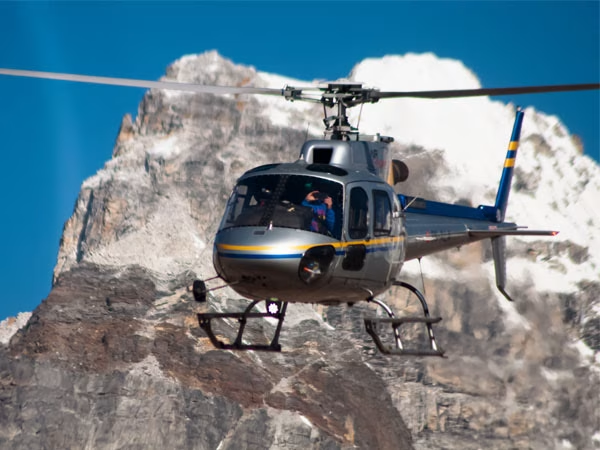
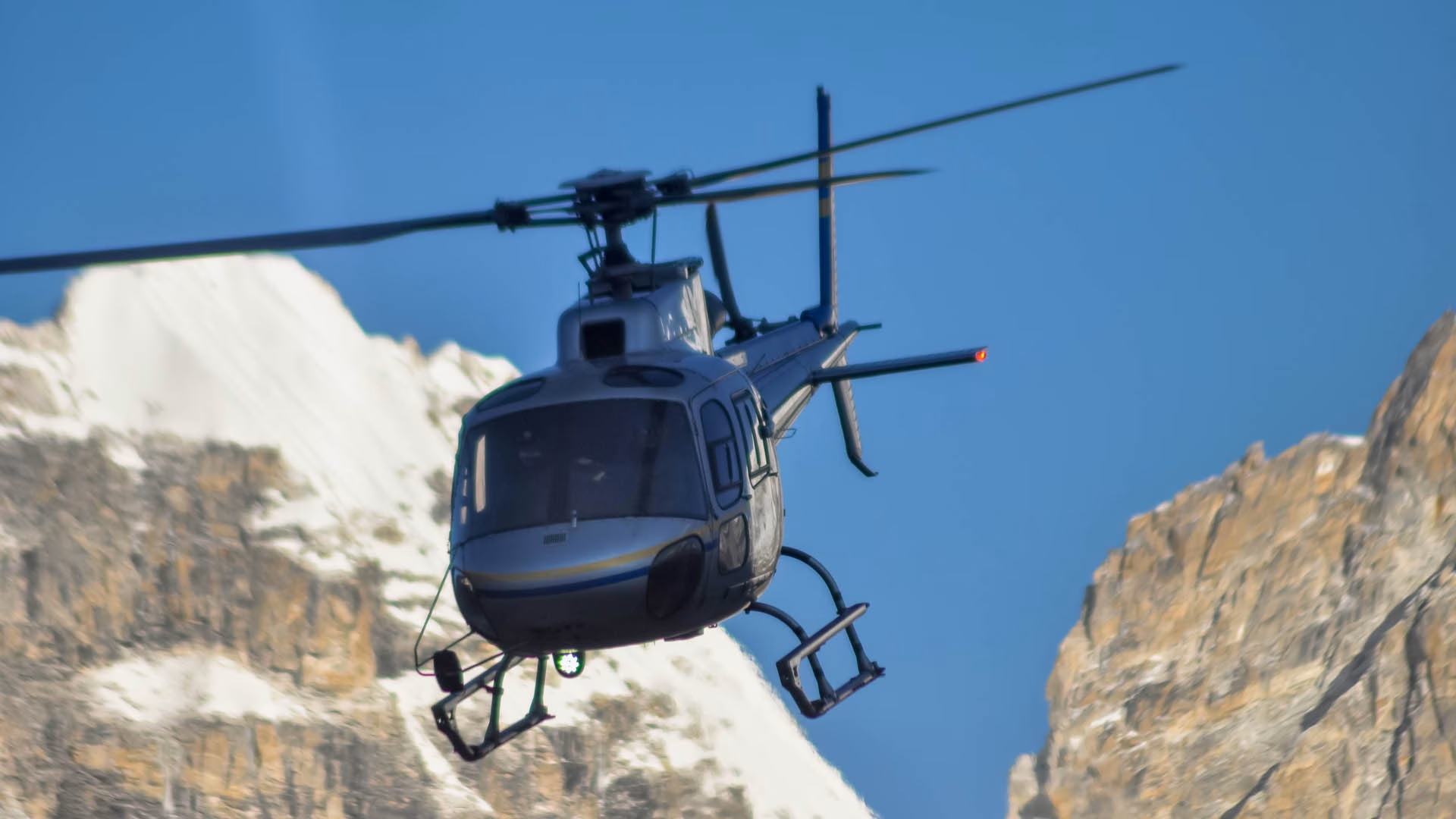
  • The B3 Eurocopter, also known as the AS350 B3, will pick you up from Gorakshep. Renowned for its versatility and exceptional performance, particularly in challenging conditions, the B3 has earned a reputation as a reliable and capable aircraft in the mountainous Everest region.

  • For serious altitude-related complications, you will be airlifted from any place in the Everest region and shuttled straight to Kathmandu for medical treatment. If your health condition is manageable, you will be picked up by a helicopter from any point in the Everest region, flown over to Everest Base Camp, and then to Lukla and Kathmandu.

  • You can pack 10 to 12 kg (22.05 to 26.46 lbs) of luggage to be assigned to a porter. Each porter is shared by two trekkers and can carry up to 20 kg. If you have extra gear, equipment, or supplies, you can easily hire an additional porter.

  • For additional personal and miscellaneous expenses, bring the Nepalese equivalent of USD 200 to USD 300 in cash.

  • Yes, all stops in the Everest trekking trail have WiFi connectivity with fees ranging from NPR 500 to NPR 1000 per day.

  • Yes, helicopter flights from Gorakshep are 100% safe and operated by licensed airline companies in Nepal. They are regulated by the Civil Aviation Authority of Nepal (CAAN), ensuring that all necessary safety checks and protocols are strictly followed.

  • Yes, most guests store their extra luggage at the hotel where they're staying in Kathmandu. We can also store your belongings safely at our office in Kathmandu.

  • Certainly, just make sure you consult with our team and guide beforehand so we can design a suitable diet plan for you throughout the trip.

Everest Base Camp Trek with Helicopter Return Reviews

5.0based on 22 reviews
  • C
    Chin SeeMay 09, 2025
    TrustPilot

    Awesome trekking to EBC

    We recently completed the Everest Base Camp trek with Sublime Trails, and the experience exceeded all expectations. From the moment we arrived in Kathmandu, the team was organized, professional, and incredibly supportive.

    Our guide was knowledgeable, patient, and deeply familiar with the trail, local culture, and altitude-related concerns. He ensured we were safe, well-acclimatized, and comfortable every step of the way. The porters were equally impressive — always cheerful and reliable despite the challenging terrain.

    Logistics were seamless — airport pickups, teahouse accommodations, permits, and meals were all taken care of smoothly. Sublime Trails also stood out in how they balanced professionalism with a personal touch. We never felt rushed, and every question or concern was met with genuine care.

    The Everest region is breathtaking, and having a dependable agency like Sublime made the entire trek even more enjoyable. I highly recommend them to anyone planning this once-in-a-lifetime adventure.

  • H
    Henry TohMay 08, 2025
    TripAdvisor

    Unforgettable EBC hiking

    Sublime provide very good service the moment you landed in Kamanthu for the trek. We are very fortunate to have a good guide Adjit which provide very detailed route everyday for the hike. He is friendly and advised us what to expect during the hike and the good spot to take good photos.

Send Inquiry