Book Now
Price from
US$1800

Bhutan Spiritual Tour - 3 Nights 4 Days

325 reviews in TripAdvisor
41 reviews in Google
Duration:3 Days
Trip Grade:Easy
Best Time:Whole Year
Price Per Person
US$1800

The Bhutan Spiritual Tour offers a focused, enriching journey into Bhutan’s spiritual life, monastic traditions, and cultural identity—perfect for travelers with limited time who still want to experience the country’s essence. 

3 Nights 4 Days Bhutan Tour Highlights

  • The perfect getaway to Bhutan - the last Buddhist Kingdom
  • A scenic flight over mountains towards Paro Airport
  • Reach Kunselcholing Viewpoint, also known as Kuensel Phodrang, to get amazing views of the Thimphu Valley
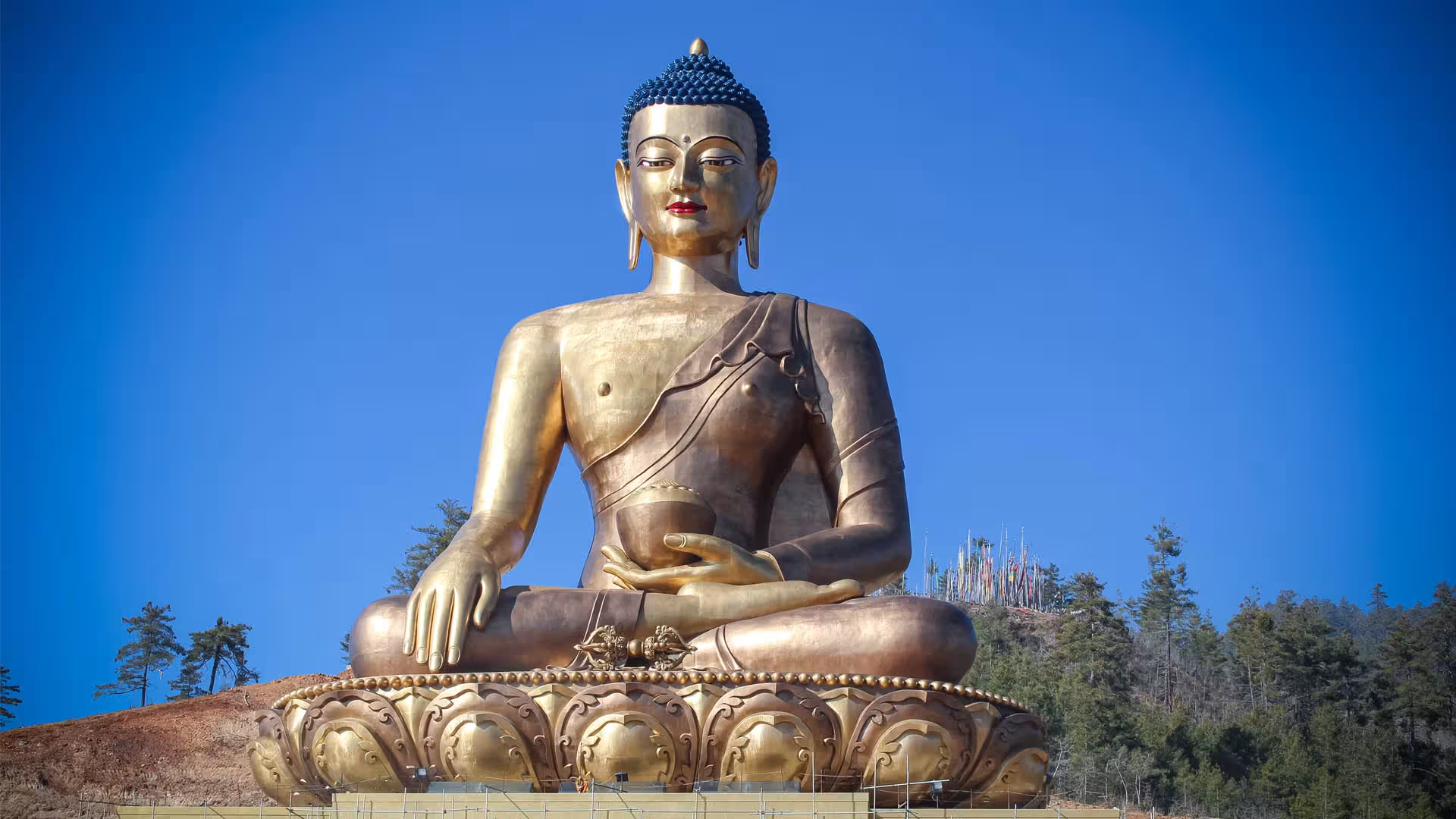
  • Pay homage to the country's largest statue of Buddha
  • Visit Memorial Chorten, built in memory of King Jigme Dorji Wangchuck, and Tashichho Dzong
  • Hike up to the world-renowned Taktshang Monastery, also known as Tiger’s Nest
  • Visit the National Museum in Paro
  • Learn about the culture and daily lifestyle of people in Bhutan
  • Enjoy the amazing natural beauty and picturesque landscapes throughout the tour

Covering just Thimphu and Paro, the Bhutan Spiritual Tour itinerary avoids long road journeys and instead emphasizes living culture, meaningful interactions, and landmark experiences.

In Thimphu, the tour begins at the Memorial Chorten, where locals gather for daily prayers—a powerful glimpse into everyday spirituality. At Tashichho Dzong, you’ll see how religion and governance coexist, as the fortress houses both the King’s office and the central monastic body.

A visit to Dechen Phodrang Monastic School offers rare insight into Bhutan’s living Buddhist education system, while Simtokha Dzong, the country’s oldest fortress, introduces Bhutan’s architectural foundations and cultural preservation efforts.

In Paro, you’ll hike to the legendary Tiger’s Nest Monastery (Taktsang)—a spiritual landmark built into a cliffside that symbolizes devotion, endurance, and faith.

After the hike, the visit to the National Museum (Ta Dzong) provides context to everything you’ve seen, with exhibits that trace Bhutanese history through ritual tools, thangka paintings, and everyday objects.

Optional stops at local markets in Thimphu and Paro give you the chance to explore Bhutanese craftsmanship firsthand, from woven textiles to bamboo and woodwork.

This Bhutan 4-day itinerary offers a grounded, meaningful experience of Bhutan—rich in insight, spiritual energy, and living tradition—all within a compact and accessible format.

Ta Dzong and the Everyday Story of Bhutan

Bhutan’s history isn’t only found in its fortresses and temples—it also lives quietly inside the walls of Ta Dzong, Bhutan’s National Museum in Paro.

Originally built as a watchtower in the 1600s, Ta Dzong was later transformed into a museum. Today, it holds a wide collection of objects that reflect how Bhutanese people have lived, worked, prayed, and created over the centuries.

Inside, you’ll find everything from ancient weapons and traditional masks to handmade textiles and detailed Thangka paintings. These aren’t just museum pieces—they’re tools, heirlooms, and symbols of daily life. Each one tells a story about Bhutanese culture, not through big events, but through quiet traditions and everyday craftsmanship.

For visitors, Ta Dzong helps make sense of what they’ve seen throughout the tour. It gives context to the prayers at Memorial Chorten, the architecture of Tashichho Dzong, and the monastic life at Dechen Phodrang.

The museum doesn’t rely on flashy exhibits—instead, it offers a grounded, thoughtful look at Bhutan’s values: simplicity, faith, and resilience.

This stop is less about looking back and more about understanding the way Bhutan continues to live its heritage. It’s a moment of reflection that helps tie the journey together.

Bhutan’s Living Monasteries and Sacred Spaces

Bhutan’s monasteries and monastic schools are not historical relics—they are active institutions that shape daily life, education, and spiritual practice across the country.

Dechen Phodrang Monastic School, situated on a hill overlooking Thimphu, provides a unique glimpse into this living tradition.

Originally a dzong, the building now serves as a monastic school for young boys, many of whom begin their training here at a young age. Students learn Buddhist philosophy, scriptural recitation, and meditation techniques alongside basic education.

Visiting Dechen Phodrang is not about viewing artifacts—it’s about witnessing an education system rooted in centuries of spiritual discipline, one that still actively shapes Bhutanese society.

In contrast, Tiger’s Nest Monastery (Taktsang) represents a more symbolic and spiritual side of Bhutanese Buddhism. Perched nearly 900 meters above the Paro Valley, Taktsang is one of the most iconic religious sites in the Himalayas.

Believed to be the meditation site of Guru Rinpoche, who introduced Buddhism to Bhutan, the monastery’s remote location and construction on a sheer cliff face demonstrate an extraordinary level of devotion and architectural determination.

The climb to Taktsang is demanding, but for Bhutanese pilgrims, it’s a spiritual rite of passage. For visitors, it underscores the resilience and reverence that define Bhutanese religious life.

Together, these two sites offer more than scenic or historical interest. Dechen Phodrang shows Buddhism as a lived, formative experience, while Tiger’s Nest highlights the commitment and faith that continue to shape Bhutan’s cultural identity.

Where Art is Devotion: Encounter the Sacred in Every Stroke

In Bhutan, art is more than expression — it’s devotion.

Whether it’s a Thangka painting, a carved artifact, or a handwoven textile, everything here is made slowly, by hand, and with purpose. There’s a softness in the way the lines are drawn, the colors are chosen, and the brush is held. You can feel it, not just see it. When you pause and stand still in front of one of these works, something shifts. You’re not just looking at art anymore. You’re sensing a connection to something sacred.

These art pieces reflect the way Bhutanese people live: with intention, with care, with a quiet sense of reverence. The art itself is meditation here, especially when you see students painting, completely focused, as if they’re not just creating something, but living inside it.

And what’s powerful is that this sense of presence doesn’t end in museums. You’ll start noticing it in airports, in buildings, in walls, even in the smallest everyday objects. Art is everywhere, not because it’s meant to be shown off, but because it’s simply part of how people express their beliefs, their respect, and their inner stillness.

Itinerary

Bhutan Spiritual Tour - 3 Nights 4 Days Detailed Itinerary

Day 1 - Arrival in Paro and Drive to Thimphu

Your Bhutan tour starts with a scenic mountain flight to Paro. As you approach Bhutan, you will get the thrilling bird’s-eye view of the mountain landscapes. When you reach Paro, our representatives will already be there to pick you up. You will then have a one- to one-and-a-half-hour drive from Paro to Thimphu. Enjoy the ride that offers you amazing views of the landscapes, forests, and rivers while your body gets the chance to acclimatize.

Upon your arrival at Thimphu, you will check into a hotel and take a rest for a while. Then you can set out to explore the city. You will first visit Memorial Chorten built in memory of  Jigme Dorji. It is one of the prominent heritage sights of Bhutan. The architecture of the Tibetan-style Chorten will amaze you. Then you will visit Tashi Cho Dzong, which is half monastery and half administration, and the throne room of the current king. Later in the evening, you can visit local markets where you can buy local products and observe them.

Meals: Lunch and Dinner
Accommodation Type: 3-Star Hotel

Day 2 - Sightseeing in Thimphu

You will spend the second day sightseeing in Thimphu. After breakfast, you will have about 15 minutes of drive to Hillock. The tower is one of the best viewpoints in Thimphu city. Enjoy the amazing view of the city and the surrounding landscapes. You will go to the state monastic school, Dechen Phodrang. After spending a few moments there, you will leave for the National Museum, which displays many paintings and statues that represent the history and culture of Bhutan. Visit Simtokha Dzong at last, which is the first dzong of the country. You can get back to the hotel and take a rest after that. However, if time permits, you can stroll around the streets and interact with the local people.

Meals: BLD
Accommodation Type: 3-Star Hotel

Day 3 - Drive from Thimphu to Paro

On the third day of your Bhutan tour, you will drive to Paro from Thimphu after breakfast in the morning. Enjoy the scenic views of the mountains, forests, and rivers along the way. You will get to Paro after about one and a half hours of the ride. You can rest for a while and have your lunch in Paro, preparing yourself for the hike up to Tiger’s Nest Monastery. You will hike uphill for about 2 hours to get to the monastery hanging on the cliff. You will have to walk through rhododendron forests and stairs on the cliff along the way, so it might be a bit strenuous. You will encounter a cafeteria halfway through the monastery, from where you will get a spectacular view of the valley and the surrounding landscapes. You will explore the monastery, spend some time in the serene environment, and get back to the valley.

After returning back you can explore the valley. Stroll around the street, visit local markets to buy some local handmade bamboo products. Visit the National Museum, which preserves some of the best pieces of art.

Meals: BLD
Accommodation Type: 3-Star Hotel

Day 4 - Departure

Your 3 Nights 4 Days Bhutan tour concludes in Paro. According to your flight schedule, we will drive you to the airport for your connecting flight. We will bid you farewell, and you will fly to your home or your next destination.

Meals: Breakfast
Make Your Own Itinerary
Map And Altitude Chart

Bhutan Spiritual Tour - 3 Nights 4 Days Map and Altitude Chart

Interactive Map
StartMid DaysEnd
Cost Details

Inclusions & Exclusions

What’s Included
  • 3 Breakfasts, 3 Lunches, 3 Dinners
  • 3-Star accommodation in Bhutan for 3 nights
  • All land transportation with pickups and drops
  • An experienced driver and a private vehicle
  • A qualified & licensed English-speaking guide
  • Flight from Kathmandu to Paro and return to Kathmandu
  • Visas for Bhutan
  • All entry fees and permits
  • Government fees, royalty, taxes & surcharges
  • Mineral bottled water
  • Set of traditional costume (to be returned at the end of your stay)
What’s Excluded
  • Travel Insurance (assistance can be provided)
  • Meals at any restaurant other than the designated ones
  • Any upgrade in accommodation and services
  • Items of a personal nature (drinks, chocolates, desserts, etc.)
  • Tips for the guide and driver
Upcoming Trip

Dates & Availablity

Cancellation Policy
Secure Payment
Reviews

Client’ Testimonials and their Experiences

Deborah Fahy
Short tour but unlimited fun

I have to say, this tour was one of the best thing that happened in my life. The service, hospitality, the food, culture everything was awesome.  Even after i returned from the tour, all i could think about was the fun we had there.

Deborah Fahy - United States
October 06, 2017
Essential

Know Everything Before You Go Bhutan Spiritual Tour - 3 Nights 4 Days

What to Wear: Dress Code in Bhutan

Bhutan is a deeply traditional society where cultural etiquette plays an important role in daily life. Visitors are expected to dress modestly, especially when visiting religious sites or government buildings—this means covering shoulders and knees and avoiding bright, flashy clothing.

In sacred spaces like temples, dzongs, and monasteries, it is customary to remove your shoes and hats before entering, and to walk clockwise around chortens and prayer wheels.

It’s often the small gestures of courtesy that leave a stronger impression. Avoid pointing at people or religious icons, never step over food or someone’s outstretched legs, and use both hands—or your right hand only—when giving or receiving something, even casually.

Public displays of affection are frowned upon, and it’s respectful to keep your voice low and your demeanor composed, especially in the presence of monks or during religious rituals.

During festivals and formal occasions, locals wear traditional dress, and while tourists aren’t required to do the same, a neat and respectful outfit will help you blend in and be warmly received. When in doubt, follow your guide’s lead and observe how Bhutanese people conduct themselves.

Photography

Bhutan’s breathtaking landscapes and rich cultural heritage offer countless photo-worthy moments, but visitors should approach photography with mindfulness and respect.

Photography is strictly prohibited inside temples, monasteries, and shrine rooms, as these spaces often contain sacred relics and are deeply revered by the Bhutanese people. Similarly, photographing ceremonies or monks—whether during festivals or in daily life—should only be done with clear and explicit permission.

While exterior shots of temples and dzongs are generally allowed, always check with your guide or look for signage before taking photos. The use of drones is heavily restricted and requires special authorization; they are not allowed near monasteries or populated areas. Government and military buildings are also off-limits for photography.

In Bhutan, the emphasis is on being present rather than documenting every moment. Your guide will help you understand when photography is appropriate—when in doubt, it’s best to ask first.

Packing List for a Short Bhutan Trip

Packing for a 3-night, 4-day trip to Bhutan doesn’t require much, but it does require some thought. With a mix of light hiking, cultural visits, and variable mountain weather, you’ll want to keep things light, modest, and practical.

For temple visits and dzongs, modesty is important. Pack long pants or ankle-length skirts, along with tops that cover your shoulders (long sleeves are preferred). A light scarf or shawl can come in handy if additional coverage is needed at religious sites. Avoid sleeveless tops, shorts, or flashy clothing, as these are not appropriate inside sacred spaces. You’ll also need to remove your shoes and hat before entering temples.

Bhutan’s weather can shift quickly, especially between valleys and higher altitudes. Layering is key. Include a breathable base layer, a fleece or light jacket, and a windbreaker or compact rain jacket. Evenings can be cool, especially in places like Dochula Pass or during early-morning hikes.

For the Taktsang Monastery (Tiger’s Nest) hike, bring proper hiking shoes with good grip, as the trail can be steep and dusty. A daypack with essentials like water, sunscreen, tissues, and a light snack will be useful. Mornings are typically the best time to hike, so pack accordingly for cooler temperatures.

While exploring markets or walking around towns like Thimphu and Punakha, casual wear and comfortable shoes are enough. Just make sure your outfit can transition easily if your itinerary includes a monastery or cultural site.

Here’s a quick list of useful extras:

  • Reusable water bottle
  • Sunglasses and sunscreen
  • Hand sanitizer and travel tissues
  • Power bank or spare battery
  • Personal medication
  • Lightweight backpack or tote bag
Enough Dreaming About It
One simple step to start your Himalayan journey. Select your trek, select your dates and book your space with Sublime Trails in minutes. Bookings include expert local guides, permits and personalized itinerary support. Flexibility in rescheduling and open pricing.
Book Now
Tell Us Your Version
Every Sublime Trails experience is made for you. Extend your journey, include a cultural stay, improve your lodging or combine several regions into one unforgettable expedition. Tell us how you want to experience and we will make an itinerary that suits your pace, budget and dreams.
Customize
Need Help? Call Us+977 9851183278