Book Now
Price from
US$2200

Bhutanese History and Architecture - 5 Day Tour

325 reviews in TripAdvisor
41 reviews in Google
Duration:4 Days
Trip Grade:Easy
Maximum Altitude:3050m
Best Time:Whole Year
Price Per Person
US$2200
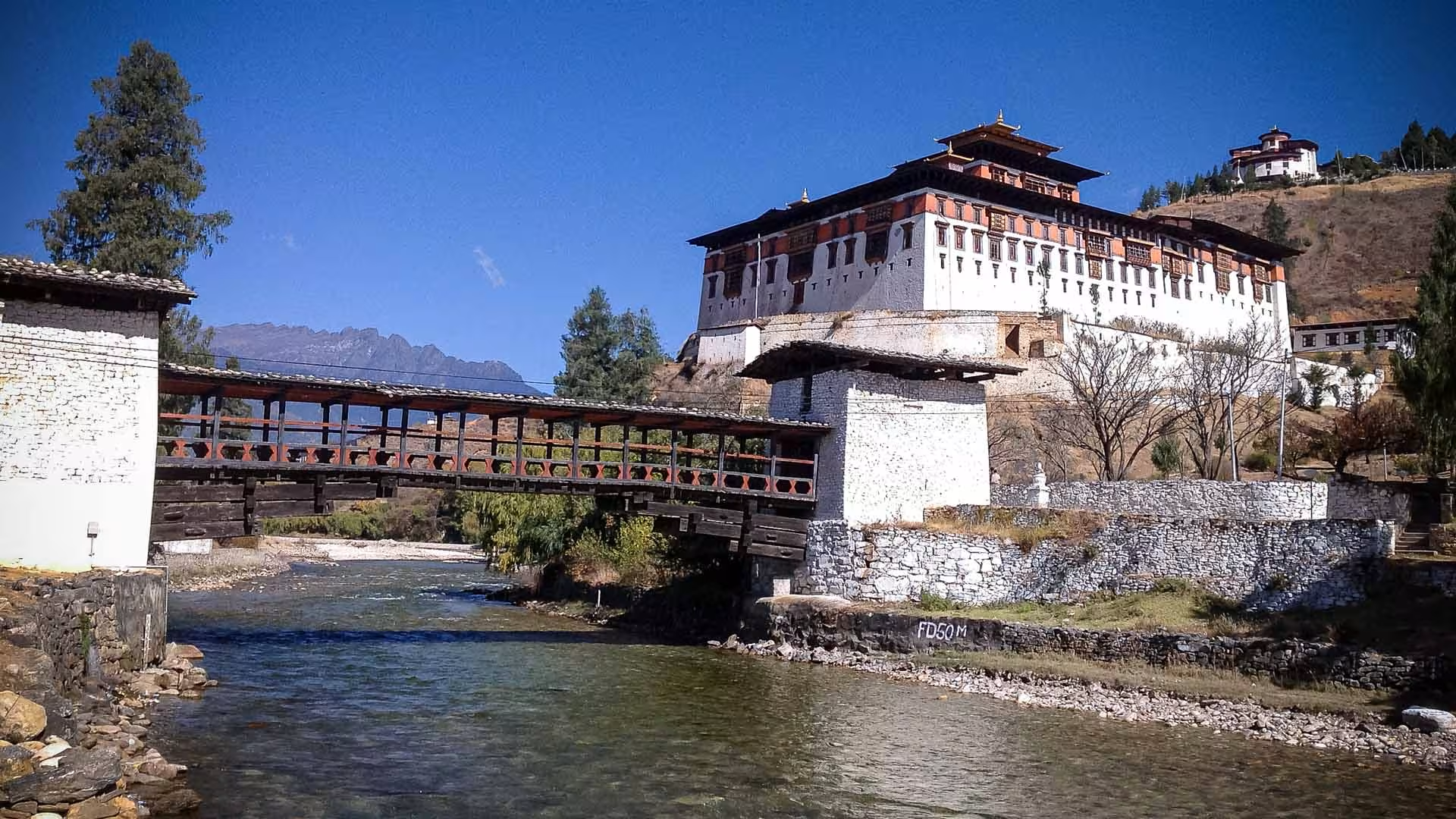
Rinpung Dzong traditional Bhutanese architecture in Bhutan Tour

The Bhutanese History and Architecture – 5 Day Tour takes you on a curated journey through Bhutan’s most iconic cultural and architectural landmarks across Thimphu, Punakha, and Paro. This itinerary highlights the country’s distinctive dzong architecture, sacred temples, traditional art forms, and living heritage.

4 Nights 5 Days Bhutan Tour Highlights

  • A scenic flight over the mountains to Paro Airport
  • Visit Memorial Chorten, built in memory of King Jigme Dorji Wangchuck, and Tashichho Dzong
  • Get close to the culture and traditions of the people in Bhutan
  • Dochula Pass at 3,080 meters and enjoy views of Masagang, Tsendagang, Gangkar Puensum (the highest peak in Bhutan), etc.
  • Visit Punakha Dzong and explore the local market at Wangdue Phodrang
  • Visit Punakha Suspension Bridge to get the amazing views
  • On the way to Paro, visit Simtokha Dzong, an old fortress
  • Visit the National Museum, Rinpung Dzong, and the ruins of Drukgyel Dzong in Paro
  • Hike up to Taktshang Monastery, also known as Tiger’s Nest, and visit Kyichu Lhakhang
  • Amazing natural beauty and picturesque landscapes throughout the tour
  • Shop for Bhutanese arts and textiles in Thimphu

In Thimphu, you’ll explore the Memorial Chorten, Tashichho Dzong, and Simtokha Dzong, along with visits to the Art & Craft School (Zorig Chusum) and the optional Handicraft Emporium. The route over Dochula Pass, with its 108 chortens, offers panoramic views and a symbolic glimpse into Bhutan’s spiritual resilience.

In Punakha, the tour covers the grand Punakha Dzong, the Punakha Suspension Bridge, and the bustling Wangduephodrang Local Market, with a blend of history, engineering, and everyday culture.

In Paro, you’ll visit the National Museum (Ta Dzong), Rinpung Dzong, and two of Bhutan’s oldest and most significant temples: Kyichu Lhakhang and the cliffside Taktsang Monastery (Tiger’s Nest). An optional farmhouse visit concludes the experience with a look into rural Bhutanese life before you depart from Paro Airport.

This 5-day Bhutanese History and Architecture Tour is ideal for travelers who want a compact yet immersive look at Bhutan’s historical depth and architectural identity, directly through the landmarks that define it.

Bhutan Architecture Tour - Where Fortresses Tell Stories Through Stone and Timber

On the Bhutanese History and Architecture tour, you will visit Bhutan’s most iconic dzongs—Tashichho Dzong, Punakha Dzong, Simtokha Dzong, and Rinpung Dzong.

A dzong is a fortress unique to Bhutan. It serves as both an administrative center and a monastery. These imposing structures are found across the country, built without nails, using stone foundations and intricately joined timber frameworks.

Each dzong follows a distinct layout—thick exterior walls, central courtyards, and a multi-storied tower known as the utse. The design is consistent across the country but reflects regional character in its detail and decoration.

Punakha Dzong, built in 1637, is one of the most iconic examples. Located at the meeting point of the Pho Chhu and Mo Chhu rivers, it once served as Bhutan’s capital. Its location and size show how important it was for politics and defense.

Meanwhile, Tashichho Dzong in Thimphu is the current seat of government and houses the King’s throne room. Unlike older dzongs, it has undergone several reconstructions, but it still follows the traditional architectural principles.

Furthermore, Simtokha Dzong, built in 1629, is the oldest surviving dzong in Bhutan. Though smaller, it set the architectural precedent for later fortresses and introduced the dual-purpose model that defines dzongs today.

Meanwhile, Rinpung Dzong in Paro continues to function as both a district administration office and a monastic center. It overlooks the Paro Valley and is known for its defensive walls and historical murals.

These buildings are not static monuments—they’re in daily use. Every beam, every wall, shows how Bhutan’s leaders built to protect and govern. Their age, repairs, and decorations reveal a history of resilience and care. While visiting these dzongs, you will step into Bhutan’s past, where stone and wood carry centuries of meaning.

Traditional Bhutanese Art Lives On in Every Detail

This 5-Day Bhutan Heritage Travel Itinerary offers a deep dive into Bhutan’s rich artistic heritage, where centuries-old traditions are preserved and practiced with care.

At the Art & Craft School in Thimphu, you will witness firsthand the delicate process of Thangka painting. Thangka painting has always been a sacred art form that demands patience, precision, and spiritual focus. Watching skilled artists at work offers insight into the techniques and symbolism that Bhutan's ancestors have passed down through generations.

Similarly, the Handicraft Emporium offers a cultural shopping experience, allowing you to explore a diverse range of traditional Bhutanese crafts. From woven textiles to bamboo and woodwork, the emporium shows the everyday crafts that support local people and keep Bhutan’s traditions alive today.

At the National Museum (Ta Dzong) in Paro, the experience broadens to historical and cultural perspectives. The museum houses an extensive collection of artifacts, including ancient stamps, weapons, and exquisite Thangka paintings. More importantly, this setting ties together the artistic practices seen earlier with their historical context, illustrating how Bhutan’s art forms reflect its unique cultural identity.

Together, these destinations highlight how traditional Bhutanese art continues to thrive, not just as decoration but as a living expression of history and craftsmanship.

Every Landmark is a Chapter in Bhutan’s Architectural History

Bhutan’s dzongs obviously make the list when talking about the country’s rich architectural heritage. These impressive fortresses showcase centuries of design, craftsmanship, and cultural significance. 

But Bhutan’s architectural story doesn’t end there—other landmarks across the country also reveal important chapters of its history.

The Punakha Suspension Bridge, which we will visit in this "Bhutan Architecture Tour," is one such example. As one of Bhutan’s longest iron chain bridges, it spans the Po Chhu River near Punakha Dzong. The bridge combines practical engineering with traditional style. This bridge has linked communities for generations and stands as a symbol of Bhutan’s adaptation to its mountainous landscape.

Moreover, the Taktsang Monastery, famously known as the Tiger’s Nest, is a bold architectural feat. The name "Tiger’s Nest" itself reflects the legend of Guru Rinpoche flying here on the back of a tiger, symbolizing the monastery’s fearless spirit.

Sitting about 900 meters above the Paro Valley, the Taktsang Monastery clings to a steep cliff that amazes visitors. It was built in the 1600s without modern tools and took a lot of courage, skill, and hard work to make. All in all, Taktsang shows that Bhutan may seem quiet and polite, but it has a bold and fearless spirit that conquers even the toughest landscapes.

Then there is Kyichu Lhakhang, one of Bhutan’s oldest temples, dating back to the 7th century. Its simple stone and timber construction reflects the early introduction of Buddhism to Bhutan and remains a powerful symbol of the country’s ancient architectural roots.

Together with the dzongs, these landmarks tell the story of Bhutan’s architecture—from grand fortresses to bridges and temples. As you visit these landmarks on this trip, each one will reveal the country’s prowess in architecture and the willingness to preserve its heritage.

Itinerary

Bhutanese History and Architecture - 5 Day Tour Detailed Itinerary

Day 1 - Arrive at Paro and drive to Thimphu

Your Bhutan tour starts with a mountain flight to Paro. During the flight, you can get a thrilling bird’s-eye view of the snow-capped mountains and landscapes of the Himalaya. Upon your arrival at Paro airport, our representatives will pick you up and drive you to Thimphu. During one and a half hours of drive, you will have time to acclimatize to the high altitude of Bhutan. You can also enjoy the view of the landscapes, forests, rivers, etc during the drive. Once you reach Thimphu, you can check into a hotel and rest for a while.

You will spend the rest of your day sightseeing in Thimphu. You will first visit Memorial Chorten, which was built in honor of the late King Jigme Dorji Wangchuck. Then, explore Thimphu Dzong, which is the largest dzong in Bhutan and the seat of the King as well. Later, visit the art and craft school to explore the traditional Thangka paintings. You can also visit the handicrafts emporium that displays many handicrafts if time permits.

Meals: Lunch and Dinner
Accommodation Type: 3-Star Hotel

Day 2 - Drive to Punakha from Thimphu

Almost 3 hours drive from Thimphu takes you to Punakha. You will be rewarded with a plethora of scenic views. Stop by Dochula Pass, which is one of the best viewpoints to behold the mountains of the Himalayan range and the forests and other landscapes below them.

You can visit the 108 Chortens built in memory of departed soldiers.

When you arrive at Punakha, you will check into a hotel and take a rest. After a while, you will visit Punakha Dzong, where you can explore the paintings, artifacts, and statues inspired by Mahayana Buddhism.

You will then go to Wangdue Phodrang and explore local markets. You can buy local bamboo products and stone carvings. Visit the Punakha suspension bridge to get a wonderful view of the Punakha Dzong and the landscapes. You will finally return back to the hotel and stay overnight.

Meals: BLD
Accommodation Type: 3-Star Hotel

Day 3 - Drive to Paro from Punakha

Today, you will head to Paro from Punakha after breakfast. Enjoy the scenic views of the forests and the landscapes. You will visit Simtokha Dzong, which is the oldest fortress of Bhutan where religious studies are conducted. After almost 4 hours of driving, you will get to Paro. You can check into a hotel and rest for a while. Set out to explore Paro Valley after a few moments of rest. Visit the National Museum of Bhutan, built in the ruins of Ta Dzong. The museum has a collection of traditional paintings, artifacts, postage stamps, etc which represent the history of Bhutan. After that, you will go to Rinpung Dzong, also known as Paro Dzong, which was built by Ngawang Namgyal. You will then return back to the hotel or roam around the streets in the evening.

Day 4 - Sightseeing around Paro

After having an early morning breakfast, you will set off for Tiger’s Nest monastery. An uphill hike for about an hour takes you to the cafeteria, which is halfway through the monastery. This station provides you with amazing views of the Paro Valley and landscapes. You will ascend further through the rhododendron forest and the cliff to get to the monastery. The view of the monastery looks spectacular, hanging on the cliff. You can visit the cave where Guru Rinpoche is said to have meditated. Apart from exploring the monastery, you will get a mesmerizing view of the landscapes and mountains.

You will then return back to Paro using a different trail. Along the way, you will visit Kyichu Lhakhang, which is the oldest shrine of Bhutan. If time permits, you can also visit local farmhouses in the evening.

Meals: BLD
Accommodation Type: 3-Star Hotel

Day 5 - Departure

Your 4 nights 5 days Bhutan tour concludes here. According to your flight schedule, we will drive you to the airport for your connecting flight. We will then bid you farewell, and you will fly to your next destination with the beautiful memories of Bhutan.

Make Your Own Itinerary
Map And Altitude Chart

Bhutanese History and Architecture - 5 Day Tour Map and Altitude Chart

Interactive Map
StartMid DaysEnd
Cost Details

Inclusions & Exclusions

What’s Included
  • 4 Breakfasts, 4 Lunches, 4 Dinners
  • 3-Star accommodation in Bhutan for 4 nights
  • All land transportation with pickups and drops from Paro Airport
  • Flight from Kathmandu to Paro and return to Kathmandu ( contact us if you are flying to Paro from a different destination)
  • An experienced driver and a private vehicle
  • A qualified & licensed English-speaking guide
  • Visas for Bhutan
  • All entry fees and permits
  • Government fees, royalty, taxes & surcharges
  • Mineral bottled water
  • Set of traditional costume (to be returned at the end of your stay)
What’s Excluded
  • Travel Insurance (assistance can be provided)
  • Meals at any restaurant other than the designated ones
  • Any upgrade in accommodation and services
  • Items of a personal nature (drinks, chocolates, desserts, etc.)
  • Tips for the guide and driver
Upcoming Trip

Dates & Availablity

Cancellation Policy
Secure Payment
Reviews

Client’ Testimonials and their Experiences

Jimmy T. Boone
Such a beautiful place and people

After spending last vacation in Nepal, we decided to tour in Bhutan this year and it was totally worth it. The beautiful mountains, the rich culture and amazing people. I highly recommend this tour to everyone who want to go to some place new and fresh.

Jimmy T. Boone - United States
December 12, 2018
Essential

Know Everything Before You Go Bhutanese History and Architecture - 5 Day Tour

Best Time for Bhutan 5-Day History and Architecture Tour

Bhutan is a year-round destination, but spring (March to May) and autumn (late September to November) are hands-down the best times to visit. These seasons offer the clearest skies, most pleasant temperatures, and ideal conditions for all destinations in our 5-Day Bhutan Tour.

In Thimphu, landmarks like the Memorial Chorten and Tashichho Dzong shine during spring and autumn, with fewer clouds and gentle light in the mornings. The dzong is especially vibrant if you visit during the Thimphu Tshechu, usually held in September.

While the Art & Craft School (Zorig Chusum) and the Handicraft Emporium are open year-round on weekdays, the Dochula Pass offers sweeping Himalayan views that are most reliable between October and December. If you’re there in spring, you’ll catch the rhododendrons in full bloom—a visual treat in itself.

In the lush Punakha region, both the Punakha Dzong and the Punakha Suspension Bridge are ideal in dry seasons, especially around March, when the Punakha Tshechu brings the dzong to life. The Wangduephodrang Local Market, meanwhile, is a lively stop year-round, especially on weekends.

The iconic Taktsang Monastery, or Tiger’s Nest, is best hiked in dry months: October to November or March to May. These periods offer safe trail conditions and breathtaking views of the cliffside monastery. If you visit during the summer monsoon, the trail may be slippery, and cloud cover can block the view.

Currency, Cash, and Payments in Bhutan

The official currency in Bhutan is the Ngultrum (BTN), which is pegged to the Indian Rupee (INR) at par. Indian Rupees are widely accepted throughout the country.

Cash is king in Bhutan, especially in smaller towns and rural areas. Mobile payments like Google Pay or Apple Pay are not commonly used in Bhutan. While major hotels and some businesses in urban areas accept credit cards, cash remains the dominant method of payment. You’ll find ATMs in cities like Thimphu and Paro, but they can be unreliable or have limited cash.

All in all, it’s best to carry enough cash for daily expenses, particularly for shopping in local markets or dining at small eateries.

Plan to withdraw or exchange currency in Thimphu or Paro upon arrival, and always keep small denominations for tips, entry fees, or personal purchases.

Travel Etiquette and Cultural Sensitivity for Bhutan Travel

Being mindful of Bhutanese etiquette not only shows respect but also enhances your experience in the country.

Bhutan places great value on respect, modesty, and harmony. As a traveler, you are expected to dress modestly—especially when visiting temples and dzongs—covering arms and legs.

Always remove shoes before entering religious spaces, and avoid pointing feet at people or sacred objects.

Public displays of affection are frowned upon, and smoking is banned in most public areas, including streets and temples.

When greeting locals, a slight bow with a smile is appreciated. Always ask before taking photos, especially at religious sites or of people.

Supporting local crafts and behaving respectfully toward customs isn’t just polite—it’s a way to connect with Bhutan’s deep-rooted traditions.

Does Bhutan Have a Nightlife?

Bhutan isn’t known for wild nightlife—but that doesn’t mean there’s nothing happening after dark. In Thimphu and Paro, you’ll find a growing scene of local bars, lounges, and live music venues where young Bhutanese gather to unwind.

Karaoke bars and clubs like Mojo Park in Thimphu are popular spots where local bands play everything from Bhutanese rock to international covers.

For younger Bhutanese, especially students and teens, evenings are often spent socializing at cafés, playing sports like football or basketball, or attending school-hosted events. Urban youth enjoy modern trends—music, movies, dance—but always balanced with traditional values.

If you're looking to fit in, skip loud nightlife expectations and instead explore these relaxed local scenes. Visit a live music venue, attend a community festival, or even join locals for a game of carrom or archery during the day.

Overall, it’s less about blending in and more about showing genuine curiosity and respect—that’s what really opens doors in Bhutan.

Enough Dreaming About It
One simple step to start your Himalayan journey. Select your trek, select your dates and book your space with Sublime Trails in minutes. Bookings include expert local guides, permits and personalized itinerary support. Flexibility in rescheduling and open pricing.
Book Now
Tell Us Your Version
Every Sublime Trails experience is made for you. Extend your journey, include a cultural stay, improve your lodging or combine several regions into one unforgettable expedition. Tell us how you want to experience and we will make an itinerary that suits your pace, budget and dreams.
Customize Trip
Need Help? Call Us+977 9851183278