Machhapuchhre close enough to feel its scale, reached in one of the shortest genuine high-altitude treks in Nepal. Five days from Pokhara: drive to Kande, climb through rhododendron forest to Low Camp and High Camp, then a pre-dawn push to the Mardi Himal viewpoint before descending to Siding. Roughly 61km total, 2,400m of accumulated elevation gain, and genuinely manageable for beginners and seniors alike.
The Mardi Himal Trek is a 5-day trek in the Annapurna region, starting and ending in Pokhara. It reaches either the Upper Viewpoint at 4,250m or Mardi Himal Base Camp at 4,500m. It's one of the shortest, gentlest ways to reach genuine high-altitude Himalayan views in Nepal.
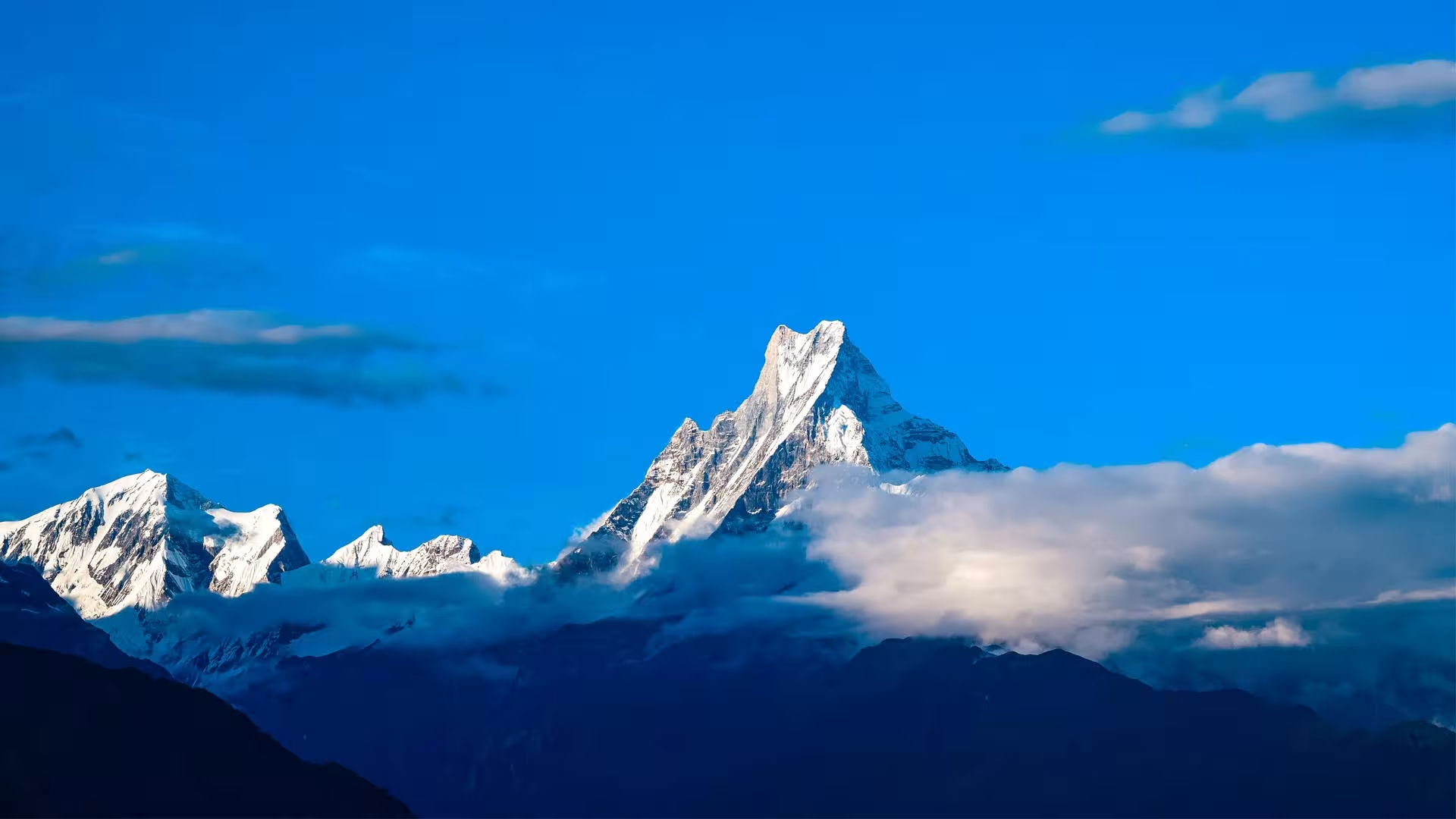
Machhapuchhre, the Fishtail peak, dominates this entire trek in a way few other routes offer. You're closer to it here than almost anywhere else, and Annapurna South rises just beside it. The trail covers roughly 38 miles, about 61km, with a total accumulated elevation gain of around 2,400m. That's genuinely manageable for trekkers who want real mountain views without a demanding multi-week commitment.
Two Possible High Points, and Why That Matters
Competitor itineraries for this exact trek report two different maximum altitudes, 4,250m at the Upper Viewpoint and 4,500m at Mardi Himal Base Camp itself. Both are correct, they're simply different endpoints. Some itineraries stop at the Upper Viewpoint, a genuinely spectacular panorama in its own right. Others continue further to the true Base Camp. We state both clearly here rather than letting a reader wonder which figure applies to their trip.
Who This Trek Is Actually For
Genuinely accessible to most travelers, including seniors over 55 and first-time trekkers, provided you're reasonably fit. You don't need previous high-altitude experience. This is one of the newer trekking routes in the Annapurna region, developed after the more classic trails. It sees noticeably less traffic than Poon Hill or Annapurna Base Camp.
This is a fully guided, lodge-based trek from Kande, near Pokhara, up through Deurali, Low Camp, and High Camp to the Mardi Himal viewpoint. It runs as a there-and-back route with a different descent path to Siding before returning to Pokhara. It's rated moderate, suited to beginners and experienced trekkers alike, and starts and ends entirely in Pokhara.
This trek is genuinely flexible in a way few others are. Multiple trailhead and exit combinations exist, Kande, Phedi, Landruk, and Siding among them, and the route can be extended into a longer combined itinerary with Poon Hill, Khopra Ridge, or Annapurna Base Camp if you have more time. We run the standard 5-day Kande-to-Siding version as our default itinerary, since it offers the best balance of depth and pace for most trekkers. Ask us about a custom combination if you want to extend it.
How Difficult Is the Mardi Himal Trek?
The Mardi Himal Trek is rated moderate. The trail is well-managed but includes steady ascents and increasingly rugged terrain closer to the viewpoint. Trekking to High Camp alone is genuinely accessible to beginners, while continuing to the Upper Viewpoint or Base Camp adds a more demanding, higher-altitude day. The route has several alternative paths in its higher, more remote sections, so trekking with a guide is strongly recommended rather than attempting it independently.
How Much Does the Mardi Himal Trek Cost?
A standard guided 5-day Mardi Himal Trek costs around US$450 per person for a group booking, including permits, guide, porter, teahouse accommodation, and meals. Private treks and longer combined itineraries, such as a 7-day version or one extended with Poon Hill or Annapurna Base Camp, cost more, reflecting the added days and logistics.
Trip Highlights
Journey Highlights
Machhapuchhre (Fishtail Peak): The Closest View of This Sacred, Unclimbed Mountain
This trek runs closer to Machhapuchhre than almost any other route in the Annapurna region, with the peak dominating the skyline for most of Days 3 and 4.
The Mardi Himal Viewpoint (4,250m to 4,500m): A Genuine High-Altitude Panorama in Five Days
Annapurna South, Hiunchuli, and Machhapuchhre in close range, reached without the multi-week commitment longer Annapurna treks require.
High Camp (3,580m): The Last Forest Before the Alpine Zone
The final overnight stop before the treeline disappears, positioned perfectly for the pre-dawn push to the viewpoint.
Siding Village: A Genuine Gurung Community on the Descent
A quieter, less-visited village on the return route, offering real cultural contact away from the trek's more crowded upper sections.
One of the Newest Trails in the Annapurna Region
- Developed after the more classic routes, which is exactly why it sees noticeably less traffic than Poon Hill or Annapurna Base Camp.
Two Altitude Figures, Both Genuine
- 4,250m at the Upper Viewpoint, 4,500m at the true Base Camp. Confirm which your specific itinerary reaches.
Genuinely Flexible Routing
- Multiple trailhead and exit combinations exist. Ask us about extending into Poon Hill, Khopra Ridge, or Annapurna Base Camp if you have more time.
A Real High-Altitude Trek, Not Just a Forest Walk
- Despite its short length, this trek reaches genuine high altitude. Take altitude symptoms seriously even on a 5-day itinerary.
Itinerary
Mardi Himal Trek Detailed Itinerary
Day 1 - Drive to Kande & Trek to Deurali via Pothana
Your journey begins early from Pokhara with a 1-hour drive along the highway past Hemja and Naudanda to Kande (1,770m). Once your boots hit the trail, you’ll ascend through peaceful rhododendron woodlands and terraced fields up to Australian Camp, where you'll catch your first panoramic mountain views. After a warm lunch stop at Pothana, make a final, pleasant climb to Deurali (2,100m).
Tip: Deurali offers a fantastic evening view over both the Annapurna South and Modi Khola valleys.
Day 2 - Trek from Deurali to Low Camp
After breakfast, leave the main trail behind and plunge deep into the tranquil rhododendron and oak forest. Today’s path feels untouched—keep your eyes peeled along the quiet, mossy tree trunks for native wildlife like the Himalayan Thar or the elusive Musk Deer. As the forest thins into sub-alpine terrain, you’ll cross small mountain streams before reaching Low Camp.
What to Expect: Low Camp sits right beneath the looming shadow of Mardi Himal and Mount Fishtail, offering a cozy mountain atmosphere around the teahouse dining stove.
Day 3 - Trek from Low Camp to High Camp via Badal Danda
Wake up to a crisp morning with views of Machhapuchhre right outside your window. Today, you climb out of the forest canopy and onto the ridge. After a short, steady uphill climb through maple woods, you’ll reach Badal Danda (Cloud Ridge) for lunch. From Badal Danda, the tree line disappears completely—you’ll walk along an open, narrow ridge with sweeping 360-degree views down into deep valleys on both sides. You’ll reach High Camp by early afternoon, leaving plenty of time to rest, hydrate, and prepare for tomorrow's early summit push.
Day 4 - High Camp to Mardi Himal Base Camp & Descend to Badal Danda
Set a pre-dawn alarm—today is the absolute highlight of the trip. Departing around 4:30–5:00 AM under a blanket of stars, you’ll trek up the narrow, rocky ridge toward the Mardi Himal Viewpoint (4,200m) and onward to Mardi Himal Base Camp (4,500m). Standing directly beneath the sheer, towering face of Fishtail as the morning sun turns the snow peaks golden is an experience you'll never forget. After taking in the views, descend back to High Camp for a warm lunch before dropping further down to Badal Danda (3,210m) for the night. Badal Danda is widely considered the single best sunset and sunrise vantage point on the entire trek.
Safety & Altitude Note: Gaining high elevation quickly on narrow paths requires steady footwork. Bring warm layers, plenty of water, and pace yourself.
Day 5 - Descent from Badal Danda to Siding & Drive to Pokhara
On your final morning on foot, follow a quiet, forested trail downhill toward the traditional Gurung village of Siding (1,750m). The trail gives you continuous back-shoulder views of Fishtail as you drop back down to lower elevations. At Siding, enjoy a final local lunch before boarding a local jeep for a bumpy, fun ride through off-road mountain valleys back to Pokhara. You'll be back at your lakeside hotel by mid-afternoon—just in time for a hot shower and a cold drink by Phewa Lake.
Getting There
Kathmandu's Tribhuvan International Airport is served by direct and one-stop flights from most major hubs in Asia and the Gulf. Travelers from the US, Europe, and Australia typically connect through Doha, Istanbul, Delhi, Singapore, or Bangkok. This itinerary begins in Pokhara, reachable from Kathmandu by a scenic 6 to 7 hour drive or a 25 minute domestic flight, both bookable as an addon.
Map And Altitude Chart
Mardi Himal Trek Map and Altitude Chart
Interactive Map
Cost Details
Inclusions & Exclusions
What’s Included
- Ground transport: Pokhara to Kande and Lumre to Pokhara
- All teahouse accommodation and meals during the trek
- Licensed guide and porter (1 porter per 2 trekkers)
- Annapurna Conservation Area Permit (ACAP) and TIMS card
- All necessary government fees and taxes
What’s Excluded
- Kathmandu to Pokhara transport (available as an addon)
- Travel insurance
- Nepal visa fee
- Hot showers, personal expenses, and guide and porter tips
Trip Departure
Dates & Booking
Cancellation Policy
Secure Payment
Saturday
17 Oct 2026
to
Wednesday
21 Oct 2026
Status
Guaranteed
Sunday
18 Oct 2026
to
Thursday
22 Oct 2026
Status
Guaranteed
Monday
19 Oct 2026
to
Friday
23 Oct 2026
Status
Guaranteed
Wednesday
21 Oct 2026
to
Sunday
25 Oct 2026
Status
Guaranteed
Friday
23 Oct 2026
to
Tuesday
27 Oct 2026
Status
Guaranteed
Saturday
24 Oct 2026
to
Wednesday
28 Oct 2026
Status
Guaranteed
Sunday
25 Oct 2026
to
Thursday
29 Oct 2026
Status
Guaranteed
Monday
26 Oct 2026
to
Friday
30 Oct 2026
Status
Guaranteed
Wednesday
28 Oct 2026
to
Sunday
01 Nov 2026
Status
Guaranteed
Friday
30 Oct 2026
to
Tuesday
03 Nov 2026
Status
Guaranteed
Saturday
31 Oct 2026
to
Wednesday
04 Nov 2026
Status
Guaranteed
Book at least 1 to 2 weeks ahead. Given this trek's short length and lower weather sensitivity, it's one of our most schedule-flexible itineraries, suitable even for last-minute additions to a longer Nepal trip.
Fixed group departures run every 1 to 3 days year round. Private departures are available on any date, including short notice.
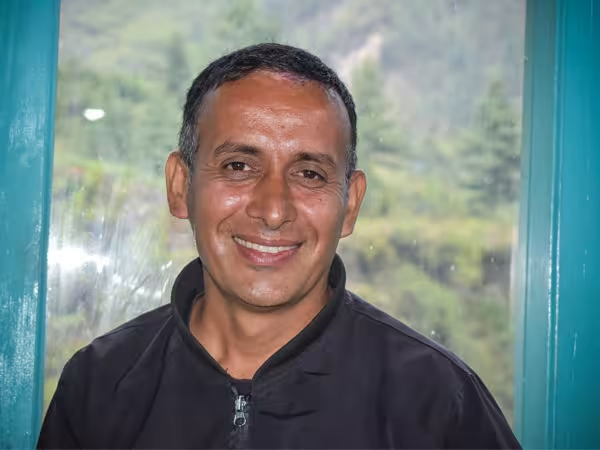
Local Guide
Meet Our Local Guide


Food and Accommodation
What You’ll Eat & Where You’ll Stay
Teahouses along this route serve breakfast, lunch, and dinner, with both vegetarian and non-vegetarian options available throughout. Dal bhat with free refills remains the trail staple, alongside noodle soups, momos, and simple breakfasts. Menus narrow slightly at High Camp given the more limited supply access that high on the trail.
Equipment list
Mardi Himal Trek Equipment list

Know before you go! Some stuff we’ll provide, other things you’ll need to bring.
Reviews
Client’ Testimonials and their Experiences
R
Exquise Mardi Himal experience with best guide Ajit
I wanted a short but beautiful trek and found Mardi Himal Trek as best. I completed it in 4 days with my fantastic guide Mr. Ajit. I enjoyed the drive from Pokhara to Kande and hiked to Mardi High Camp. Although there was no snow at this time, I enjoyed the clear viewing of landscapes. The experience was amazing.
I have to express my gratitude to Mr. Ram from Sublime Trails. He was a very persuasive guy with the best communication skills. He arranged everything for this trek to ensure that I get the ultimate experience, and I get it too. Thanks, Ram. Looking forward to doing further trips with you
E
Mardi Himal trek on Monsoon, greenery and fresh landscape
Monsoon in Nepal in July is not the best time for trekking but I completed the Mardi Himal trek successfully with Sublime Trails. Rain was disturbing our hike but the greenery was best. Every hill and valley was spectacularly green. Also, Mardi Himal was looking sharp with clear weather. Mr. Ram from Sublime Trails also arranged Pokahra tour for us as complementary of this trekking. He is a professional yet humble tour operator. Also, thanks to guide Ajit for taking our care throughout. Sublime Trails, best. Everything were best. Good luck.

Thrilled to see Machhapuchhre Himal from Mardi Himal High Camp
I decided to hike on the recent hotspot Mardi Himal. But later, I was unable to manage
everything for the trek including accommodation. Also, my friend told me that it will be
difficult to find one during the season. So, I googled some local agencies in Nepal. I found
Sublime Trail as Travellers Choice for 2022 in a trip advisor. I thought this was a cool
company. I called to the office, Mr. Ram was very responsive with my emails and texts.
He also arranged Kathmandu to Pokhara two way flight on my request. Also, Kathmandu
sightseeing tour later after return was also a complementary trip by him. The guides were
good. The landscape was magical. I thought that I was in heaven for some time. It was that
eternal moment. Thanks!
Moments
Hear It From Our Travelers
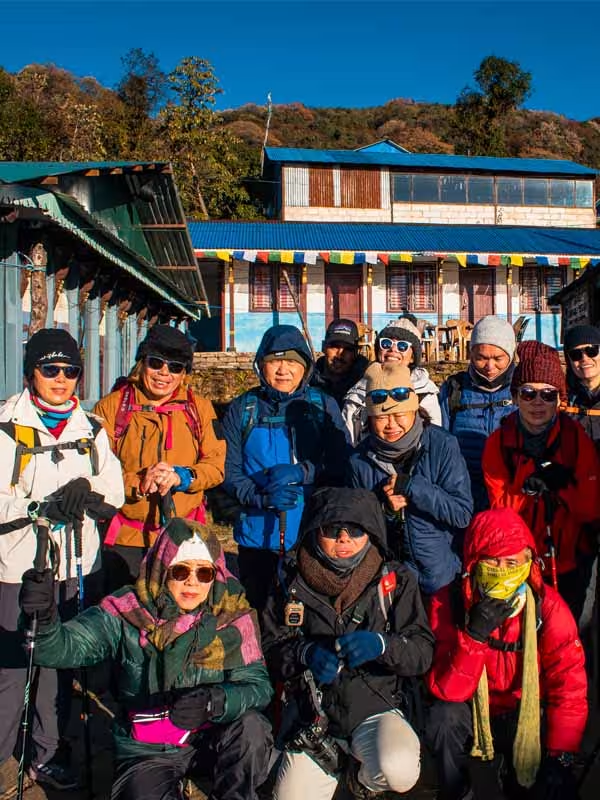
You Must Do The Mardi Himal Trek With Sublime Trails
Essential
Know Everything Before You Go Mardi Himal Trek
Currency & ATMs
Exchange currency in Pokhara before you start trekking, since this is where your itinerary begins. ATMs exist in Pokhara but not on the trail itself, so carry sufficient cash for the full trek. Budget roughly US$100 to 130 in cash for personal spending along this shorter route.
Travel Insurance
Travel insurance is not legally required to enter Nepal or obtain a visa. It is required by us before you can start this trek, the same as every itinerary we run.
Your policy should cover trekking to at least 4,700m. This trek reaches either 4,250m at the Upper Viewpoint or 4,500m at Mardi Himal Base Camp, genuinely higher altitude than most travelers expect from a 5 day itinerary. Confirm your policy covers whichever figure applies to your specific booking.
Buy your policy before you leave home. This trek's short length does not reduce genuine altitude risk on Day 4 specifically. Insure for the destination, not the day count.
Nepal Visa
Most nationalities, including US, UK, EU, Australian, and Canadian citizens, can get a Nepal visa on arrival at Tribhuvan International Airport. You can also apply online in advance to save time at immigration. A 15 day visa comfortably covers this short itinerary with plenty of room to spare. Indian citizens don't need a visa at all. Bring a valid passport, one passport photo, and the visa fee.
Travel Etiquette
- Always pass mani walls, chortens, and prayer wheels on your left, walking clockwise. This is a real Buddhist observance, not a suggestion.
- Ask before photographing people directly. A smile and a gesture toward your camera is usually enough. A shaken head means no, and that's the end of it.
- Yield the trail to porters and mule trains. Stay on the uphill side when you do, particularly on Day 4's pre-dawn viewpoint push.
- A donation at any shrine along the route is appreciated but never expected. Don't make a show of it either way.
- Respect the pace of village life in Siding on the descent. This is a genuine Gurung community, not an attraction built for trekkers.
- Tipping is customary, not mandatory, and matters more than it might seem. Guides and porters rely on it as real income. Ask your operator for a typical range rather than guessing.
Training for the Mardi Himal Trek
This trek is genuinely accessible to seniors and first time trekkers, though Day 4's push to the viewpoint deserves real respect despite the short overall length. Start training at least 6 weeks out.
- Cardio, 2 to 3 times a week, building toward 60 minute sessions. Most days run 4 to 6 hours, manageable for reasonably fit beginners, with Day 4 running longer and higher.
- Load-bearing hikes with a daypack at 4 to 5kg, at least once weekly before you travel. Steady, sustained walking matters more here than raw strength.
- This trek suits beginners and seniors over 55 for most days, though the altitude reached on Day 4 deserves the same respect as any 4,000m plus destination. Discuss any health concerns with your guide honestly.
- Fitness doesn't prevent altitude sickness, and this trek's short length compresses acclimatization time compared to our longer itineraries. Respect the altitude regardless of how gentle the earlier days feel.
Porter and Weight Limitation
One porter carries up to 12kg shared between two trekkers on this route. Keep your personal duffel to around 6 to 8kg for comfortable sharing. Given the pre-dawn Day 4 push, keep your daypack focused on layers and a headlamp rather than overloading it.
Electricity & Connectivity
Electricity and charging are available at Deurali, Low Camp, and High Camp, though costs increase with altitude on this route. A power bank is worth carrying for the High Camp night specifically. Mobile data through NTC or Ncell works reliably through Low Camp, patchier at High Camp and above.
Getting to Pokhara and the Kande Transfer
This trek starts and ends in Pokhara, not Kathmandu. It uses a jeep transfer to Kande rather than a standard road trailhead drive.
Getting to Pokhara itself is a separate step. Most travelers arrive from Kathmandu by road, roughly 6 to 7 hours. A 25 minute domestic flight is available as an addon.
The Pokhara to Kande transfer is short and generally reliable. It's one of the more schedule flexible starts in our entire lineup, given this trek's proximity to Pokhara itself.