
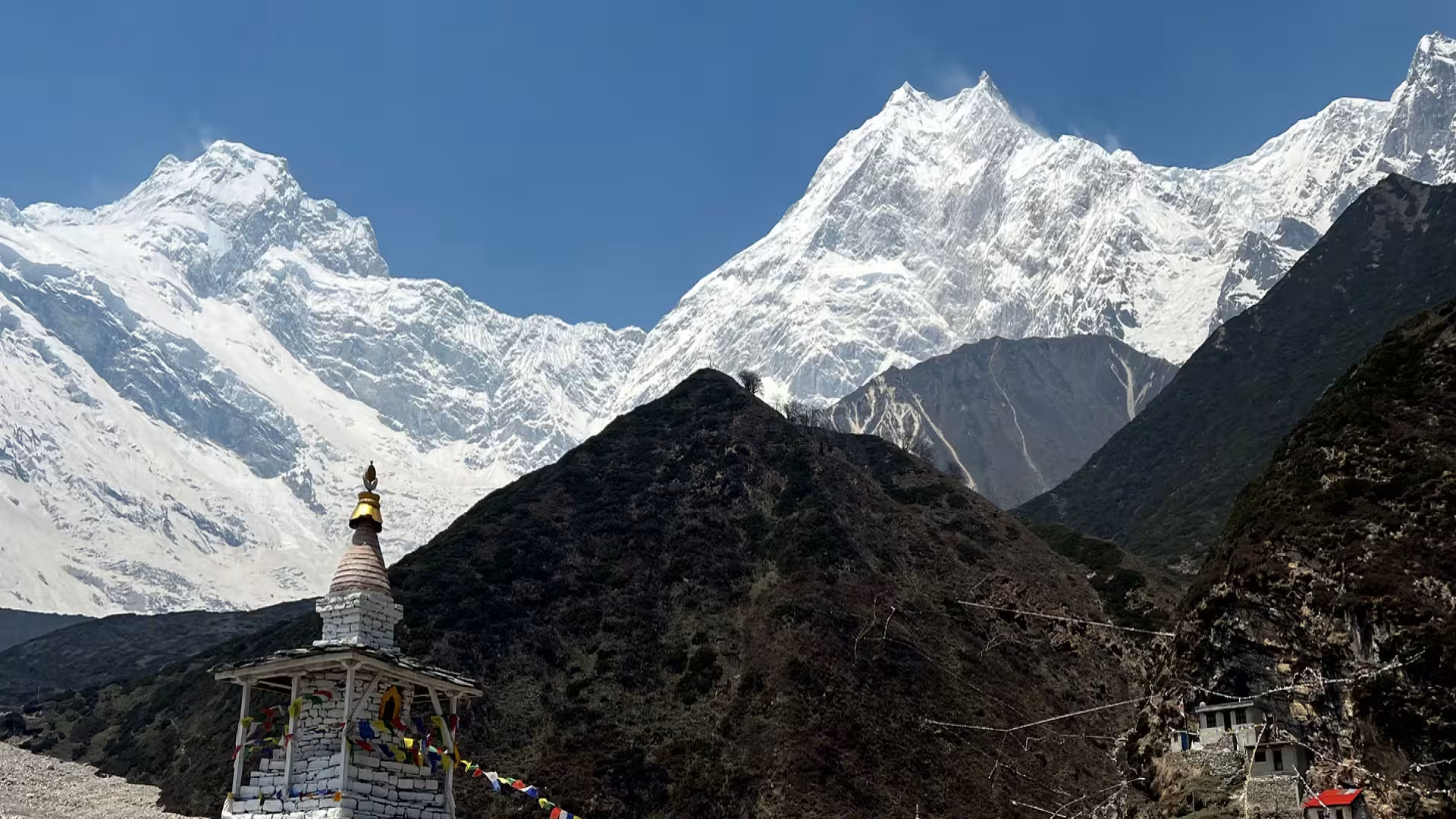
A valley sealed to outsiders until 2008, and still one of the least visited restricted regions in Nepal. 11 days: follow the Shiar Khola from Lokpa through Chumling and Chhokangparo to Mu Gompa, a monastery close enough to Tibet to see the border ridgeline from its courtyard, then retrace the route back. Three permits, one dead-end valley, and a level of cultural preservation that's genuinely rare on Nepal's more established trekking routes.
The Tsum Valley Trek is a 11-day restricted-area trek into a hidden Buddhist valley on the Nepal-Tibet border, only opened to foreign trekkers in 2008. It requires a licensed guide and three separate permits by law.
Tsum Valley was closed to outsiders until 2008, and it still feels that way. This isn't a valley you pass through on the way to somewhere higher or more famous. It's the destination itself, a place where Tibetan Buddhist tradition has continued largely undisturbed for centuries, protected as much by its remoteness as by any government policy.
This is a fully guided, lodge-based trek into the restricted Tsum Valley, following the Shiar Khola upriver from its junction with the main Manaslu Circuit trail at Lokpa, through Chumling, Chhokangparo, and Nile to Mu Gompa near the Tibetan border, then back the same route to the trailhead.
Unlike the Manaslu Circuit, this is genuinely an out-and-back trek rather than a loop, since Tsum Valley is a dead-end valley with a single access point. That shapes the entire trip differently. You walk the same villages twice, once heading up and once coming back down, which sounds repetitive on paper but plays out differently in practice, since the return trip happens with two weeks of altitude adaptation behind you and a completely different quality of light on the same peaks. Many trekkers say the descent reveals details the ascent, focused on effort and altitude, missed entirely.
The valley takes its name from the Tibetan word for vertical cliffs, and the geography lives up to it. Sheer canyon walls rise on both sides of the Shiar Khola for much of the route, funneling the trail through a corridor that feels closer to a fortress than an open valley. This is also one of the few places in Nepal where the Tibetan Buddhist practice of polyandry, one wife with multiple husbands, historically within the same family, persisted well into the twentieth century, a detail that speaks to just how isolated this valley remained even after the rest of Nepal opened to outside influence.
Three separate permits are required for this trek. Beyond the commonly cited Restricted Area Permit and Manaslu Conservation Area Permit, a Chum Nubri Rural Municipality Permit is also mandatory and checked at the trailhead.
Tsum Valley Trek Permits and Fees, 2026
Three separate permits are legally required to trek Tsum Valley. Fees vary by season for the Restricted Area Permit specifically.
| Permit | Season | Cost (USD, per person) |
| Restricted Area Permit (RAP) | Sep to Nov, first 7 days | US$40 |
| Restricted Area Permit (RAP) | Sep to Nov, each additional day | US$7 |
| Restricted Area Permit (RAP) | Dec to Aug, first 7 days | US$30 |
| Restricted Area Permit (RAP) | Dec to Aug, each additional day | US$7 |
| Manaslu Conservation Area Permit (MCAP) | Year-round | US$25 to 30 |
| Chum Nubri Rural Municipality Permit | Year-round | Included in package, checked at trailhead |
A minimum of two trekkers is required to apply for the Restricted Area Permit, and a licensed guide from a registered agency is mandatory. All three permits are arranged for you as part of this package.
How Much Does the Tsum Valley Trek Cost in 2026?
A standard guided Tsum Valley Trek costs between US$900 and US$1,500 per person for a group booking, including permits, guide, porter, teahouse accommodation, and meals during the trek. Solo trekkers pay a premium given the two-person minimum on the Restricted Area Permit. Combined Manaslu Circuit and Tsum Valley itineraries typically run higher, reflecting the added length and logistics.
How Difficult Is the Tsum Valley Trek?
The Tsum Valley Trek is rated moderate, genuinely more accessible than the Manaslu Circuit or Annapurna Circuit, since it never crosses a high mountain pass. The maximum altitude, 3,700m at Mu Gompa, sits well below the altitude-sickness danger zone most Everest or Annapurna itineraries reach. The main challenges are the out-and-back trail's steep, occasionally narrow sections and the region's remoteness rather than extreme altitude.
Trip Highlights
Journey Highlights
Mu Gompa (3,700m): A Monastery Facing the Tibetan Border
The valley's highest monastery, close enough to Tibet for a clear-day view across the border ridgeline, and the trek's turnaround point.
Rachen Gompa: One of the Region's Largest Nunneries
An active Buddhist nunnery near Nile, reachable as a short detour, offering genuine insight into Tsum's monastic tradition.
Gumba Lungdang: A Monastery Perched Above the Return Trail
An optional detour on the descent, positioned high above the valley with sweeping views back toward Ganesh Himal.
The Shiar Khola Gorge: Sheer Canyon Walls for Most of the Route
The valley's namesake geography, cliffs rising on both sides of the river for much of the trail, giving the trek its distinctive, fortress-like character.
This Is a Dead-End Valley, Not a Loop
- Unlike the Manaslu Circuit, you walk the same trail in both directions. Many trekkers find the descent reveals details the ascent missed entirely.
Three Permits Are Required, Not Two
- A Chum Nubri Rural Municipality Permit is also mandatory and checked at the trailhead.
A Guide and a Travel Partner Are Both Required
- The Restricted Area Permit requires a minimum of two trekkers. Solo travelers pay a premium to cover the second permit, or we can pair you with another solo trekker on request.
This Region Sees a Fraction of Manaslu's Own Traffic
- Even by restricted-area standards, Tsum Valley remains genuinely quiet, which is central to its appeal rather than a logistical downside.
Itinerary
Tsum Valley Trek Detailed Itinerary
Day 1 - Kathmandu to Maccha Khola (Drive)
Leaving Kathmandu early at 6:00 AM lets us beat the morning city traffic. The highway is smooth along the Trisuli River, but the real adventure begins after turning off at Dhading toward Arughat. We switch to a rugged 4x4 jeep for a bumpy, multi-hour dirt road carved into steep valley cliffs. Sit on the right side of the vehicle for sweeping views of the river canyon and terraced farms. We arrive in Machha Khola by late afternoon with time to relax before tomorrow's trek.
Day 2 - Trek to Jagat
Our foot journey begins on narrow trails running along rock faces high above the roaring Budhi Gandaki River. We cross high suspension bridges and pass through Tatopani, where natural hot springs flow directly from the cliffside. The path pushes through shady bamboo groves, crossing the river several times on sturdy plank bridges. A final steady climb brings us to the neat stone houses of Jagat, where we present our restricted area permits at the park checkpoint.
Day 3 - Trek to Lokpa (Gateway to Tsum Valley)
Leaving Jagat, we walk up the main river gorge past the green farming terraces of Philim village. At the small junction of Ekle Bhatti, we officially branch away from the busier Manaslu Circuit trail to enter the quiet pine woods of the Tsum region. The trail climbs steeply above the wild canyon where the Budhi Gandaki and Siyar Khola rivers crash together. We arrive at Lokpa by late afternoon, an isolated hillside village rewarding us with grand views of snowy Boudha Himal (6,672 m).
Day 4 - Trek to Chumling (Lower Tsum)
Moving deeper into the valley, we descend through a cool canopy of fir and giant blue pine trees down to the narrow Siyar Khola riverbed. The route immediately switches to a series of steep, lung-busting switchbacks up the canyon wall. Crossing a high suspension bridge, we pass the local welcome sign into sacred Lower Tsum. We reach the traditional stone houses of Chumling by early afternoon, leaving time to explore the ancient wood carvings inside Panago Gompa.
Day 5 - Trek to Chekampar (Chokhangparo - Upper Tsum)
Leaving Chumling, the path climbs past Rainjam before tackling a rocky section cut directly into cliff faces. As the thick forests open up, the valley unveils stunning views of the Ganesh Himal range (7,422 m). We hike past fertile fields of barley and buckwheat to reach Chokhangparo (Chekampar), the main plateau settlement of Upper Tsum. Here, we drop our packs and spend the warm afternoon experiencing authentic Tibetan-influenced Tsumba hospitality.
Day 6 - Trek to Nile via Milarepa’s Cave
Hiking deeper into Upper Tsum, we take a steep side path to Piren Phu (Milarepa’s Cave), an ancient sacred rock shelter housing Saint Milarepa's footprint and historic murals. Rejoining the main trail, we pass long mani walls and the impressive nunnery complex of Rachen Gompa. We cross a suspension bridge over the Siyar Khola to reach Nile, the northernmost inhabited village in Upper Tsum before the Tibetan borderlands.
Day 7 - Day Trip to Mu Gompa (Return to Nile)
We set off on a steady morning hike up the high alpine valley floor to Mu Gompa (3,700 m), the highest and most isolated monastery in Tsum. Founded in 1895, this ancient stone sanctuary looks out across stark mountain terrain toward Shringi Himal and the Tibetan border peaks. We explore the prayer halls, view centuries-old statues and sacred texts, and enjoy butter tea with resident monks before descending back to Nile for a warm evening.
Day 8 - Nile or Mu Gompa to Chumling
We begin our descent back through the valley, enjoying a fresh perspective on the Ganesh Himal wall. The trail drops along the river, guiding us past the stone homes of Lar and back through the broad Chokhangparo plateau. As we descend through the cliff sections into Lower Tsum, the air grows warmer and richer in oxygen. We finish our big walking day back at Chumling for a restful evening.
Day 9 - Trek from Chumling to Philim
Leaving Chumling, a steady morning walk brings us out of the Tsum Valley gorge and down to Lokpa. Here, we rejoin the main river route heading south, passing directly by Samba Falls, a waterfall tumbling down high canyon cliffs. We arrive in Philim by early afternoon. We spend the evening walking past terraced fields, exploring traditional Gurung architecture, and visiting the village school built by a Japanese charity.
Day 10 - Trek from Philim to Machha Khola
Our trail continues downward, following the Budhi Gandaki River south. We pass through Jagat, Tatopani’s hot springs, and Dobhan, steadily losing elevation into sub-tropical terrain. The walking is comfortable and rich in river valley scenery as we pass local agricultural traffic and mule trains. By late afternoon, we reach Machha Khola to celebrate our final night on the trail with our guide and porter crew.
Day 11 - Drive from Machha Khola to Kathmandu
After breakfast, we board our private 4x4 vehicle or local bus in Machha Khola for the drive back to Kathmandu. Winding along mountain roads past Soti Khola, Arughat, and Dhading Besi, we rejoin the main highway into the capital. Arriving by late afternoon, you'll transfer to your hotel for a hot shower, marking the conclusion of your journey into the sacred Tsum Valley.
Getting There
Most international travelers arrive in Nepal through Tribhuvan International Airport in Kathmandu, which has direct and one-stop connections from major cities across Asia and the Gulf. Travelers from Europe, North America, and Australia commonly connect through hubs such as Doha, Istanbul, Delhi, Singapore, or Bangkok.
Your Tsum Valley adventure begins with a scenic drive from Kathmandu toward the Manaslu region. The road passes through the hills of Dhading and Gorkha before reaching Machha Khola, where the trekking trail starts. The drive usually takes around 7 to 9 hours, depending on road and traffic conditions.
A Sublime Trails representative will meet you at Tribhuvan International Airport and assist with your arrival and transfer arrangements. From there, we take care of the transportation and logistics needed to get you to the trailhead, so you can focus on enjoying the journey into the remote Tsum Valley.
Map And Altitude Chart
Tsum Valley Trek Map and Altitude Chart
Interactive Map
Cost Details
Inclusions & Exclusions
What’s Included
- All ground transport: Kathmandu to Machha Khola return
- All teahouse accommodation and meals during the trek
- Licensed guide and porter (1 porter per 2 trekkers, up to 20kg)
- All three required permits: RAP, MCAP, and Chum Nubri Rural Municipality Permit
- Comprehensive first aid kit and daily health monitoring
What’s Excluded
- Travel and rescue insurance, including high-altitude helicopter evacuation coverage (mandatory)
- Nepal visa fee
- Kathmandu hotel accommodation
- Guide and porter tips
Food and Accommodation
What You’ll Eat & Where You’ll Stay
Meals in Tsum Valley are simpler than on more established routes. Dal bhat, noodle soups, and basic breakfasts are the norm throughout, with genuinely limited variety beyond that given the valley's remoteness and lack of road access.
Equipment list
Tsum Valley Trek Equipment list
Know before you go! Some stuff we’ll provide, other things you’ll need to bring.
Essential
Know Everything Before You Go Tsum Valley Trek
Currency & ATMs
Exchange currency in Kathmandu before departure, since this itinerary starts and ends there entirely by road. ATMs don't exist beyond Machha Khola, so carry sufficient cash for the full fourteen days. Budget roughly US$180 to 220 in cash for personal spending along this remote route.
Travel Insurance
Travel insurance is not legally required to enter Nepal or obtain a visa. It is required by us before you can start this trek, the same as every itinerary we run.
Your policy should cover trekking to at least 4,000m, given Mu Gompa's altitude of 3,700m, meaningfully lower than our Manaslu Circuit or Everest products. Confirm your policy covers evacuation from this specific valley, since it is genuinely more remote than the main Manaslu trail.
Buy your policy before you leave home. This region's remoteness means slower evacuation response than Everest or Annapurna, worth understanding before you travel.
Nepal Visa
Most nationalities, including US, UK, EU, Australian, and Canadian citizens, can get a Nepal visa on arrival at Tribhuvan International Airport. You can also apply online in advance. A 15 day visa is tight for this fourteen day itinerary. Choose 30 days for genuine buffer around weather or permit delays. Indian citizens don't need a visa at all.
Travel Etiquette
- Always pass mani walls, chortens, and prayer wheels on your left, walking clockwise. This is a real Buddhist observance, not a suggestion, particularly given how central Buddhist practice remains in this valley.
- Ask before photographing monks, ceremonies, or people directly. A smile and a gesture toward your camera is usually enough. A shaken head means no, and that's the end of it.
- Remove your shoes before entering Mu Gompa or Rachen Gompa's prayer halls. Keep your voice low inside, especially around active nunneries.
- Yield the trail to porters and mule trains. Stay on the uphill side when you do, particularly on the narrow Shiar Khola gorge sections.
- A donation at Mu Gompa or Rachen Gompa is appreciated but never expected. Don't make a show of it either way.
- Tsum Valley's Buddhist tradition has continued largely undisturbed for centuries. Approach it as a living practice, not a cultural display staged for visitors.
- Tipping is customary, not mandatory, and matters more than it might seem. Guides and porters rely on it as real income. Ask your operator for a typical range rather than guessing.
Training for the Tsum Valley Trek
This trek stays well below the altitude of our Manaslu Circuit or Everest products, though the out-and-back trail's steep sections still demand real fitness. Start training at least 8 weeks out.
- Cardio, 3 times a week, building toward 60 to 75 minute sessions. Fourteen days of walking the same villages in both directions asks for sustained fitness, not just a single peak effort.
- Load-bearing hikes with a daypack at 5 to 6kg, at least once weekly in your final month. This region's remoteness makes steady, sustainable pacing more valuable than raw speed.
- This trek suits trekkers who have already researched the Manaslu Circuit and specifically want more remoteness. It is not built for complete first timers to Himalayan trekking.
- Fitness doesn't prevent altitude sickness. This trek's lower altitude ceiling means the real risk is genuinely lower than on our Manaslu Circuit or Everest products.
Porter and Weight Limitation
Each porter carries up to 20kg, shared between two trekkers, given this itinerary's fourteen day length. Keep your personal duffel to around 12 to 13kg for comfortable sharing. There's no flight baggage limit to plan around, since this entire route is reached by road.
Electricity & Connectivity
Electricity and charging are available at most teahouses through Chumling and Chhokangparo. This narrows further toward Mu Gompa given the valley's remoteness. A power bank is worth carrying for the upper valley days specifically. Mobile data through NTC or Ncell is patchy beyond Chumling and largely absent near Mu Gompa.
Kathmandu to Machha Khola Road Conditions
This trek uses road transport only, with no domestic flight option at any point. This is the same as our Manaslu Circuit route, since both share the same Machha Khola trailhead.
The Kathmandu to Machha Khola drive runs roughly 7 to 8 hours. It's a genuinely long, winding journey rather than a quick highway drive. This is the same road our Manaslu Circuit trekkers use.
Road construction toward Larke Pass continues to change the character of the lower shared trail sections. This affects the first three days of this itinerary before the route turns into Tsum Valley proper.


