The Annapurna Base Camp Trek is a wonderful way to experience the Annapurna region at a comfortable pace. Rather than rushing straight toward the mountains, this route lets you enjoy the journey itself: from peaceful terraced hills and traditional villages to rhododendron forests, waterfalls, and finally the dramatic high-altitude landscape of the Annapurna Sanctuary.
Starting from Pokhara, the trek follows the classic trail toward Ghorepani and Poon Hill before continuing through Tadapani, Chhomrong, Dovan, Deurali, and Machhapuchhre Base Camp. The ultimate destination is Annapurna Base Camp (4,130 m), surrounded by some of the most impressive peaks in the Himalayas.
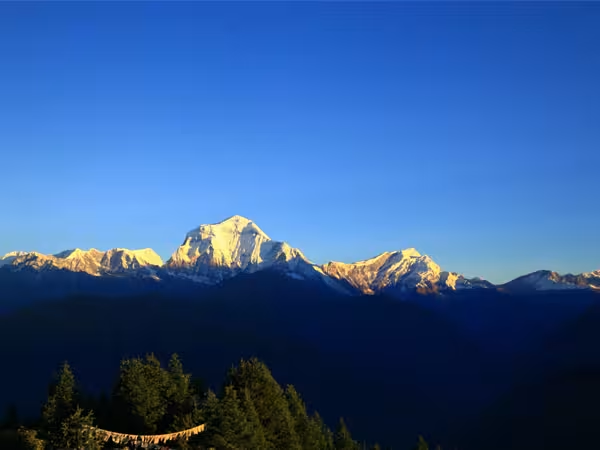
One of the highlights comes early in the trek with a morning hike to Poon Hill. Waking up before sunrise and walking up to the viewpoint is well worth the early start. As the first light reaches the mountains, you get beautiful views of the Annapurna and Dhaulagiri ranges. From there, the trail winds through forests and mountain villages toward Tadapani and the Gurung communities around Chhomrong.
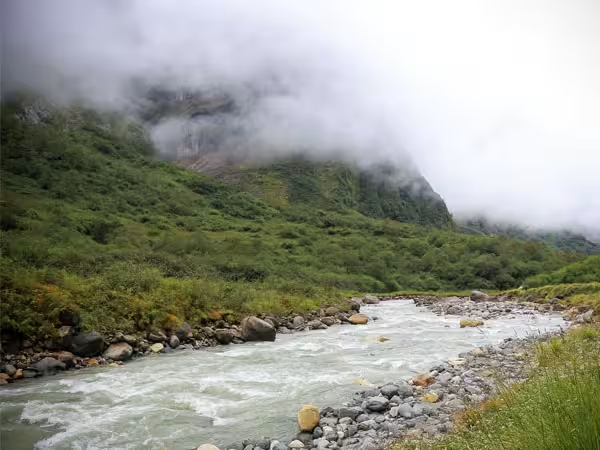
From Chhomrong, the scenery gradually begins to change. The trail enters the Annapurna Sanctuary, following the Modi Khola valley through Sinuwa, Bamboo, Dovan, and Deurali. The forests become quieter and thinner as you gain altitude, while the surrounding mountains seem to grow closer with every step.
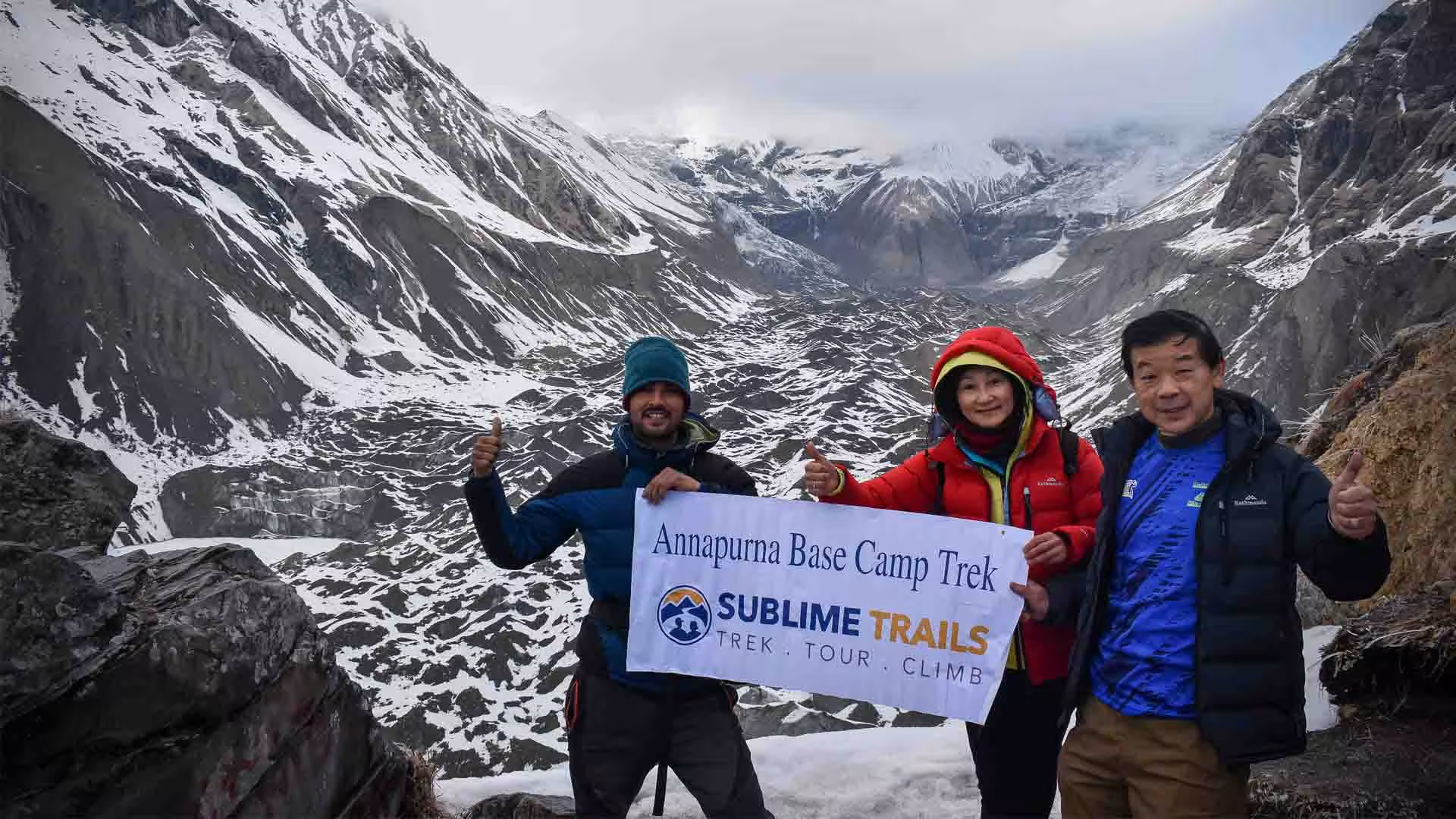
The final stretch takes you from Deurali to Machhapuchhre Base Camp, and from there into the spectacular natural amphitheater of Annapurna Base Camp. Standing at 4,130 meters with towering Himalayan peaks surrounding you is a moment that stays with you long after the trek is over.
After spending a night at ABC, you retrace the trail downhill toward Bamboo and then continue to Jhinu Danda. Here, you can take a well-earned break in the natural hot springs and let your tired legs relax. The trek then continues through Tolkha before finally returning to Pokhara.
This 10-day Annapurna Base Camp itinerary is more than simply a longer version of the shorter ABC trek. The extra time gives you the chance to enjoy the lower valleys, experience local mountain communities, walk through beautiful forests, and take in the sunrise from Poon Hill without feeling like you are constantly rushing toward the next destination.
10 Days Annapurna Base Camp Trek at a Glance
| Trek Information |
Details |
| Region |
Annapurna / Annapurna Sanctuary |
| Maximum Altitude |
4,130 m / 13,550 ft |
| Starting Point |
Pokhara |
| Initial Trailhead |
Tikhedhunga area after a drive from Pokhara |
| Ending Point |
Pokhara |
| Trek Duration |
10 Days |
| Approximate Trekking Distance |
110 km |
| Daily Walking |
Approximately 4–7 hours |
| Difficulty |
Moderate |
| Highest Overnight Stay |
Annapurna Base Camp |
| Accommodation |
Local teahouses/mountain lodges |
| Meals |
Breakfast, lunch, and dinner during the trek |
| Guide |
Experienced & Licensed local trekking guide |
| Porter |
1 porter for every 2 trekkers |
| Permits |
Annapurna Conservation Area Permit + TIMS |
| Trek Style |
Guided teahouse trek |
| Best Seasons |
March–May and September–November/December |
| Main Mountain Views |
Annapurna I, Annapurna South, Annapurna III, Hiunchuli, Machhapuchhre, Dhaulagiri and surrounding Himalayan peaks |
The distance is distributed across multiple trekking days, allowing the journey to progress from the lower foothills to the high-altitude Annapurna Sanctuary.
Why Choose the 10 Days Annapurna Base Camp Trek?
The biggest advantage of the 10-day Annapurna Base Camp Trek is that the journey becomes part of the destination.
This itinerary is particularly suitable for travelers who:
- Have around 10 days available for the Annapurna trek.
- Prefer a moderate and more evenly distributed trekking schedule.
- Want to experience Poon Hill and Annapurna Base Camp in one journey.
- Want more time to explore villages and mountain landscapes.
- Prefer not to compress the approach to Annapurna Base Camp.
- Want a classic introduction to trekking in the Annapurna region.
- Enjoy a combination of cultural villages, forests, viewpoints, and high Himalayan scenery.
- Want more time to adjust to increasing elevation before reaching 4,130 m.
- Are comfortable walking several hours per day but do not want the compressed schedule of a fast-track ABC itinerary.
The route also provides a natural progression.
You begin in the warmer lower hills, climb through rhododendron forests toward Ghorepani, reach the panoramic viewpoint at Poon Hill, descend and climb through Tadapani and Chhomrong, and only later enter the narrow Modi Khola valley toward the Annapurna Base Camp.
From Poon Hill to Annapurna Base Camp: See the Himalayas, Then Walk Into Them
The 10-day route brings together two very different mountain experiences. At Poon Hill, you stand on a ridge above the lower Annapurna foothills, watching the Annapurna and Dhaulagiri ranges stretch across the horizon. A few days later, the perspective changes completely.
At Annapurna Base Camp, you are no longer looking toward the mountains from a distance. You are inside the Annapurna Sanctuary, surrounded by towering peaks on every side.
The trail between these two places is what makes the journey special. It passes through Ghorepani, Tadapani, and Chhomrong before following the Modi Khola valley toward Machhapuchhre Base Camp and ABC. In one journey, you experience the Himalayas first as a panorama and later as the landscape around you.
More Than a Trek to Base Camp: The Journey Is Part of the Experience
Annapurna Base Camp is the destination, but it is not the only reason to take the longer route.
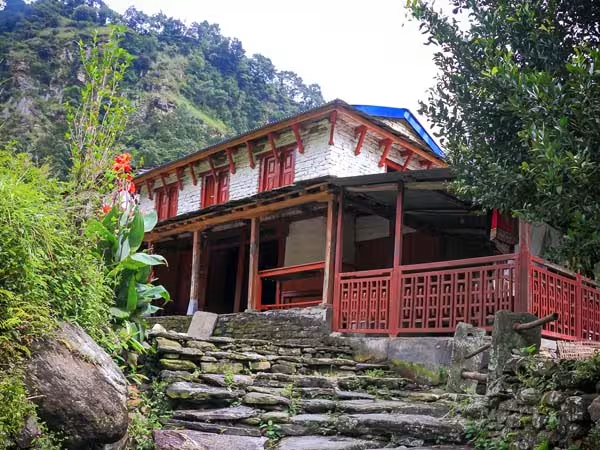
The first days take you through terraced hillsides, villages, rhododendron forests, stone stairways, streams, and mountain ridges. You spend time around Ghorepani and Poon Hill before continuing through Tadapani and the Gurung villages around Chhomrong.
As the trek progresses, the landscape changes naturally. Villages become fewer, forests give way to more rugged terrain, and the trail gradually moves deeper into the mountains.
That is the real advantage of having 10 days for the journey. You are not simply adding nights to reach ABC. You have enough time to experience the Annapurna region as a changing landscape — from its green foothills to its high Himalayan interior.
From Mountain Villages to the Annapurna Sanctuary
The trek begins in a landscape where the mountains are closely connected to everyday life. Farms, terraced fields, traditional homes, teahouses, and villages are part of the trail, particularly around Ghorepani, Tadapani, and Chhomrong.
Then the character of the journey starts to shift. After Chhomrong, the trail descends toward the river before climbing through Sinuwa, Bamboo, Dovan, and Deurali. The valley becomes narrower, the forest gradually thins, and the signs of settlement begin to disappear.
Beyond Deurali, the landscape feels increasingly alpine. You continue toward Machhapuchhre Base Camp and finally into the open amphitheater of Annapurna Base Camp at 4,130 m.
It is a remarkable change to experience on foot: you start among cultivated hills and mountain communities, and several days later find yourself surrounded almost entirely by rock, snow, and enormous Himalayan peaks.