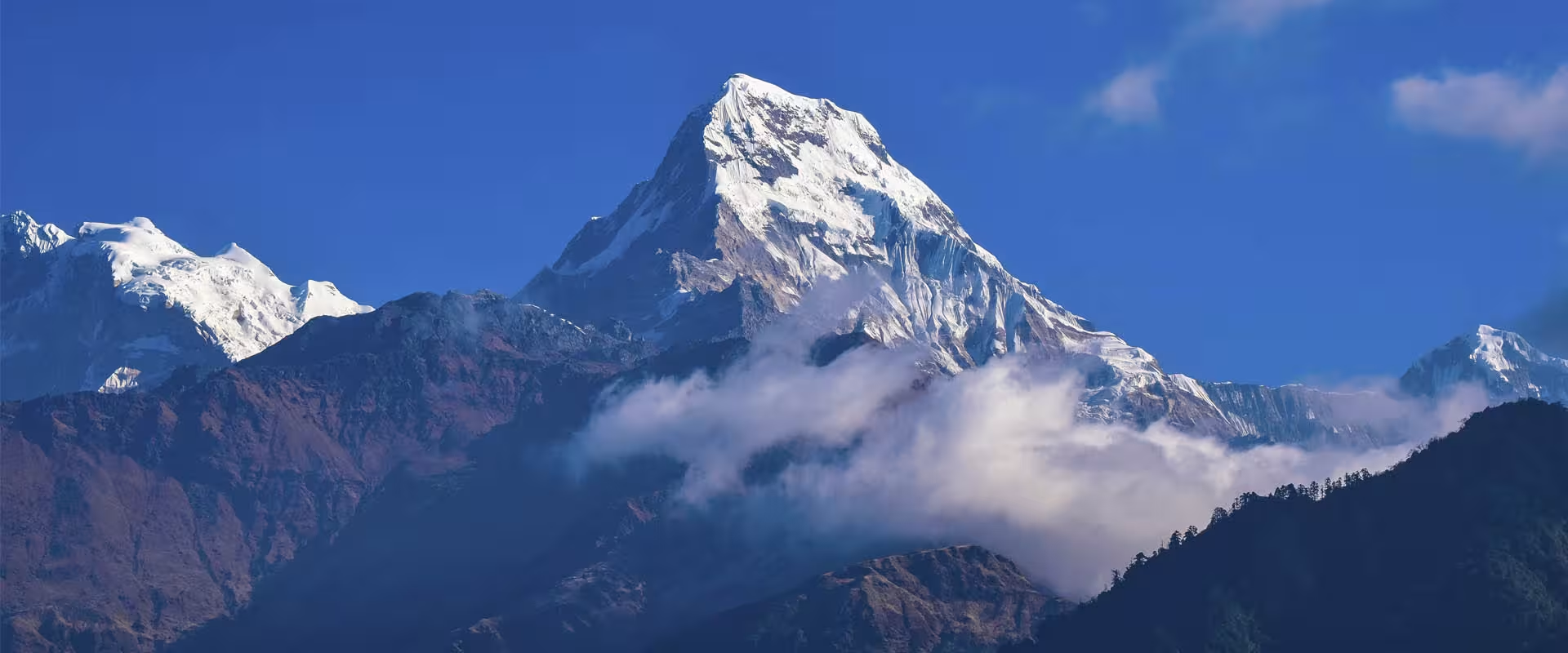
The Annapurna region is one of Nepal's most diverse trekking destinations, where lush subtropical forests gradually give way to alpine meadows, glacial valleys, and snow-covered peaks. Within just a few days of trekking, you'll ascend from low-elevation villages to landscapes above 4,000 meters, making altitude an important factor for every trekker to understand.
Whether you're planning the Annapurna Base Camp Trek, Annapurna Circuit, Mardi Himal Trek, or a shorter hike to Poon Hill, knowing how elevation affects your body can help you enjoy the journey safely. While thousands of trekkers complete these routes each year without serious problems, ascending too quickly or ignoring early symptoms of altitude sickness can turn an unforgettable adventure into a medical emergency.
This guide explains everything you need to know about Annapurna region elevation and altitude sickness, including elevation profiles of popular trekking routes, when altitude sickness can occur, how to prevent it, and what to do if symptoms develop. By understanding the risks and preparing properly, you'll be better equipped to experience the breathtaking beauty of the Annapurna Himalayas with confidence.
Why Understanding Annapurna Region Elevation Matters
Unlike many mountain destinations where altitude increases gradually over weeks, trekking in the Annapurna region often involves gaining significant elevation in just a few days. As you climb higher, the atmospheric pressure decreases, reducing the amount of oxygen available with every breath. Although the percentage of oxygen in the air remains the same, your body receives less oxygen than it does at lower elevations.
Most trekkers begin their journey from Pokhara, situated at around 822 meters, where breathing feels effortless. Within 5 to 10 trekking days, many reach Annapurna Base Camp at 4,130 meters, while trekkers on the Annapurna Circuit eventually cross Thorong La Pass (5,416 meters), one of the highest trekking passes in the world.
This rapid gain in elevation means your body has less time to adapt. The higher you climb, the more important proper acclimatization becomes. Even healthy, physically fit trekkers can experience altitude sickness if they ascend too quickly.
Understanding the elevation profile of your trek allows you to:
- Plan realistic daily hiking distances.
- Include adequate acclimatization where needed.
- Recognize when symptoms are likely to appear.
- Reduce the risk of Acute Mountain Sickness (AMS).
- Trek more comfortably and safely.
Simply, altitude awareness is just as important as physical fitness when preparing for an Annapurna adventure.
Annapurna Region Elevation Overview
One of the reasons the Annapurna region appeals to trekkers of all experience levels is its remarkable range of landscapes and elevations. From warm river valleys to high mountain passes, every route offers a unique altitude profile and level of difficulty.
Here's a quick overview of the elevations you'll encounter on some of the region's most popular trekking routes.
|
Destination |
Elevation |
|
Pokhara |
822 m |
|
Nayapul |
1,070 m |
|
Ulleri |
2,050 m |
|
Ghorepani |
2,874 m |
|
Poon Hill |
3,210 m |
|
Chhomrong |
2,170 m |
|
Bamboo |
2,310 m |
|
Deurali |
3,230 m |
|
Machhapuchhre Base Camp (MBC) |
3,700 m |
|
Annapurna Base Camp (ABC) |
4,130 m |
|
Thorong Phedi |
4,540 m |
|
Thorong La Pass |
5,416 m |
|
Tilicho Lake |
4,919 m |
|
Mardi Himal Base Camp |
4,500 m |
Although the Annapurna region includes several trekking routes, they differ considerably in terms of altitude exposure.
Annapurna Base Camp Trek
The Annapurna Base Camp Trek reaches a maximum elevation of 4,130 meters at Annapurna Base Camp. Most trekkers spend 7–11 days completing the route, allowing for a gradual ascent that helps reduce the likelihood of altitude sickness. While AMS is still possible, the risk remains relatively moderate when following a well-paced itinerary.
Annapurna Circuit Trek
The Annapurna Circuit is the highest trek in the region, reaching 5,416 meters at Thorong La Pass. Crossing this high mountain pass requires careful acclimatization, making the circuit more demanding than Annapurna Base Camp in terms of altitude. A slower ascent and proper rest days are essential for a safe crossing.
Mardi Himal Trek
Although shorter than many other Annapurna treks, Mardi Himal climbs to approximately 4,500 meters at Mardi Himal Base Camp. Since the route gains elevation relatively quickly, trekkers should maintain a steady pace and remain attentive to any signs of altitude sickness.
Ghorepani Poon Hill Trek
The Ghorepani Poon Hill Trek reaches 3,210 meters, making it one of the most accessible trekking options in the Annapurna region. While the risk of altitude sickness is considerably lower than on higher routes, some trekkers may still notice mild symptoms due to the elevation gain.
Where Does Altitude Sickness Start in the Annapurna Region?
There is no specific elevation at which every trekker develops altitude sickness. However, medical experts generally agree that the likelihood of Acute Mountain Sickness (AMS) begins to increase once you ascend above 2,500 meters (8,200 feet).
Many villages along Annapurna trekking routes fall within or above this altitude, including Ghorepani, Upper Sinuwa, Deurali, Yak Kharka, and Thorong Phedi. While some trekkers may feel completely normal, others can develop symptoms despite following the same itinerary.
Several factors influence how your body responds to altitude, including:
- Individual physiology and genetic factors.
- Rate of ascent.
- Previous altitude experience.
- Hydration and nutrition.
- Sleep quality.
- Physical exertion.
Contrary to popular belief, being young or exceptionally fit does not provide immunity against altitude sickness. In fact, strong hikers sometimes ascend too quickly because they feel capable of maintaining a faster pace, increasing their risk of developing AMS.
The good news is that most cases of altitude sickness are mild and improve with rest or a slower ascent. Recognizing the early warning signs is the key to preventing more serious complications.
Annapurna Region Altitude Profile by Popular Trek
One of the biggest factors influencing the likelihood of altitude sickness is how high you climb and how quickly you gain elevation. Although all Annapurna treks showcase spectacular Himalayan scenery, each route has a different altitude profile and level of risk.
Understanding the highest point, daily elevation gains, and acclimatization opportunities can help you choose a trek that matches your experience and fitness level.
Annapurna Base Camp Trek Altitude Profile
The Annapurna Base Camp (ABC) Trek is one of Nepal's most popular adventures because it offers a high-altitude Himalayan experience without crossing an extremely high mountain pass. Most itineraries follow a gradual ascent through forests, terraced farmland, and traditional Gurung villages before entering the Annapurna Sanctuary.
|
Location |
Elevation |
|
Pokhara |
822 m |
|
Nayapul |
1,070 m |
|
Ulleri |
2,050 m |
|
Ghorepani (optional route) |
2,874 m |
|
Chhomrong |
2,170 m |
|
Bamboo |
2,310 m |
|
Himalaya |
2,920 m |
|
Deurali |
3,230 m |
|
Machhapuchhre Base Camp |
3,700 m |
|
Annapurna Base Camp |
4,130 m |
Highest Elevation
Annapurna Base Camp – 4,130 meters
Altitude Risk
Moderate
Most trekkers begin noticing the effects of altitude after Deurali (3,230 m), where the air becomes noticeably thinner. While serious altitude sickness is uncommon on properly paced itineraries, mild AMS symptoms such as headaches or fatigue can still occur.
A well-planned 8 to 11-day itinerary significantly reduces the risk by allowing your body to adjust naturally.
Annapurna Circuit Altitude Profile
The Annapurna Circuit is Nepal's classic high-altitude trek. Unlike the ABC Trek, the Circuit climbs well above 5,000 meters before crossing Thorong La Pass, making acclimatization far more important.
|
Location |
Elevation |
|
Besisahar |
760 m |
|
Chame |
2,670 m |
|
Pisang |
3,300 m |
|
Manang |
3,519 m |
|
Yak Kharka |
4,018 m |
|
Thorong Phedi |
4,540 m |
|
Thorong La Pass |
5,416 m |
|
Muktinath |
3,760 m |
Highest Elevation
Thorong La Pass – 5,416 meters
Altitude Risk
High
Most itineraries include an acclimatization day in Manang because the following days involve sleeping above 4,000 meters. Attempting to rush the itinerary greatly increases the risk of Acute Mountain Sickness.
Mardi Himal Trek Altitude Profile
Although considerably shorter than the Annapurna Circuit, the Mardi Himal Trek climbs quickly into alpine terrain. Trekkers often gain substantial elevation over just a few days, making pacing especially important.
|
Location |
Elevation |
|
Kande |
1,770 m |
|
Forest Camp |
2,550 m |
|
Low Camp |
2,990 m |
|
High Camp |
3,580 m |
|
Viewpoint |
4,200 m |
|
Mardi Himal Base Camp |
4,500 m |
Highest Elevation
Mardi Himal Base Camp – 4,500 meters
Altitude Risk
Moderate to High
Because there are fewer villages at higher elevations and the ascent can be relatively quick, trekkers should maintain a slow pace, stay hydrated, and monitor for AMS symptoms.
Ghorepani Poon Hill Trek Altitude Profile
The Ghorepani Poon Hill Trek is ideal for beginners or travelers with limited time. Although it reaches over 3,000 meters, the trek remains below the elevations associated with severe altitude illness in most cases.
|
Location |
Elevation |
|
Nayapul |
1,070 m |
|
Tikhedhunga |
1,570 m |
|
Ulleri |
2,050 m |
|
Ghorepani |
2,874 m |
|
Poon Hill |
3,210 m |
Highest Elevation
Poon Hill – 3,210 meters
Altitude Risk
Low
Some trekkers may experience mild headaches during the sunrise hike to Poon Hill, but serious altitude-related problems are uncommon.
Khopra Danda Trek Altitude Profile
The Khopra Danda Trek offers quieter trails and stunning panoramic views while reaching similar elevations to Annapurna Base Camp.
|
Location |
Elevation |
|
Tadapani |
2,630 m |
|
Dobato |
3,430 m |
|
Khopra Danda |
3,660 m |
|
Khayer Lake (optional) |
4,660 m |
Highest Elevation
Khayer Lake – 4,660 meters
Altitude Risk
Moderate to High
Trekkers continuing to Khayer Lake should be prepared for a long day at high altitude and begin the hike well-acclimatized.
|
Trek |
Highest Elevation |
Altitude Risk |
Best For |
|
Ghorepani Poon Hill |
3,210 m |
Low |
Beginners |
|
Annapurna Base Camp |
4,130 m |
Moderate |
Most trekkers |
|
Mardi Himal |
4,500 m |
Moderate to High |
Experienced hikers |
|
Khopra Danda + Khayer Lake |
4,660 m |
Moderate to High |
Adventure seekers |
|
Annapurna Circuit |
5,416 m |
High |
Experienced trekkers |
Symptoms of Altitude Sickness in the Annapurna Region
Altitude sickness usually develops gradually rather than suddenly. Many trekkers first notice mild symptoms after sleeping above 2,500–3,000 meters, especially if they have gained elevation quickly. Recognizing the warning signs early is the best way to prevent more serious complications.
Early Symptoms of Acute Mountain Sickness (AMS)
Most trekkers with mild AMS experience one or more of the following symptoms:
- Persistent headache
- Fatigue or unusual tiredness
- Shortness of breath during light activity
- Loss of appetite
- Nausea
- Dizziness or lightheadedness
- Difficulty sleeping
- General weakness
These symptoms often resemble dehydration or the flu, which is why many trekkers initially ignore them. However, continuing to ascend without improvement can make the condition worse.
Important: A headache at altitude combined with one or more additional symptoms should never be ignored.
Severe Altitude Illness
Although uncommon on properly guided treks, severe altitude illness requires immediate action.
High Altitude Cerebral Edema (HACE)
HACE occurs when the brain begins to swell because of inadequate oxygen.
Warning signs include:
- Confusion
- Difficulty walking in a straight line
- Loss of coordination
- Slurred speech
- Hallucinations
- Extreme drowsiness
- Loss of consciousness
HACE is a life-threatening emergency and requires immediate descent and medical attention.
High Altitude Pulmonary Edema (HAPE)
HAPE occurs when fluid accumulates in the lungs.
Symptoms include:
- Severe shortness of breath, even while resting
- Persistent cough
- Chest tightness
- Rapid heartbeat
- Blue lips or fingernails
- Crackling sounds while breathing
Without immediate descent and treatment, HAPE can become fatal.
Who Is Most at Risk of Altitude Sickness?
Altitude sickness does not discriminate. Even experienced mountaineers can develop AMS under the wrong conditions.
You may be at higher risk if you:
- Ascend too quickly.
- Skip acclimatization days.
- Have previously experienced altitude sickness.
- Sleep at high elevations too soon.
- Become dehydrated.
- Drink excessive alcohol.
- Push yourself too hard during the trek.
Interestingly, research shows that physical fitness does not protect against altitude sickness. In fact, very fit trekkers sometimes increase their risk because they climb faster than their bodies can acclimatize.
Myth vs. Fact About Annapurna Altitude Sickness
|
Myth |
Fact |
|
Only beginners get altitude sickness. |
Anyone can develop AMS, including experienced trekkers. |
|
Young people are immune. |
Age has little influence on altitude adaptation. |
|
If you're fit, you won't get altitude sickness. |
Fitness improves endurance but does not prevent AMS. |
|
Drinking more water alone prevents altitude sickness. |
Hydration helps but cannot replace proper acclimatization. |
|
Oxygen is always needed above 4,000 meters. |
Most healthy trekkers complete the ABC Trek without supplemental oxygen when following a gradual itinerary. |
Understanding these facts helps trekkers make safer decisions and avoid common misconceptions that can increase risk.
How to Prevent Altitude Sickness in the Annapurna Region
Although altitude sickness cannot always be prevented, following a sensible itinerary and listening to your body can significantly reduce the risk. The goal is to give your body enough time to adapt to lower oxygen levels as you gain elevation.
1. Ascend Gradually
A gradual ascent is the most effective way to prevent Acute Mountain Sickness (AMS). Most well-designed Annapurna itineraries increase sleeping altitude steadily, allowing your body to acclimatize naturally.
Avoid rushing to reach higher villages simply because you feel strong. Even experienced trekkers benefit from a slower pace.
2. Stay Hydrated
Dehydration can worsen the symptoms of altitude sickness. Drink plenty of water throughout the day, even if you don't feel thirsty.
A good rule of thumb is to aim for 3–4 liters of fluids daily while trekking at higher elevations. Herbal teas and soups also contribute to hydration.
Signs you may need more fluids include:
- Dark-colored urine
- Dry mouth
- Fatigue
- Headache
3. Eat Regular, Carbohydrate-Rich Meals
Your body burns more energy at altitude, even while resting. Eating enough carbohydrates helps provide the fuel needed for acclimatization.
Common meals served in Annapurna teahouses, such as Dal Bhat, noodles, rice, potatoes, porridge, and soups, are excellent choices for maintaining energy during the trek.
Even if your appetite decreases slightly at higher elevations, try to eat regular meals.
4. Avoid Alcohol and Smoking
Alcohol and smoking can interfere with your body's ability to adjust to reduced oxygen levels. Alcohol also contributes to dehydration and can mask the early symptoms of altitude sickness.
It's best to avoid alcoholic drinks until you've descended to lower elevations.
5. Walk at a Comfortable Pace
Many first-time trekkers make the mistake of hiking too quickly during the first few days. Trekking at altitude is not a race.
Walking slowly and maintaining a steady rhythm allows your body to conserve energy and adapt more efficiently.
Experienced guides often describe the ideal pace as "slow and steady."
6. Get Enough Rest
A good night's sleep supports recovery and acclimatization. If you feel unusually tired, don't hesitate to take extra breaks during the day.
Listening to your body is more important than strictly following a timetable.
7. Communicate Any Symptoms Early
Never hide symptoms from your guide or trekking companions.
A mild headache today can become a serious medical problem tomorrow if ignored. Early communication allows guides to monitor your condition and adjust the itinerary if necessary.
Recommended Acclimatization Strategy
Although the Annapurna Base Camp Trek does not usually require dedicated acclimatization days like the Annapurna Circuit, a well-paced itinerary naturally helps your body adjust.
A gradual ascent with reasonable daily elevation gains is generally sufficient for most healthy trekkers.
For the Annapurna Circuit, however, an acclimatization day in Manang (3,519 m) is strongly recommended before continuing toward Thorong La Pass.
Additional acclimatization hikes around Manang, such as visiting Ice Lake or Gangapurna Lake, can help your body adapt while returning to sleep at the same elevation.
Should You Take Diamox?
Diamox (Acetazolamide) is commonly used to help prevent and reduce the symptoms of altitude sickness by speeding up the body's acclimatization process.
Diamox may be helpful if you:
- Have previously experienced altitude sickness.
- Are trekking above 4,000 meters.
- Have limited time for acclimatization.
- Have been advised by your healthcare provider.
However, Diamox is not a substitute for proper acclimatization. It should never be used as an excuse to climb faster than recommended.
Possible side effects include:
- Tingling in the fingers or toes
- Increased urination
- Altered taste for carbonated drinks
- Mild fatigue
Always consult your doctor before taking Diamox, especially if you have allergies, kidney problems, or other medical conditions.
What to Do If You Develop Altitude Sickness
The most important rule is simple:
Never continue ascending if your symptoms are getting worse.
If you develop mild symptoms:
- Stop ascending.
- Rest and monitor your condition.
- Stay hydrated.
- Eat light meals if possible.
- Inform your guide immediately.
If symptoms improve after resting, you may be able to continue cautiously.
However, if symptoms worsen or new symptoms appear, the safest option is to descend to a lower elevation.
Emergency Signs That Require Immediate Descent
Seek immediate assistance if you experience:
- Difficulty walking normally
- Confusion
- Severe breathlessness while resting
- Persistent vomiting
- Blue lips or fingernails
- Chest pain
- Loss of consciousness
These may indicate High Altitude Cerebral Edema (HACE) or High Altitude Pulmonary Edema (HAPE), both of which require urgent medical attention.
Is Oxygen Needed on the Annapurna Base Camp Trek?
For most trekkers, supplemental oxygen is not necessary on the Annapurna Base Camp Trek when following a gradual itinerary. The highest point of the trek, Annapurna Base Camp at 4,130 meters, is well within the range where healthy trekkers can acclimatize naturally.
Supplemental oxygen is generally reserved for medical emergencies rather than routine trekking.
How Experienced Guides Help Reduce Altitude Risk
A knowledgeable guide plays an important role in recognizing altitude-related problems before they become serious.
Professional trekking guides typically:
- Monitor your pace throughout the trek.
- Watch for early signs of AMS.
- Recommend additional rest if needed.
- Adjust the itinerary when conditions require.
- Coordinate emergency evacuation if necessary.
Their local knowledge and experience can make a significant difference, especially for first-time trekkers.
Why Trek the Annapurna Region with Sublime Trails?
Choosing a reliable trekking company is about more than logistics, it also contributes to your safety and overall experience at altitude.
At Sublime Trails, our itineraries are designed with gradual elevation gain to support proper acclimatization rather than rushing to the destination. Our experienced, licensed guides monitor trekkers throughout the journey, provide practical advice on hydration and pacing, and are trained to recognize the early signs of altitude sickness.
Whether you're trekking to Annapurna Base Camp, crossing Thorong La Pass, or exploring quieter routes like Mardi Himal or Khopra Danda, our team prioritizes your safety while helping you enjoy the remarkable landscapes and culture of the Annapurna region.
Final Thoughts
The Annapurna region offers some of the world's most rewarding trekking experiences, from the peaceful forests below Ghorepani to the breathtaking amphitheater of Annapurna Base Camp and the dramatic crossing of Thorong La Pass. As the scenery changes with elevation, so does the amount of oxygen available to your body, making preparation and acclimatization essential parts of the journey.
Fortunately, altitude sickness is largely manageable with the right approach. Choosing a realistic itinerary, trekking at a steady pace, staying hydrated, eating well, and communicating any symptoms early can dramatically reduce the risk of serious complications. Rather than focusing solely on reaching the destination, give yourself time to appreciate the landscapes, local culture, and gradual transition into the high Himalayas.
With thoughtful planning and the support of experienced local guides, you can explore the Annapurna region confidently and safely, creating memories that last long after the trek is over.