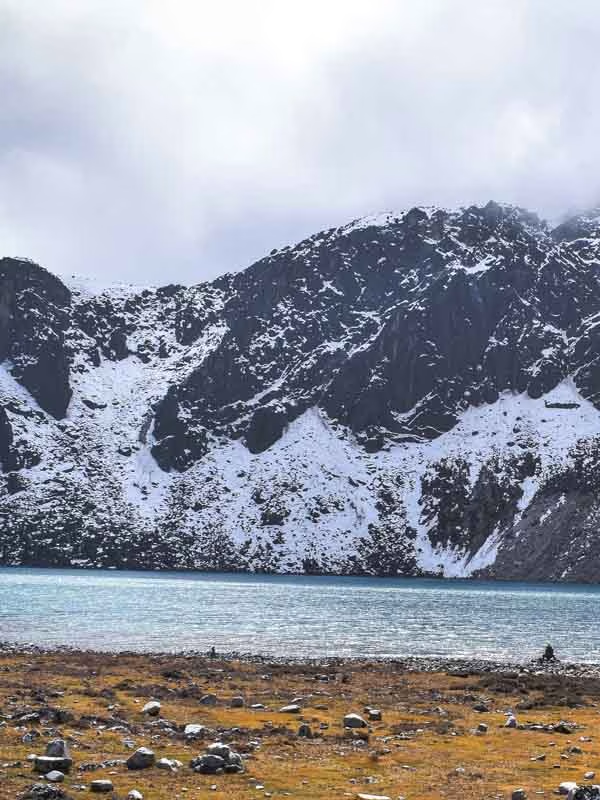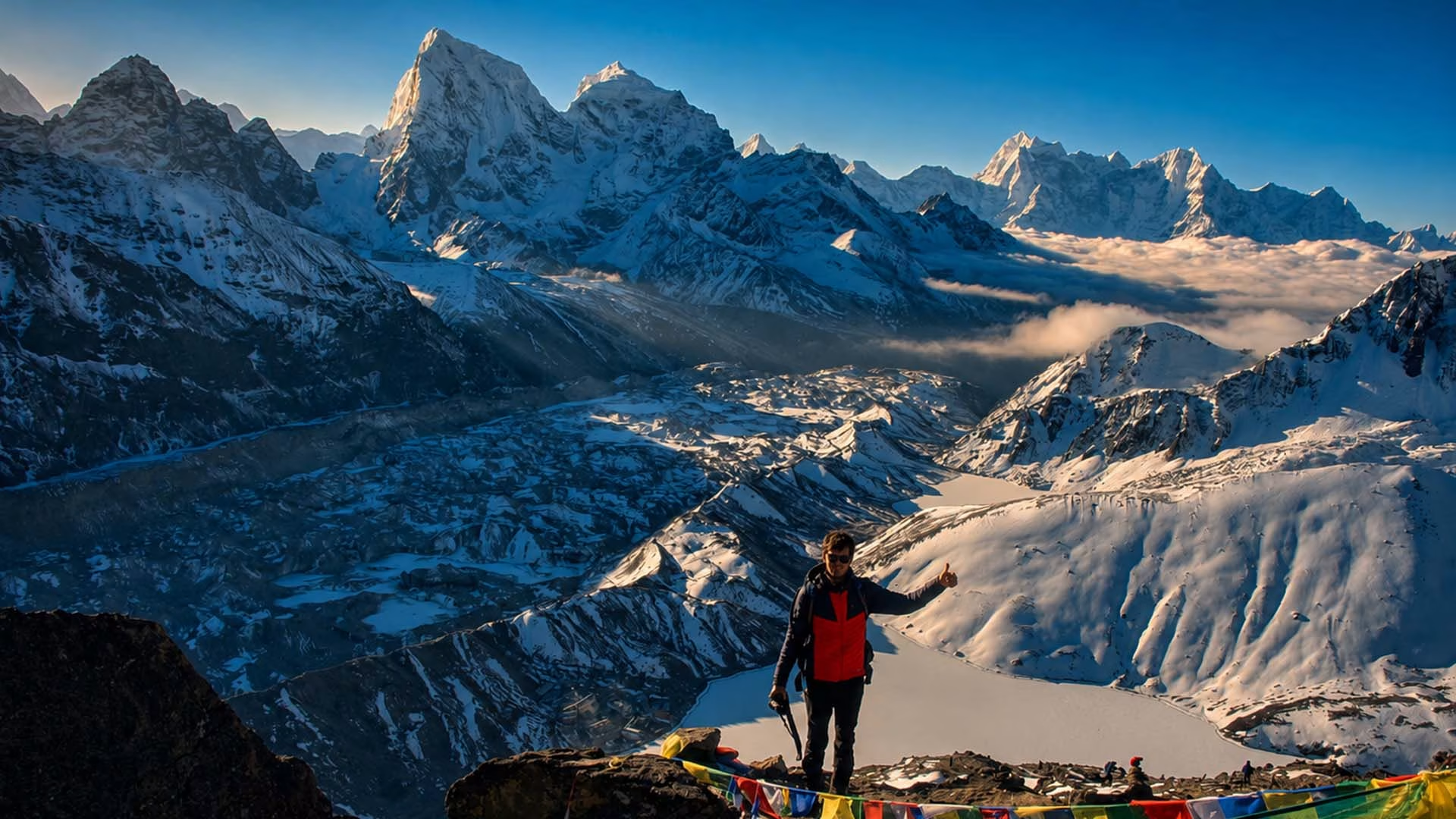
Twenty days, Kathmandu to Kathmandu. Trek the classic route to Namche and Dingboche, cross Kongma La (5,535m) to reach Everest Base Camp and Kala Patthar, cross Cho La (5,420m) into the Gokyo valley, climb Gokyo Ri for the region's best panoramic viewpoint, then cross Renjo La (5,360m) into the remote Thame valley before descending to Lukla. Three passes, four valleys, and every major highlight the Everest region has to offer, in one itinerary.
The Everest Three High Passes Trek is the ultimate high-altitude challenge, pushing trekkers over three spectacular summits: Kongma La, Cho La, and Renjo La. Whether you are standing on a 5,500m pass, wandering the shores of the Gokyo Lakes, or reaching Everest Base Camp, this trek delivers a world-class adventure that showcases the very best of the Everest region. Most Everest itineraries pick one valley and follow it.
This one refuses to. Over twenty days you cross three passes above 5,300m (Kongma La, Cho La, and Renjo La) stitching together the Khumbu, Imja, Gokyo, and Thame valleys into a single continuous route that also takes in Everest Base Camp and Kala Patthar along the way. Nothing else on our site, or arguably in the Everest region, covers this much ground.
Why This Isn't Just a Longer EBC Trek
Everest Base Camp is one stop on this itinerary, not the destination. The real substance is the three passes themselves. Each one a genuine mountaineering-adjacent crossing over ice and rock, not a walking pass in the way Poon Hill or even Thorong La can feel on a good day. Between passes, the route runs through Gokyo's turquoise lake system and the rarely-visited Thame valley, doubling the region's highlight count against a standard EBC trek without repeating a single day's terrain.
Who This Is Actually For
This is not a trek to attempt as your first experience above 4,000m. It's built for trekkers who've already done Everest Base Camp or a comparable high-altitude circuit, understand what multiple consecutive demanding days feel like, and specifically want the most complete version of the Everest region available.
If Everest Base Camp itself is still your primary goal and the idea of three additional passes sounds like more challenge than reward, our 14-Day Classic or 9-Day Helicopter Return covers the destination without this trip's added demands.
Trip Highlights
Journey Highlights
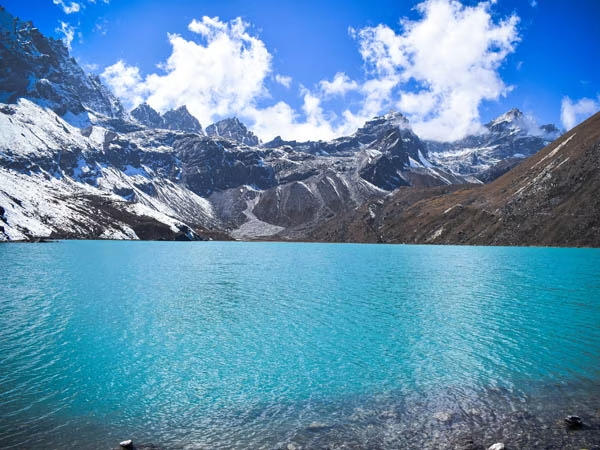
The Gokyo Lakes
A turquoise glacial lake system most EBC-only trekkers never see
The remote Thame valley
One of the least-visited corners of the Khumbu, reached only via the Renjo La descent
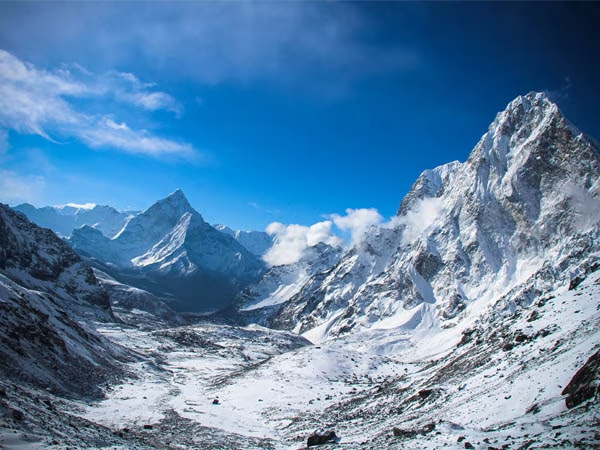
Three high-altitude pass crossings
Kongma La, Cho La, and Renjo La in one continuous itinerary, a combination very few operators run start to finish
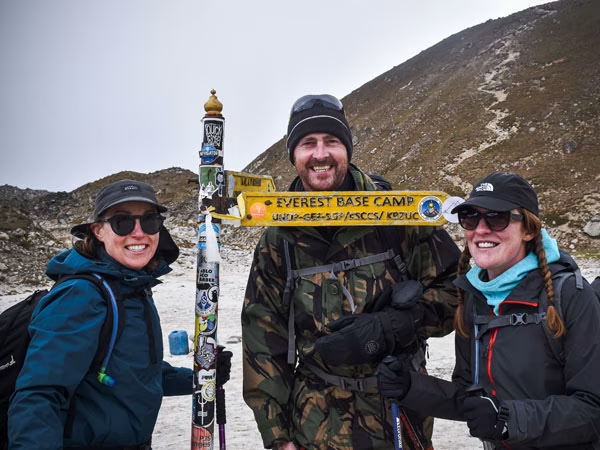
Everest Base Camp and Kala Patthar
Reached from the less-crowded Kongma La approach rather than the standard direct route
We say this plainly: this is not a trek for a first Everest region attempt, regardless of general fitness. Three passes above 5,300m, technical glacier sections, and twenty consecutive days at altitude combine into real cumulative demand that a strong first-timer can underestimate. If you haven't done Everest Base Camp or a comparable high-altitude trek before, we'd genuinely rather you start there and come back for this once you know how your body handles sustained altitude.
Safety & Altitude
Designed for Success at Altitude
Confidence. Not fear.
Three passes above 5,300m in one itinerary is the single most altitude-intensive product we offer, and every structural decision in this trek reflects that.
Acclimatization: three full rest days, more than any other Sublime Trails Everest itinerary, positioned directly ahead of each major altitude push
Careful pacing: pre-dawn starts on all three pass days, timed to cross before afternoon winds and temperature swings make conditions worse
Experienced local guides: verified, current-season experience on all three specific passes, not general high-altitude credentials
AMS awareness: daily oximeter checks, with increased frequency around each pass crossing
Guide training: wilderness first aid and high-altitude rescue protocols, refreshed annually, plus specific technical training for glacier crossings on Cho La
Emergency response: evacuation points exist near each pass, but response times vary by location — covered specifically for each stage during your Day 1 briefing
Essential Information
1. Porter and Weight Limitation
Each porter carries up to 20kg, shared between two trekkers. Given the technical nature of three pass crossings, keep your daypack focused on essentials — water, layers, microspikes if self-carried — rather than overloading it.
2. A Typical Day on the Trail
Standard trekking days follow the familiar rhythm as early breakfast, walking through cooler hours, an early lodge arrival. Pass-crossing days break that pattern entirely: expect a pre-dawn wake-up, 7–8 hours of sustained effort including technical sections, and a later arrival at the next lodge than any other day type on this itinerary.
3. Helicopter Evacuation
Evacuation logistics vary by location on this route, faster near Everest Base Camp and Gokyo, slower from the more remote Thame valley sections. This is covered specifically for each stage during your Day 1 briefing. Insurance covering high-altitude helicopter evacuation to at least 6,000m is mandatory — see Cost Exclusion below.
Trip Gallery
See the Journey Through the Lens
Itinerary
Everest Three High Passes Trek Detailed Itinerary
Day 1 - Day 1: Arrival in Kathmandu
When you exit the Tribhuvan International Airport terminal, look for our team holding the Sublime Trails sign. Our team will assist you with your luggage and drive you straight to the hotel to rest. Later, we’ll meet for an essential pre-trip briefing to check your gear, review safety protocols, and answer any questions. You’ll have the rest of the afternoon to explore the nearby markets of Thamel for last-minute supplies before we gather for a traditional welcome dinner to meet your crew.
Day 2 - Flight to Lukla and Trek to Phakding
This is the day your adventure begins with a thrilling 35-minute flight to the mountain airstrip at Lukla. After landing, we’ll meet our porter team, organize the gear, and hit the trail. The trek starts with a gentle descent toward the Dudh Koshi River, winding through local villages for about 4 hours until we reach Phakding. Take the evening to ease into the altitude and enjoy your first night in a traditional mountain tea house.
Day 3 - Trek to Namche Bazaar
After breakfast, we push deeper into the beautiful Khumbu region. The trail follows the river valley, crossing scenic suspension bridges as we head toward Monjo for lunch. From there, the terrain steepens significantly for the final push up to Namche Bazaar. Reaching this bustling Himalayan hub is incredibly rewarding. There, you'll be greeted by views of Thamserku and Kongde Ri, vibrant local markets, and the unique energy of the Sherpa capital.
Day 4 - Acclimatization at Namche Bazaar
To adapt safely to the thinning air, we spend a dedicated acclimatization day in Namche. Rather than resting entirely, staying active is the best approach. Therefore, we’ll take a scenic hike up to the Everest View Hotel (3,880 m) for our first proper look at Everest, Lhotse, and Ama Dablam. Afterward, you can explore the local Sherpa culture museum, visit the national park headquarters, or simply enjoy a coffee at a local bakery.
Day 5 - Namche to Tengboche
The day starts with a relatively flat, winding trail that offers sweeping views of the valley and Ama Dablam. After dropping down to the river for lunch at Phunki Thenga, we face a steady, 3-to-4-hour uphill climb through rhododendron forests. Our destination is Tengboche, a stunning village famous for its iconic monastery. We’ll have time to visit the monastery, learn about its history, and watch the evening mist roll over the peaks.
Day 6 - Tengboche to Dingboche
We catch the early morning light on the mountains before hitting the trail, which gradually leaves the tree line behind. Passing through Pangboche, the landscape shifts into a starker, alpine environment. A gentle but steady climb brings us into the wide valley of Dingboche. Known as the summer valley, this stone-walled village is a welcome place to rest, recharge, and look out at the towering wall of Lhotse.
Day 7 - Acclimatization at Dingboche
As we approach the 4,500-meter mark, a second acclimatization day is vital. To help your body adjust, we’ll take a steep day-hike up the ridge behind the village, or head toward Chhukung Ri (5,550 m). The effort pays off with dramatic views of Makalu, Island Peak, and the massive south face of Lhotse. We’ll return to Dingboche for a relaxed afternoon to rest up for the challenges ahead.
Day 8 - Trek from Dingboche to Chhukung
Today is intentionally short and slow, designed to conserve your energy for the grueling pass tomorrow. We follow a gentle, steady uphill trail through high alpine pastures, flanked by incredible mountain walls. After a 3-hour trek, we reach the small settlement of Chhukung. Use the afternoon to pack your gear, stay hydrated, and get plenty of sleep before tackling the first big pass.
Day 9 - Chhukung to Kongma-La and Lobuche
We start before dawn for our first high pass: Kongma La (5,535 m). The climb is a steep, demanding slog over rocky terrain, but the panoramic views from the summit at 5,535 meters are absolutely unforgettable. After descending the other side, we stop for lunch near Thukla before navigating the moraine of the massive Khumbu Glacier. We'll pass the poignant climbers' memorials before arriving in Lobuche, exhausted but accomplished.
Note: This is a highly grueling day
Day 10 - Lobuche to Gorak Shep and EBC, Return to Gorak Shep
We trek along the rocky edge of the Khumbu Glacier for about 3 hours to reach Gorak Shep, our final outpost. After checking into the tea house and having a quick bite, we push onward to Everest Base Camp (5,364 m). Walking across the glacier's edge brings you right to the foot of the Khumbu Icefall. Take your time soaking in the atmosphere, snapping photos, and standing at the base of the world's highest peak before heading back to Gorak Shep.
Day 11 - Trek to Kala Patthar, Back to Gorak Shep, Onwards to Dzongla
An early alpine start brings us up the steep trail of Kala Patthar (5,545 m). It is a tough climb in the cold, but standing at the top to watch the sunrise illuminate Everest, Nuptse, and Pumori is the visual highlight of the entire trek. After descending to Gorak Shep for breakfast, we pack up and head back down the trail toward Lobuche, eventually branching off toward the quiet, scenic village of Dzongla.
Day 12 - Dzongla to Cho La Pass and Dragnag
Today brings our second major challenge: Cho La Pass (5,420 m). The day begins across a gentle basin before turning into a steep scramble over loose rock and boulders. The final stretch requires walking across a crisp, packed glacier to reach the prayer flags at the top. The descent down the other side is steep and requires careful footing on the moraine, but it leads us safely into the small settlement of Dragnag.
Note: Involves crossing a steep glacier/rock scree.
Day 13 - Dragnag to Gokyo Village and Gokyo Lakes
Compared to yesterday, today is short and visually spectacular. We spend the morning navigating across the rugged, debris-covered Ngozumpa Glacier—the longest glacier in the Himalayas. As we reach the far side, the landscape transforms as the striking, turquoise waters of the Gokyo Lakes come into view. We’ll check into our tea house early, giving you a relaxed afternoon to explore the lakeside village.
Day 14 - Acclimatization at Gokyo Village
We catch our breath with another active rest day in the Gokyo Valley. In the morning, we’ll make the steep climb up Gokyo Ri (5,357 m). From the summit, you get a breathtaking, panoramic view of four 8,000-meter peaks: Everest, Lhotse, Makalu, and Cho Oyu, alongside the massive glacier below. We’ll head back down for lunch, leaving the afternoon free to rest or walk along the shores of the upper lakes.
Day 15 - Gokyo to Renjo La Pass and Lumde
Today we tackle our third and final high pass, Renjo La (5,360 m). The trail climbs steadily away from the Gokyo Lakes, turning into a steep stone staircase near the top. Looking back from the pass offers one of the finest views in the region, framed by prayer flags. From the top, we begin a long, steady descent into a quiet, rarely visited valley, following the trail down to our tea house in Lumde.
Day 16 - Lumde to Thame
With all three passes behind us, the trail eases significantly as we enter the traditional Bhote Koshi valley. We descend through ancient villages like Marulung and Tarngga, crossing the river along the way. Our stop for the day is Thame, a historic Sherpa village untouched by mass tourism. It’s the childhood home of Tenzing Norgay, and you’ll have plenty of time to visit its stunning, cliffside monastery.
Day 17 - Thame to Namche Bazaar
We loop back into familiar territory today, making our way back to Namche Bazaar. The trail is a comfortable, mostly downhill walk through beautiful pine and rhododendron forests, passing small Sherpa settlements along the valley wall. Arriving back in Namche feels like a return to civilization—enjoy a hot shower, celebrate your achievement at a local cafe, and enjoy a comfortable night’s rest.
Day 18 - Namche to Lukla
Our final day on the trail is a long but rewarding push back to where it all started. We descend the steep hill out of Namche, cross the suspension bridges over the Dudh Koshi, and stop for lunch near Phakding. From there, a final, gradual uphill stretch brings us back into Lukla. It’s a great evening to celebrate with your guides and porters, toast to an incredible journey, and prepare for your flight tomorrow.
Day 19 - Lukla to Kathmandu
We board an early morning flight from Lukla, enjoying one last look at the Himalayas as we fly back to Kathmandu. Once at the hotel, the rest of the day is entirely yours. It’s the perfect time to book a well-deserved massage, do some souvenir shopping in Thamel, or just relax. In the evening, join us for a farewell cultural dinner hosted by Sublime Trails to celebrate your trek.
Day 20 - Departure
Your Himalayan journey comes to an end today. Depending on your flight schedule, our representative will pick you up from your hotel and drive you to the airport for your journey home. Safe travels, until your next adventure.
Getting There
Kathmandu's Tribhuvan International Airport is served by direct and one-stop flights from most major hubs in Asia and the Gulf; travelers from the US, Europe, and Australia typically connect through Doha, Istanbul, Delhi, Singapore, or Bangkok. From Kathmandu, the trek begins with a short mountain flight to Lukla, or, during peak-season air traffic restrictions, a road transfer to Ramechhap followed by the same flight from there.
Sublime Trails representative will come to pick you at the airport. So we will be meeting at Tribhuvan International Airport to start the amazing journey.
Map And Altitude Chart
Everest Three High Passes Trek Map and Altitude Chart
Interactive Map
Cost Details
Inclusions & Exclusions
What’s Included
- Lukla flights both ways (or Ramechhap transfer if applicable)
- All meals and teahouse accommodation for 17 nights
- Licensed guide and porter (1 porter per 2 trekkers), with verified three-pass experience
- Microspikes for the Cho La glacier crossing
- Sagarmatha National Park and Khumbu Rural Municipality permits
- Comprehensive first aid kit and daily health monitoring
What’s Excluded
- Travel and rescue insurance, including high-altitude helicopter evacuation coverage (mandatory)
- Nepal visa fee
- Personal expenses beyond what's listed under What Elevates This Journey
- Guide and porter tips
Add-Ons
Optional Upgrades & Extras
Extra buffer days: US$75 per day, including accommodation and meals worth strong consideration given how weather-dependent pass crossings are. Extra Kathmandu nights: US$45–120 depending on hotel category. Personal Sherpa: US$800 for the full 20 days.
Trip Departure
Dates & Booking
Cancellation Policy
Secure Payment
Saturday
17 Oct 2026
to
Thursday
05 Nov 2026
Status
Guaranteed
US$1850
Sunday
18 Oct 2026
to
Friday
06 Nov 2026
Status
Guaranteed
US$1850
Monday
19 Oct 2026
to
Saturday
07 Nov 2026
Status
Guaranteed
US$1850
Wednesday
21 Oct 2026
to
Monday
09 Nov 2026
Status
Guaranteed
US$1850
Friday
23 Oct 2026
to
Wednesday
11 Nov 2026
Status
Guaranteed
US$1850
Saturday
24 Oct 2026
to
Thursday
12 Nov 2026
Status
Guaranteed
US$1850
Sunday
25 Oct 2026
to
Friday
13 Nov 2026
Status
Guaranteed
US$1850
Monday
26 Oct 2026
to
Saturday
14 Nov 2026
Status
Guaranteed
US$1850
Wednesday
28 Oct 2026
to
Monday
16 Nov 2026
Status
Guaranteed
US$1850
Friday
30 Oct 2026
to
Wednesday
18 Nov 2026
Status
Guaranteed
US$1850
Saturday
31 Oct 2026
to
Thursday
19 Nov 2026
Status
Guaranteed
US$1850
Book at least 6 weeks ahead as permit processing and the specialized guide assignment this itinerary requires need more lead time than a standard trek. Build at least one buffer day into your international return flight; pass-day weather delays are the most common disruption on this specific itinerary.
Fixed group departures run monthly during peak season (March–May, September–November), kept intentionally small given the technical demands. Private departures available on request.
Local Guide
Meet Our Local Guide


Food and Accommodation
What You’ll Eat & Where You’ll Stay
Meals follow the standard Khumbu teahouse pattern through Namche, Tengboche, and Dingboche as dal bhat, porridge, eggs, noodle soups, momos. Variety narrows considerably at the more remote stops this itinerary reaches that standard EBC trekkers never see, particularly Thangnak, Lungden, and Chhukung, where menus are simpler and more repetitive given limited supply access
Equipment list
Everest Three High Passes Trek Equipment list
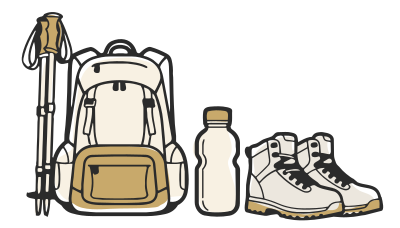
Know before you go! Some stuff we’ll provide, other things you’ll need to bring.
Reviews
Client’ Testimonials and their Experiences

Everest Three Passes Trek in late June, a perfect escape to the nature.
Everest three passes trek experience with Sublime Trails became good. The overall experience from my side is good because of good food, accommodations, porters and everything was good. We managed to fly to Lukla but the return was not possible to fly from Lukla. Instead, Mr Ram from Sublime Trails arranged an affordable helicopter flight rate for us from Namche to Kathmandu. It was a truly heartwarming gesture by the tour manager.
To write few lines about Everest three high passes, without a guide, the tour would have been not possible. Our fantastic guide Mr Shiva was entertaining, caring, and a bold guy. He made the whole trip effortless. Thanks for his extra photography skills. Truly, the best tour of life. Cheers!!

Wonderful trip on Everest Circuit, The Three High Passes Trek
I recommend everyone looking for best trekking in Nepal, go to Everest Three High Passes trek It gives the ultimate Everest experience you'll ever get. The budget friendly package from Sublime Trails was amazing. It was truly mesmerizing.
Guides was best. Meals, accommodation, flights, everything were at their top. Felt the best travel experience.

Beautiful Gokyo, EBC, and Three High Passes
Sublime Trails was my trekking partner for Thee High Passes. I had great time at Everest Base Camp, Gokyo Lakes, Cho La Pass, Renjo La Pass, and Kongma La Pass. The trekking experience was the best. The company was best. Their toup operation style was best. A successful trip at best rate.
A must recommended trip on Nepal. Blessed being there.
Moments
Hear It From Our Travelers
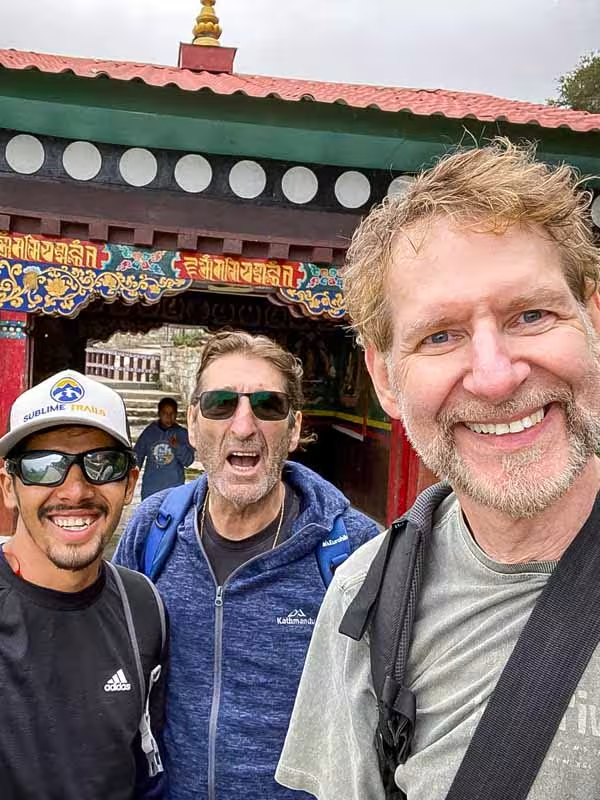
Their Spirit, Their Love of Their Country, Their Love of The Mountains, Their Love For Trekking and Hiking.
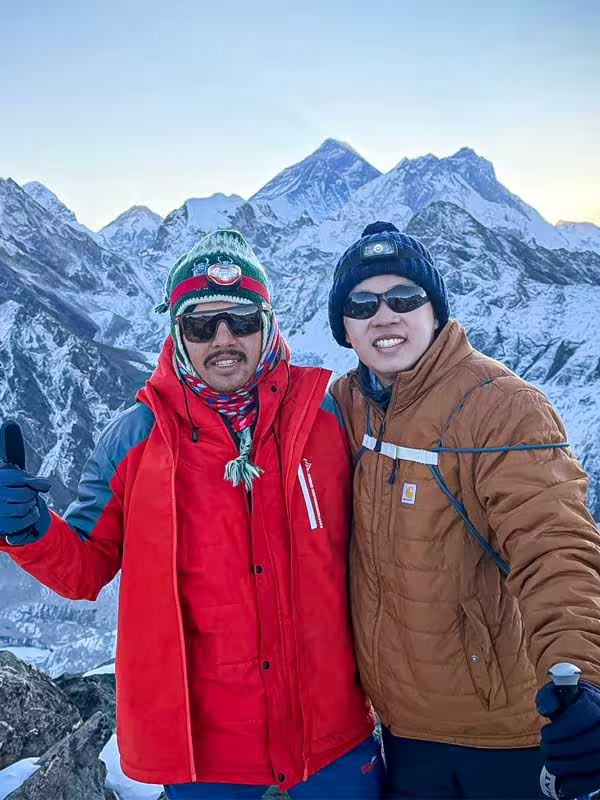
They Take Care of Everything — Food, Accommodation, Everything's Taken Care of
Essential
Know Everything Before You Go Everest Three High Passes Trek
Currency & ATMs
Exchange currency in Kathmandu before departure. ATMs exist only in Lukla and Namche Bazaar along the route. Both charge a processing fee of roughly 3 to 8 percent on card withdrawals. Carry the local currency equivalent of at least US$350 in cash. This is our longest standard Everest itinerary, and personal spending accumulates over twenty days.
Travel Insurance
Travel insurance is not legally required to enter Nepal or obtain a visa. It is required by us before you can start the Everest Three High Passes Trek. This requirement carries more weight here than on any of our standard Everest itineraries.
Your policy needs high-altitude coverage to at least 6,000m and helicopter evacuation coverage, given three separate crossings above 5,300m. Confirm your policy does not exclude technical terrain. The Cho La crossing involves a short glacier section that some policies define differently from standard trekking. US-based trekkers commonly use UnitedHealthcare Global. European trekkers use Allianz or Europe Assist. Australian trekkers use Cover-More.
Buy your policy before you leave home. Confirm evacuation coverage extends to all three passes specifically, not just the main Everest Base Camp corridor.
Nepal Visa
Most nationalities, including US, UK, EU, Australian, and Canadian citizens, can get a Nepal visa on arrival at Tribhuvan International Airport. You can also apply online in advance to save time at immigration. Choose the 30 day visa option for this twenty day itinerary. It gives genuine buffer for weather delays around any of the three passes. Indian citizens don't need a visa at all.
Travel Etiquette
- Always pass mani walls, chortens, and prayer wheels on your left, walking clockwise. This is a real Buddhist observance, not a suggestion.
- Ask before photographing monks, ceremonies, or people directly. A smile and a gesture toward your camera is usually enough. A shaken head means no, and that's the end of it.
- Remove your shoes before entering a monastery prayer hall. Keep your voice low inside.
- Yield the trail to porters, yaks, and mule trains throughout this twenty day trek. Stay on the uphill side when you do.
- A small monastery donation is appreciated but never expected. Don't make a show of it either way.
- On pass crossing days specifically, follow your guide's pace and instructions without exception. Technical terrain at altitude is not the setting for independent decisions about route or timing.
- Tipping matters more on a twenty day itinerary than a shorter one, given the extended time your guide and porter team spend supporting this specific trip. Ask your operator for a typical range rather than guessing.
Training for the Everest Three High Passes Trek
- This is the most demanding itinerary we run. It should be trained for as a serious undertaking, not a longer version of a standard trek. Start at least 14 to 16 weeks out.
- Cardio, 4 to 5 times a week, building toward 90 to 120 minute sessions at sustained moderate intensity. Three passes above 5,300m in twenty days is a genuinely different physical demand than a single push to Base Camp.
- Load-bearing hikes with a daypack at 8 to 10kg, twice weekly in your final two months. Each pass day involves technical terrain and sustained effort well beyond a standard walking day. Carrying real weight in training builds the specific strength this requires.
- Prior high altitude experience is close to essential here, not just useful. We assess trekking history closely during booking. A first Everest region trek is genuinely better spent on our 14-day classic route.
- Fitness doesn't prevent altitude sickness, and three separate high-altitude pushes compound that risk beyond what any single crossing carries. No training block substitutes for the acclimatization structure this itinerary is built around.
Porter and Weight Limitation
Baggage allowance on the Lukla flight is capped at 15kg including hand luggage. One porter carries up to 25kg shared between two trekkers, so keep your personal duffel to around 12 to 13kg. Given the technical nature of three pass crossings, keep your daypack focused on essentials, water, layers, and microspikes if self-carried. Do not overload it for a twenty day trip.
Electricity & Connectivity
Electricity and phone charging are free up to Namche Bazaar. Beyond Namche, most teahouses charge a per-device fee that increases with altitude, so a power bank is worth carrying rather than relying on paid charging at every stop, particularly given this itinerary's extended length. Mobile data through NTC or Ncell works reliably as far as Tengboche, with coverage dropping in and out around each of the three pass crossings specifically.
Lukla Flight Delays and Alternatives
Lukla flight delays are the most common disruption on the Everest Three High Passes Trek. This itinerary has more built-in buffer than our shorter routes to absorb one, given its already generous twenty day length.
When scheduled flights are delayed by weather, a private helicopter charter is often available as a faster alternative for trekkers willing to pay for it. This typically costs US$400 to $500 per person from Kathmandu to Lukla.
If flights are suspended entirely for an extended period, an overland route exists via Phaplu and Surke. This adds roughly two driving days each way. This trip already runs twenty days with three demanding pass crossings. We would only route you through this alternative in genuinely exceptional circumstances, always with a direct conversation about how it affects your onward travel.