Book Now
Price from
US$5700

Luxury Everest Base Camp Trek

325 reviews in TripAdvisor
41 reviews in Google
Kathmandu → Lukla → Monjo → Namche → Debuche → Tengboche → Dingboche → Nagartsang → Lobuche → Gorakshep → Everest Base Camp → Kala Patthar → Kathmandu
Duration:13 Days
Trip Grade:Moderate
Maximum Altitude:5,545m / 18,192ft (Kala Patthar)
Group Size:Private
Best Time:March–May and September–November
What Elevates This Journey?
  • Luxury lodges throughout the Everest region.
  • Premium comfort without sacrificing adventure.
  • Fine meals and upgraded mountain stays.
  • Relaxed itinerary for better acclimatization.
Price Per Person
US$5700
Book This Trip

Secure Payment, Transparent Pricing

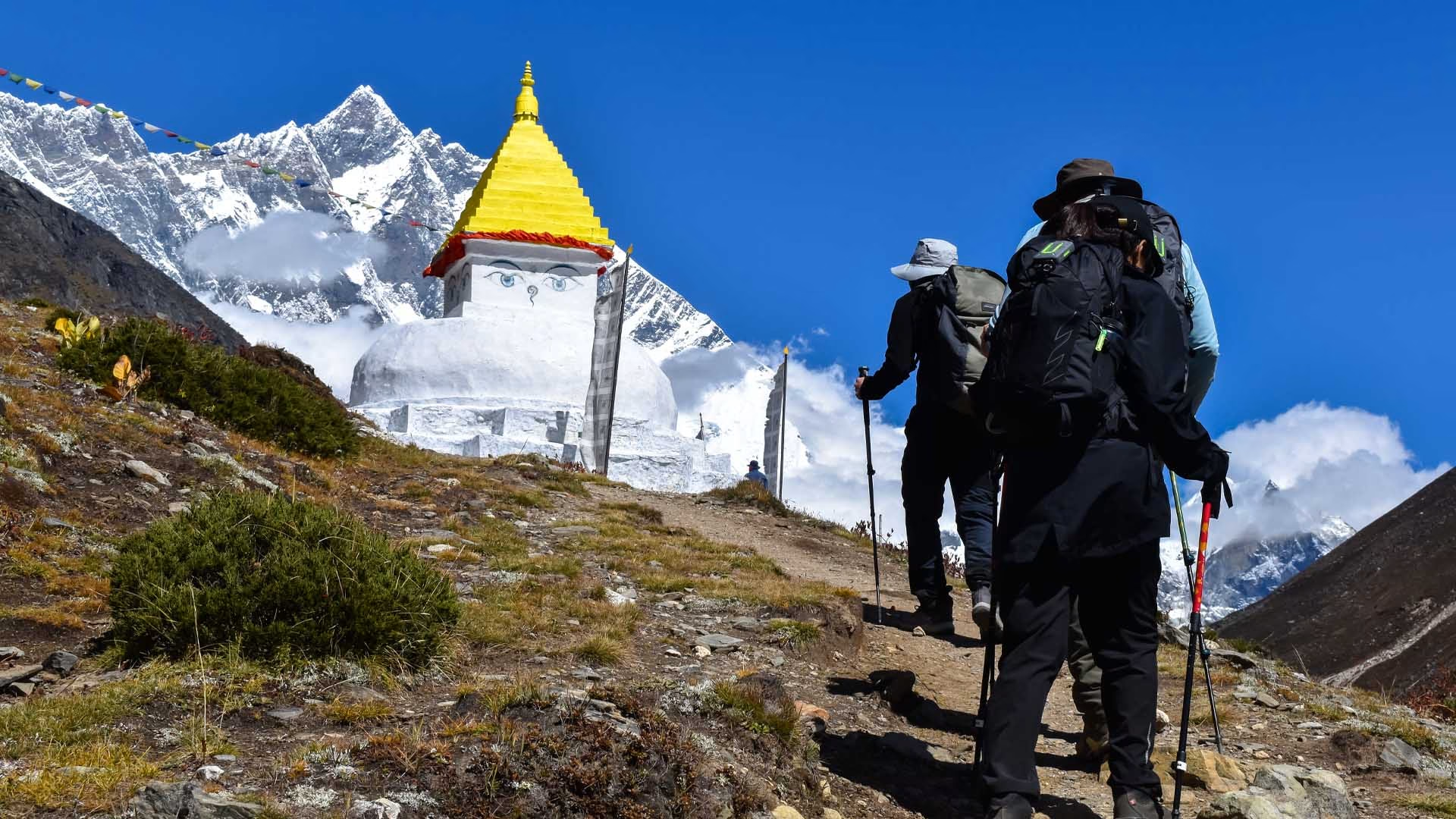
Three trekkers walking past a Buddhist stupa on the Luxury Everest Base Camp Trek with Himalayan views.
  • Nepal Government Registered
  • Experienced Himalayan Experts
  • Real Emergency Support
  • Reviews from actual travelers

The Luxury Everest Base Camp Trek is designed for travellers who want the achievement of reaching Everest Base Camp without making unnecessary discomfort part of the experience. This private 13-day journey combines classic Khumbu trekking with private helicopter travel, premium accommodation and personal support from a local team.

You begin in Kathmandu and fly privately by helicopter to Lukla before trekking through Monjo, Namche Bazaar, Tengboche, Dingboche and Lobuche. Along the route, you stay in comfortable accommodation with private en-suite bathrooms, hot showers and electric blankets, while your guide and support team take care of the daily logistics.

The biggest difference comes at the highest part of the trek. Instead of sleeping at Gorakshep (5,164 m / 16,942 ft), you return to Lobuche (4,910 m / 16,109 ft) after your Everest Base Camp visit. You reach Everest Base Camp (5,364 m / 17,598 ft) by private horseback, giving you the chance to experience the Khumbu Glacier and stand beneath the Khumbu Icefall without adding another night at higher altitude. The following day, a private helicopter takes you to Kala Patthar (5,545 m / 18,192 ft) before flying you back to Kathmandu.

This is not an attempt to make Everest easy. It is a carefully designed way to experience the mountain with less unnecessary physical strain and more comfort, privacy and personal attention.

EBC Luxury Trek at Glance

Trip Detail Luxury EBC Trek
Everest Base Camp Elevation 5,364 m / 17,598 ft
Kala Patthar/Maximum Elevation 5,545 m / 18,192 ft
Trek Style Luxury Adventure
Trip Type Private
Starting Point Kathmandu
Ending Point Kathmandu
Lukla Transport Private Helicopter
EBC Access Private horseback
Accommodation Kathmandu Marriott + selected premium mountain lodges
Room Facilities Private en-suite bathroom, hot shower and electric blanket
Meals Breakfast, Lunch and Dinner
Highest Sleeping Elevation Lobuche, 4,910 m / 16,109 ft

Why This Luxury EBC Trek Is Different

The word luxury means very little on its own. What matters is what changes when you choose this itinerary.

Here, the difference is built into the route itself.

  • Private helicopter from Kathmandu to Lukla
  • Premium accommodation throughout the journey
  • Private en-suite bathroom
  • Hot shower every day
  • Electric blankets for cold nights
  • No overnight at Gorakshep
  • Private horseback journey to Everest Base Camp
  • Private helicopter to Kala Patthar and Kathmandu Return
  • Dedicated local guide and support team
  • Private itinerary and flexible pace
  • Altitude monitoring and emergency oxygen support
  • Premium meals and free-flow drinks
Why Choose This Luxury Everest Base Camp Trek?

This private 13-day journey is designed for travellers who want to experience the Everest region with more comfort, privacy and personal support than a conventional EBC trek. From a private helicopter flight from Kathmandu to Lukla and premium mountain accommodation to private en-suite bathrooms, electric blankets and hot showers, comfort is built into the journey. At higher elevations, the itinerary is designed to reduce unnecessary physical strain, with a stay at Lobuche (4,910 m / 16,109 ft) instead of Gorakshep, private horseback access to Everest Base Camp (5,364 m / 17,598 ft), and a private helicopter flight to Kala Patthar (5,545 m / 18,192 ft) before returning to Kathmandu. Throughout the trek, a dedicated local team manages the logistics, luggage, meals and altitude support, allowing you to focus on experiencing the Khumbu rather than worrying about the details.

Luxury vs Standard Everest Base Camp Trek

Factor Sublime Trails Luxury Trek Standard EBC Trek
Duration 13 Days  14 Days
Kathmandu to Lukla Private Helicopter Domestic Mountain Flight
EBC Access Private Horseback On foot (Round Trip from Gorakshep)
Kala Patthar Helicopter Landing On foot from Gorakshep (Pre-Dawn Climb)
Return to Kathmandu  Private Helcopter from Lobuche Trek Back to Lukla then catch Domestic Flight
Highest Sleeping Altitude Lobuche 4910m Gorakshep 5164m
Lead Guide  Senior Guide (Dedicated to your Group) Certified Guide (Shared in Groups)
Monastery Access Private Blessing from Tengboche Rimpoche General Monastery Visit
Accomodation Hot shower, Private en suite, Electric Blankets,Heated Dining, Premium Lodges Available at Extra Cost
Wifi & Charging Included  Extra Cost per Device Above Namche
Price Form USD 5700 per person USD 1350 per person
Trip Highlights

Journey Highlights

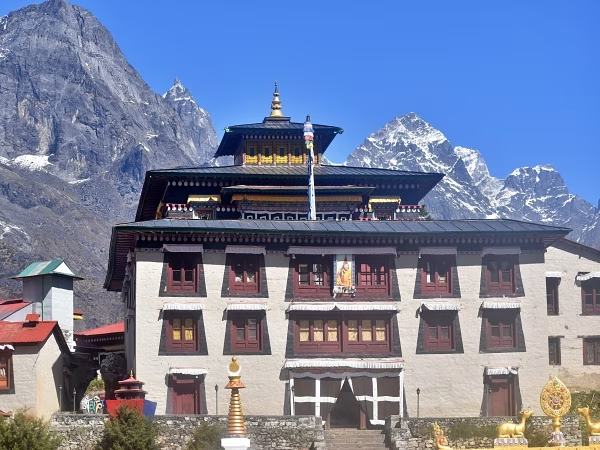
Visit the iconic Tengboche Monastery on the Luxury Everest Base Camp Trek, where Sherpa culture, Himalayan spirituality, and breathtaking views of Ama Dablam come together.
Tengboche Monastery (3,867 m): The Spiritual Heart of the Khumbu

The spiritual heart of the Khumbu, framed by Ama Dablam on one side and Everest on the other, and still an active monastic community rather than a restored tourist stop

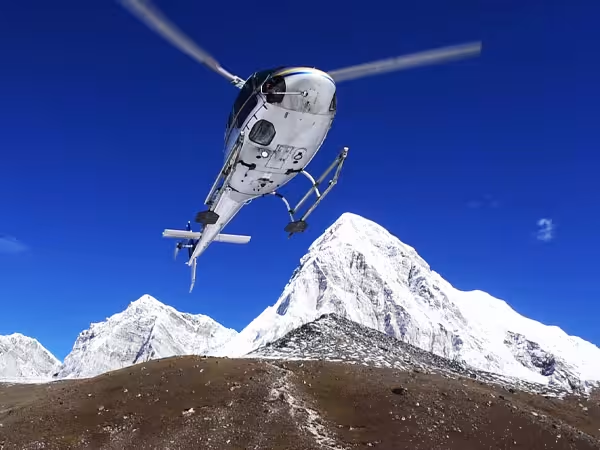
Helicopter Returning to Kathmandu
Private Helicopter Return: From the Khumbu to Kathmandu

Once you have experienced Kala Patthar, the private helicopter takes you back toward Kathmandu. What would normally be several days of walking becomes a scenic flight over the valleys and mountains you have just travelled through. It is a comfortable way to finish the journey and gives you one last look at the Khumbu from above.

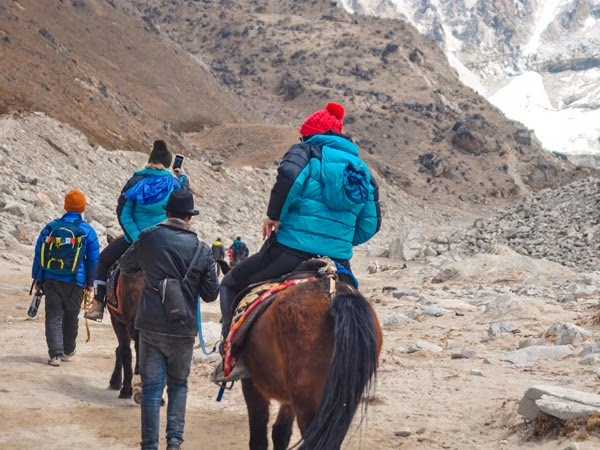
Enjoy added comfort on the Luxury Everest Base Camp Trek with optional horse support, guided by experienced local experts and surrounded by breathtaking Himalayan scenery.
Horse Support: A More Comfortable Way to Reach EBC

The trail from Lobuche to Everest Base Camp is demanding, particularly at this altitude. On this itinerary, private horseback support gives you another way to cover the most strenuous section. You can ride when you need the extra help and focus on the landscape around you rather than simply pushing through the miles.

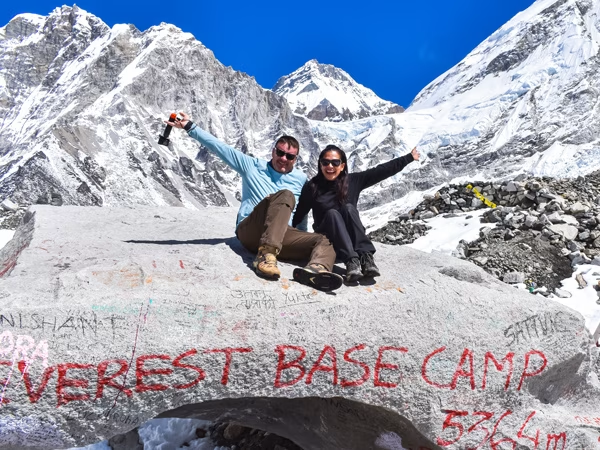
Two trekkers soaking in the achievement at Everest Base Camp Trek.
Everest Base Camp (5,364 m): The Ultimate Achievement

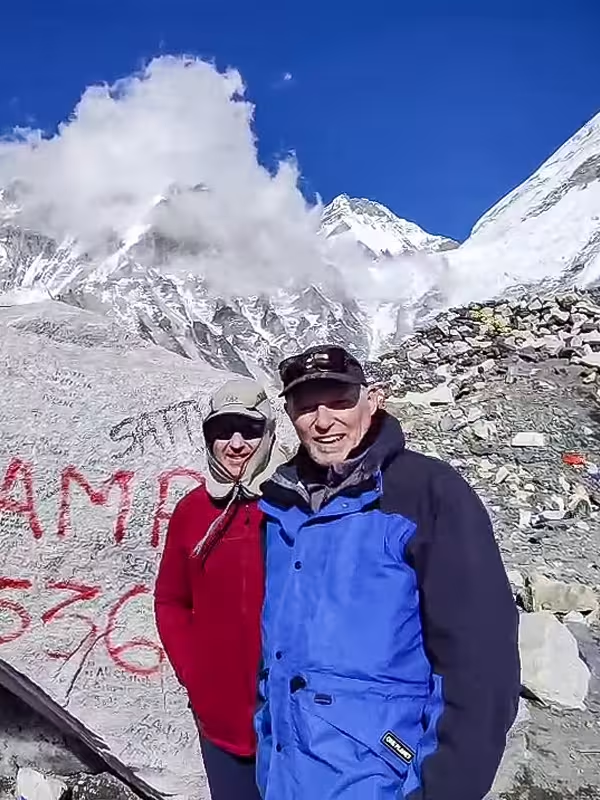
Standing at Everest Base Camp, 5,364 m / 17,598 ft, is the moment the trek has been building toward. You arrive beside the Khumbu Glacier with the Khumbu Icefall rising ahead of you. With private horseback support from Lobuche, you can make this high-altitude journey with less physical strain and spend more time taking in the place you came so far to see.

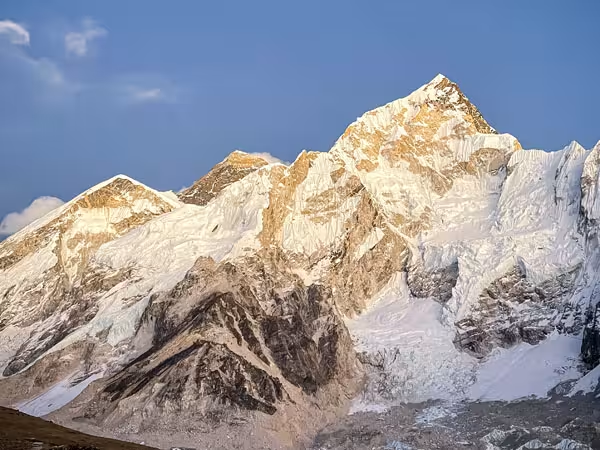
Everest View from Kalapatthar
Kala Patthar (5,545 m): The Definitive View of Everest

Kala Patthar is known for its close view of Everest, and this itinerary takes you there by private helicopter rather than asking you to make the usual pre-dawn climb from Gorakshep. At 5,545 m / 18,192 ft, you get a remarkable view of Everest, Pumori, Nuptse, Lhotse and the Khumbu Glacier before beginning your journey back to Kathmandu.

Itinerary

Luxury Everest Base Camp Trek Detailed Itinerary

The luxury Everest Base Camp Trek runs 13 days from Kathmandu. It covers the full Khumbu route to Everest Base Camp at 5,364 m and Kala Patthar at 5,545 m. A private helicopter replaces the Lukla domestic flight on both ends. Every overnight stop uses the best available premium lodge on the route, with en-suite bathrooms, heating, and hot showers. Two acclimatization days are built in at Namche Bazaar (3,440 m) and Dingboche (4,410 m). The route passes through Monjo, Namche Bazaar, Deboche, Tengboche, Dingboche, Lobuche, and Gorak Shep before reaching Base Camp. The return from Kala Patthar is by private helicopter directly back to Kathmandu.

Note: This itinerary is verified and reviewed every seaon by our senior guide Ganesh Adhikari who is also Known as Prakash.

Day 1 - Kathmandu Arrival & 5-Star Welcome

Starting Destination: Tribhuvan International Airport
Final Destination: Kathmandu
Sleeping Altitude: 1,400 m / 4,593 ft
Transportation: Private luxury vehicle
Accommodation: Kathmandu Marriott Hotel
Meals: Welcome Dinner

Your Luxury Everest Base Camp Trek begins with a private transfer from Tribhuvan International Airport to the Kathmandu Marriott Hotel. There is no rush on your first day. After settling in, you meet your Sublime Trails lead guide and go through the important details of the trek, including the route, daily rhythm and preparations for the mountains.

In the evening, you join a welcome dinner with your lead trekking guide before your journey into the Khumbu begins.Tomorrow’s helicopter flight departs early, with the exact departure window depending on weather conditions.

Today's Highlights

  • Private airport transfer and hotel check-in
  • Meet your lead guide and trekking team
  • Full route, altitude, and safety briefing
  • Equipment check and duffel bag handover
  • Welcome dinner

Guide Tip

After dinner, open your duffel and check your layerings. Everything for the porter goes in the duffel bag. Everything you need daily goes in your daypack.

Where You'll Sleep

Kathmandu Marriott Hotel

You spend your first night at the Kathmandu Marriott Hotel before heading into the Everest region.

Where You’ll Sleep

Day 2 - Private Helicopter to Lukla & Trek to Monjo

Kathmandu → Lukla by Private Helicopter → Chaurikharka → Phakding → Monjo

Starting Destination: Kathmandu
Final Destination: Monjo
Sleeping Altitude: 2,835 m / 9,301 ft
Walking: Approximately 4 hours
Transportation: Private helicopter
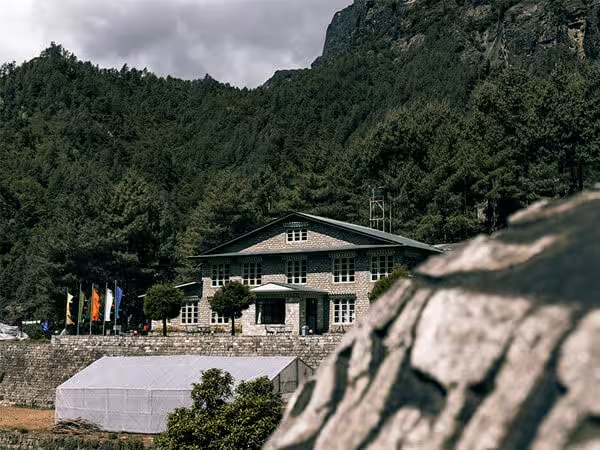
Accommodation: Yeti Mountain Home, Monjo
Meals: Lunch and Dinner

The mountain journey begins with a private helicopter flight from Kathmandu to Lukla. From the small mountain airstrip, you begin walking through the lower Khumbu, following trails through pine forests and Sherpa settlements.

The route gradually follows the Dudh Koshi valley toward Monjo, the entrance area for the Sagarmatha National Park. The first day on the trail is deliberately gentle, allowing you to settle into the rhythm of walking at altitude.

By evening, you reach Yeti Mountain Home in Monjo.

Along the Trail

Natural Features

  • Pine forests
  • Dudh Koshi River
  • Mountain foothills

Himalayan Views

The landscape begins to change as you leave Lukla. The valley opens gradually toward the mountains of the Khumbu, although the highest peaks remain largely hidden at this lower elevation.

Natural Observations

Look for pine forest, stone walls, cultivated terraces and traditional Sherpa settlements along the trail.

Today's Challenge

Today's walk is relatively short compared with the days ahead. The main task is getting used to walking on mountain trails after your helicopter flight.

Altitude Note

You finish the day at approximately 2,835 m / 9,301 ft, your first night above 2,500 m.

Guide Tip

Do not judge the trek by today's easy pace. The elevation increases steadily over the next several days, so conserving energy from the beginning is important.

Where You'll Sleep

Yeti Mountain Home, Monjo

Yeti Mountain Home in Monjo provides a comfortable first night in the Khumbu.

Arriving by helicopter at Lukla Airport to begin the adventure.
Where You’ll Sleep
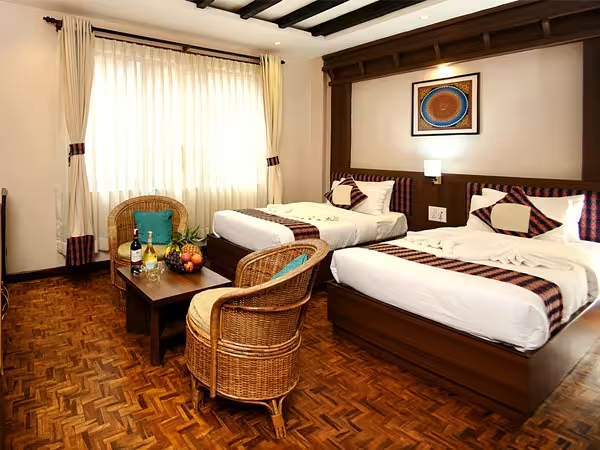
Yeti Mountain Home Manjo
Facilities
  • Mountain Views
  • Heated Blankets
  • Full bedding
  • Ensuite Bathroom
  • Full Board
  • Hot Drinks
  • Happy Hour

Day 3 - Monjo to Namche Bazaar via Hillary Suspension Bridge

Monjo → Jorsale → Hillary Suspension Bridge → Namche Bazaar

Starting Destination: Monjo | 2,835 m / 9,301 ft
Final Destination: Namche Bazaar | 3,440 m / 11,286 ft
Sleeping Altitude: 3,440 m / 11,286 ft
Elevation Gain: 605 m / 1,985 ft
Walking Distance: 7 km / 4.3 miles | 4–5 hours
Difficulty: Moderate to Strenuous
Accommodation: Premium Lodge, en-suite bathroom
Meals: Breakfast, Lunch, Dinner
Overnight: Namche Bazaar

Today you enter the heart of the Everest region.

The trail follows the Dudh Koshi River through Monjo, Jorsale and the forested valleys of Sagarmatha National Park. Along the way, you cross several suspension bridges before reaching the famous Hillary Suspension Bridge, one of the most recognizable landmarks on the Everest Base Camp trail.

After the bridge, the trail climbs steadily toward Namche Bazaar. The change is noticeable. The walking becomes more demanding as you gain elevation, but the growing mountain views make the effort worthwhile.

Namche Bazaar sits in a natural amphitheatre and is the main trading and service centre of the Khumbu.

Along the Trail

Key Waypoints

  • Monjo
  • Jorsale
  • Dudh Koshi River
  • Hillary Suspension Bridge
  • Namche Bazaar

Natural Features

  • Dudh Koshi River
  • Pine and rhododendron forests
  • Steep Himalayan valley

Key Landmarks

  • Sagarmatha National Park
  • Hillary Suspension Bridge
  • Namche Bazaar

Himalayan Views

As the trail rises toward Namche, views begin opening toward Thamserku (6,623 m / 21,729 ft) and Kangtega (6,779 m / 22,241 ft). Higher sections of the approach also begin revealing the great peaks of the Everest region.

Natural Observations

The lower Khumbu remains green and forested, with pine and rhododendron surrounding sections of the trail. The Dudh Koshi continues to accompany the route before the landscape becomes more rugged around Namche.

Today's Challenge

The steep climb after the Hillary Suspension Bridge is the hardest section of the day. At this point, the combination of sustained climbing and increasing altitude becomes more noticeable.

Altitude Note

You finish at 3,440 m / 11,286 ft. This is a significant altitude gain from Monjo, which is why tomorrow is reserved for acclimatization.

Guide Tip

When crossing suspension bridges or meeting yak and mule trains, follow your guide's instructions and give animals plenty of space.

Where You'll Sleep

Yeti Mountain Home, Namche

You stay at Yeti Mountain Home in Namche Bazaar, where the luxury itinerary provides a private room, hot shower and electric blanket for a more comfortable night at altitude.

Crossing the iconic Hillary Suspension Bridge on the way to Namche
Where You’ll Sleep
Yeti Mountain Home  Namche
Facilities
  • Mountain Views
  • Heated Blankets
  • Full bedding
  • Ensuite Bathroom
  • Full Board
  • Hot Drinks
  • Happy Hour
  • Spa
  • Library
  • Laundry

Day 4 - Namche Acclimatization – High Tea at Hotel Everest View (3,880m)

Namche Bazaar → Syangboche → Hotel Everest View → Namche Bazaar

Starting Destination: Namche Bazaar | 3,440 m / 11,286 ft
Final Destination: Namche Bazaar | 3,440 m / 11,286 ft
Sleeping Altitude: 3,440 m / 11,286 ft
Elevation Gain: 440 m / 1,443 ft (day hike, return to Namche to sleep)
Walking Distance: 8–10 km / 5–6.2 miles | 4–5 hours
Difficulty: Moderate
Accommodation: Premium Lodge, en-suite bathroom
Meals: Breakfast, Lunch, Dinner
Overnight: Namche Bazaar

Today is your first dedicated acclimatization day.

Rather than spending the entire day resting inside the lodge, you take a gradual hike toward Hotel Everest View at 3,880 m / 12,730 ft. The climb gives your body exposure to a higher elevation before you return to sleep lower in Namche.

From the viewpoint, the surrounding mountains begin to feel much closer, with Everest and Ama Dablam among the major peaks visible in clear conditions.

After returning to Namche, you have the afternoon to rest and recover.

Along the Trail

Key Waypoints

  • Namche Bazaar
  • Hotel Everest View
  • Namche Bazaar

Natural Features

  • Mountain ridges above Namche
  • High-altitude terrain
  • Khumbu valley

Key Landmarks

  • Hotel Everest View
  • Namche Bazaar

Himalayan Views

Look toward Mount Everest (8,848.86 m / 29,031 ft), Ama Dablam (6,812 m / 22,349 ft) and the surrounding peaks of the Khumbu.

Natural Observations

The forest becomes thinner as you gain elevation. You can also see how Namche is built into the steep mountain landscape, with terraces and buildings following the natural contours of the hillside.

Today's Challenge

The goal is not distance. It is controlled altitude exposure. Walk steadily and avoid turning the acclimatization hike into a race.

Altitude Note

You climb to 3,880 m / 12,730 ft but return to sleep at 3,440 m / 11,286 ft. This follows the important principle of hike high and sleep low.

Guide Tip

Tell your guide if you develop a headache, unusual fatigue, nausea, dizziness or difficulty sleeping. Small symptoms are easier to manage when they are reported early.

Where You'll Sleep

Yeti Mountain Home, Namche

You return to the same lodge for a second night, avoiding unnecessary packing and unpacking while your body adjusts to the elevation.

High tea with panoramic Everest views at Hotel Everest View.
Where You’ll Sleep
Yeti Mountain Home  Namche
Facilities
  • Mountain Views
  • Heated Blankets
  • Full bedding
  • Ensuite Bathroom
  • Full Board
  • Hot Drinks
  • Happy Hour
  • Spa
  • Library
  • Laundry

Day 5 - Namche Bazaar to Deboche (3,820m)

Namche Bazaar → Kyangjuma → Sanasa → Phunki Tenga → Tengboche → Deboche

Starting Destination: Namche Bazaar | 3,440 m / 11,286 ft
Final Destination: Deboche | 3,820 m / 12,532 ft
Sleeping Altitude: 3,820 m / 12,532 ft
Elevation Gain: 380 m / 1,247 ft
Walking Distance: 10 km / 6.2 miles | 4–5 hours
Difficulty: Moderate
Accommodation: Boutique Mountain Lodge, en-suite bathroom
Meals: Breakfast, Lunch, Dinner
Overnight: Deboche

You leave Namche and continue deeper into the Khumbu.

The trail follows a scenic high route through Kyangjuma and Sanasa before descending toward Phunki Tenga. From there, the route climbs through forest toward Tengboche, one of the most important cultural and spiritual landmarks in the Everest region.

Rather than ending the day at Tengboche, your luxury itinerary continues down to the quieter village of Deboche, where you spend the night.

This gives you a more peaceful base for the following day's dedicated visit to Tengboche Monastery.

Along the Trail

Key Waypoints

  • Namche Bazaar
  • Kyangjuma
  • Sanasa
  • Phunki Tenga
  • Tengboche
  • Deboche

Natural Features

  • Rhododendron and pine forests
  • Dudh Koshi valley
  • Mountain ridges

Key Landmarks

  • Tengboche Monastery
  • Tengboche village
  • Debuche

Himalayan Views

The route offers views toward Ama Dablam, Thamserku, Kangtega, Lhotse and Everest in clear weather.

Natural Observations

The forest becomes especially beautiful around Tengboche and Debuche. Rhododendrons and pine trees line sections of the trail, while the landscape becomes increasingly alpine as you move higher.

Today's Challenge

The day combines long traverses, descents and a final climb before continuing down toward Debuche. Pace yourself rather than trying to maintain the speed you had at lower elevations.

Altitude Note

You sleep at 3,820 m / 12,533 ft, only slightly higher than Namche. This moderate increase gives your body another opportunity to adapt.

Guide Tip

Take your time on the climbs after Phunki Tenga. Short, regular breaks are more useful at altitude than pushing until you are exhausted.

Where You'll Sleep

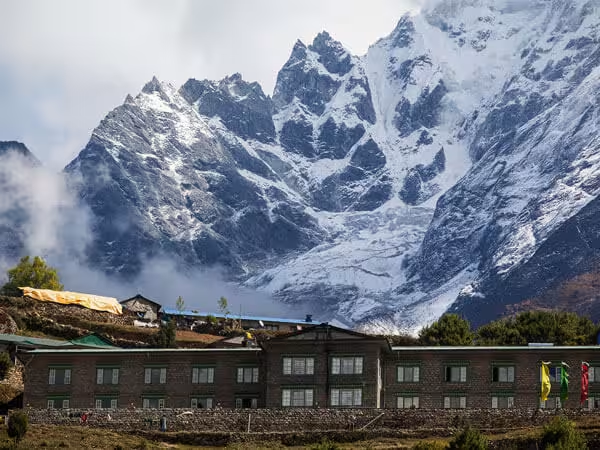
Yeti Mountain Home, Deboche

Your overnight stay is at Yeti Mountain Home in Deboche. The lodge provides a private room and higher-comfort facilities, including private bathrooms and warmth for the night

Arriving in Deboche for a peaceful overnight stay.
Where You’ll Sleep

Day 6 - Spiritual Access – Tengboche Monastery Private Blessing

Deboche → Tengboche Monastery → Deboche

Starting Destination: Deboche | 3,820 m / 12,532 ft
Final Destination: Deboche | 3,820 m / 12,532 ft
Sleeping Altitude: 3,820 m / 12,532 ft
Elevation Gain: 47 m / 154 ft (day visit to Tengboche Monastery, return to Deboche to sleep)
Walking Distance: 4 km / 2.5 miles round trip | 2–3 hours
Difficulty: Easy
Accommodation: Boutique Mountain Lodge, en-suite bathroom
Meals: Breakfast, Lunch, Dinner
Overnight: Deboche

Today is deliberately different.

From Deboche, you take a short walk back toward Tengboche Monastery, one of the most significant Buddhist monasteries in the Khumbu. At 3,860 m / 12,664 ft, Tengboche also provides one of the region's most memorable mountain settings.

Sublime Trails has coordinated exclusive, private access for you to sit down with the High Rimpoche (the Monastery’s lead Lama). Receiving a personal travel blessing from the Rimpoche is a rare and moving experience that lends a profound sense of meaning to the journey. 

After the visit, you return to Deboche for a relaxed afternoon and another night at the same lodge.

Along the Trail

Key Waypoints

  • Deboche
  • Tengboche
  • Deboche

Key Landmark

  • Tengboche Monastery

Himalayan Views

Tengboche is particularly known for its views toward Ama Dablam, with other major Khumbu peaks surrounding the valley.

Natural Observations

The forested landscape around Tengboche and Deboche provides a noticeable contrast to the increasingly barren terrain you will encounter farther up the valley.

Today's Challenge

This is a short walking day. The purpose is to recover while continuing gentle movement at altitude.

Altitude Note

The highest point today is approximately 3,860 m / 12,664 ft, while you return to sleep at 3,820 m / 12,533 ft.

Guide Tip

Give yourself time to experience Tengboche rather than treating it as another trail checkpoint. The monastery and its surroundings are an important part of the Khumbu experience.

Where You'll Sleep

Yeti Mountain Home, Deboche

You return to the same lodge in Deboche after your Tengboche visit.

Mountain views from the steps of Tengboche Monastery.
Where You’ll Sleep

Day 7 - Deboche to Dingboche through the Imja Valley

Deboche → Pangboche → Somare → Orsho → Dingboche

Starting Destination: Deboche | 3,820 m / 12,532 ft
Final Destination: Dingboche | 4,410 m / 14,468 ft
Sleeping Altitude: 4,410 m / 14,468 ft
Elevation Gain: 590 m / 1,936 ft
Walking Distance: 11 km / 6.8 miles | 5–6 hours
Difficulty: Moderate
Accommodation: Premium Mountain Resort, en-suite bathroom
Meals: Breakfast, Lunch, Dinner
Overnight: Dingboche

The landscape changes noticeably today.

As you leave Debuche, the dense forest gradually gives way to the open alpine terrain of the Imja Valley. The route passes through settlements including Pangboche and Somare before continuing toward Dingboche.

At 4,410 m / 14,469 ft, Dingboche is one of the major acclimatization centres on the Everest Base Camp route.

Along the Trail

Key Waypoints

  • Debuche
  • Pangboche
  • Somare
  • Orsho
  • Dingboche

Natural Features

  • Imja Valley
  • Alpine meadows
  • High mountain slopes

Key Landmarks

  • Pangboche village
  • Dingboche village

Himalayan Views

As the valley opens, views toward Ama Dablam, Island Peak (6,189 m / 20,305 ft) and the surrounding Himalayan peaks become increasingly prominent.

Natural Observations

The transition from forest to alpine landscape is one of the most noticeable changes on the trek. Trees become sparse, vegetation becomes shorter and the valley feels much more exposed.

Today's Challenge

The main challenge is the jump in elevation. Although the walking distance is manageable, the thinner air at 4,000 m and above makes the same effort feel harder.

Altitude Note

You sleep at 4,410 m / 14,469 ft. From this point onward, altitude management becomes increasingly important.

Guide Tip

Keep your walking rhythm slow and consistent. At this elevation, rushing uphill usually costs more energy than it saves.

Where You'll Sleep

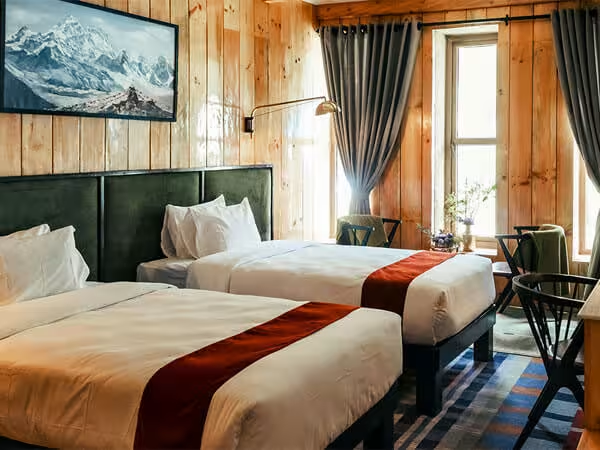
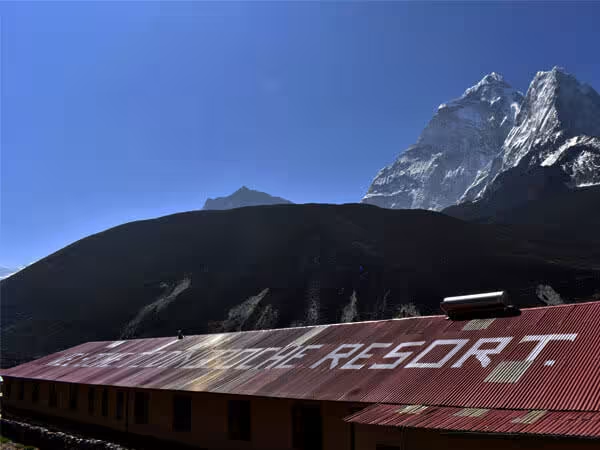
Dingboche Resort

Dingboche Resort is your base for the next two nights. The luxury itinerary specifically provides an attached private bathroom and hot shower here.

Arriving in Dingboche, surrounded by the alpine landscape.
Where You’ll Sleep
Dingboche Resort
Facilities
  • Hot Shower 
  • En-suite bathroom 
  • Private Room
  • Heated dinning
  • Full board meal
  • Electric Blanket

Day 8 - Nagartsang Hill Acclimatization Hike

Dingboche → Nagartsang Hill → Dingboche

Starting Destination: Dingboche | 4,410 m / 14,468 ft
Final Destination: Dingboche | 4,410 m / 14,468 ft
Sleeping Altitude: 4,410 m / 14,468 ft
Elevation Gain: 670 m / 2,198 ft (day hike to Nagartsang Hill, return to Dingboche to sleep)
Walking Distance: 5–6 km / 3–4 miles round trip | 3–5 hours
Difficulty: Strenuous
Accommodation: Premium Mountain Resort, en-suite bathroom
Meals: Breakfast, Lunch, Dinner
Overnight: Dingboche

This is your final dedicated acclimatization day before heading toward Lobuche and Everest Base Camp.

You climb Nagartsang Hill, reaching approximately 5,083 m / 16,677 ft before returning to Dingboche. The climb gives your body valuable exposure to higher altitude without requiring you to sleep at that elevation.

From the viewpoint, the surrounding mountains open dramatically, with Makalu (8,485 m / 27,838 ft) among the major peaks visible in clear conditions.

Along the Trail

Key Waypoints

  • Dingboche
  • Nagartsang Hill
  • Dingboche

Natural Features

  • Imja Valley
  • High alpine slopes
  • Exposed mountain terrain

Key Landmarks

  • Nagartsang Hill viewpoint
  • Dingboche village

Himalayan Views

Look toward Makalu, Ama Dablam, Island Peak and the surrounding peaks of the Khumbu.

Natural Observations

At this elevation, vegetation becomes increasingly sparse. The landscape is dominated by exposed rock, high mountain slopes and the broad alpine valley below.

Today's Challenge

The climb to Nagartsang is short compared with a full trekking day, but the altitude makes it physically demanding. The goal is controlled effort, not speed.

Altitude Note

You reach approximately 5,083 m / 16,677 ft before descending to sleep at 4,410 m / 14,469 ft.

Guide Tip

This is an important day for observing how your body responds to altitude. Tell your guide immediately if you experience a worsening headache, nausea, dizziness, unusual weakness or breathing difficulties.

Where You'll Sleep

Dingboche Resort

After the acclimatization hike, you return to Dingboche Resort for your second night.

High above Dingboche at Nangkartshang Hill Viewpoint.
Where You’ll Sleep
Dingboche Resort
Facilities
  • Hot Shower 
  • En-suite bathroom 
  • Private Room
  • Heated dinning
  • Full board meal
  • Electric Blanket

Day 9 - Dingboche to Lobuche via Thukla Pass

Dingboche → Thukla → Thukla Pass Memorial → Lobuche

Starting Destination: Dingboche | 4,410 m / 14,468 ft
Final Destination: Lobuche | 4,910 m / 16,109 ft
Sleeping Altitude: 4,910 m / 16,109 ft
Elevation Gain: 500 m / 1,641 ft
Walking Distance: 8 km / 5 miles | 4–5 hours
Difficulty: Moderate to Strenuous
Accommodation: Best Available Premium Lodge
Meals: Breakfast, Lunch, Dinner
Overnight: Lobuche

The route now enters the high-altitude landscape leading toward Everest Base Camp.

You leave Dingboche and follow the valley toward Thukla, where the trail climbs toward the Thukla Pass Memorial. The memorial contains stones and markers dedicated to climbers and mountaineers who lost their lives on Himalayan peaks.

From Thukla, the trail continues toward Lobuche, surrounded by an increasingly stark landscape of rock, moraine and towering Himalayan peaks.

Lobuche is your highest overnight stop on this itinerary.

Along the Trail

Key Waypoints

  • Dingboche
  • Thukla
  • Thukla Pass
  • Lobuche

Natural Features

  • High alpine valley
  • Glacial terrain
  • Rocky moraine

Key Landmarks

  • Thukla Pass Memorial
  • Lobuche village

Himalayan Views

The landscape opens toward Pumori, Nuptse, Lhotse and other high peaks surrounding the upper Khumbu.

Natural Observations

Trees have disappeared from the landscape. The route is now dominated by rock, moraine, sparse vegetation and glacial terrain.

Today's Challenge

The increasing altitude is the main challenge. Even moderate climbs feel considerably harder above 4,500 m, so expect a slower pace.

Altitude Note

You sleep at 4,910 m / 16,109 ft, the highest sleeping altitude of the trek.

Guide Tip

Stay warm, drink regularly and avoid unnecessary exertion after reaching Lobuche. Tomorrow is your Everest Base Camp day.

Where You'll Sleep

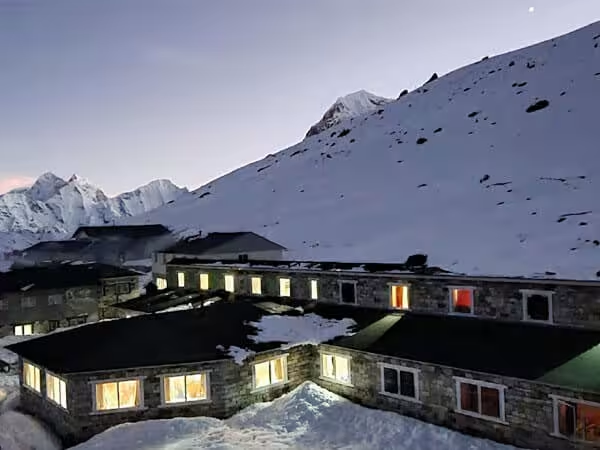
Oxygen Home, Lobuche

Oxygen Home is your base for both the Everest Base Camp excursion and the night before your helicopter return.

Capturing the moment on arrival in Lobuche.
Where You’ll Sleep
Oxygen Home
Facilities
  • Mountain Views
  • Full bedding
  • Common bathroom
  • Private room
  • Full Board
  • Hot drinks
  • Heated Dinning

Day 10 - Everest Base Camp by Private Horseback (Bypassing Gorakshep)

Lobuche → Everest Base Camp → Lobuche by Private Horseback

Starting Destination: Lobuche | 4,910 m / 16,109 ft
Final Destination: Lobuche | 4,910 m / 16,109 ft
Sleeping Altitude: 4,910 m / 16,109 ft
Elevation Gain: 454 m / 1,490 ft (day hike to EBC, return to Lobuche to sleep)
Walking Distance: 16 km / 10 miles round trip | 8–10 hours
Difficulty: Challenging
Accommodation: Best Available Premium Lodge
Meals: Breakfast, Lunch, Dinner
Overnight: Lobuche

Today is the moment the entire journey has been building toward.

From Lobuche, you travel by private horseback toward Everest Base Camp, reducing the physical strain of the demanding high-altitude section. The route takes you deeper into the upper Khumbu, where the landscape becomes increasingly dominated by glacial terrain.

At Everest Base Camp, 5,364 m / 17,598 ft, you stand beside the Khumbu Glacier with the Khumbu Icefall rising ahead.

After spending time at Base Camp, you return to Lobuche by horseback rather than staying overnight at Gorakshep.

This is the defining feature of the luxury route: you experience Everest Base Camp without adding another night at the higher elevation of Gorakshep.

Along the Trail

Key Waypoints

  • Lobuche
  • Upper Khumbu
  • Everest Base Camp
  • Return to Lobuche

Natural Features

  • Khumbu Glacier
  • Glacial moraine
  • High-altitude rocky terrain
  • Khumbu Icefall

Key Landmarks

  • Everest Base Camp
  • Khumbu Glacier
  • Khumbu Icefall
  • Himalayan Views
  • The upper Khumbu brings you close to Pumori, Nuptse, Lhotse and the surrounding high Himalayan peaks.

Natural Observations

The landscape is almost entirely alpine and glacial. Rock, moraine, ice and snow dominate the surroundings, with very little vegetation surviving at this elevation.

Today's Challenge

Everest Base Camp is physically demanding because of the altitude, even with horseback support. The private horse reduces walking strain, but it does not remove the effects of being above 5,000 m.

Altitude Note

Everest Base Camp sits at 5,364 m / 17,598 ft, while you return to sleep at 4,910 m / 16,109 ft in Lobuche.

Guide Tip

Do not underestimate the altitude simply because you are using horseback support. Stay hydrated, move slowly and communicate immediately with your guide if you feel unwell.

Where You'll Sleep

Oxygen Home, Lobuche

After reaching Everest Base Camp, you return to Oxygen Home in Lobuche. This means you do not spend the night at Gorakshep, allowing you to recover at a lower elevation before the following day's helicopter journey.

A milestone moment at Everest Base Camp.
Where You’ll Sleep
Oxygen Home
Facilities
  • Mountain Views
  • Full bedding
  • Common bathroom
  • Private room
  • Full Board
  • Hot drinks
  • Heated Dinning

Day 11 - Kala Patthar Helicopter Landing & Kathmandu Return

Lobuche → Kala Patthar by Private Helicopter → Kathmandu

Starting Destination: Lobuche | 4,910 m / 16,109 ft
Final Destination: Kathmandu | 1,400 m / 4,593 ft
Sleeping Altitude: 1,400 m / 4,593 ft
Elevation Gain: 635 m / 2,083 ft (summit climb to Kala Patthar, then helicopter descent)
Walking Distance: 8 km / 5 miles | 4–5 hours
Difficulty: Strenuous
Accommodation: 5-Star Hotel
Meals: Breakfast, Dinner
Overnight: Kathmandu

Your final mountain morning begins from Lobuche.

Instead of making the traditional climb from Gorakshep to Kala Patthar, you take a private helicopter from Lobuche for a landing at Kala Patthar, 5,545 m / 18,192 ft.

From this famous viewpoint, you get an exceptional perspective of Mount Everest, Pumori, Nuptse, Lhotse and the Khumbu Glacier.

After the Kala Patthar experience, the helicopter continues toward Kathmandu, replacing several days of downhill trekking with a direct aerial journey back to the city.

Along the Trail

Key Waypoints

  • Lobuche
  • Kala Patthar
  • Kathmandu

Natural Features

  • Khumbu Glacier
  • High Himalayan valleys
  • Glacial landscape

Key Landmarks

  • Kala Patthar
  • Mount Everest
  • Khumbu Glacier

Himalayan Views

Kala Patthar is renowned for its close perspective of Mount Everest (8,848.86 m / 29,031 ft). You can also see Pumori, Nuptse, Lhotse and the surrounding peaks.

Natural Observations

From the helicopter, the landscape changes perspective completely. Glacial valleys, moraines and mountain ridges that you crossed on foot become part of a much wider Himalayan panorama.

Today's Challenge

The altitude at Kala Patthar remains extreme even though you are not climbing there on foot. Give yourself time to acclimatize to the elevation during the landing and follow your guide's instructions.

Altitude Note

Kala Patthar reaches 5,545 m / 18,192 ft, the highest point of your journey. You then descend rapidly to Kathmandu at approximately 1,400 m / 4,593 ft.

Guide Tip

Keep warm during the helicopter landing and avoid unnecessary movement at Kala Patthar. The thinner air can affect you even during a short visit.

Where You'll Sleep

Kathmandu Marriott Hotel

After returning from the mountains, you spend the night at the Kathmandu Marriott Hotel.

Helicopter departure from Kala Patthar after an unforgettable Everest journey.

Day 12 - Recovery & Recreation in Kathmandu

Starting Destination: Kathmandu
Final Destination: Kathmandu
Sleeping Altitude: 1,400 m / 4,593 ft
Accommodation: Kathmandu Marriott Hotel
Meals: Breakfast and Farewell Dinner

After days in the high Himalayas, today gives you time to slow down. Following your high-altitude achievements, today is yours to enjoy at whatever pace you prefer. Indulge in a specialized deep-tissue sports massage at the Marriott Spa to rejuvenate your muscles, explore the boutique shopping alleys of Thamel, or request a private luxury vehicle and guide to tour Kathmandu’s historic UNESCO World Heritage sites. It is the perfect day to unwind and reflect on your trek in total comfort.

Where You'll Sleep

Kathmandu Marriott Hotel

You spend your final full night in Nepal at the Kathmandu Marriott Hotel.

Where You’ll Sleep

Day 13 - Departure

Kathmandu Marriott Hotel → Tribhuvan International Airport

Your Luxury Everest Base Camp Trek ends with a private transfer from the Kathmandu Marriott Hotel to Tribhuvan International Airport. You will head home not just with photographs, but with the deep satisfaction of having experienced Everest in a way very few ever will. 

Guide Tip

Keep your passport, travel documents and flight details accessible rather than packed away in your main luggage.

Make Your Own Itinerary
Getting There

Kathmandu's Tribhuvan International Airport is served by direct and one-stop flights from most major hubs in Asia and the Gulf; travelers from North America, Europe, and Australia typically connect through Doha, Istanbul, Delhi, Singapore, or Bangkok. From Kathmandu, the trek begins with either a short mountain flight to Lukla or, during peak season air-traffic restrictions, a road transfer to Ramechhap followed by the same flight from there — we'll confirm which applies to your exact dates closer to departure.

Sublime Trails representative will come to pick you at the airport. So we will be meeting at Tribhuvan International Airport to start the amazing journey.

Map And Altitude Chart

Luxury Everest Base Camp Trek Map and Altitude Chart

Interactive Map
StartMid DaysEnd
Cost Details

Inclusions & Exclusions

What’s Included

Accommodation

  • 3 nights at Kathmandu Marriott Hotel
  • 5 nights at Yeti Mountain Home in Monjo, Namche and Deboche
  • 2 nights at Dingboche Resort
  • 2 nights at Oxygen Home, Lobuche
  • En-suite bathrooms where provided by the selected accommodation
  • Hot showers
  • Electric blankets
  • Wi-Fi and Phone Charging

Private Transportation

  • Private luxury vehicle for airport pickup and departure transfer
  • Private helicopter flight from Kathmandu to Lukla
  • Private horseback support from Lobuche to Everest Base Camp and back
  • Private helicopter from Lobuche to Kala Patthar and onward to Kathmandu

Meals & Hydration

  • Breakfast, lunch and dinner during the trekking itinerary
  • Welcome dinner in Kathmandu
  • Farewell dinner
  • Free-flow drinks during the trek
  • 3 litres of boiled drinking water per day
  • Fresh seasonal fruit

Guides & Porter Support

  • Experienced local trekking guide
  • Assistant guide
  • Porter service
  • 1 porter for every 2 guests
  • Maximum porter load of 25 kg
  • Guide and porter accommodation, food and salaries
  • Guide and porter insurance

Permits & Trek Administration

  • Sagarmatha National Park permit
  • Khumbu Rural Municipality permits
  • Required trekking paperwork
  • Government and Tax Department documentation

Safety & Altitude Support

  • Emergency oxygen cylinder
  • Pulse oximeter
  • First aid kit
  • Guides trained in altitude management and emergency response
  • Daily health and altitude monitoring
  • Emergency support and helicopter evacuation coordination

Trekking Equipment

  • Down jacket rated to approximately −20°C
  • Sleeping bag
  • Sublime Trails duffel bag
  • Sublime Trails T-shirt
What’s Excluded

Travel & Personal Insurance

  • International flights to and from Nepal
  • Travel insurance
  • Medical expenses
  • Emergency medical treatment
  • Helicopter evacuation costs
  • Trip cancellation insurance
  • Coverage for baggage loss, theft or damage

Nepal Entry & Personal Expenses

  • Nepal visa fee
  • Personal purchases
  • Souvenirs
  • Laundry
  • Personal telephone expenses
  • Any extra hotel nights in Kathmandu

Food & Drinks Not Covered

  • Alcoholic beverages
  • Personal cold drinks and beverages outside the included package
  • Meals outside the specified itinerary
  • Any special food or drinks requested outside the included arrangements

Tips & Gratuities

  • Tips for guides, assistant guides and porters

Unplanned or Additional Costs

  • Costs resulting from flight cancellations or major weather disruptions
  • Additional accommodation caused by itinerary changes
  • Additional transportation outside the stated itinerary
  • Expenses resulting from personal illness, injury or evacuation
  • Any service not specifically listed under What's Included
Trip Departure

Dates & Booking

Cancellation Policy
Secure Payment
Thursday
01 Oct 2026
to
Tuesday
13 Oct 2026
Status
Guaranteed
US$5700
Friday
02 Oct 2026
to
Wednesday
14 Oct 2026
Status
Guaranteed
US$5700
Saturday
03 Oct 2026
to
Thursday
15 Oct 2026
Status
Guaranteed
US$5700
Sunday
04 Oct 2026
to
Friday
16 Oct 2026
Status
Guaranteed
US$5700
Monday
05 Oct 2026
to
Saturday
17 Oct 2026
Status
Guaranteed
US$5700
Wednesday
07 Oct 2026
to
Monday
19 Oct 2026
Status
Guaranteed
US$5700
Friday
09 Oct 2026
to
Wednesday
21 Oct 2026
Status
Guaranteed
US$5700
Saturday
10 Oct 2026
to
Thursday
22 Oct 2026
Status
Guaranteed
US$5700
Sunday
11 Oct 2026
to
Friday
23 Oct 2026
Status
Guaranteed
US$5700
Monday
12 Oct 2026
to
Saturday
24 Oct 2026
Status
Guaranteed
US$5700
Wednesday
14 Oct 2026
to
Monday
26 Oct 2026
Status
Guaranteed
US$5700
Friday
16 Oct 2026
to
Wednesday
28 Oct 2026
Status
Guaranteed
US$5700
Saturday
17 Oct 2026
to
Thursday
29 Oct 2026
Status
Guaranteed
US$5700
Sunday
18 Oct 2026
to
Friday
30 Oct 2026
Status
Guaranteed
US$5700
Monday
19 Oct 2026
to
Saturday
31 Oct 2026
Status
Guaranteed
US$5700
Wednesday
21 Oct 2026
to
Monday
02 Nov 2026
Status
Guaranteed
US$5700
Friday
23 Oct 2026
to
Wednesday
04 Nov 2026
Status
Guaranteed
US$5700
Saturday
24 Oct 2026
to
Thursday
05 Nov 2026
Status
Guaranteed
US$5700
Sunday
25 Oct 2026
to
Friday
06 Nov 2026
Status
Guaranteed
US$5700
Monday
26 Oct 2026
to
Saturday
07 Nov 2026
Status
Guaranteed
US$5700
Wednesday
28 Oct 2026
to
Monday
09 Nov 2026
Status
Guaranteed
US$5700
Friday
30 Oct 2026
to
Wednesday
11 Nov 2026
Status
Guaranteed
US$5700
Saturday
31 Oct 2026
to
Thursday
12 Nov 2026
Status
Guaranteed
US$5700

Private departures available on any date year-round. Fixed group departures run on the 5th and 20th of each month during peak season (March–May, September–November).Book at least 3 weeks ahead to allow time for permit processing. Build one buffer day into your Kathmandu return flight in case the helicopter service is delayed by weather. This happens occasionally and is the single most common itinerary disruption on this route.

Didn’t find a suitable date?
Don’t miss last minute deals
Ask For last minute stops
Local Guide

Meet Our Local Guide

Ganesh Adhikari (Prakash)
Trekking Guide
Language:English
Experience:25 Years
Guided Places:All Region in Nepal
Bibek Khadka
Trekking Guide
Language:English
Experience:9 Years
Guided Places:Tibet and Every Region in Nepal
Dawa Sona Sherpa
Trekking Guide
Language:English
Experience:15 Years
Guided Places:High Altitude Region above 4000
Safety & Altitude

Safety & Altitude

How Sublime Trails Keeps You Safe at Altitude

Altitude sickness is the biggest real risk on any Everest Base Camp trek, luxury or standard. It has nothing to do with fitness level. A marathon runner can get hit by it just as easily as a first-time trekker. What matters is how your body adjusts to lower oxygen as you climb, and how closely that adjustment is watched.

Your daily oxygen check

Every evening at the lodge, your guide checks your blood oxygen level (SpO2) and heart rate with a pulse oximeter. This takes about thirty seconds and gets logged for each member of the group.

We're not just watching the number. A reading of 85% at 4,900 metres might be completely normal for one person and a warning sign for another. Your guide compares each reading against how you're behaving: are you eating normally, sleeping, talking in full sentences, walking steadily? A slightly low number paired with normal behaviour usually means nothing. A borderline number paired with confusion, stumbling, or a bad headache means we act immediately, whatever the oximeter says.

Why we skip the Gorakshep overnight

This is the single biggest safety difference between our itinerary and a standard EBC trek.

On the standard route, you sleep at Gorakshep, 5,164 metres, the night before summiting Kala Patthar and visiting base camp. That's the highest and most exhausting night of the entire trek, right when your body is most fatigued from the days before it.

Our itinerary ends each trekking day back at Lobuche, 4,910 metres, a full 254 metres lower. You reach EBC by private horseback and Kala Patthar by helicopter, then return to a warmer lodge with a private bathroom instead of pushing through one more high, cold night. Less time spent at extreme altitude means less strain on your body, full stop.

Guides trained for exactly this

Ganesh Adhikari, Dawa Sona Sherpa, and Bibek Khadka each hold Wilderness First Responder certification, which covers recognising and treating altitude illness in the field before it becomes an emergency. They've led this specific route dozens of times and know which sections tend to cause trouble for which kinds of trekkers.

If a guide calls a descent, that decision is final. It isn't up for negotiation, even if you feel fine. Altitude sickness can look and feel mild right up until it isn't.

What happens if something goes wrong

Every trip includes:

  • Emergency oxygen carried by your guide at all times above Namche Bazaar
  • A direct line to helicopter evacuation from any point on the route, weather permitting
  • A pre-arranged protocol with the CIWEC and HRA clinics in the Khumbu for anything beyond what field treatment can handle

You'll need travel insurance that specifically covers high-altitude helicopter evacuation before you join this trek. We can point you to insurers that cover this properly if you don't already have a policy.

What you can do to help your own body

Altitude tolerance isn't something you can train for at sea level, but a few things genuinely help:

  • Drink at least 3 to 4 litres of water a day. Dehydration mimics and worsens altitude symptoms.
  • Walk at a slow, steady pace. Rushing uphill at altitude is one of the most common triggers for acute mountain sickness.
  • Tell your guide about symptoms early. A headache on day one that you mention becomes a five-minute conversation. The same headache hidden until day three can become a mid-trek descent.
  • Avoid alcohol and sleeping pills above Namche. Both suppress breathing overnight, exactly when your body needs oxygen most.
Food and Accommodation

What You’ll Eat & Where You’ll Stay

Meals on the Everest Base Camp luxury trek are hearty, nutritious, and designed to keep your energy levels high.

Food becomes increasingly important as you gain altitude. On this trek, breakfast, lunch and dinner are included throughout the trekking portion, with meals arranged at the selected mountain lodges along the route.

The menu combines familiar international choices with Nepali and Himalayan dishes. You can expect hearty meals that provide the energy needed for long days on the trail, with options becoming simpler as you move higher into the Khumbu.

Drinks and Drinking Water

The package includes free-flow drinks during the trek and 3 litres of boiled drinking water per day. Fresh seasonal fruit is also provided.

You should still carry a reusable water bottle or hydration system so you can drink regularly throughout the day, particularly above 3,000 m / 9,843 ft.

Dietary Requirements

Vegetarian, vegan, gluten-free and high-protein meals can be arranged with advance notice. Let us know about your dietary requirements when booking so the team can coordinate with the lodges along the route.

Food at High Altitude

Appetite can change as you gain elevation, particularly above 4,000 m / 13,123 ft. You do not need to force large meals, but eating regularly and choosing easy-to-digest, carbohydrate-rich foods can help you maintain energy.

Your guide can also help you choose meals according to how you are feeling each day.

A note from the guides and porters: Most of them eat Dal Bhat twice a day, every day, and there is a reason. The refills are free, the rice and lentils digest well at altitude, and it is the one meal every teahouse cook makes properly because they have made it their whole life.

Below Listed are the basic food available at the most of the tea houses in Everest Region

Meals Include
Breakfast
  • Oatmeal and porridge
  • Corn flakes and other cereals
  • Eggs prepared to order
  • Pancakes
  • Bread and toast
  • Jam, butter, cheese and honey
  • Tibetan bread
  • Chapati
  • Fresh seasonal fruit
  • Tea, coffee and milk
Lunch
  • Dal bhat
  • Soups
  • Sherpa stew
  • Tibetan bread
  • Thukpa
  • Tenduk noodles
  • Pasta and macaroni
  • Sandwiches
  • Momo
  • Steak
  • Potatoes
  • Desserts
Dinner
  • Dal bhat
  • Soups
  • Tibetan bread
  • Thukpa
  • Tenduk noodles
  • Pasta and macaroni
  • Salads
  • Potatoes
  • Desserts
Equipment list

Luxury Everest Base Camp Trek Equipment list

equipment
Know before you go! Some stuff we’ll provide, other things you’ll need to bring.

Training & Preparation

The Luxury Everest Base Camp Trek combines long days of walking with significant altitude gain, so preparation should focus on endurance, leg strength, uphill walking, and altitude awareness. You do not need mountaineering experience, but you should be physically prepared for several consecutive days on Himalayan trails. For detailed information check our blog on how to train and prepare for Everest base camp trek.

Build Your Walking Endurance

Start training 6 to 8 weeks before the trek. Gradually increase the duration of your walks rather than trying to build fitness in a few intense sessions.

  • Walk or hike 4 to 5 days a week.
  • Build toward 5 to 8 hours of walking on your longer training days.
  • Include uphill and downhill sections to prepare for Himalayan terrain.
  • Practice walking on uneven trails, stairs, or inclines.
  • Include back-to-back walking days occasionally to replicate trekking conditions.

Strengthen Your Legs and Core

Strong legs help you manage repeated ascents and descents, while core strength improves stability on uneven trails.

Focus on:

  • Squats and lunges
  • Step-ups
  • Calf raises
  • Glute bridges
  • Planks and core exercises
  • Controlled downhill walking

You do not need heavy bodybuilding workouts. The goal is trekking-specific strength and muscular endurance.

Prepare for High Altitude

Fitness does not prevent altitude sickness. The most important factors are gradual acclimatization, appropriate pacing, hydration, and recognizing symptoms early.

The trek reaches Everest Base Camp at 5,364 m (17,598 ft) and Kala Patthar at 5,545 m (18,192 ft), so your body will be exposed to considerably less oxygen than at sea level.

During the trek:

  • Walk at a steady, sustainable pace.
  • Avoid racing uphill.
  • Stay hydrated without forcing excessive amounts of water.
  • Eat regularly, even when your appetite decreases.
  • Tell your guide immediately if you develop headache, nausea, unusual fatigue, dizziness, or breathing difficulties.
  • Follow your guide's acclimatization and altitude-safety advice.

Mental Preparation Matters Too

Luxury accommodation and private support make the journey more comfortable, but they do not remove the physical reality of trekking in the Everest region. You should be prepared for long walking days, changing weather, uneven terrain, and the effects of high altitude.

A positive mindset, patience, and willingness to maintain a steady pace can be just as important as physical fitness.

Reviews

Client’ Testimonials and their Experiences

Benjamin
7 Days Everest Base Camp trek with luxurious helicopter ride

I had no issues hiking to Everest Base Camp and returning to Kathmandu on helicopter. It was one of the best experience I had. I doubted that I'd get altitude sickness but the tour plan and my previous trekking experience made this hike effortless. I was on a good shape until reaching Kala Patthar.

Later, a helicopter ride was a cherry on the cake for this trip. Sublime Trails did managed a helicopter on time, which was best for viewing Everest and other mountains. I enjoyed this trip. It was the best value trip. It was affordable.

Benjamin - United Kingdom
May 18, 2022
Scott Fletcher
Perfect Trek to EBC and back

Getting to Everest Base Camp doesn't always have to be about giving up your normal way of life, not after Sublime Trails' Luxury Everest Base Camp trek. Obviously you have to trek for several hours a day but you after a long day, you can rest in luxurious accommodation and enjoy hot beverages and nice food. But, as you walk further, the places you will stay will be more simple but more than you would expect in such a rural area. I didn't think it was possible because I had already been to ABC and it was so hard for me to stay at tea houses, though the people were kind and did whatever they could. Well done guys, Thanks for the awesome trip.

Scott Fletcher - United States
April 03, 2018
Moments

Hear It From Our Travelers

Luxury Everest base camp trek reviews
Highly Recommended Company Sublime Trails!
Friendly and Caring Sublime Team
Jousha Everest Base Camp Trek
Sublime, Really Good Job | Thank You Very Much.
Thank you for being with us
Overnight at Everest Base Camp Review Video
We Couldn't Have Asked For a Better Company To Go With
It's been like one big massive team
Essential

Know Everything Before You Go Luxury Everest Base Camp Trek

Planning a luxury Everest Base Camp trek involves more than choosing an itinerary. From weather and altitude to travel insurance, Nepal visa requirements, electricity, internet, money, and local customs, these practical details can help you prepare confidently and enjoy a smoother journey in the Everest region.

Electricity & Connectivity

Electricity, charging, and Wifi are included at no extra charge at every premium lodge on this route. This differs from our standard itineraries, where teahouses charge per device beyond Namche. It's one of the genuine comfort differences this package is built around. Mobile data through NTC or Ncell still works reliably as far as Tengboche.

Flight Delays and Alternatives

If the Kala Patthar helicopter can't fly on your scheduled morning, we hold you at Gorak Shep or Lobuche for the next available weather window. We do not force an unsafe flight. In genuinely extended delays, trekking out via the standard route becomes the fallback. This is rare and would only happen in exceptional circumstances.

Porter and Weight Limitation

A porter is provided to carry your main trekking luggage, allowing you to walk with only a light daypack. For the Luxury Everest Base Camp Trek, one porter is assigned for every two trekkers, with a maximum load of 25 kg per porter.

  • Porter ratio: 1 porter for 2 trekkers
  • Maximum porter load: 25 kg
  • Keep your daypack light with essentials such as water, snacks, layers, and personal items.
  • Pack only what you need for the trek and follow the recommended luggage limit.

Currency & ATMs Details

Exchange currency in Kathmandu before departure. This matters less on the Luxury Everest Base Camp Trek than on our standard itineraries. Most of your costs, including premium lodges and the private helicopter segment, are prepaid as part of this package. Carry the local currency equivalent of at least US$250 for incidentals, tips, and any personal purchases along the route.

Travel Insurance for Luxury EBC Trek

Travel insurance is not legally required to enter Nepal or obtain a visa. It is required by us before you can start the Luxury Everest Base Camp Trek. This applies regardless of the premium level of service.

Your policy needs high-altitude coverage to at least 6,000m and helicopter evacuation coverage, the same requirement as our standard itineraries. This surprises some guests, since a private helicopter segment is already included in this package. That helicopter is scheduled transport, not emergency evacuation. The two are covered differently by every insurer. US-based trekkers commonly use UnitedHealthcare Global. European trekkers use Allianz or Europe Assist. Australian trekkers use Cover-More. Asian trekkers use World Nomads Travel Insurance. If you want details information regarding travel insurance then, check our article Best Travel Insurance Guide for Nepal Trekking 2026

Buy your policy before you leave home. Confirm it explicitly covers helicopter evacuation as a distinct benefit from any scheduled flight segment in your itinerary.

How to Obtain Nepal Visa for Luxury Trek?

Most nationalities, including US, UK, EU, Australian, and Canadian citizens, can get a Nepal visa on arrival at Tribhuvan International Airport. You can also apply online in advance to save time at immigration. A 15-20 day visa is enough if this trek is your only reason for visiting. Choose 30 or 90 days if you're staying longer. Indian citizens don't need a visa at all. Bring a valid passport, recent passport size photo.

Local Travel Etiquette

  • Always pass mani walls, chortens, and prayer wheels on your left, walking clockwise. This is a real Buddhist observance, not a suggestion, regardless of the comfort level of your itinerary.
  • Ask before photographing monks, ceremonies, or people directly. A smile and a gesture toward your camera is usually enough. A shaken head means no, and that's the end of it.
  • Remove your shoes before entering a monastery prayer hall. Keep your voice low inside.
  • Yield the trail to porters, yaks, and mule trains, even on sections of this route where you're traveling by horseback. Stay on the uphill side when you do.
  • A donation at Tengboche Monastery is appreciated but never expected. Don't make a show of it either way.
  • Dress modestly in villages, even in premium trekking gear. Covered shoulders and knees matter to local families whose homes and lodges you pass through.
  • Tipping matters here more than on our standard itineraries, given the additional premium staff, horse handlers, and helicopter crew involved. Ask us for a specific recommended range before you travel.

If you want to know more about the local culture and travel etiquette, then check our blog Travel Etiquette and Cultural Sensitivity for Nepal Travel for detailed information.

Best Time for Luxury EBC Trek

The most popular periods are spring, from March to May, and autumn, from September to November. These seasons generally offer favorable trekking conditions and strong mountain visibility, but they can also be busy.

Winter brings colder temperatures and fewer trekkers. The monsoon period can create wetter conditions and operational changes, especially at lower elevations. We can organize departures outside the main seasons, but your packing, expectations, and contingency planning should reflect the conditions.

Flight Delays and Contingency Planning

This Luxury Everest Base Camp Trek includes a private helicopter flight from Kathmandu to Lukla and a private helicopter return from the Everest region to Kathmandu.

All helicopter flights depend on weather, visibility, wind, landing conditions, air traffic, and aviation regulations. If conditions are unsafe, the pilot may delay, reschedule, reroute, or cancel the flight.

If a delay occurs, Sublime Trails will coordinate with the helicopter operator and arrange the next available safe flight. Depending on the situation, you may need to spend an additional night in Kathmandu or the Everest region. Extra accommodation, meals, transport, or operational costs will be handled according to your confirmed booking terms.

Also, we have included one buffer day in Kathmandu before your international departure. Travel insurance should cover high-altitude trekking, helicopter evacuation, flight delays, trip interruption, additional accommodation, and missed connections.

Safety always comes first, and the pilot’s decision is final.

FAQ

Frequently Asked Questions

Booking & Payments

How much deposit is required to book the Luxury Everest Base Camp Trek?

A 30% deposit of the total trip cost is required to confirm the booking, with the remaining balance payable according to Sublime Trails' booking terms.

Basic Trek Information

How many days is the Luxury Everest Base Camp Trek?

The Luxury Everest Base Camp Trek is a 13-day private trek from Kathmandu to Everest Base Camp and back. The itinerary includes acclimatization, comfortable accommodation, and a two way helicopter flight.

What is the highest altitude reached on the Luxury EBC Trek?

The highest point is Kala Patthar at 5,545 m (18,192 ft). Everest Base Camp itself is at 5,364 m (17,598 ft).

Is the Luxury Everest Base Camp Trek suitable for first-time trekkers?

Yes. Previous high-altitude trekking experience is not mandatory, but you should have good walking endurance and prepare for several consecutive days at altitude. The trek is physically demanding despite its luxury services and accommodation.

What is the best time for the Luxury Everest Base Camp Trek?

The main trekking seasons are spring from March to May and autumn from September to November. These periods generally provide favorable trekking conditions, clearer mountain views, and more stable weather than the monsoon and winter seasons

Is a porter included in the Luxury Everest Base Camp Trek?

Yes. Sublime Trails provides one porter for every two trekkers, with a maximum porter load of 25 kg. Trekkers carry a lighter daypack containing their personal essentials.

Trek Difficulty and Fitness

How fit do I need to be for the Luxury Everest Base Camp Trek?

You should be comfortable walking for several hours a day on uneven and mountainous terrain. Training should focus on walking endurance, uphill and downhill strength, cardiovascular fitness, and core stability. Luxury accommodation does not eliminate the physical demands of trekking at high altitude.

How do you prepare for the altitude on the Luxury EBC Trek?

Gradual ascent, appropriate acclimatization, steady pacing, hydration, nutrition, and early reporting of symptoms are essential. The trek reaches 5,545 m (18,192 ft), so altitude awareness is important regardless of your fitness level or previous trekking experience.

Health and Safety

Is the Luxury Everest Base Camp Trek safe?

The trek is designed with gradual altitude gain, acclimatization, experienced local guides, and high-altitude safety procedures. However, trekking above 5,000 m always carries inherent risks, particularly altitude-related illness and changing mountain weather.

Do I need travel insurance for the Luxury Everest Base Camp Trek?

Yes. Comprehensive travel insurance with high-altitude trekking coverage and emergency helicopter evacuation coverage is strongly required. Before travelling, check that your policy specifically covers the maximum altitude of the trek and helicopter evacuation in Nepal.

What happens if I get altitude sickness?

Your guide will assess your symptoms and determine the safest course of action. Depending on the severity, this may involve rest, monitoring, descending to a lower altitude, or arranging emergency evacuation. Never continue ascending while experiencing worsening altitude sickness symptoms.

What is a safe SpO2 level at Everest Base Camp altitude?

There's no single safe number. Readings between 80 and 90% are common and often normal above 4,000 metres. Guides watch the trend over several days and cross-check it against how a person is actually behaving, not just the raw figure.

Can you get altitude sickness even if you're physically fit?

Yes. Altitude sickness is caused by how quickly your body adjusts to lower oxygen, which has no reliable link to fitness level. Slow, gradual ascent and listening to early symptoms matter far more than cardio fitness.

Food, Accommodation, and Connectivity

What makes the Luxury Everest Base Camp Trek different?

The main difference is the level of comfort and private support throughout the journey. The trek includes premium accommodation with private en-suite bathrooms, hot showers, and electric blankets where available, along with private trekking services. It provides greater comfort without removing the authentic Himalayan trekking experience.

Does the Luxury Everest Base Camp Trek include hot showers?

Yes. Hot showers are included throughout the trek where the selected accommodation provides the facility. The availability of certain amenities can vary at higher elevations because of the remote mountain environment.

What food is available during the Luxury Everest Base Camp Trek?

Meals include a combination of Nepali, Sherpa, Tibetan, and international dishes, with options such as dal bhat, Sherpa stew, thukpa, pasta, noodles, fried rice, vegetable dishes, soups, and simple desserts. Breakfast typically includes options such as eggs, porridge, oats, pancakes, Tibetan bread, toast, chapati, tea, and coffee.

Enough Dreaming About It
One simple step to start your Himalayan journey. Select your trek, select your dates and book your space with Sublime Trails in minutes. Bookings include expert local guides, permits and personalized itinerary support. Flexibility in rescheduling and open pricing.
Book Now
Tell Us Your Version
Every Sublime Trails experience is made for you. Extend your journey, include a cultural stay, improve your lodging or combine several regions into one unforgettable expedition. Tell us how you want to experience and we will make an itinerary that suits your pace, budget and dreams.
Customize Trip
Have Questions? Talk to a Local Expert.
Ram, Banuka, and Kabiraj have planned hundreds of Nepal treks and tours for travelers just like you. Message them directly on WhatsApp and get a personalized plan back the same day.
Let’s Plan Your Trip — Call or WhatsApp
+977 9851183278
Free Trip Planning
Ram Khadka
Ram Khadka
Trip Planner
Banuka Dhakal
Banuka Dhakal
Nepal Tour Planner
Kabiraj Kafle
Kabiraj Kafle
Trip Planner

More Journeys in This Region

Upgraded
Everest base camp trek

Everest Base Camp Trek

Duration:14 Days
Grade:Strenuous
Price From
US$1350
US$1400
Trekkers hiking across a snowy mountain trail during the Everest Three High Passes Trek in Nepal

Everest Three High Passes Trek

Duration:20 Days
Grade:Strenuous
Price From
US$1850
Couple posing in front of a helicopter before the Everest Base Camp Helicopter Tour in Lukla.

Everest Base Camp Helicopter Tour

Duration:1 Day
Grade:Easy
Price From
US$1450
Need Help? Call Us+977 9851183278
Luxury Everest Base Camp Trek | 13 Days, Helicopter & Horse Access