
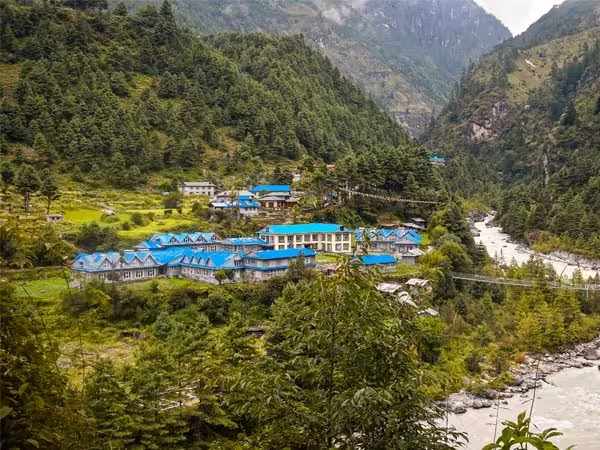
Pangboche, Nepal is a Sherpa village in the Khumbu region of Solukhumbu District, at 3,985 m (13,074 ft). It sits on the Everest Base Camp trail between Tengboche and Dingboche, in the Imja Khola valley, with Ama Dablam filling the skyline. Walking straight from Lukla takes about three days. Our Everest Base Camp trek paces it more slowly and passes through Pangboche on Day 6.
Pangboche, Nepal: Altitude, Weather, Monastery and Yeti Hand
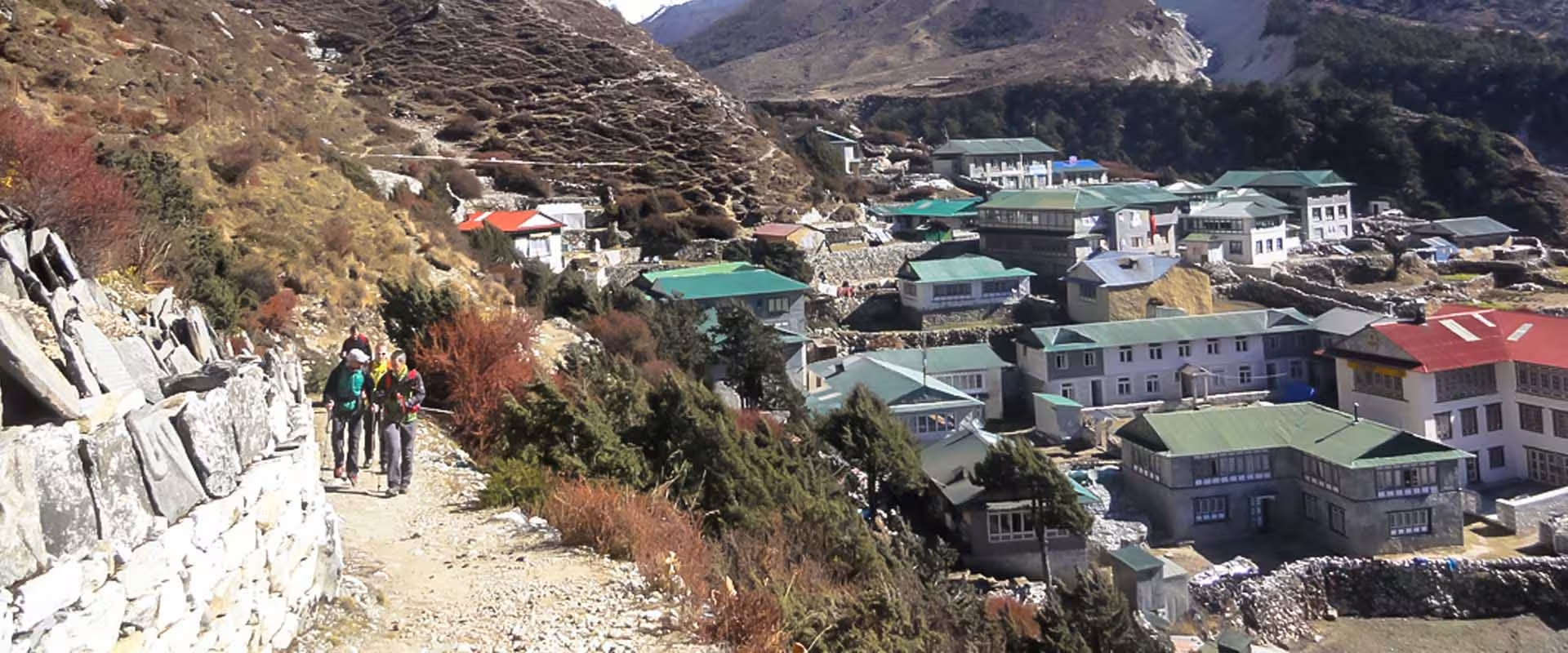
Pangboche, Nepal Elevation and Altitude
Pangboche stands at 3,985 m (13,074 ft), about 115 m higher than Tengboche (3,860 m, 12,664 ft). The air here holds roughly 60 percent of the oxygen available at sea level, so your body needs time to adjust. Above 3,000 m (9,800 ft), our guides recommend limiting your gain in sleeping altitude to 500 m (1,650 ft) per night.
Our guides also recommend one extra acclimatization night for every 1,000 m (3,300 ft) you add to your sleeping altitude. Most itineraries cover this with a rest day in Namche Bazaar before the Tengboche and Pangboche stage. Climb high and sleep low where the route allows, drink water steadily, and keep a pace slow enough to hold a conversation.
Altitude sickness starts with a headache plus loss of appetite, dizziness, fatigue or nausea, typically 2 to 12 hours after you reach a new height. Symptoms usually fade within 12 to 48 hours if you stop climbing. Breathlessness at rest, a persistent cough, confusion or loss of balance mean you descend and tell your guide at once. Never climb higher to sleep while you have symptoms. Our guide to Everest Base Camp elevation and altitude sickness covers the whole route profile.
Pangboche weather by Season
The best weather in Pangboche comes in spring (March to May) and autumn (late September to November). Mornings are clear, nights fall below freezing, and cloud tends to build in the afternoon. Monsoon rain arrives from June to August, and winter nights drop below -15 °C (5 °F).
| Season | Months | Typical range | What to expect |
| Spring | March to May | 6 °C to 10 °C (21 °F to 50 °F) | Clearer days, cold mornings, rhododendrons and junipers along the trail. Cloud increases toward the end of May |
| Monsoon | June to August | -3 °C to 15 °C (27 °F to 59 °F) | Rain, muddy trails and cloud that hides the views. Flight disruptions are more likely |
| Autumn | Late September to November | -7 °C to 8 °C (19 °F to 46 °F) | Early September can still be wet. October is the steadiest month, and November is dry and clear but colder |
| Winter | December to February | Nights below -15 °C (5 °F) | The coldest season, with snow and icy trails possible. Clear days give excellent visibility |
Sunny walking hours feel mild, then temperatures drop fast after sunset. Teahouse dining rooms are usually heated in the evening, but bedrooms generally are not, so pack a sleeping bag rated for the season.
Pangboche Monastery
Pangboche Monastery is one of the oldest Buddhist monasteries in the Khumbu. Local tradition credits the Tibetan lama Sangwa Dorje with founding it. Sources disagree on whether that was in the 16th or 17th century, and no exact date is settled.
The gompa is also known for a relic once described as a yeti hand.
Ask your guide before photographing inside any gompa.
Pangboche Hand: The Yeti Relic Story
The Pangboche hand is a relic that monks at Pangboche Monastery once displayed as a yeti hand. Tests point to a human origin, and the original hand vanished from the monastery in 1991.
The monks' own account says Lama Sangwa Dorje lived in a cave where a yeti brought him food, water and fuel. When the yeti died, the lama kept its hand and scalp as relics. Before 1957, monks showed a skull top and a hand to visitors for donations.
In the late 1950s, an expedition funded by the Texas oilman Tom Slick removed a finger from the hand. Accounts differ on whether the monks were paid or the finger was taken. It was smuggled to Britain, where the primatologist Osman Hill examined it and reached shifting conclusions.
Sir Edmund Hillary's expedition visited in 1960 and judged the relics a hoax. A scalp tested after that expedition was most likely serow skin, from a goat-like Himalayan animal.
In 2011, researchers at Edinburgh Zoo and the Royal Zoological Society of Scotland tested the finger and found human DNA. The rest of the hand disappeared from the monastery in 1991 after a television programme on the relic, and its whereabouts are unknown. A replica was reportedly given to the monks in 2011.
Walking times and distances from Pangboche
| Route | Walking time | Notes |
| Tengboche to Pangboche | 2 to 3 hours | Passes through Deboche, crosses the Imja Khola, then a final climb with Ama Dablam ahead |
| Namche Bazaar to Pangboche | 5 to 7 hours | Many itineraries split it with a night at Tengboche or Deboche |
| Pangboche to Namche Bazaar | 5 to 7 hours | The same trail in reverse, with the same river drops and climbs |
| Pangboche to Dingboche | 3 to 4 hours | Passes Somare and Orsho. |
| Lukla to Pangboche | About 3 days | At a steady pace, before adding rest days |
Tengboche to Dingboche via Pangboche: The Day 6 walk
On Day 6 of our 14-day Everest Base Camp trek, you walk from Tengboche to Dingboche through Deboche, Pangboche, Somare and Orsho. The stage covers about 10 km (6.2 mi), takes 5 to 6 hours with stops, and climbs a net 550 m (1,800 ft).
Plan on about two hours from Tengboche to Pangboche and three to four more to Dingboche, with a break for lunch. One tracked hike took 3 hours 30 minutes of walking, so a fast group finishes earlier. Most sources describe a gentle slope with no steep sections, though one rates the day as challenging at this altitude.
Dingboche sits 540 to 550 m (1,770 to 1,800 ft) above Tengboche, a little over the 500 m (1,650 ft) nightly guideline. Walk slowly, drink water and tell your guide about any headache or nausea. Plan at least one extra day in Dingboche to acclimatize, as our Dingboche guide explains.
Pangboche to Ama Dablam Base Camp
The village is the junction for the Ama Dablam Base Camp side trail, which is quieter than the main Everest route. One local operator lists the round trip at 6 to 7 hours. Others schedule an overnight at base camp, which sits at about 4,600 m (15,100 ft).
That is more than 600 m (2,000 ft) above the village. Treat it as an extra acclimatization decision, not a casual detour.
Trek through Pangboche with Sublime Trails
Pangboche is a stop on the main Khumbu trail. Our 14-day Everest Base Camp trek walks through it on Day 6, between nights in Tengboche and Dingboche. Each itinerary page shows where you sleep.
Want the Ama Dablam Base Camp side trip, a slower pace around Tengboche, or a private departure for your group? Say so when you enquire. Send your dates and group size and a trek planner will reply with a day-by-day plan for Pangboche, Nepal and the permits that apply.
Need Help? Call Us
Need Help? Call Us+977 9851183278