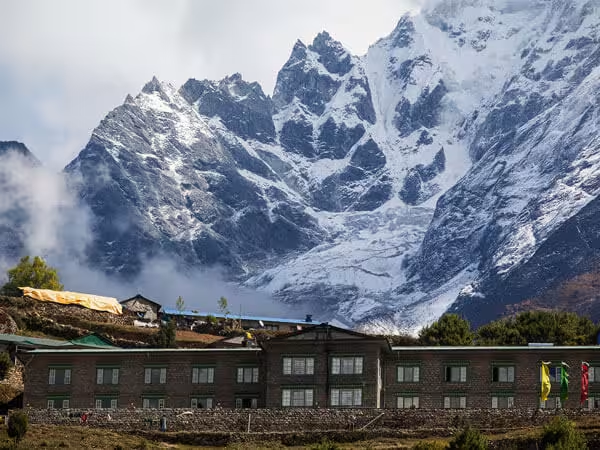
Reach Everest Base Camp in just one week without missing the ultimate reward. Designed for trekkers with limited time and strong fitness, the Everest Base Camp Short Trek follows an efficient itinerary that minimizes unnecessary days while still taking you to Everest Base Camp and Kala Patthar. Expect dramatic Himalayan scenery, Sherpa culture, and the excitement of trekking beneath the world's tallest peaks. It's the fastest way to experience Everest without compromising the destination itself.
The Everest Base Camp Short Trek with Helicopter out is an elite logistical solution for adventurers who refuse to let a limited schedule compromise their Himalayan ambitions. This high-tempo journey is purposefully designed for the physically conditioned trekker, condensing the iconic Khumbu experience into a high-impact, one-week window.
This is a fixed-departure or private, lodge-based trek that walks the classic route in full but compresses the schedule to seven days by removing acclimatization days and flying back by helicopter from Gorak Shep instead of walking out. It's rated strenuous, runs Kathmandu to Kathmandu, is open to private bookings and joining groups, and is built for trekkers aged 14 and above with prior high-altitude experience.
The Trade You're Actually Making
This route exists because someone, at some point, asked a simple question: what if the walk out wasn't necessary? Everything about the classic Everest Base Camp trek up to Gorak Shep stays the same — the same villages, the same slow climb through Namche and Tengboche, the same first sight of Everest above the Nuptse ridge. The difference comes on the last morning, when instead of turning around and retracing six days of trail, a helicopter is waiting to take you home instead. It's not a shortcut through the mountains. It's a shortcut back from them.
If the classic version with its built-in rest days and slower pace sounds like a better fit, our 14-Day Classic Everest Base Camp Trek covers the same ground without the compressed schedule. We'll say so plainly here rather than only mention it once at the bottom of the page, because which one is right for you matters more to us than which one you book.
Who Finds Their Way to This One
Most trekkers who choose this route already know what altitude asks of a body. They've been above 3,000 metres before, they know what a bad night's sleep at 4,500m feels like, and they're comfortable trading the built-in rest days of a longer itinerary for time they'd rather spend somewhere else in their year. If that's not you yet, that's alright, there's no shame in it, and we'll say so plainly rather than sell you something that doesn't fit. But if it is you, this is the most efficient, honest way we know to stand at the foot of the world's highest mountain and be home for dinner three days sooner than you thought possible.
What Seven Days Actually Feels Like
It's worth being honest about the shape of this trip before you commit to it. The first three days build gradually forest trails, suspension bridges, the slow reveal of bigger peaks with each turn in the valley. By day four the landscape has changed entirely: no trees, thinner air, a kind of stripped-back beauty that either grips you or unsettles you, usually both. The last two days are the ones people remember for the rest of their lives, and the seventh morning, Kala Patthar at sunrise, then a helicopter instead of another six days of walking is the part almost nobody else's itinerary can offer in this timeframe.
Journey Highlights

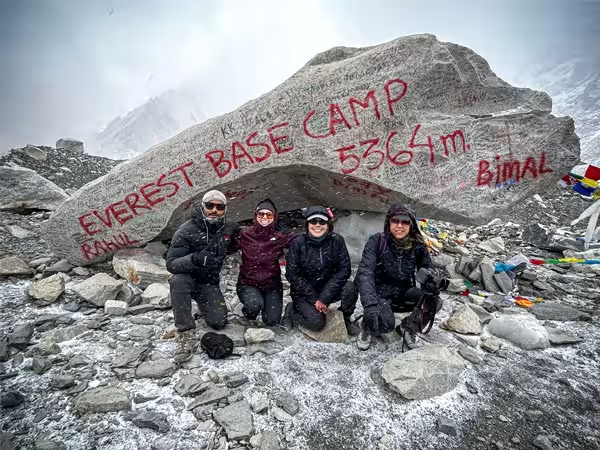
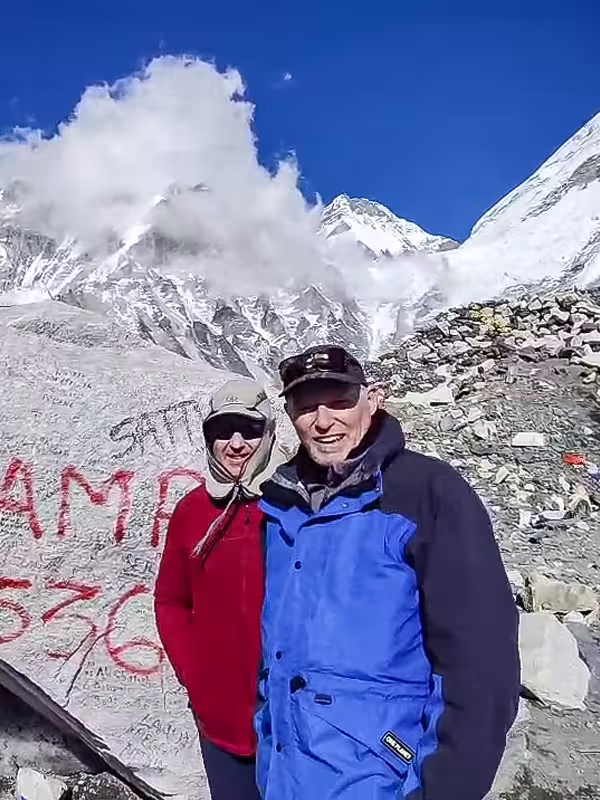
Standing at 5,364m beside the shifting ice towers of the Khumbu Icefall, the same gateway every Everest expedition has passed through since Hillary and Norgay in 1953 — no summit permit required, just the walk in.

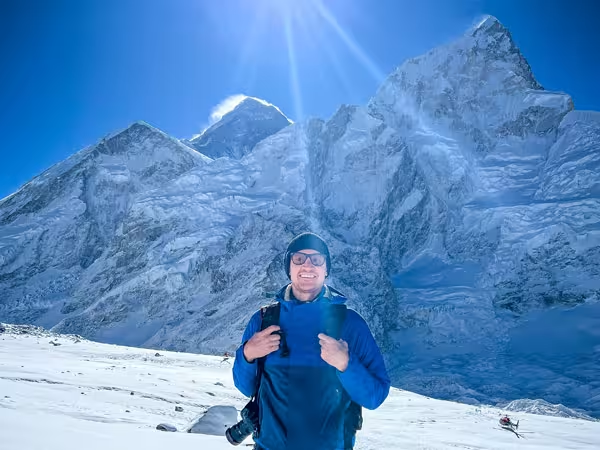
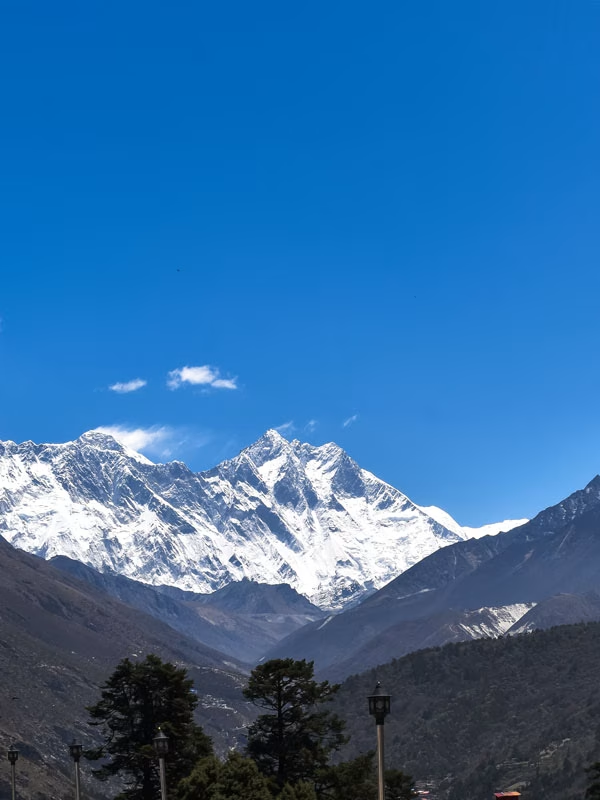
At 5,545m, this is the closest, clearest panorama of Everest, Nuptse, and Lhotse available without a mountaineering permit, and the true visual payoff of the entire trip. Base Camp itself, oddly, doesn't offer a clean view of Everest's summit

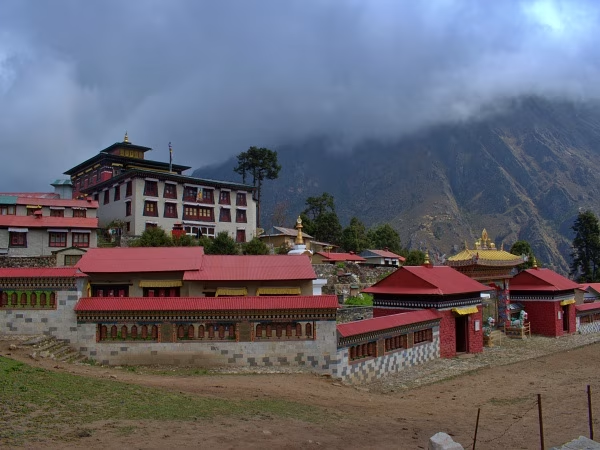
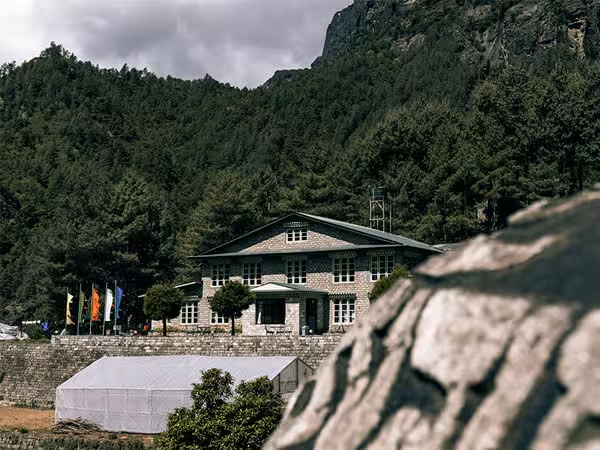
The spiritual heart of the Khumbu, framed by Ama Dablam on one side and Everest on the other, and still an active monastic community rather than a restored tourist stop

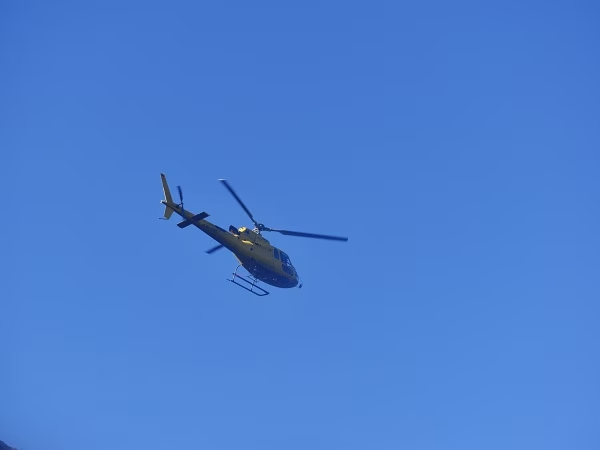
A 40-minute aerial retrace of six days of walking, banking low enough over the Khumbu valley that you'll recognize villages you slept in a day earlier

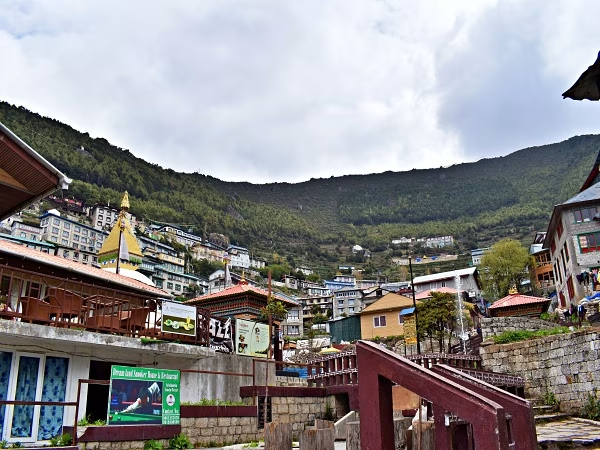
The Sherpa capital, alive with bakeries, gear shops, and a Saturday market that's stayed largely unchanged for decades, tucked into a natural amphitheater of hillside that makes for the trip's best acclimatization-day wandering
This itinerary is not a gentler version of Everest Base Camp. It's a faster one, and that speed comes from removing rest days a longer trek would give you for free. We recommend it to trekkers with prior experience above 3,000m, not as a first introduction to high altitude. That's not a disclaimer buried in fine print; it's the single most important thing to understand about this specific package before you pay a deposit.
If this is your first time at elevation, our 14-Day Classic Everest Base Camp Trek or the Everest Base Camp Trek with Helicopter Return, which keeps full acclimatization days while still saving you the walk-out, are the safer starting point. We'd rather point you to the right itinerary and lose a booking than fit you into one that doesn't match your experience as it is a genuinely bad outcome for you and, longer term, for us too.
One more practical note: This itinerary has almost no slack built in. A single weather delay on the Day 7 helicopter, or a decision to rest an extra day for altitude reasons, can compress the trip further or push your return home back by a day. Build a buffer into your international flight home if your schedule allows it.
See the Journey Through the Lens
Everest Base Camp Short Trek Detailed Itinerary
Day 1 - Fly to Lukla and trek to Monjo
Your journey starts with a thrilling, scenic morning flight from Kathmandu to Lukla. If the weather is clear, you’ll enjoy sweeping aerial views of the Langtang and Ganesh ranges before touching down at Tenzing-Hillary Airport, widely known as the Gateway to Everest. From here, you hit the trail and begin a gentle descent toward Monjo for your overnight stay. This dynamic launch sets a thrilling pace for your 7-Day Everest Base Camp trek.
Day 2 - Monjo to Namche Bazaar
Today, you officially cross the threshold into Sagarmatha National Park, a UNESCO World Heritage site. The trail winds along the river before tackling a steady, legendary uphill climb toward Namche Bazaar, the vibrant town known as the Sherpa capital. As you gain altitude on this accelerated fast-track EBC adventure, the pine forests part to reveal your very first glimpses of Mount Everest. We settle into our tea house early to allow your body to begin adapting to the thin alpine air.
Day 3 - Namche Bazaar to Tengboche
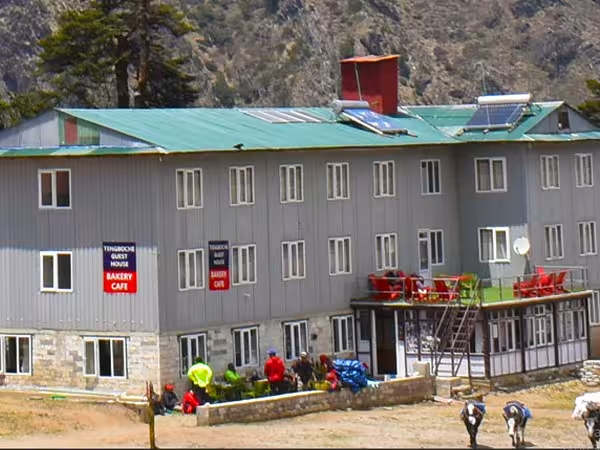
While standard routes typically pause for a rest day here, our focused 7-day Everest trekking itinerary pushes directly upward into the spiritual heart of the Khumbu region. Your efforts are rewarded with pristine, world-class vistas of Ama Dablam and the Everest massif. The day ends at the ridge-top village of Tengboche, home to the region’s largest Buddhist monastery, where you can watch the setting sun paint the surrounding peaks in gold while listening to the resonant morning or evening chants of the resident monks.
Day 4 - Tengboche to Dingboche
The lush rhododendron forests fade behind you today as you cross the tree line into the stark, raw beauty of the high alpine zone. You will cross the roaring waters of the Imja Khola and hike deep into the broad Imja Valley. The iconic silhouette of Ama Dablam dominates the skyline, growing more massive and impressive with every mile of this premier short Everest trek package. We spend the night in the windy outpost of Dingboche—at this altitude, remember to maintain a steady, measured pace and drink plenty of water.
Day 5 - Dingboche to Lobuche
The terrain grows increasingly dramatic as you trace the lateral moraine of the massive Khumbu Glacier. You will pause at the poignant memorial site at Thukla Pass—a humbling field of stone monuments dedicated to climbers who lost their lives on Everest. Pushing past the pass, this high-altitude segment of our Everest Base Camp Short trek brings you to the stark settlement of Lobuche by late afternoon, giving you ample time to rest and fuel up before tomorrow’s ultimate destination.
Day 6 - Lobuche to Everest Base Camp via Gorak Shep
Today is the day you’ve been working so hard for. You'll trek alongside the glacier to the final outpost of Gorak Shep (5,164 m), drop your heavy gear, and immediately push onward across the rocky glacial moraine to Everest Base Camp. Standing at the foot of the world’s highest peak, surrounded by the shifting, frozen towers of the Khumbu Icefall, is an unforgettable milestone. After celebrating this historic achievement on your fast-track EBC adventure, you will retrace your steps to Gorak Shep for a triumphant and well-earned night's sleep.
Day 7 - Hike to Kala Patthar viewpoint and helicopter flight to Kathmandu
Before dawn, you’ll hike the steep slopes of Kala Patthar to witness the ultimate 360-degree panoramic sunrise over Everest, Lhotse, and Nuptse. After descending back to Gorak Shep for a warm breakfast, you will skip the grueling multi-day return hike entirely. You’ll board a private helicopter for a spectacular victory lap through the deep gorges, flying directly back to Kathmandu. This aerial exit saves you three days of steep downhill trekking and provides a jaw-dropping final look at the Himalayas from above to close out your 7 Days Everest Base Camp trek.
Kathmandu's Tribhuvan International Airport is served by direct and one-stop flights from most major hubs in Asia and the Gulf; travelers from North America, Europe, and Australia typically connect through Doha, Istanbul, Delhi, Singapore, or Bangkok. From Kathmandu, the trek begins with either a short mountain flight to Lukla or, during peak season air-traffic restrictions, a road transfer to Ramechhap followed by the same flight from there. We'll confirm which applies to your exact dates closer to departure.
Sublime Trails representative will come to pick you at the airport. So we will be meeting at Tribhuvan International Airport to start the amazing journey.
Everest Base Camp Short Trek Map and Altitude Chart
Inclusions & Exclusions
Lukla flights both ways (or Ramechhap transfer if applicable)
All meals and teahouse accommodation for 6 nights
Helicopter return from Gorak Shep to Kathmandu
Government-licensed guide and porter (1 porter per 2 trekkers)
Sagarmatha National Park and Khumbu Rural Municipality permits
Guide and porter insurance
Travel and rescue insurance covering helicopter evacuation (mandatory)
Nepal visa fee, paid on arrival
Personal expenses beyond what's listed under What Elevates This Journey
Guide and porter tips
Meet Our Local Guide
What You’ll Eat & Where You’ll Stay
During the Everest Base Camp Short Trek, you'll enjoy freshly prepared, energy-rich meals designed to keep you fueled throughout your Himalayan adventure. The most popular meal is Nepal's traditional dal bhat, a wholesome combination of steamed rice, lentil soup, seasonal vegetables, and homemade pickle. Most teahouses also offer free refills of dal bhat, making it a favorite among trekkers for both nutrition and value.
In addition to dal bhat, lodge menus typically include porridge, eggs, pancakes, fried rice, pasta, noodle soups, momos (Nepali dumplings), potatoes, and hot drinks like tea, coffee, and hot chocolate. As you trek above Namche Bazaar, food prices gradually increase and menu options become more limited because all supplies are transported by porters or yaks through the mountain trails.
Everest Base Camp Short Trek Equipment list
Client’ Testimonials and their Experiences
We gave this review the title above because Mr. Ram (the owner of Sublime Trails) and his crew, Mr. Bibek (our youthful and dynamic guide for EBC trek), Mr. Bikas (strong Sherpa, problem solver), and Mr. Mohan (resilient Sherpa, motivator), were so accommodating to our needs.
Being family of 3 and having a little child with us made us quite exposed during the journey, yet they treated us like we were invincible and eliminated any signs of weakness with ease. In this context, I'd like to provide the John Wooden remark that seems most applicable to the aforementioned squad "It's the little details that are vital. Little things make big things happen.
Despite the fact that we were unable to complete the trek, we continue to remain in awe of the Himalayas. After the trek, M/S. Sublime went above and beyond to ensure that our Nepal vacation was really unforgettable and "A trip of a lifetime" by arranging for us to visit Chitwan National Park and Pokhara.
We can state without a shadow of a doubt that Nepal is the most beautiful place on Earth for two reasons: the Himalaya, and the people of Nepal.
We would like to stress for the "Healing Sound Bowl", that we purchased, is a wonderful miracle of modern technology, and it even has a name for itself: The Sanskrit mantra "om mani padme hum" consists of six syllables and serves as a reminder and means of relieving the stresses of daily living.
We are not finished with Nepal just yet; we plan to return with the same group and give it another go in the hopes of gaining the satisfaction that comes from completing a difficult journey.
April 1st week 2023, I successfully completed my trek to Everest Base Camp in just 6 days, and returned via helicopter to Kathmandu on day-7. We were a small group of three (my 16 year old son, my brother and I), and we are glad to have done this trek with Sublime Trails. Ram (owner and manager of Sublime Trails company) did excellent in planning the logistics and executing this trek.
Ram is very helpful from the moment I planned this trek 3 months ago, and when I first contacted Ram. He extended his support before and well after the trek was completed. Ram offered to keep our extra luggage bags at his office location, while we were out at the trek. When we arrived back to Kathmandu a few hours earlier, Ram helped with getting us a hotel room for 3-4 hours so we could take a shower, freshen up and pack-up. Ram arranged and took care of the shuttle from the airport, and back to the airport once the trek.
Our trek guide, Prakash Adhikari is an excellent guide, who explained every detail of the trek, shared great details about the trail, the monuments we see along the way and the various mountain peaks we see. From making sure we ordered the best food and tea along the trek, to offering medical help when we were struggling with altitude sickness, Prakash has been hugely helpful. Without Prakash’s continuous care and support, this trek would not have been as smooth and as successful.
In complete honesty, we did not enjoy the hotel stays during the EBC trek. Pretty much all hostels we stayed were of poor quality and lack basic amenities, however, I completely understand that this is outside of Sublime Trails’ control and the hotel accommodation situation is as such not very good throughout EBC. I believe that Ram did everything possible in his hands and control to make our trip very successful and comfortable.
Overall Ram & Prakash’s hospitality is much appreciated. I recommend my friends and others interested in doing EBC trek to consider going with Sublime Travels and ask for Prakash as the guide.

Mr Ram from Sublime Trails was very communicative and friendly from the start to the end of this adventure; we went to Everest Base Camp. We arrived in early September this year in Nepal. Mr Ram was at the airport to welcome us and also dropped us at the hotel.
The flight to Lukla and hike to Namche Bazaar and Hotel Everest View was a fantastic hiking experience. My trek guide, Mr Shiva, was a very cheerful person. He was constantly asking us about how we were doing throughout the hike. He also did a fantastic job setting the base camp tent. Other trek crews and our chef for the base camp were also very wonderful and supportive.
The feeling of sleeping close to Everest is indescribable. It was cold, but sleeping bags were good enough to warm us. Everything was excellent, and Sublime Trails well managed the logistics.
I recommend anyone joining this trip to at least communicate with Sublime Trails and Mr Ram to check the availability of this trip. These guys are the absolute best for tour in Nepal
Travel Moments
Know Everything Before You Go Everest Base Camp Short Trek
Currency & ATMs
Exchange currency in Kathmandu before departure. ATMs exist only in Lukla and Namche Bazaar along this route. Both charge a processing fee of roughly 3 to 8 percent on card withdrawals. Carry the local currency equivalent of at least US$250 in cash for personal spending beyond what this package includes.
Travel Insurance
Travel insurance is not legally required to enter Nepal or obtain a visa. It is required by us before you can start the Everest Base Camp Short Trek, and by essentially every reputable operator running this route. Nepali immigration doesn't check for it. We do.
This itinerary carries less acclimatization buffer than our 14-day classic route. That makes your insurance choice more important, not less. Your policy needs high-altitude coverage to at least 6,000m. It needs helicopter evacuation coverage. It needs trip interruption coverage that names Lukla flight delays specifically, the most common disruption on this trek. US-based trekkers commonly use UnitedHealthcare Global. European trekkers use Allianz or Europe Assist. Australian trekkers use Cover-More, and trekkers from elsewhere in the Asia-Pacific region often use World Nomads.
Buy your policy before you leave home. This trek compresses fourteen days of walking into seven — a genuine medical issue has less schedule flexibility to absorb here. Confirm your coverage handles a same-day evacuation, not just a delayed rebooking.
Nepal Visa
Most nationalities, including US, UK, EU, Australian, and Canadian citizens, can get a Nepal visa on arrival at Tribhuvan International Airport. You can also apply online in advance to save time at immigration. A 15-day visa is enough if this trek is your only reason for visiting. Choose 30 or 90 days if you're staying longer or combining this with other travel in Nepal. Indian citizens don't need a visa at all. Bring a valid passport, one passport photo, and the visa fee. Your passport should be valid for at least 6 months.
Travel Etiquette
- Always pass mani walls, chortens, and prayer wheels on your left, walking clockwise. This is a real Buddhist observance, not a suggestion.
- Ask before photographing monks, ceremonies, or people directly. A smile and a gesture toward your camera is usually enough. A shaken head means no, and that's the end of it.
- Remove your shoes before entering a monastery prayer hall. Keep your voice low inside.
- Yield the trail to porters, yaks, and mule trains. Stay on the uphill side when you do. Loaded porters and animals have the right of way on the Everest Base Camp Short Trek — they're working, you're not.
- A small monastery donation is appreciated but never expected. Don't make a show of it either way.
- Dress modestly in villages, even in trekking gear. Covered shoulders and knees matter to local families whose homes double as your teahouse.
- Tipping is customary, not mandatory, and matters more than it might seem. Guides and porters rely on it as real income. Ask your operator for a typical range rather than guessing.
Training for the Everest Base Camp Short Trek
This is not the itinerary to under-train for. Our 14-day classic route builds in two acclimatization days that also double as recovery time. This one doesn't. Start training at least 10 to 12 weeks out, not 8.
- Cardio, 4 times a week minimum, building toward sustained 90-minute sessions. The compressed schedule means less time to recover between demanding days. Your baseline fitness matters more here than on our longer itineraries.
- Load-bearing hikes with a daypack at 6 to 8kg, at least twice weekly in your final month. You'll carry more of your own gear day to day on this pace, since it allows less room for casual adjustments.
- Prior high-altitude experience is genuinely useful here, more so than on our classic route. If you've never spent a night above 3,500m before, we'd rather steer you toward our 14-day itinerary first.
- Fitness doesn't prevent altitude sickness, and that matters even more on a compressed schedule. A strong training block reduces physical strain. It does not substitute for the acclimatization days this itinerary doesn't include.
Porter and Weight Limitation
Baggage allowance on the Lukla flight is capped at 15kg including hand luggage. Since one porter carries up to 25kg shared between two trekkers, keep your personal duffel to around 12 to 13kg. Given this trek's faster daily pace, pack lighter than you would for our 14-day classic route — there's less flexibility to adjust or send extra gear back if you overpack.
Electricity & Connectivity
Electricity and phone charging are free up to Namche Bazaar. Beyond Namche, most teahouses charge a per-device fee that increases with altitude. A power bank is worth carrying rather than relying on paid charging at every stop. Mobile data through NTC or Ncell works reliably as far as Tengboche. NTC generally holds a signal furthest up the valley, including at Gorak Shep.
Lukla Flight Delays and Alternatives
Lukla flight delays are the most common disruption on the Everest Base Camp Short Trek. They carry more weight here than on our longer itineraries, since this route has less built-in schedule buffer to absorb a multi-day delay.
When scheduled flights are delayed by weather, a private helicopter charter is often available as a faster alternative. This typically costs US$400 to $500 per person from Kathmandu to Lukla. We can arrange it directly if a delay puts your compressed schedule at genuine risk.
If flights are suspended entirely for an extended period, an overland route exists via Phaplu and Surke. This adds roughly two driving days each way. This trek is already only seven days, so that alternative would meaningfully disrupt your itinerary. We treat it as a genuine last resort here, more than on our longer routes.