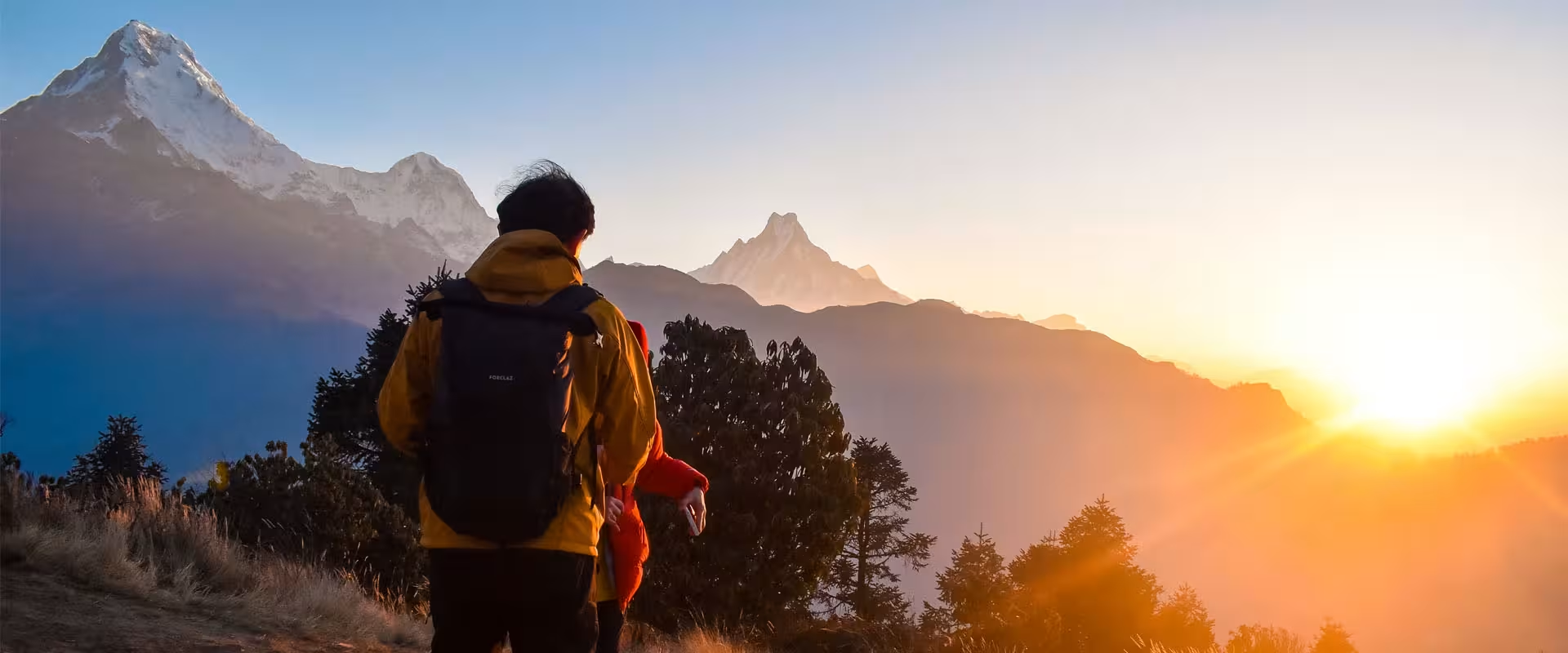
The walk to Poon Hill begins before daylight, when Ghorepani is still quiet and most trekkers are preparing for the climb. With a headlamp lighting the stone steps, you follow the uphill trail towards a viewpoint at 3,210 metres. The effort becomes worthwhile as the sky gradually brightens over the Annapurna and Dhaulagiri ranges. From the viewpoint, you can watch the first sunlight reach the surrounding Himalayan peaks, creating changing colours across the mountains.
The Poon Hill sunrise is a highlight of the Annapurna region, but the experience does not end when the sun appears. After returning to Ghorepani for breakfast, trekkers can continue towards Tadapani and Ghandruk, discovering more of the region's forests, villages and mountain scenery.
Where Is Poon Hill and How High Is It?
Poon Hill is a popular mountain viewpoint in Nepal's Annapurna region, situated above Ghorepani village at approximately 3,210 metres (10,531 feet). It lies northwest of Pokhara and offers wide views of the surrounding Himalayan ranges.
Ghorepani is the main overnight stop for trekkers visiting Poon Hill. From the village, a marked uphill trail leads to the viewpoint, making it possible to reach the summit before sunrise. Its location also makes Poon Hill a natural highlight of both the Poon Hill Trek and the longer Ghorepani Ghandruk Trek.
Unlike viewpoints that require several additional days of trekking, Poon Hill can be visited as an early morning hike from Ghorepani. This makes it accessible to many trekkers who want a Himalayan sunrise without crossing a high mountain pass.
What Makes the Poon Hill Sunrise Special?
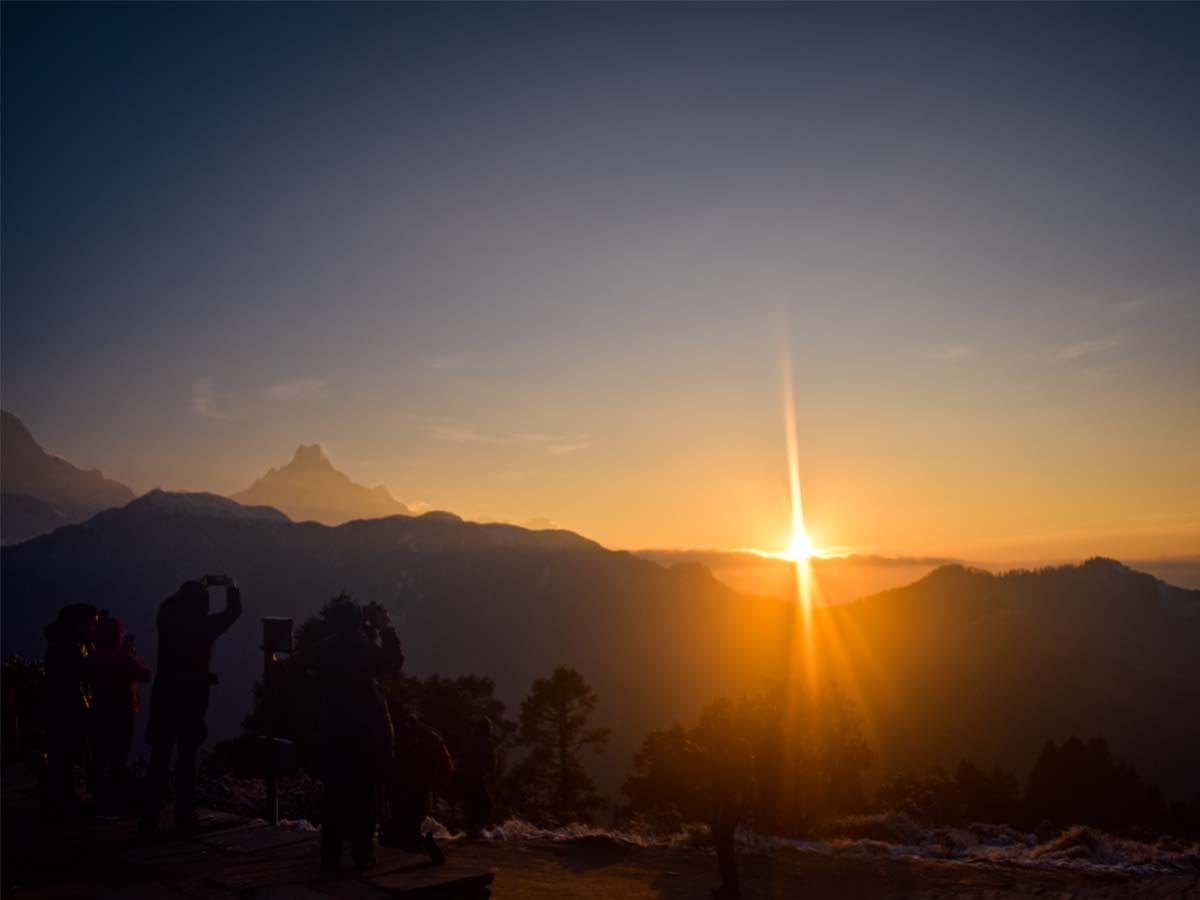
People Captruing sunrise view from Poon Hill
The Poon Hill sunrise is special because it offers a wide view of the Annapurna and Dhaulagiri mountain ranges from a single viewpoint. As daylight reaches the peaks, their snow-covered slopes gradually change colour, creating a striking contrast against the morning sky.
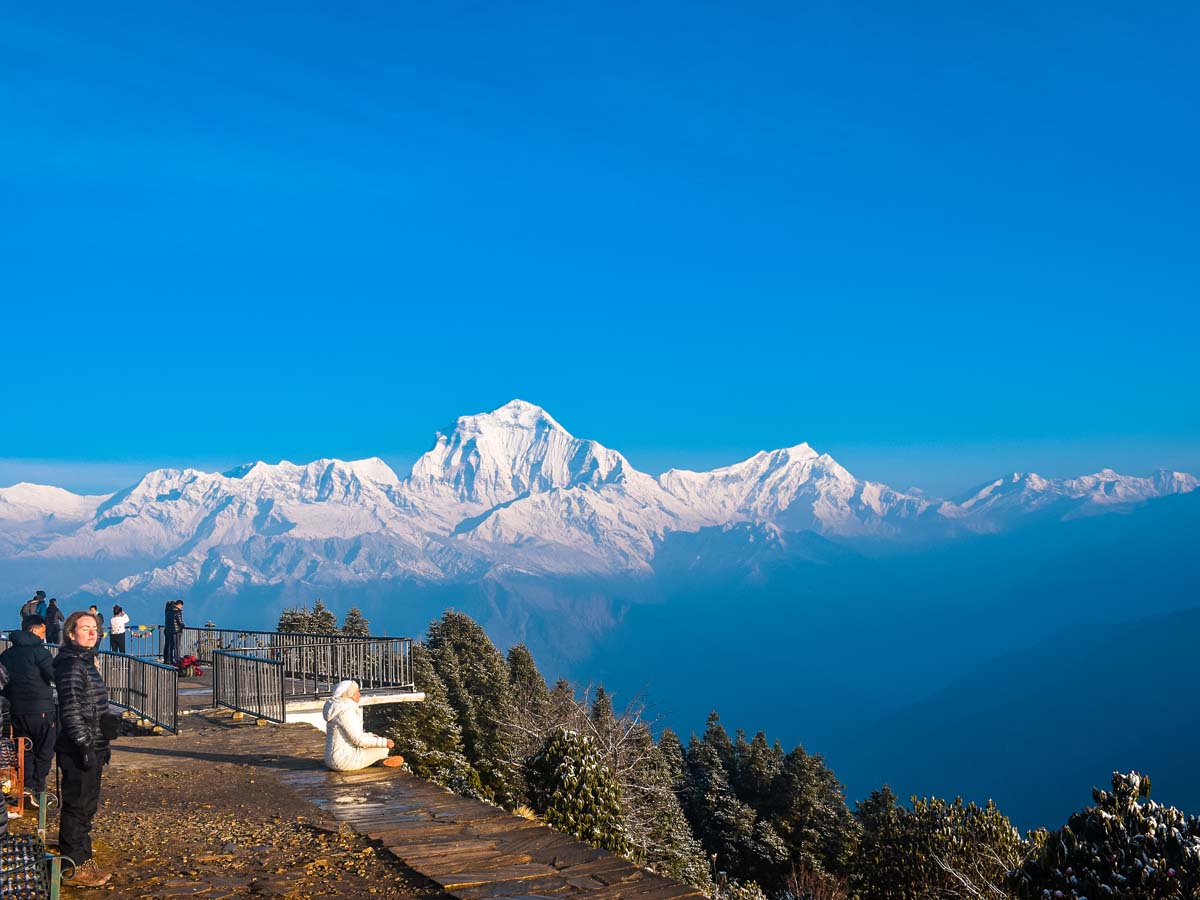
From the viewpoint, you can see several prominent Himalayan mountains, including Annapurna South, Dhaulagiri I, Machhapuchhre (Fishtail), Hiunchuli and Nilgiri. On clear mornings, the surrounding peaks stand out against the distant valleys and ridgelines.
The experience also changes with the light. Before sunrise, the mountains appear as dark silhouettes. As the sun rises, the higher peaks catch the first light while the lower slopes remain in shadow. This gradual change is one of the most memorable parts of the morning.
The viewpoint can become busy during peak trekking seasons, especially around sunrise. Arriving early gives you more time to find a comfortable viewing spot and enjoy the scenery without rushing.
Guide's tip: Don't leave immediately after the first sunlight reaches the mountains. Stay a little longer, as the changing light can reveal different details across the Himalayan landscape.
What Time Should You Start the Poon Hill Sunrise Hike?
Most trekkers leave Ghorepani between 4:00 and 5:00 AM to reach Poon Hill before sunrise. The exact departure time depends on the season, expected sunrise and your walking pace.
The uphill walk usually takes around 45–60 minutes. However, allow extra time if you walk slowly, take breaks or encounter busy sections along the trail. Starting early also gives you time to find a good viewing spot before the first sunlight reaches the mountains.
Sunrise times change throughout the year, so your departure should not follow the same schedule every month. Your trekking guide can check the expected sunrise time and recommend when to leave.
A few practical tips:
Keep your headlamp or torch ready before leaving the teahouse.
Wear warm layers because temperatures can be very low before dawn.
Carry water and a small snack if needed.
Walk steadily on the stone steps, especially in darkness.
Reach the viewpoint early enough to settle in before sunrise.
What Is the Trail Like from Ghorepani to Poon Hill?
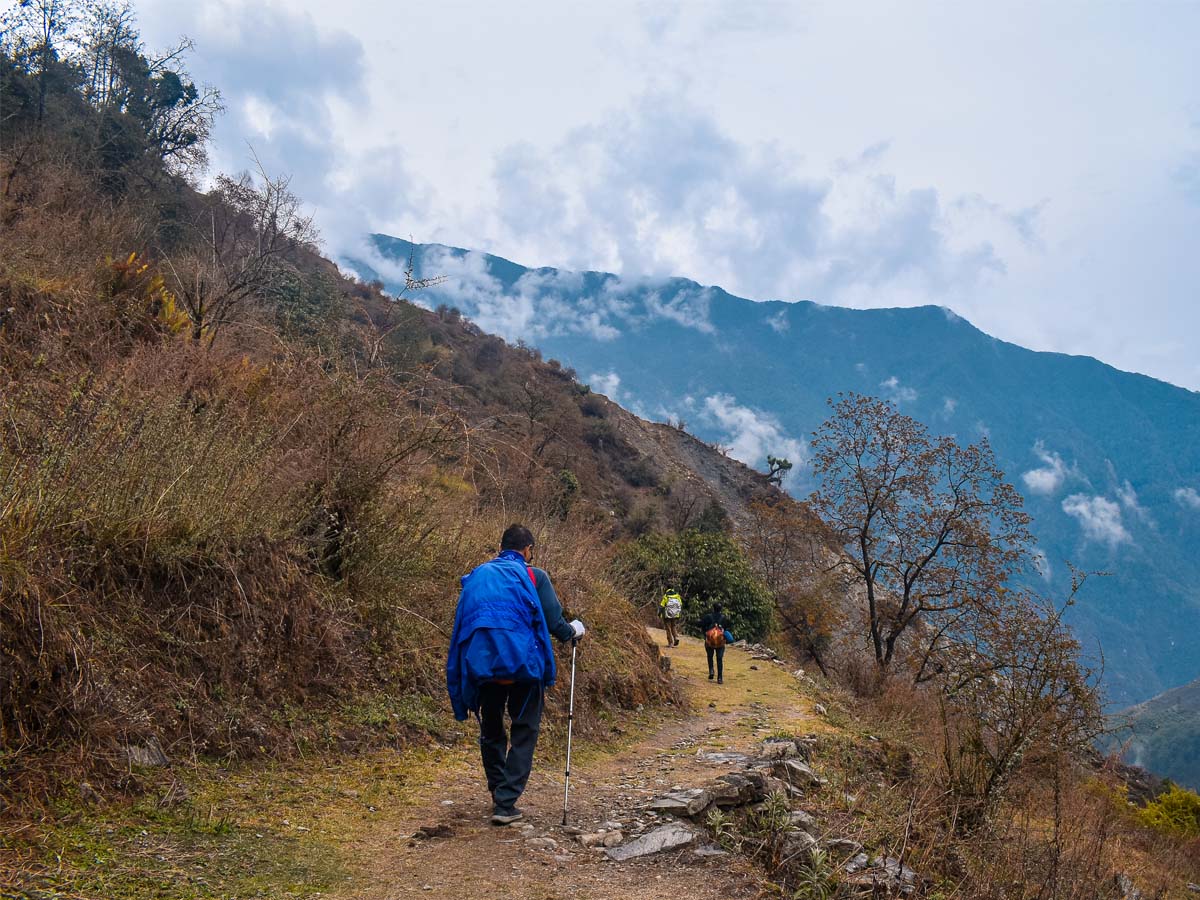
The trail from Ghorepani to Poon Hill is a steady uphill climb through a series of stone steps and forested sections. Although the distance is relatively short, the ascent can feel demanding, especially before dawn when temperatures are cold and visibility is limited.
The walk begins near the upper part of Ghorepani village. You follow a well-used path that gradually climbs towards the viewpoint. Stone steps make up much of the route, with some steeper sections along the way. During the early morning, a headlamp is essential for seeing the trail clearly.
As you gain elevation, the forest gradually opens up. The final approach leads to the Poon Hill viewpoint, where a viewing area provides space to watch the sunrise over the surrounding mountains.
What to expect along the trail:
Starting point: Upper Ghorepani village.
Trail surface: Stone steps, uneven paths and uphill sections.
Walking time: Approximately 45–60 minutes, depending on pace.
Lighting: A headlamp or torch is necessary before sunrise.
Crowds: The trail can become busy during popular trekking seasons.
Conditions: Cold temperatures and occasional frost or snow are possible in winter.
Which Mountains Can You See from Poon Hill?
Poon Hill offers a panoramic view of several major peaks in the Annapurna and Dhaulagiri ranges. On a clear morning, you can see snow-covered mountains stretching across the horizon, with some peaks appearing much closer than others.
The main mountains visible from Poon Hill include:
Dhaulagiri I (8,167 m): One of the most prominent peaks on the western side of the panorama.
Annapurna I (8,091 m): The highest mountain in the Annapurna range, visible among the surrounding peaks.
Annapurna South (7,219 m): A striking mountain that forms part of the southern Annapurna skyline.
Machhapuchhre (6,993 m): Also called Fishtail, recognised by its distinctive double summit.
Hiunchuli (6,441 m): A prominent peak near Annapurna South.
Nilgiri (6,940 m): A group of peaks visible towards the northern part of the panorama.
Tukuche Peak (6,920 m): A notable mountain in the Dhaulagiri region.
Panaromic View of Annapurna Ranges from Poon Hill
The visibility of individual peaks depends on weather, cloud cover and atmospheric conditions. Clear mornings generally offer the best opportunity to appreciate the full mountain panorama.
Best Time to See Sunrise at Poon Hill
The best time to experience the Poon Hill sunrise is generally spring (March to May) and autumn (September to November). These seasons offer favourable trekking conditions and good opportunities for clear mountain views. However, each season brings a different experience along the trail.
Spring (March to May)
Spring is a beautiful time to visit Poon Hill, especially when rhododendron forests bloom along the trekking route. The hillsides become colourful, and daytime temperatures are generally comfortable for walking. Early mornings can still be cold, so warm clothing is important for the sunrise hike.
Autumn (September to November)
Autumn is one of the most popular seasons for the Poon Hill sunrise. The weather is generally stable after the monsoon, and clearer skies often provide excellent mountain visibility. October and November attract many trekkers, so the viewpoint and teahouses can become busy.
Winter (December to February)
Winter offers quieter trails and crisp mountain scenery. However, temperatures at Ghorepani and Poon Hill can drop considerably before sunrise. Snowfall or icy stone steps may also make the climb more challenging.
Monsoon (June to August)
The monsoon brings green hillsides, flowing waterfalls and fewer trekkers. However, frequent rain, clouds and mist can reduce mountain visibility. Wet and slippery trails may also make the early morning climb less comfortable.
Our recommendation: Choose October or November for generally favourable mountain visibility, or March and April if you want to see rhododendron forests in bloom. Always allow some flexibility because mountain weather can change quickly.
What Should You Bring for the Early Morning Poon Hill Hike?
The early morning hike to Poon Hill can be cold, particularly during winter and the autumn trekking season. Even if the daytime weather in Ghorepani feels comfortable, temperatures before sunrise can be much lower. Carrying a few essential items will make the walk safer and more comfortable.
We recommend bringing:
Headlamp or torch: Essential for seeing the stone steps and trail before sunrise.
Warm jacket: Wear a down or insulated jacket to stay warm at the viewpoint.
Thermal layers: Use a warm base layer and fleece for extra insulation.
Gloves and warm hat: Protect your hands and head from the cold morning air.
Trekking shoes: Wear comfortable shoes with good grip, especially on wet or icy steps.
Water bottle: Carry enough water for the uphill walk and return.
Small daypack: Keep your essentials together without carrying unnecessary weight.
Camera or phone: Capture the sunrise and mountain panorama.
Sunglasses: Useful once daylight reaches the viewpoint.
Is the Poon Hill Sunrise Hike Difficult?
The Poon Hill sunrise hike is a short but fairly steep uphill walk from Ghorepani. It is generally manageable for beginners with reasonable fitness, although the early start, stone steps and cold temperatures can make it tiring.
The trail climbs approximately 300 metres from Ghorepani to the viewpoint. Much of the ascent follows stone steps, with several sections requiring a steady effort. Walking in darkness also requires extra attention, particularly when the steps are wet or slippery.
You do not need technical climbing skills or previous high-altitude trekking experience. However, being comfortable with uphill walking and stairs will make the experience easier.
What makes the hike challenging?
Uphill sections: Continuous climbing can tire your legs, especially if you are not used to stairs.
Early departure: Starting before dawn means walking when your body may still feel tired.
Cold temperatures: Standing at the viewpoint before sunrise can be uncomfortable without warm clothing.
Altitude: At 3,210 metres, some trekkers may notice mild altitude-related symptoms.
How to prepare for the hike:
Practise walking uphill and climbing stairs before your trip.
Build your fitness through regular walking, hiking or cycling.
Maintain a comfortable pace and take short breaks when needed.
Wear shoes with good grip.
Follow your guide's advice and avoid rushing.
What Happens After Sunrise at Poon Hill?
The experience continues after sunrise. Once you have enjoyed the mountain views and taken photographs, you follow the same trail back to Ghorepani for breakfast. This is usually a good time to warm up, rest briefly and prepare for the next walking section.
On the Ghorepani Ghandruk Trek, the journey continues towards Tadapani through Deurali and Banthanti. The trail passes through rhododendron and oak forests, with occasional clearings offering views of the surrounding mountains.
The walk gradually changes from the open mountain viewpoint to shaded forest paths. After reaching Tadapani, trekkers stay overnight before descending towards Ghandruk the following day.
This onward journey is what makes the Ghorepani Ghandruk route more than a sunrise excursion. You experience the mountain viewpoint, forest trails and traditional Gurung village life within the same trek.
Route after sunrise:
Poon Hill → Ghorepani: Return for breakfast.
Ghorepani → Deurali: Continue along the forest trail.
Deurali → Banthanti: Walk through woodland and descending sections.
Banthanti → Tadapani: Follow the trail towards the overnight village.
Frequently Asked Questions About Poon Hill Sunrise
How long does it take to walk from Ghorepani to Poon Hill?
The uphill walk from Ghorepani to Poon Hill usually takes around 45–60 minutes. The return journey takes approximately 30–45 minutes, depending on your walking pace and trail conditions.
What time does the sunrise at Poon Hill?
Sunrise time changes throughout the year. Most trekkers leave Ghorepani between 4:00 and 5:00 AM to reach the viewpoint before daylight. Your guide can recommend the departure time based on the season.
How high is Poon Hill?
Poon Hill stands at approximately 3,210 metres (10,531 feet) above sea level. It is one of the popular sunrise viewpoints in Nepal's Annapurna region.
Can you see Mount Everest from Poon Hill?
No, Mount Everest is not visible from Poon Hill. The viewpoint offers panoramic views of the Annapurna and Dhaulagiri ranges, including Annapurna South, Dhaulagiri I and Machhapuchhre.
Is Poon Hill sunrise worth the early morning hike?
Yes. The viewpoint offers a wide panorama of Himalayan peaks as the first sunlight reaches their snow-covered slopes. The early morning climb is a memorable part of the Annapurna trekking experience.
Is the trail to Poon Hill difficult?
The trail is a steady uphill climb with many stone steps. Most reasonably fit beginners can complete it at a comfortable pace, although the early start and cold conditions can make it tiring.
Can you visit Poon Hill without staying in Ghorepani?
Ghorepani is the usual overnight base for the sunrise hike. Staying there allows you to reach the viewpoint before sunrise without needing a long approach from another village in darkness.
Is there an entrance fee for Poon Hill?
A local viewpoint or entry fee may apply. Fees and collection arrangements can change, so check with your trekking agency or guide before departure.
Can you see the sunrise from Poon Hill in winter?
Yes. Winter offers opportunities to see the sunrise, and the trails are often quieter. However, freezing temperatures, snowfall and icy steps can affect the climb.
What happens if it is cloudy on the morning of the hike?
Clouds or fog may block the mountain views, and a clear sunrise cannot be guaranteed. Your guide can assess the weather before departure, but the hike may still be worthwhile for the surrounding landscape.