Planning to trek to Everest Base Camp alone? You don't need to organize every detail yourself. A private guided trek lets you travel independently while a professional local guide helps manage the route, accommodation, permits, transportation, and safety.
At Sublime Trails, we're based in Kathmandu and organize trekking trips across Nepal. We understand the practical concerns solo travelers face, from arranging Lukla flights to finding suitable teahouses at higher elevations.
A solo trek is a personal experience. You choose your travel dates, walking preferences, and accommodation requirements. However, the mountain environment demands careful planning.
This guide explains what to expect from a guided Everest Base Camp trek as a solo traveler. We'll cover costs, private guides, accommodation, altitude safety, permits, Lukla flights, and what to check before choosing a trekking company.
Can You Do the Everest Base Camp Trek Alone?
Yes, you can travel to Everest Base Camp as a solo traveler, but you still need to follow the applicable trekking regulations. Hiring a professional local guide helps you manage the route, accommodation, permits, and unexpected situations without organizing every detail yourself.
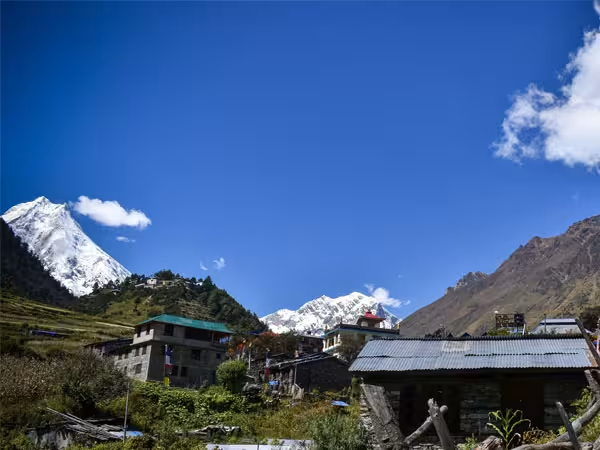
The Everest Base Camp trail passes through established villages in Nepal's Khumbu region. You'll walk through Phakding, Namche Bazaar, Tengboche, Dingboche, and Lobuche before reaching Everest Base Camp.
Teahouses, restaurants, and small shops line much of the route. But don't mistake an established trail for an easy trek.
Here are some practical challenges you'll need to consider:
Finding accommodation: Private rooms become harder to secure during busy trekking months, especially at higher villages.
Managing transportation: You need to arrange flights to Lukla and account for possible transfers through Manthali in Ramechhap.
Understanding the route: Daily walking distances, steep climbs, and changing trail conditions require preparation.
Recognizing altitude sickness: Headaches, nausea, dizziness, and unusual fatigue shouldn't be ignored.
Handling unexpected delays: Weather, flight cancellations, and accommodation shortages can disrupt your original itinerary.
A local guide helps you deal with these details. You can concentrate on walking while your guide coordinates the practical arrangements.
Is a Guided Everest Base Camp Trek Necessary for Solo Travelers?
For most solo travelers, a guide is not strictly necessary to reach Everest Base Camp, but it is the safer choice. Nepal’s trekking rules have changed several times since 2023, so confirm the current requirements with Nepal Tourism Board or your trekking agency before you book.
What the rules say
Trekkers on the Everest Base Camp route need two permits: the Sagarmatha National Park entry permit and the Khumbu Pasang Lhamu Rural Municipality permit. Many sources report that a TIMS card is not required for this route, unlike some other regions of Nepal. The government has also announced stricter guide requirements for several trekking areas, and enforcement differs from one region to the next. Because of this, check the latest rules shortly before departure rather than relying on an older article.
Why Choose a Guided Trek Instead of Organizing Everything Yourself?
The biggest advantage is having someone local to contact when plans change.
Here are five areas where professional support makes a difference:
Route knowledge: Your guide understands the trail, walking distances, and difficult sections.
Accommodation arrangements: A local operator can coordinate teahouse bookings and explain realistic room availability.
Flight coordination: Your team can help manage Kathmandu–Lukla or Ramechhap–Lukla transportation arrangements.
Altitude awareness: An experienced guide can recognize possible AMS symptoms and respond appropriately.
Local communication: Your guide can communicate with lodge owners, transport providers, and local support services.
For someone visiting Nepal for the first time, that support can make the trek considerably easier to manage.
Why Choose a Guided Everest Base Camp Trek as a Solo Traveler?
A guided trek gives solo travelers professional support without requiring them to travel with friends. You retain your independence while a local guide helps coordinate accommodation, transportation, route planning, and safety throughout the trek.
A solo trek doesn't mean you have to handle everything alone. You can still enjoy quiet walking days, spend time taking photographs, and move at a comfortable pace.
The difference is having someone who understands the Khumbu region.
1. Get Professional Guidance Along the Route
The Everest Base Camp trail is well established, but it isn't flat or predictable.
You'll cross suspension bridges, climb rocky paths, walk through exposed sections, and tackle long uphill stretches. Conditions also change as you gain elevation.
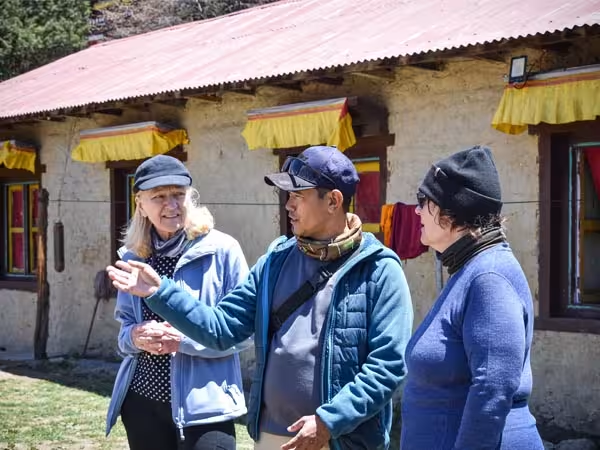
An experienced guide helps you maintain a sensible pace. They can explain local customs, introduce you to Sherpa culture, and share knowledge about the villages and monasteries along the route.
Don't underestimate that local knowledge. It adds context to the places you're visiting.
Most basic rooms have twin beds, mattresses, pillows, and blankets. Bathrooms are often shared, particularly in higher villages.
October and April are busy months. Private rooms can become difficult to find, especially in smaller settlements such as Lobuche.
A local operator can coordinate accommodation according to your itinerary and availability. However, don't assume you'll get a private room everywhere.
3. Get Help With Lukla Flights and Transfers
Here's one detail worth sorting out before you arrive in Nepal.
Lukla flights don't always depart from Kathmandu. During certain busy trekking periods, airlines operate flights from Manthali Airport in Ramechhap.
That means you'll need a road transfer from Kathmandu to Manthali, often with a very early departure.
Your trekking operator should confirm the departure airport, flight arrangements, and ground transportation before the trek begins.
4. Have Support When Plans Change
Mountain weather doesn't follow your itinerary.
A flight cancellation, illness, injury, or sudden accommodation shortage can change your plans. A local guide can communicate with service providers and help coordinate the next steps.
However, no trekking company can guarantee immediate solutions to every problem.
Helicopter evacuation depends on visibility, weather, aircraft availability, landing conditions, and medical circumstances. Be realistic about these limitations.
5. Spend More Time Enjoying the Trek
You don't travel to the Himalayas to spend every evening checking tomorrow's accommodation and transportation.
With a guided arrangement, your operator handles the agreed logistics. Your guide coordinates daily arrangements and helps you understand what to expect on the trail.
That leaves you with more time to enjoy the mountains.
Private Guide vs. Independent Trekking for Everest Base Camp
A private guided trek provides individual support, local knowledge, and help with trekking logistics. Independent trekking offers greater personal control over arrangements but requires you to manage more responsibilities yourself and comply with current local regulations.
Solo travelers generally consider two arrangements: hiring a private guide or organizing the trek independently.
Neither option suits everyone. Your experience, budget, and expectations should determine your choice.
Factor
Private guided trek
Independent trekking
Guide
Dedicated professional guide
No dedicated guide
Planning
Operator coordinates agreed arrangements
You manage arrangements
Accommodation
Arranged according to the itinerary
Self-arranged
Permits
Operator can coordinate documentation
You handle applicable requirements
Walking pace
Can be adjusted within the itinerary
Self-managed
Local knowledge
Available throughout the trek
Requires personal research
Emergency support
Guide and operator coordination
You arrange assistance
Flexibility
Flexible, subject to logistics
Greater personal control
Cost
Higher due to dedicated services
Depends on individual arrangements
Is Hiring a Private Guide Worth the Cost?
For many first-time visitors to Nepal, yes.
A private guide gives you individual attention and someone who understands the local trekking environment.
Consider hiring one if you:
Have limited high-altitude experience: Your guide can help monitor how you respond to increasing elevation.
Prefer your own walking pace: You can discuss daily walking preferences and rest stops.
Want more flexible arrangements: You can discuss itinerary adjustments with your guide.
Are visiting Nepal for the first time: Local knowledge helps with transportation, accommodation, and permits.
Prefer professional support: You have someone to contact when unexpected situations arise.
A private guide doesn't eliminate every risk or guarantee complete flexibility. Weather, altitude acclimatization, flight schedules, and lodge availability still determine what you can do.
How Much Does the Everest Base Camp Trek Cost for a Solo Traveler?
The 14-day Everest Base Camp trek with Sublime Trails costs US$1,350 per person. That price includes Kathmandu to Lukla flights, a licensed local guide, porter support, teahouse and lodge accommodation, three meals a day on the trail, and the required Sagarmatha National Park and local government permits. Solo travelers can book a guaranteed group departure at this price, or arrange a private trip on any date.
The final cost depends on what you add. Travel insurance, international flights, tips, and personal spending are not included.
What Determines the Cost of a Guided EBC Trek?
Here are 6 expenses to check before accepting a quotation.
Guide fees
Porter services
Accommodation
Food and drinking water
Domestic flights and transportation
Permits and entry fees
Does a Solo Traveler Pay a Single Supplement?
A single supplement is an additional accommodation charge that applies when you occupy a room that would otherwise be shared.
Booking a trek alone doesn't automatically mean you'll pay a single supplement. Your accommodation preference matters.
Consider these four situations:
Twin-room accommodation: You can book a trek as an individual and use a twin room, subject to the operator's arrangements and lodge availability.
Private-room request: If you want the room entirely to yourself, the lodge or operator may charge extra.
Peak-season accommodation: October and April bring high demand. Private rooms become harder to secure, especially in smaller villages.
Higher-altitude villages: Lobuche and Gorak Shep have limited accommodation compared with Namche Bazaar. You may have fewer room choices
Before booking, ask these questions:
Is a private room included?
Are shared rooms part of the arrangement?
What happens if a private room isn't available?
Are accommodation upgrades charged separately?
Are guide accommodation and meal expenses included in the quotation?
Get clear answers before paying a deposit. It prevents uncomfortable surprises during the trek.
Is the Everest Base Camp Trek Safe for Solo Travelers?
The Everest Base Camp trek is achievable for many properly prepared travelers, but altitude, weather, and remote terrain create genuine risks. A gradual itinerary, experienced guide, altitude awareness, and suitable travel insurance help reduce those risks, although no trekking operator can eliminate them completely.
Altitude is the biggest challenge.
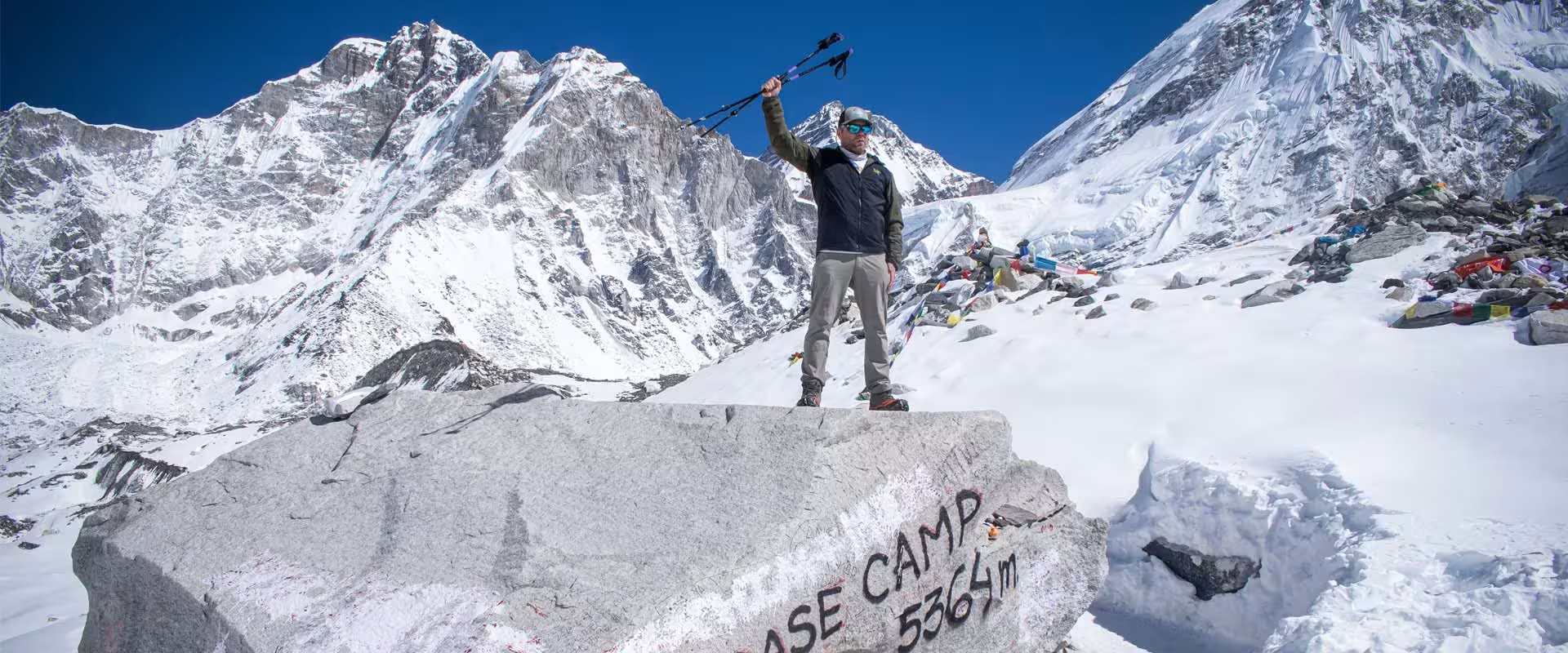
The trek starts at Lukla, approximately 2,860 meters above sea level, and reaches Everest Base Camp at approximately 5,364 meters.
The higher you climb, the less oxygen is available with each breath. Your body needs time to adjust.
Being physically fit helps with walking, but it doesn't protect you from altitude sickness.
Understanding Altitude Sickness on the Everest Base Camp Trek
Acute Mountain Sickness (AMS) can develop when your body struggles to adjust to reduced oxygen availability at altitude.
Watch for these symptoms:
Headache.
Nausea.
Loss of appetite.
Dizziness.
Unusual tiredness.
Difficulty sleeping.
Symptoms can appear around Namche Bazaar or during the higher sections of the trek.
Don't dismiss a headache as normal tiredness. Tell your guide.
We advice trekkers to take symptoms above 2,500 meters seriously. If symptoms appear, don't continue ascending. Worsening symptoms require medical assessment and descent when indicated.
Why Dingboche Is Important for Acclimatization
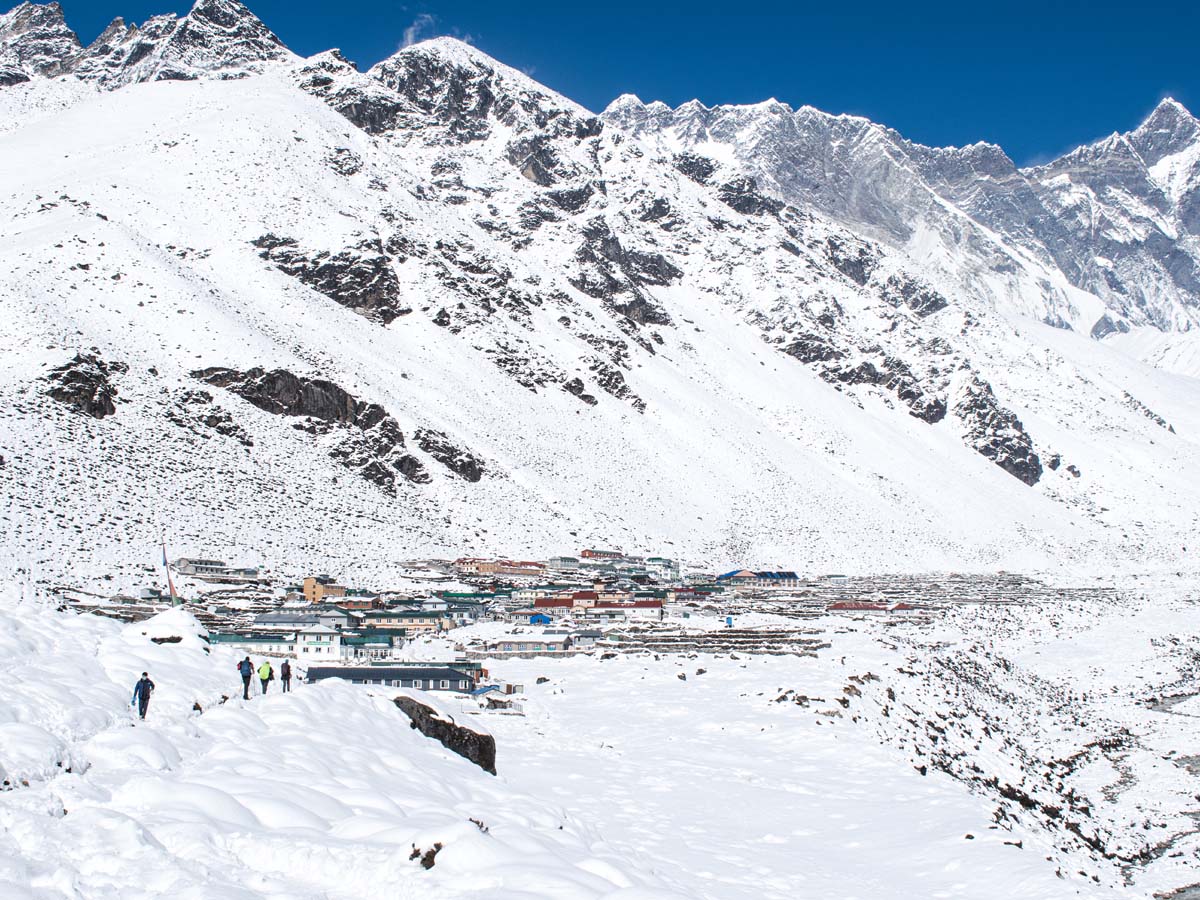
Dingboche (4,410 m) under fresh snow.
Dingboche sits at approximately 4,410 meters. It's one of the most important acclimatization stops on the standard Everest Base Camp itinerary.
Most properly planned itineraries include an additional night here before continuing toward Lobuche.
An acclimatization day gives your body more time to adjust. You don't need to spend the entire day inside the teahouse, either.
Many trekkers take a short hike toward Nangkartshang Peak or nearby viewpoints before returning to Dingboche to sleep at the same elevation.
The idea is simple: climb higher during the day, then return to sleep lower.
Your guide should pay attention to how you feel during this stage. If symptoms develop, reaching the next village isn't the priority.
What Happens at Lobuche?
Lobuche sits at approximately 4,940 meters.
By this point, ordinary walking can feel surprisingly difficult. You'll probably notice heavier breathing, slower recovery, and reduced energy.
This is another important point for monitoring altitude-related symptoms.
An oximeter measures blood oxygen saturation and pulse rate. It's a useful tool, but it doesn't tell the whole story.
A single oxygen reading cannot determine whether you're safe to continue. Your symptoms, overall condition, and medical assessment matter just as much.
A responsible guide should never use a satisfactory oximeter reading as the only reason to continue ascending.
How Does Sublime Trails Approach Altitude Safety?
A properly managed guided trek should include these measures:
Gradual ascent: The itinerary should allow enough time for acclimatization.
Regular symptom checks: Your guide should ask how you're feeling rather than relying only on your walking speed.
Early AMS recognition: Headaches, nausea, dizziness, and unusual fatigue need attention.
Oximeter monitoring: Readings can support an overall assessment but shouldn't replace clinical judgment.
Clear decisions: Sometimes the right decision is to rest, stop ascending, or descend.
Emergency coordination: Your guide and operator should understand how to contact local medical support.
Our priority should always be your health, not reaching Everest Base Camp on a fixed date.
What Happens If You Need Emergency Evacuation?
Serious altitude illness or an injury can require evacuation.
Helicopter rescue is one possible option, but it isn't available in every situation. Weather, visibility, aircraft availability, landing conditions, and medical circumstances all affect the decision.
Before traveling, purchase insurance that explicitly covers:
High-altitude trekking to at least the maximum elevation of your itinerary.
Emergency helicopter evacuation.
Medical treatment.
Repatriation where applicable.
Keep your insurance details and emergency contact information accessible throughout the trek.
What Accommodation Can Solo Travelers Expect on the Everest Base Camp Trek?
Teahouses are the main accommodation option along the Everest Base Camp route. You'll generally stay in simple twin rooms, with shared bathroom facilities becoming more common at higher elevations. Private rooms are available at some lodges, but October, April, and higher-altitude villages can make them difficult to secure.
Don't expect hotel-style comfort throughout the trek.
Teahouses are built to provide basic shelter in a remote mountain environment. Facilities vary considerably between villages.
What Are Teahouse Rooms Like?
Most standard rooms have:
Two single beds.
Mattresses and pillows.
Basic blankets.
Limited furniture.
Shared bathroom facilities in many lodges.
Some lodges in Namche Bazaar offer private bathrooms and better facilities. However, conditions become more basic as you approach Everest Base Camp.
You should also budget for certain extras:
Hot showers: Often charged separately, especially at higher elevations.
Wi-Fi: Usually available for an additional fee, although connections can be unreliable.
Device charging: May cost extra at some lodges.
Heated dining areas: Common gathering spaces, but don't expect your bedroom to be heated.
Above Lobuche, the dining room can be cold. You'll probably appreciate a warm layer while eating dinner.
Can Solo Travelers Get Private Rooms?
Yes, some teahouses offer private rooms.
However, availability depends on the lodge, season, and number of trekkers on the trail.
October and April are particularly busy. Private rooms can become difficult to arrange, especially in smaller settlements.
If a private room is important to you, discuss it before booking.
Your operator can explain where private accommodation is realistic and where shared facilities are more common.
Should You Expect Luxury Accommodation on the Everest Base Camp Trek?
No, standard Everest Base Camp treks use basic, family-run teahouses rather than luxury hotels though private luxury upgrades let you stay in heated en-suite lodges and skip the coldest overnight stop. Above 4,000 meters, standard trekking accommodation gets bare-bones fast. Our Sublime Trails Everest Base Camp Luxury Trek provides you the luxury experiences worth considering.
Best Time for Solo Travelers to Trek to Everest Base Camp
Spring and autumn are generally the best seasons for the Everest Base Camp trek. April and October are particularly popular because they often offer favorable trekking conditions and good mountain visibility. Winter and monsoon treks are possible, but they require greater preparation for cold, snow, rain, and flight disruptions.
The right season depends on your weather preferences and how much flexibility you have with travel dates.
Spring: March to May
Spring is one of the busiest seasons in the Everest region.
Temperatures gradually become warmer, and the lower sections of the trail start showing signs of spring.
March: Cold mornings and occasional snowfall at higher elevations.
April: Generally favorable trekking temperatures and high demand for accommodation.
May: Warmer conditions, with increasing cloud and possible afternoon weather changes.
Spring suits solo travelers who prefer relatively comfortable daytime temperatures and good opportunities for mountain views.
Autumn: September to November
Autumn is another excellent season for the Everest Base Camp trek.
The monsoon gradually clears, leaving cleaner mountain views and generally favorable trekking conditions.
September: Conditions improve as the monsoon retreats, although early-season rain remains possible.
October: One of the most popular months, with high demand for flights and teahouses.
November: Generally clear conditions, but temperatures drop considerably at higher elevations.
If you're planning an October trek, arrange flights and accommodation early.
Winter: December to February
Winter brings colder conditions and fewer trekkers.
Snowfall can affect higher sections of the route. Temperatures drop considerably at night, particularly around Lobuche and Gorak Shep.
You'll need proper insulation, warm sleeping arrangements, and a carefully planned itinerary.
Winter trekking isn't simply a quieter version of the autumn trek. Conditions can be much harsher.
Monsoon: June to August
Monsoon is generally less favorable for the classic Everest Base Camp trek.
Rain, cloud cover, and poor visibility can affect lower-altitude travel and domestic flights.
The Everest region receives less rainfall than some other parts of Nepal, but that doesn't remove the risk of weather disruptions.
For most first-time solo trekkers, spring and autumn are more practical choices.
How Lukla Flight Delays Affect Solo Travelers
Lukla flights deserve special attention when planning an Everest Base Camp trek. Weather and visibility can delay or cancel flights to Tenzing-Hillary Airport, affecting your trekking schedule. During certain busy periods, flights operate from Manthali Airport in Ramechhap, so you may also need an early road transfer from Kathmandu.
Here's what actually matters when arranging your travel.
Do Lukla Flights Operate From Kathmandu or Ramechhap?
The departure airport depends on the season and airline operations.
During certain peak trekking periods, flights operate from Manthali Airport in Ramechhap rather than Kathmandu's Tribhuvan International Airport.
The road journey from Kathmandu to Manthali takes several hours. You may need to leave Kathmandu very early in the morning to catch your flight.
Your trekking operator should confirm the departure airport and transfer arrangements before your trip.
What Happens If Your Lukla Flight Is Canceled?
A canceled flight can affect your entire trekking schedule.
Depending on weather and availability, you may need to wait for another flight or adjust your itinerary.
A helicopter transfer may sometimes be possible, but it involves additional costs and isn't guaranteed.
We recommend keeping at least one or two buffer days in your Nepal travel schedule, particularly before your international departure.
Don't book your international flight immediately after your expected return from Lukla.
A little extra time can prevent one weather disruption from affecting your entire travel plan.
Why Choose Sublime Trails for Your Guided Everest Base Camp Trek?
At Sublime Trails, we're based in Kathmandu and organize trekking trips across Nepal. We help solo travelers plan their Everest Base Camp trek with local guidance and coordinated trekking arrangements. Our focus is on clear communication, practical preparation, and realistic expectations about conditions in the Khumbu region.
Planning from another country can feel complicated. You need to understand the route, permits, flights, accommodation, and what to pack.
We help bring those arrangements together.
Local Knowledge and Trekking Experience
Our Kathmandu-based team understands the logistics involved in organizing an Everest Base Camp trek.
From transportation arrangements to teahouse accommodation and seasonal trail conditions, local knowledge helps us plan the practical details.
We also understand that mountain conditions can change. Weather, accommodation availability, and altitude-related concerns can all affect the original plan.
Professional Guide Support
A professional guide plays a central role in a guided Everest Base Camp trek.
Your guide helps coordinate daily arrangements, provides local knowledge, and monitors how you're responding to the altitude.
We believe safety decisions should always take priority over completing an itinerary on schedule.
Organized Trekking Logistics
Planning a trek from another country involves several separate arrangements.
These include:
Airport arrival and departure planning.
Domestic flights and ground transfers.
Trekking permits.
Teahouse accommodation.
Guide and porter arrangements.
Daily trekking logistics.
Working with a local operator gives you one point of contact for coordinating the services included in your trek.
Clear Trekking Costs
Before confirming your trek, you should know what's included and which expenses remain your responsibility.
We recommend discussing accommodation preferences, guide services, porter requirements, transportation, and insurance before booking.
This helps avoid misunderstandings once you arrive in Nepal.
Plan Your Everest Base Camp Trek With Sublime Trails
You don't need to travel with friends to experience the Everest region.
If you're planning to trek to Everest Base Camp alone, our Kathmandu team can help you understand the available guided arrangements and prepare for the practical requirements.
Planning an Everest Base Camp trek on your own? Contact Sublime Trails with your preferred travel dates, trekking experience, and accommodation preferences. We'll help you understand the arrangements, estimated costs, and preparation required before you book.