Lobuche Nepal is a high-altitude settlement in the Khumbu region, where the Everest Base Camp trek begins to feel like a journey into the heart of the Himalayas. Sitting at approximately 4,910 to 4,940 metres above sea level, Lobuche is an important overnight stop between Dingboche and Gorak Shep.
For many trekkers, reaching Lobuche is a turning point. The green landscapes of the lower Khumbu have given way to rocky slopes, glacial terrain and exposed mountain valleys. The air is thinner, temperatures drop sharply after sunset, and even a short walk can require more effort than expected.
However, Lobuche is more than a place to sleep before continuing towards Everest Base Camp. Its location beside the Khumbu Glacier, the memorials above Thukla and its proximity to high-altitude research facilities make it an interesting destination in its own right.
If you are planning the Everest Base Camp trek, this guide explains what to expect on the trail, how to prepare for your overnight stay, what comes next and which decisions matter most at this elevation.
Lobuche East vs Lobuche West
Lobuche East (6,119 m) is the more popular climbing objective, offering a challenging high-altitude ascent with glacier travel and some technical sections. Lobuche West (approximately 6,145 m) is less frequently climbed and generally more technically demanding, requiring stronger mountaineering skills and experience. Although both peaks share the Lobuche name, they have different climbing routes and difficulty levels. For most trekkers looking to add a Himalayan summit to their Everest Base Camp adventure, Lobuche East is the more common choice, with proper preparation and climbing support.
Where Is Lobuche Nepal on the Everest Base Camp Route?
Lobuche lies in the Solukhumbu District of northeastern Nepal, within Sagarmatha National Park. The settlement sits alongside the lateral moraine of the Khumbu Glacier, a ridge of rocky debris deposited along the glacier's edge.
Most trekkers reach Lobuche after walking from Dingboche or Pheriche. The standard route continues towards Gorak Shep, from where trekkers visit Everest Base Camp or climb Kala Patthar for mountain views. Check our guide to route map of Everest Base Camp Trek for more information.
Here is how the main stops fit together.
Location
Approximate elevation
Main purpose
Dingboche
4,410 m
Acclimatization and preparation
Thukla
Around 4,620 m
Rest stop before the memorial climb
Lobuche
4,910–4,940 m
Overnight stop
Gorak Shep
Around 5,160 m
Base for Everest Base Camp and Kala Pattha
Everest Base Camp
Around 5,364 m
Main trekking destination
Kala Patthar
Around 5,545 m
High-altitude viewpoint
Elevations are approximate and can vary by mapped location and source. Kala Patthar's summit elevation is also reported differently across references.
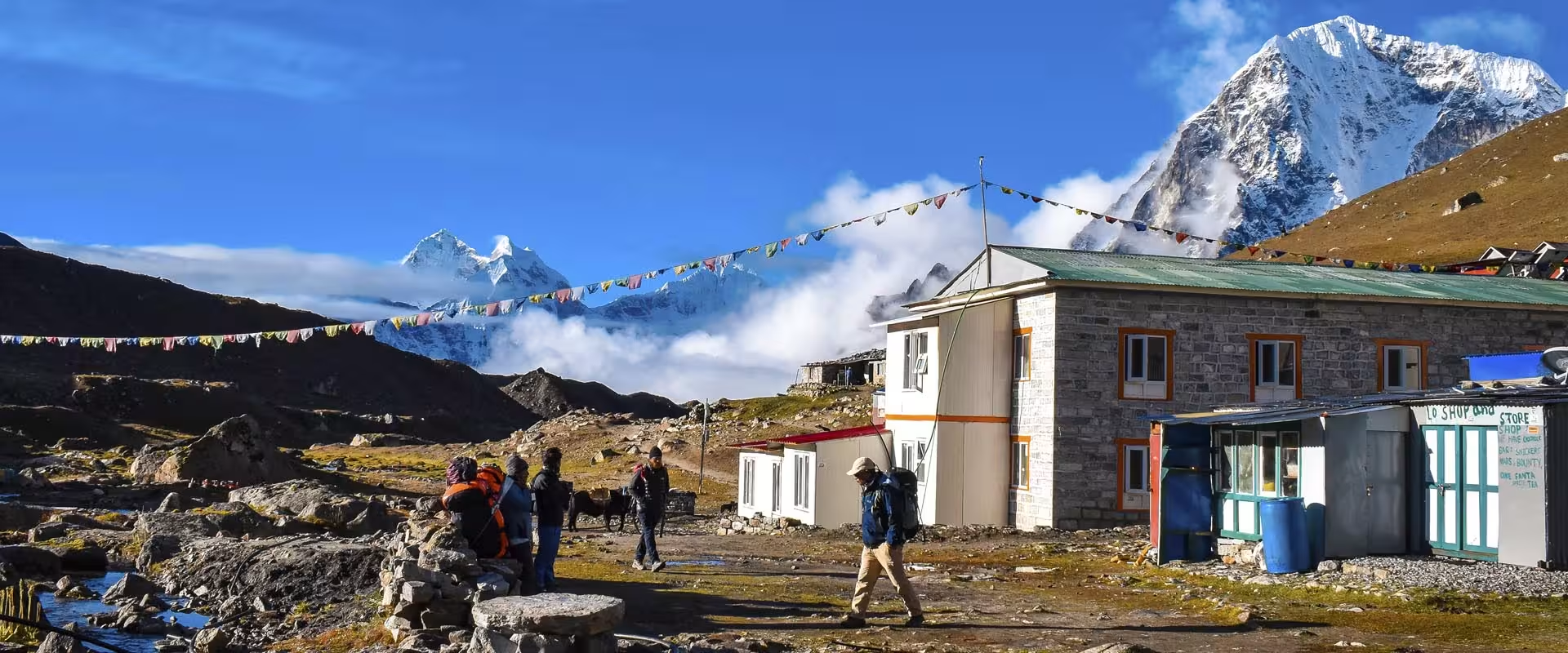
Lobuche is often described as a village, but visitors should expect a small cluster of trekking lodges rather than a large settlement with extensive shops and services. Most facilities cater to trekkers and climbers travelling through the upper Khumbu.
The Walk from Dingboche to Lobuche: What to Expect
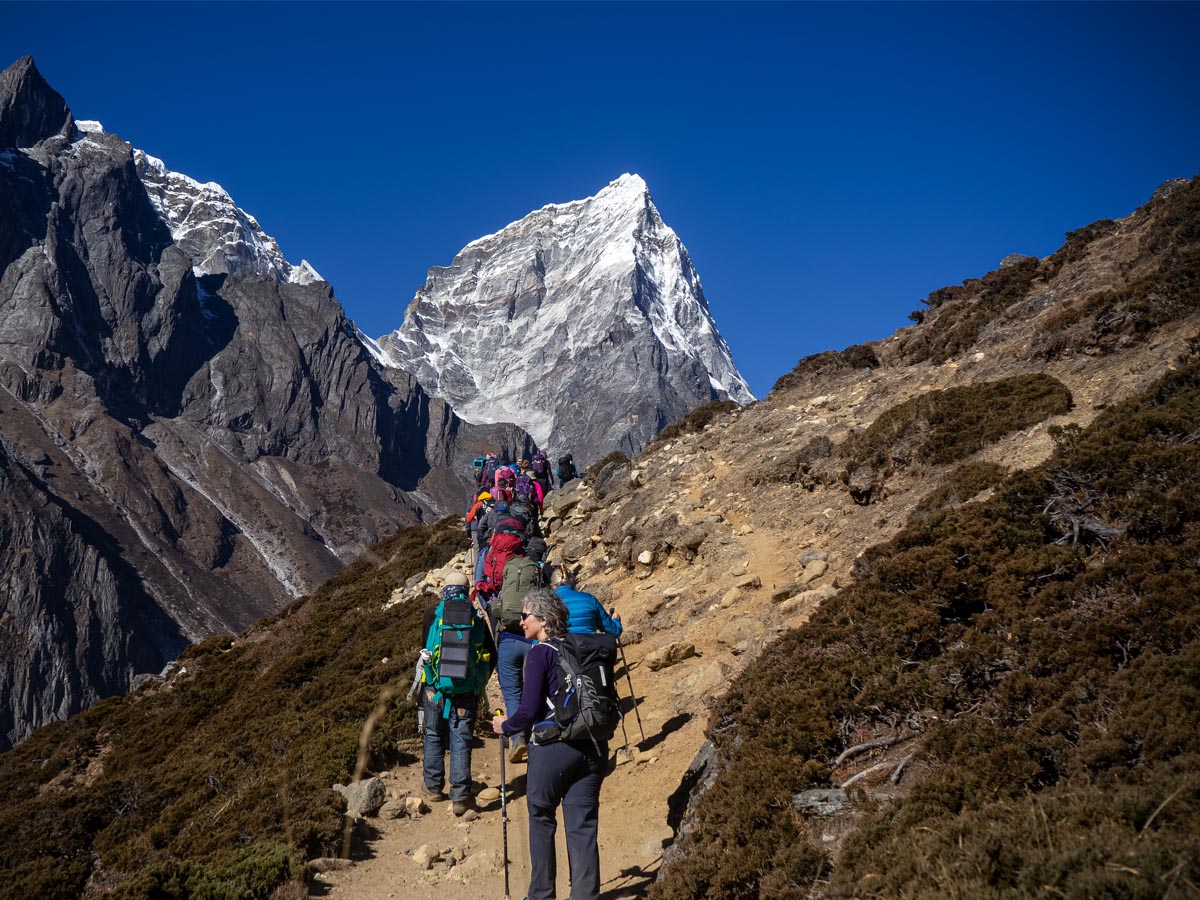
The trek from Dingboche to Lobuche typically takes around five to six hours, although your walking pace, rest stops, weather and itinerary can change the timing. The Nepal Tourism Board describes this section as an approximately six-hour walk.
The day becomes more demanding as you approach Thukla and climb towards the memorial area.
1. From Dingboche to Thukla
The trail leaves Dingboche and follows an increasingly exposed landscape towards Thukla, also known as Dughla. The surroundings become rockier, and vegetation becomes more limited as you gain elevation.
Thukla is a useful place to take a break, eat something and prepare for the climb ahead. Rather than rushing through this stop, allow yourself time to recover before continuing.
2. The Climb to the Thukla Memorials
Beyond Thukla, the trail climbs towards a collection of stone memorials dedicated to mountaineers who lost their lives in the Himalayas. The ascent can feel particularly strenuous because you are already walking at a high elevation.
Pause when needed and take time to appreciate the memorials respectfully. This section offers an important reminder that the Everest region is not only a trekking destination but also an environment where mountaineering carries serious risks.
3. The Final Stretch to Lobuche
After the memorial area, the route continues across exposed, rocky terrain towards Lobuche. The landscape is stark compared with the lower Khumbu, with the surrounding mountains and glacial landforms becoming increasingly prominent.
By the time you arrive, you may feel tired even if the day's distance seems manageable on paper. At this altitude, a slower pace is sensible. Once you reach your lodge, prioritise food, fluids, warmth and rest rather than unnecessary activity.
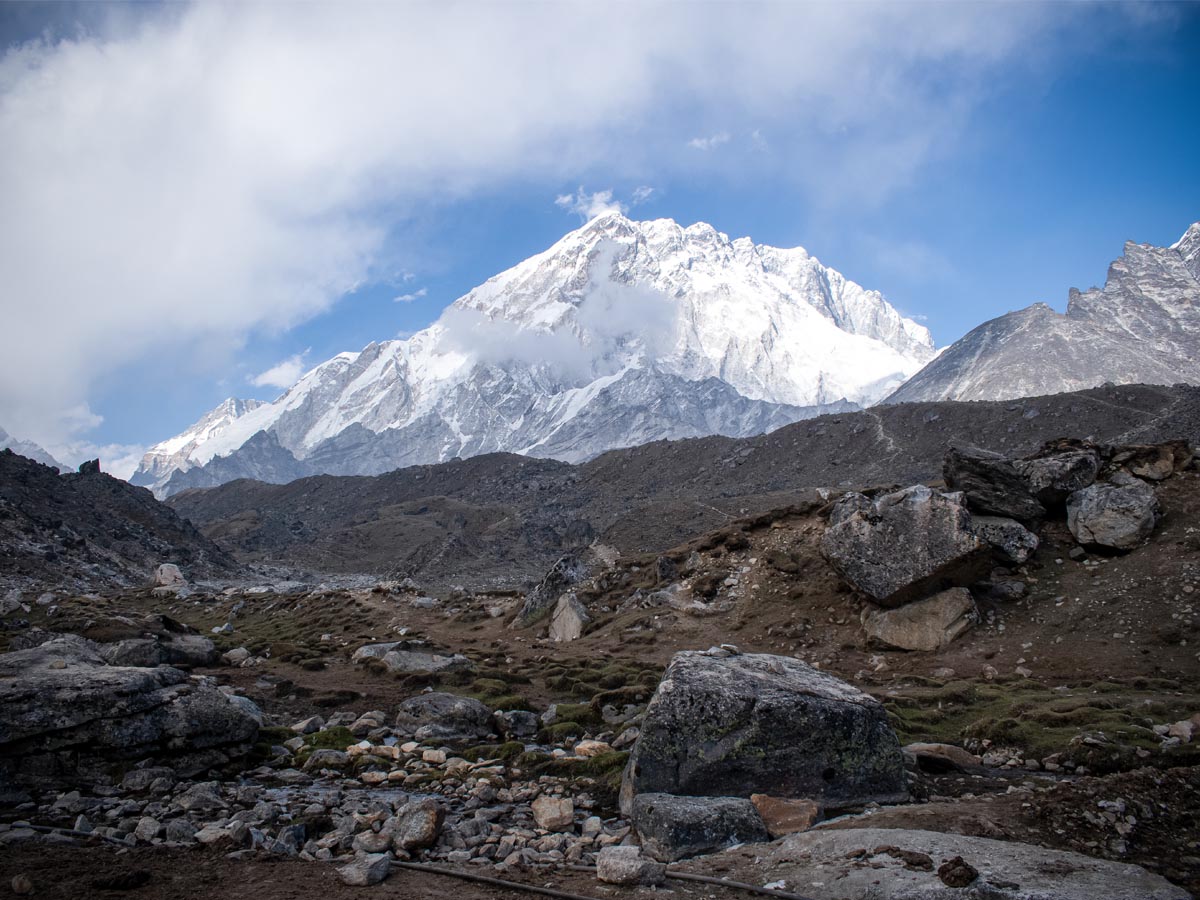
View of Mount Nuptse 7861m from Lobuche
Your First Night in Lobuche: What Should You Prepare For?
Accommodation in Lobuche mainly consists of teahouses and trekking lodges. Rooms and facilities are generally basic, and availability depends on the property and season.
Do not assume that every lodge offers the same services. Electricity, device charging, hot showers, Wi-Fi and room heating may be limited, unavailable or subject to additional charges.
A little preparation can make your stay more comfortable.
Keep warm clothing accessible. You may need your insulated jacket, thermal layers, warm socks and gloves soon after sunset.
Charge essential devices when possible. Keep your phone, headlamp and power bank ready for the next morning. Cold conditions can also reduce battery performance.
Carry enough cash. Do not rely on card payments or dependable internet access for everyday purchases.
Eat a proper evening meal. A balanced meal helps you maintain energy for the following day. Choose familiar foods that you tolerate well.
Prepare your daypack before sleeping. Keep your water, snacks, gloves, headlamp and essential personal items easy to reach.
Ask about facilities early. Confirm charging costs, bathroom arrangements and breakfast timing with your lodge rather than assuming they are included.
Sleep can be lighter at high altitude, and you may wake more often than usual. Do not assume that a poor night's sleep automatically means you have altitude sickness, but pay attention to other symptoms and report concerns to your guide.
Leaving Lobuche: Gorak Shep, Everest Base Camp or Kala Patthar?
The next stage of your trek requires a clear plan because Gorak Shep, Everest Base Camp and Kala Patthar serve different purposes.
Gorak Shep: Your next overnight stop
The walk from Lobuche to Gorak Shep generally takes around three hours, according to the Nepal Tourism Board. The route crosses exposed glacial terrain, and the altitude can make the walk feel harder than the distance suggests.
Gorak Shep has basic accommodation and is the usual base for the final excursion to Everest Base Camp.
Everest Base Camp: The main trekking destination
From Gorak Shep, the trail continues over rocky glacial terrain towards Everest Base Camp. The return excursion commonly takes several hours, depending on conditions and walking pace.
The route is not a simple, level walk. Follow your guide's instructions and allow enough time for the return journey.
Kala Patthar: A high-altitude viewpoint
Kala Patthar is a separate ascent above Gorak Shep. Trekkers often choose it for its panoramic views towards Mount Everest and the surrounding peaks.
The climb is steep and physically demanding at this elevation. Whether it fits your itinerary depends on your health, acclimatization, weather and available time.
You do not necessarily need to visit both Everest Base Camp and Kala Patthar on the same day. Many itineraries schedule the Base Camp excursion and Kala Patthar separately to manage walking time and fatigue.
Before booking, check how your chosen itinerary arranges these stages. A sensible schedule should allow flexibility if weather or health conditions affect your progress.
Altitude at Lobuche: When Should You Continue or Stop?
At nearly 5,000 metres, altitude is one of the most important considerations during your stay in Lobuche. Your body receives less oxygen with each breath than it would at sea level, and physical exertion becomes more demanding.
Acute mountain sickness (AMS) can cause headache, nausea, dizziness, fatigue and loss of appetite. Symptoms can develop after ascent and may become noticeable during the first night at a higher elevation.
The most important rule is not to treat altitude symptoms as something you must simply endure.
If you feel well: Continue according to your planned itinerary, maintain a comfortable pace and tell your guide if your condition changes.
If you develop possible altitude sickness: Stop ascending, inform your guide and seek an appropriate assessment. Do not continue higher while symptoms persist or worsen.
If symptoms become severe: Confusion, difficulty walking straight, unusual drowsiness or breathlessness at rest can indicate a serious emergency. Urgent medical assistance and descent are needed.
Supplemental oxygen may be part of emergency treatment when available, but it is not a substitute for appropriate assessment and descent when indicated.
Acclimatization days earlier in the itinerary help your body adjust, but they cannot eliminate the risk of altitude sickness. Follow a gradual ascent and discuss any history of altitude illness or relevant medical concerns with a qualified healthcare professional before your trek.
A Lesser-Known Part of the Lobuche Area: The Pyramid Laboratory
One interesting feature of the wider upper Khumbu region is the Pyramid International Laboratory-Observatory, a scientific research facility at approximately 5,050 metres.
The facility supports research into subjects including atmospheric science, climate change, environmental monitoring and human physiology at high altitude. The EvK2CNR research organization reported renewed international research activity at the observatory in 2026.
This adds another dimension to the landscape surrounding Lobuche. The region is not only important for trekking and mountaineering; it also provides an environment for studying how people, glaciers and ecosystems respond to extreme conditions.
However, do not treat the laboratory as a standard tourist attraction. Access arrangements and research activities may vary, so check with the relevant organisation before considering a visit.
Plan Your Everest Base Camp Trek with Sublime Trails
Lobuche Nepal offers an important perspective on the Everest Base Camp journey. It is where the terrain becomes more exposed, the effects of altitude become more noticeable and careful planning matters more than ever.
A well-designed itinerary should account for acclimatization, realistic walking times, weather conditions and flexibility if someone becomes unwell. Reaching Everest Base Camp is a memorable goal, but the journey should never come at the expense of your safety.
If you are planning this trek, explore the Everest Base Camp trekking options from Sublime Trails and compare itineraries before choosing one. Check the overnight stops, acclimatization schedule, inclusions and arrangements for unexpected delays.
With the right preparation and a realistic plan, Lobuche becomes more than a place to spend the night. It becomes a meaningful stage of your journey through Nepal's high Himalayas.
Lobuche Through a Trekking Guide’s Eyes: Trail Advice, Accommodation and Altitude Safety
1. The trail: Dingboche to Lobuche
Question: What do trekkers usually find most challenging between Dingboche and Lobuche, and why?
Guide’s answer:
The biggest challenge between Dingboche and Lobuche is usually the combination of altitude, a long walking day and the changing terrain. Once leaving Dingboche behind, the trail climbs gradually towards Dughla (Thukla) where most trekkers stop for a break before the steeper ascent to the Thukla Pass memorials.
This uphill section can feel surprisingly challenging. Even physically fit trekkers find that they need to walk at a slower pace because of the decrease in oxygen at this altitude. I always advise people to walk at a pace that suits them (not a race!) and to take frequent breaks.
After the memorials, the trail gradually slopes towards Lobuche but the rocky terrain and cold exposure can leave the body feeling very tired. By this point, trekkers have been climbing for several days and this fatigue tends to build up.
My advice is simple: take your time on the climb and drink regularly – there's no need to try and walk as fast as you did at lower altitudes. What's important is that you're able to comfortably continue upwards and reach Lobuche.
2. The overnight stay: What to expect in Lobuche
Question: What should trekkers know about staying in Lobuche that they mightn't expect?
Guide’s answer:
One thing that surprises many trekkers is that the accommodation in Lobuche can be basic and quite cold compared with places such as Namche Bazaar. Lobuche is a small, high-altitude settlement and the lodges are focused on providing trekkers with something to eat, rest and sleep in on their way towards Everest Base Camp. The dining room tends to be the warmest shared space (especially if the stove is on) but bedrooms can be extremely cold and blankets are generally provided. I recommend using a suitable sleeping bag rather than relying on the bedding provided by the lodge.
Another thing for trekkers to understand is that facilities become more limited as you go higher. Hot showers, charging devices and Wi-Fi may be available at some lodges but they can come at an extra cost and are not always reliable. Weather and season can also impact on the availability of accommodation on busy seasons.
I usually encourage trekkers to organise their essential belongings before dinner, keep a warm layer close by and charge their devices as much as possible. It's not ideal to be having to rummage through your duffel bag in a cold room to try and find your charger or something else you'll need.
Most importantly, don't expect a particularly comfortable night. The purpose of staying in Lobuche is for the trekkers to be able to rest as well as possible before an even more challenging day at a higher altitude.
3. The next morning: Preparing for Gorak Shep
Question: What do you normally advise trekkers to prepare before leaving Lobuche for Gorak Shep?
Guide’s answer:
I always recommend that they prepare the majority of things the evening before. The walk from Lobuche to Gorak Shep takes trekkers higher once again and many continue to Everest Base Camp later that day depending on their itinerary, weather and physical condition.
Make sure that your daypack includes warm layers, a waterproof jacket and trousers, gloves, a hat, sunglasses, sunscreen, water, snacks and any personal medication. The weather can be changeable and winds can intensify, making the trail feel much colder than expected. I also tell trekkers to make sure that their camera, phone and spare batteries are kept safe from the cold. Batteries find that they lose their charge more quickly in cold weather and you'll likely want your camera ready for the mountain views along the way.
Have breakfast and fill your water bottles and check that your footwear is comfortable. The terrain beyond Lobuche is a much rockier and uneven path so it's more about being able to get a good footing than walking speed.
Finally, be honest about your guide and how you slept and how you feel that morning. A headache or nausea, unusual weakness (not related to fatigue) or dizziness should not be ignored just because Everest Base Camp is getting closer.
Reaching Gorak Shep or Everest Base Camp isn't worth it if it comes at the expense of your health. If someone is showing signs of altitude sickness, the plan may need to change.
4. Altitude and safety: Recognising warning signs
Question: What warning signs do you watch for at this stage, and how do you respond when a trekker feels unwell?
Guide’s answer:
Between Dingboche, Lobuche and Gorak Shep, I always watch out for changes in how trekkers feel and behave. At these elevations, altitude sickness is a genuine risk for even the fittest and those who have trekked at a high altitude before.
Common warning signs include a headache, nausea, loss of appetite, dizziness, unusual tiredness and difficulty sleeping. Having just one of these is not a firm indication of altitude sickness but symptoms that develop once gaining elevation are definitely something to be taken seriously.
If a trekker tells me that they feel unwell, I stop and assess the situation rather than encouraging them to continue as normal. I ask them about their symptoms and check to see if they are getting worse and watch their breathing, balance, alertness and overall condition.
If symptoms suggest that the trekker has mild altitude sickness, they shouldn't be ascending further until they're recovered. If symptoms are persisting or getting worse, the best option is to descend.
There are more serious warning signs to be aware of, including confusion, difficulty walking in a straight line or breathing freely at rest. These are indicators of a potentially life-threatening altitude illness and the priority is to immediately descend, get emergency help and supplemental oxygen (if available). We don't wait to see whether they start to feel better the next morning.
I always remind trekkers that it's not a weakness to admit that they feel unwell. A responsible guide would rather change the itinerary than put someone's health at risk to stick to a schedule.
5. Personal insight: What every first-time trekker should know about Lobuche
Question: What is one thing about Lobuche that you wish every first-time Everest Base Camp trekker knew?
Guide’s answer:
I wish every first-time trekker knew that reaching Lobuche is a major step on your journey to Everest Base Camp but it's not the time to become overconfident.
By the time you arrive, you've already walked through beautiful Sherpa villages, crossed over suspension bridges and climbed well above 4,000 metres. You may feel proud of your progress and excited about getting closer to Everest Base Camp. That's completely understandable but your body is working much harder than it was at the beginning of the trek.
Lobuche is around 4,940 metres above sea level and the next stage of the trek takes you higher still. You might wake up feeling strong or you might have had a poor night's sleep and feel unusually tired. Both are possible and how you feel is just as important as how fast you were walking the day before.
My advice is to enjoy the experience and not to rush but to eat well, keep warm and stay hydrated and to inform your guide about any symptoms (even if you don't think they're too bad). Listen to your body and be prepared to change your plans if necessary. The real achievement is not simply reaching Everest Base Camp but completing the journey safely and being able to enjoy the experience along the way.
Frequently Asked Questions About Lobuche Nepal
How high is Lobuche Nepal?
Lobuche is approximately 4,910 to 4,940 metres (16,109 to 16,207 feet) above sea level. The exact elevation depends on the reference point and source.
How long does it take to walk from Dingboche to Lobuche?
The walk generally takes around five to six hours. The climb above Thukla is a demanding section, so allow extra time if you need frequent breaks or conditions slow your progress.
How long does it take to reach Gorak Shep from Lobuche?
The walk typically takes around 3 hours, although pace, weather and trail conditions affect the timing. The route crosses exposed rocky terrain at high altitude.
Can you get altitude sickness in Lobuche?
Yes. Lobuche's elevation puts trekkers at risk of acute mountain sickness. Headache, nausea, dizziness and fatigue can be warning signs. Stop ascending and seek advice if symptoms develop, and arrange urgent assistance and descent for severe symptoms.
Are there teahouses in Lobuche?
Yes. Lobuche has trekking lodges and teahouses that provide basic accommodation and meals. Facilities vary, and services such as hot showers, Wi-Fi and device charging may cost extra or be unavailable.
What is the difference between Lobuche village and Lobuche Peak?
Lobuche village is a settlement on the Everest Base Camp trekking route. Lobuche Peak refers to a separate mountaineering objective, with Lobuche East commonly climbed at approximately 6,119 metres. A standard Everest Base Camp trek does not require a summit attempt.
Do you need an extra acclimatization day in Lobuche?
Not every trekker needs the same itinerary. Acclimatization should be planned across the entire ascent, with sufficient time at appropriate elevations. If you develop altitude symptoms, do not assume that spending another night at the same altitude is enough to make it safe to continue.