High in the Everest region of Nepal, beyond the familiar villages and green valleys of the Khumbu, lies Gorakshep, a small settlement surrounded by some of the world's highest mountains. At 5,164 meters (16,942 feet), it is the final teahouse stop on the classic Everest Base Camp trekking route and the starting point for two of its most anticipated experiences: Everest Base Camp and Kala Patthar.
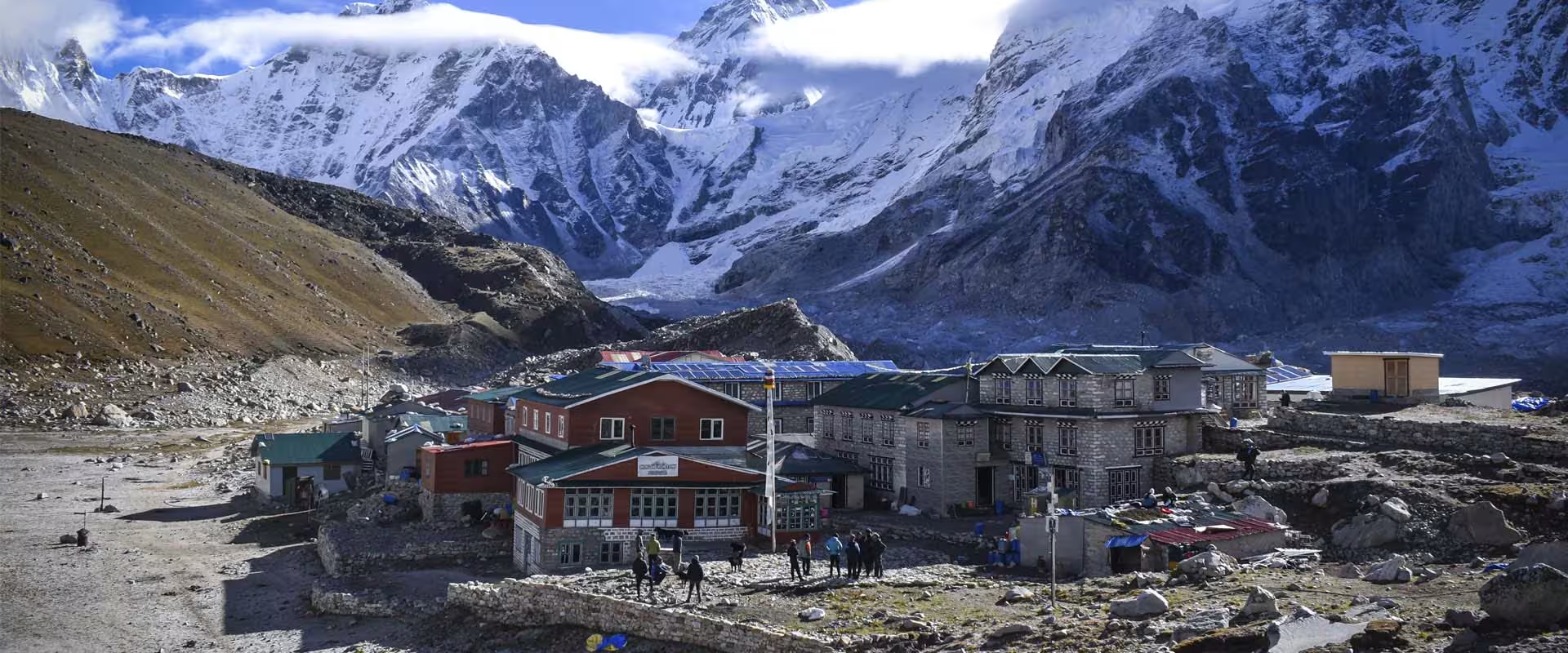
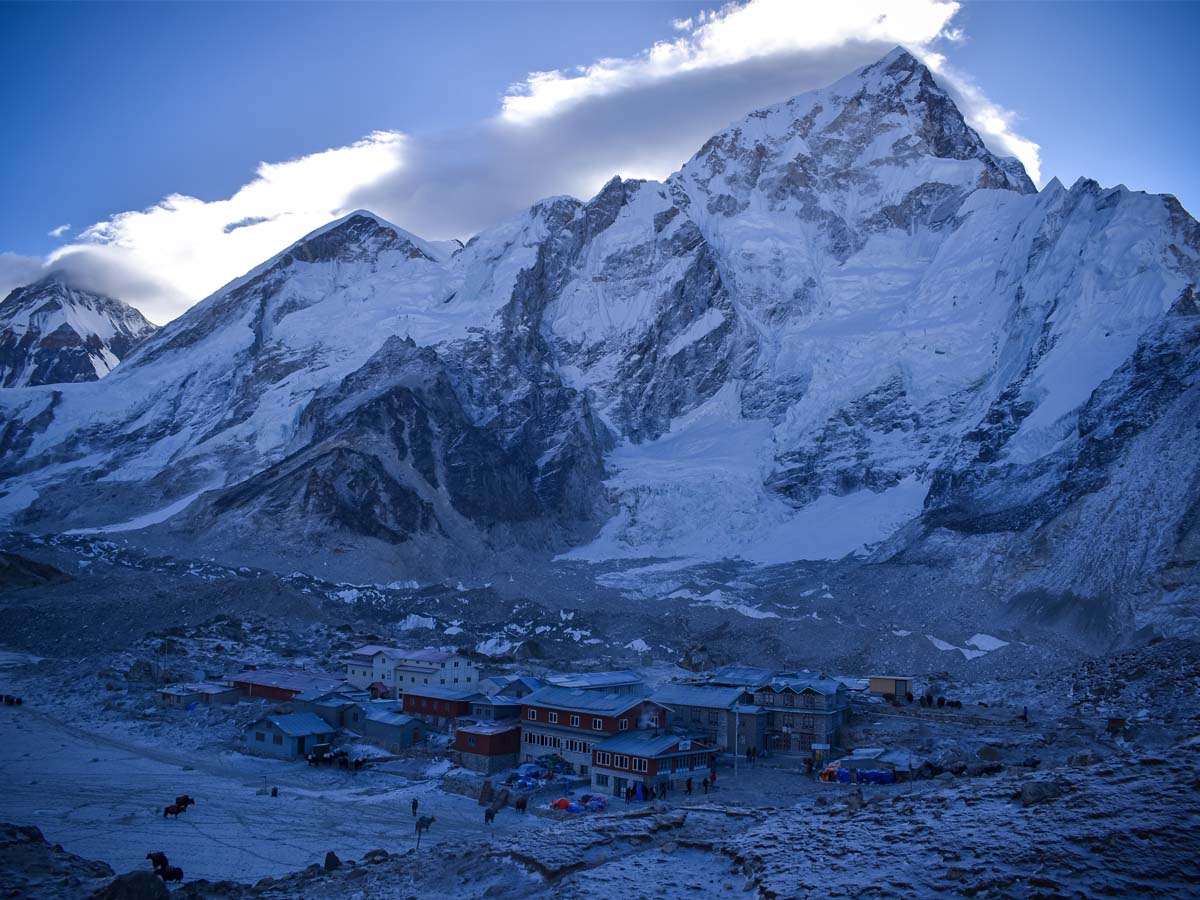
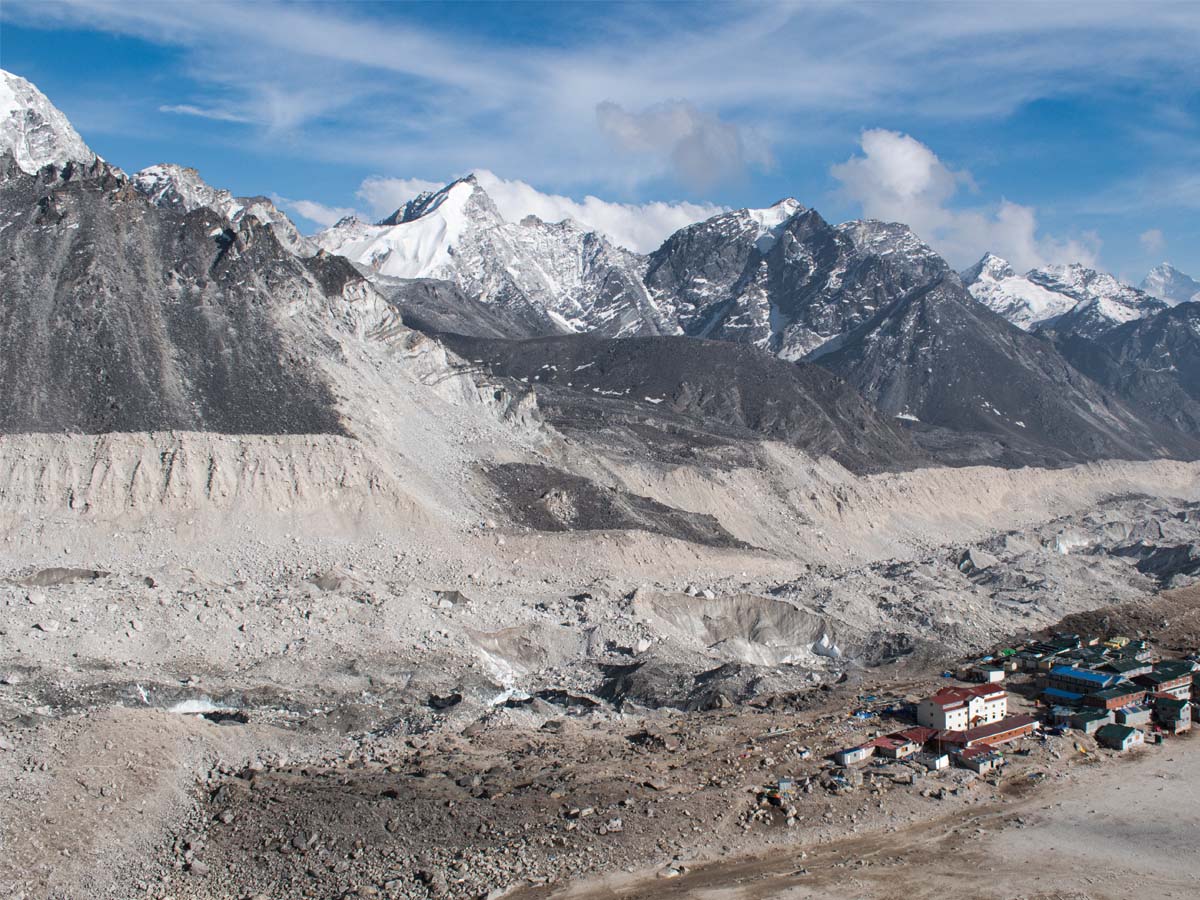
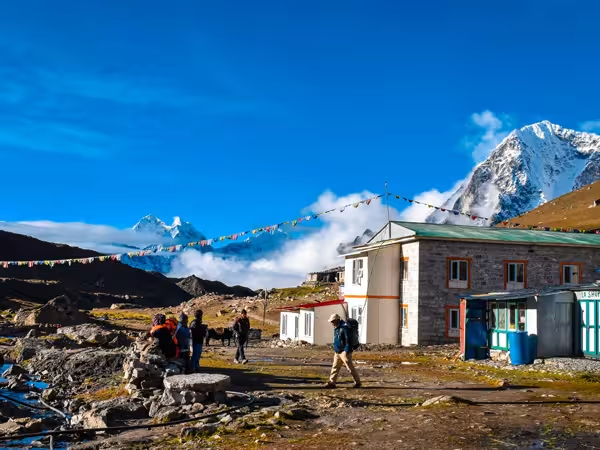
Gorakshep is unlike the villages trekkers pass through earlier in their journey. There are no bustling markets or comfortable mountain resorts. Instead, a handful of teahouses sit on a broad, sandy plateau, surrounded by glaciers, rocky slopes, and towering Himalayan peaks.
Reaching this remote settlement takes days of trekking, gradual acclimatization, and determination. The air is thinner, nights are colder, and even ordinary activities require more energy. Yet the reward is extraordinary: an opportunity to experience the Himalayas at their most dramatic, with Everest Base Camp only a few hours away.
This guide explores what makes Gorakshep special, from the final walk through glacial terrain to spending a night above 5,000 meters. It also covers altitude challenges, nearby attractions, practical trekking decisions, and the small details that make a visit more comfortable and memorable.
Where Is Gorakshep, and Why Is It Important?
Gorakshep is located in the Khumbu region of northeastern Nepal, inside Sagarmatha National Park. It sits near the Khumbu Glacier, approximately 220 meters higher than Lobuche, the previous major overnight stop on the Everest Base Camp route.
Unlike Namche Bazaar or Dingboche, Gorakshep is primarily a seasonal trekking settlement. Its teahouses provide accommodation and essential services for trekkers making their final approach to Everest Base Camp.
Gorakshep Elevation and key Features
Feature
Details
Location
Khumbu, Solukhumbu, Nepal
Elevation
Approximately 5,164 m (16,942 ft)
Previous major stop
Lobuche, approximately 4,940 m
Distance from Lobuche
Approximately 4–5 km
Distance to Everest Base Camp
Approximately 3–4 km one way
Main attractions
Everest Base Camp, Kala Patthar, Khumbu Glacier
Accommodation
Basic mountain teahouses
Best trekking seasons
March–May and September–November
Typical stay
One night
Gorakshep also holds an important place in Everest mountaineering history. The area served as an early staging ground for expeditions before the modern Everest Base Camp location became established closer to the Khumbu Icefall.
Today, its importance lies in providing the final overnight stop for most trekkers and access to some of the most remarkable viewpoints in the Everest region.
The Final Walk: What Trekking from Lobuche to Gorakshep Really Feels Like
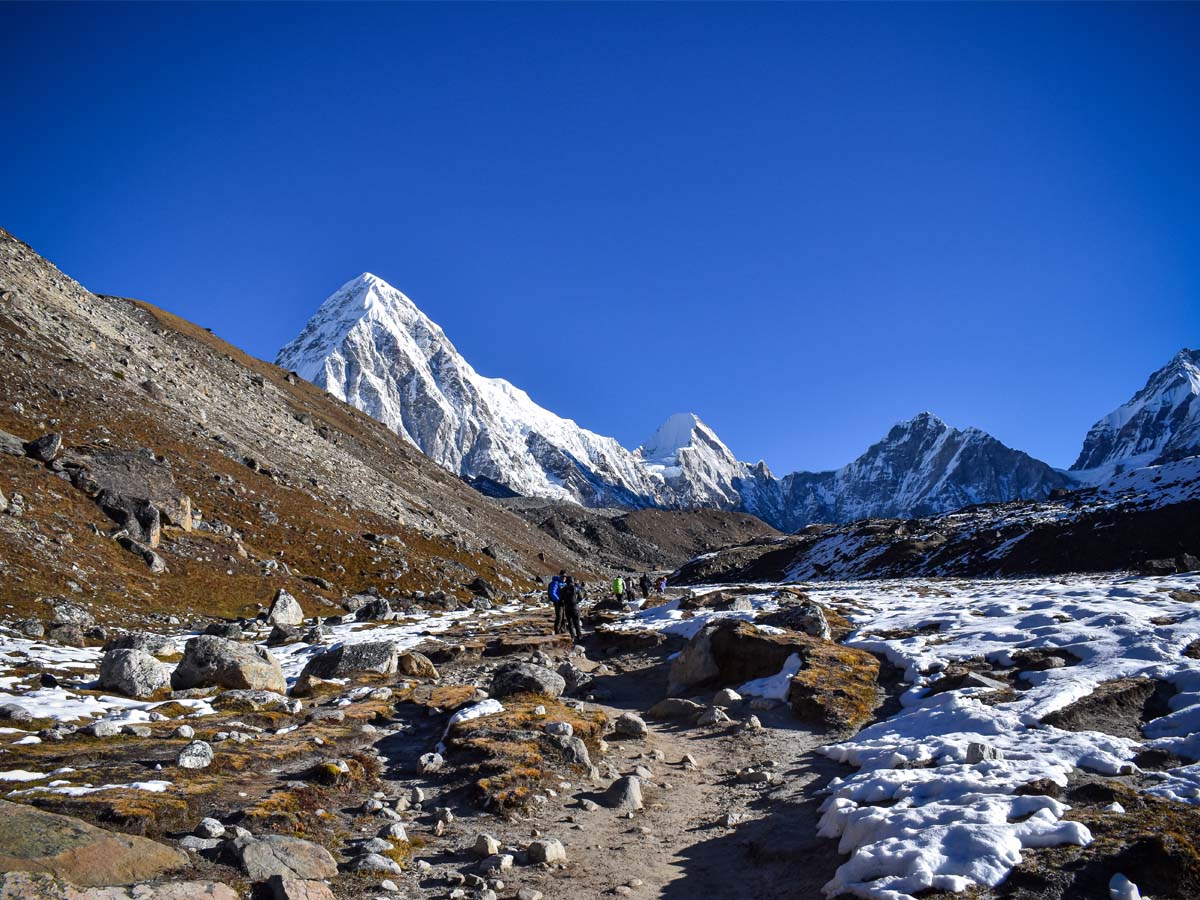
Mount Pumori 7161m on the way from Lobuche to Gorakshep
The journey from Lobuche to Gorakshep is one of the shortest walking days on the Everest Base Camp trek, yet it can feel surprisingly demanding.
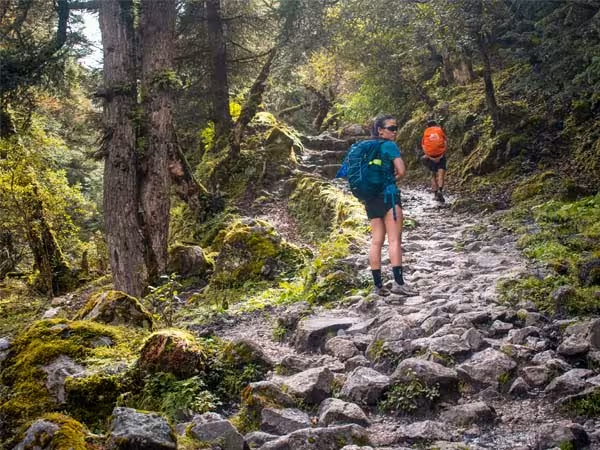
As you leave Lobuche behind, the trail gradually becomes rougher. The ground is covered with loose stones, and certain sections require careful footing. You may find yourself slowing down on slopes that would have seemed manageable at lower elevations.
At nearly 5,000 meters, your breathing becomes noticeably heavier. Conversations grow shorter, and you begin to appreciate the value of stopping occasionally to catch your breath.
But the difficulty comes with an incredible reward.
As the trail rises along the glacial moraine, the landscape opens into a vast mountain wilderness. The Khumbu Glacier stretches across the valley, while enormous Himalayan peaks dominate the horizon. The scenery becomes increasingly dramatic, making the effort of each step feel worthwhile.
Eventually, Gorakshep comes into view, a small collection of buildings resting beneath the mountains. After days of trekking through the Khumbu, arriving here brings a genuine sense of accomplishment.
Why Does a Short Trek Take So Long?
The distance from Lobuche to Gorakshep is approximately 4–5 kilometers, and most trekkers complete it in around 2–4 hours.
At this elevation, however, distance tells only part of the story.
Atmospheric pressure at approximately 5,000 meters is a little over half that at sea level. This means each breath delivers substantially less oxygen to your body, forcing you to work harder during physical activity.
Even experienced hikers may find themselves moving slowly. The rocky terrain also demands concentration, particularly when crossing uneven sections of the trail.
Rather than focusing on speed, take time to walk steadily, maintain your balance, and appreciate the changing mountain scenery.
What Happens When You Finally Reach Gorakshep?
Arriving in Gorakshep is an important milestone, but the day's journey may not be over.
Most trekkers check into a teahouse, leave their heavier belongings behind, and prepare for the hike to Everest Base Camp.
Before continuing, however, take time to assess how you feel. A short rest and an opportunity to recover from the morning's walk can make the next stage more manageable.
If you are experiencing a worsening headache, nausea, unusual dizziness, or other symptoms of altitude illness, continuing higher is not advisable. Your health should determine the next step, not the itinerary.
A Night in Gorakshep: What Teahouse Life Is Actually Like
Spending a night in Gorakshep is quite different from staying in the teahouses of Namche Bazaar or Dingboche.
At lower elevations, trekkers may find comfortable dining areas, private bathrooms, and a wider range of facilities. Gorakshep accomodation offers a much simpler experience because nearly everything needed to operate a lodge must be transported through difficult mountain terrain.
The buildings provide essential shelter, but comfort is limited by altitude, weather, and available resources.
What Makes Gorakshep Accommodation Different?
Most Gorakshep teahouses provide basic rooms with beds, mattresses, and blankets. You generally do not need to carry your own sleeping mattress when staying in an established lodge.
However, having a bed does not mean the room will be warm.
At this elevation, nighttime temperatures can fall well below freezing. Bedrooms are usually unheated, and the insulation may be limited. The mattress provides a place to sleep, but it cannot replace proper thermal protection.
This is why carrying a suitable sleeping bag is important, even when blankets are available. A sleeping bag with an appropriate comfort rating keeps you insulated throughout the night, especially when the room temperature drops.
The dining hall is usually the warmest and most social part of the lodge. Trekkers gather there to rest, share stories, and prepare for the following day's journey.
After sunset, the atmosphere changes. Outside, the settlement becomes quiet, the mountains disappear into darkness, and the cold makes the warmth of the dining room especially welcome.
The Small Details That Make a Difference
A comfortable stay in Gorakshep often depends on being prepared for facilities that are less reliable than those in lower villages.
Sleeping arrangements: Beds and mattresses are generally provided, but bring an insulated sleeping bag because bedrooms are typically unheated.
Toilets: Shared facilities are common, and running water may be limited. Carry toilet paper and hand sanitizer.
Drinking water: Use boiled or properly treated water rather than assuming untreated local water is safe.
Electricity: Charging may be available for an additional fee, but power supplies are limited.
Internet: Some teahouses offer paid Wi-Fi, although connections may be slow or unavailable.
Cold temperatures also affect electronic devices. Camera and phone batteries lose charge more quickly, so keeping spare batteries warm and carrying a power bank is particularly useful.
Despite these limitations, there is something memorable about staying in such a remote place. The experience offers a closer understanding of how life and travel operate in the high Himalayas.
Gorakshep Altitude: Why Sleeping Here Feels Different
Walking at 5,164 meters is challenging, but sleeping at that elevation introduces another experience altogether.
During the day, your breathing naturally increases as you walk. Your body responds to physical activity by taking in more air to meet its oxygen requirements.
When you sleep, however, your breathing patterns change. At high altitude, some people experience periodic breathing, where their breathing alternates between deeper breaths and brief pauses.
You may wake up several times during the night or feel as though you have not slept deeply, even after spending hours in bed.
The cold and unfamiliar surroundings can make sleeping more difficult as well.
For trekkers who have spent days working toward Everest Base Camp, this can be frustrating. You may feel physically exhausted yet struggle to rest properly.
A restless night is not necessarily a sign of altitude sickness, but symptoms such as headache, nausea, dizziness, or worsening fatigue deserve attention.
There is also a rewarding side to the experience. Waking up in Gorakshep, surrounded by immense Himalayan peaks, is a reminder of how far you have traveled. The surroundings are unlike anything found in the lower valleys, and the next stage of your Everest journey is now within reach.
How to Recognize Altitude Sickness at Gorakshep
Altitude sickness is one of the most important health considerations when visiting Gorakshep.
Acute Mountain Sickness (AMS) can develop when the body has not adequately adjusted to reduced oxygen availability at higher elevations. It can affect trekkers regardless of their fitness, previous hiking experience, or motivation.
A headache is a common symptom, particularly when accompanied by nausea, dizziness, unusual fatigue, or loss of appetite.
Mild breathlessness during physical activity is expected at this altitude, but breathlessness at rest, confusion, difficulty walking straight, or worsening symptoms should never be ignored.
Altitude Sickness: Symptoms and What to Do
Symptoms or situation
What it means for your trek
Mild breathlessness during exertion
Common at altitude; slow down and reassess
Headache with nausea, dizziness, or unusual fatigue
Possible AMS; stop ascending and seek assessment
Symptoms worsening despite rest
Descend and seek medical assistance
Confusion, difficulty walking straight, or altered consciousness
Medical emergency requiring urgent descent and treatment
Breathlessness at rest, worsening cough, or severe weakness
Possible serious altitude illness requiring urgent medical assessment and descent
Note: Never continue ascending when you are experiencing symptoms of altitude sickness. Mild symptoms require rest, monitoring, and assessment without further ascent. If symptoms worsen or serious warning signs appear, urgent descent and medical assistance are necessary.
Gorakshep to Everest Base Camp: The Final Stretch
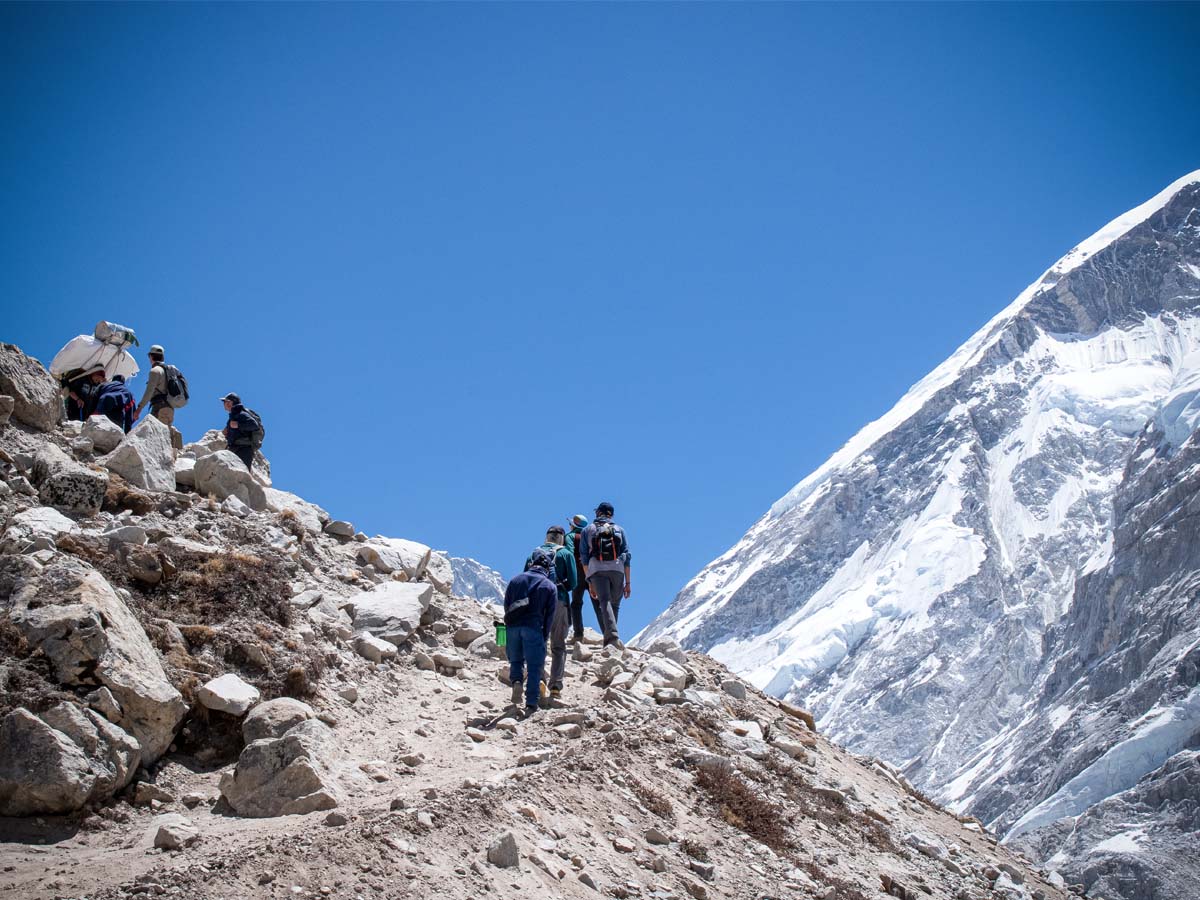
Trekkers on the trail to Everest Base Camp from Gorakshep
For many trekkers, arriving in Gorakshep brings one exciting realization: Everest Base Camp is finally within reach.
Located at approximately 5,364 meters, Everest Base Camp is around 3–4 kilometers from Gorakshep, depending on the route and seasonal trail conditions.
The journey generally takes two to three hours each way.
Unlike the approach to Gorakshep, the trail toward Everest Base Camp passes through increasingly rugged glacial terrain. There are rocky ridges to cross, uneven surfaces to navigate, and sections where careful footing becomes essential.
Although the elevation gain is relatively modest, the repeated ups and downs can feel demanding after several days of trekking.
What Makes the Final Trail Challenging?
The route follows moraine terrain alongside the Khumbu Glacier. Loose rocks and changing trail conditions mean that the path requires attention rather than speed.
At this altitude, fatigue can also build quickly. Trekkers who felt comfortable during the morning walk from Lobuche may notice that their energy levels are lower later in the day.
Yet the scenery provides plenty of reasons to keep going.
The glacier stretches across the valley, enormous mountain walls rise above the trail, and the landscape becomes increasingly dramatic as you approach the base camp area.
Eventually, the familiar Everest Base Camp landmark comes into view.
For many trekkers, reaching this point is an emotional moment. After days of walking through the Khumbu, they are finally standing at the foot of the world's highest mountain.
Gorakshep to Kala Patthar: The View Many Trekkers Remember Most
While Everest Base Camp offers the experience of reaching a historic mountaineering destination, Kala Patthar provides something different: one of the finest close-range viewpoints of Mount Everest.
Rising above Gorakshep, Kala Patthar reaches approximately 5,545–5,645 meters, depending on the viewpoint or summit point reached.
The climb is steep, and the thin air makes the ascent demanding. However, the reward is a remarkable panorama of Everest, Nuptse, Pumori, and the surrounding Himalayan landscape.
On a clear day, the summit of Everest becomes visible above the neighboring ridges, creating one of the most recognizable mountain views in Nepal.
Everest Base Camp vs. Kala Patthar
Feature
Everest Base Camp
Panoramic mountain viewpoint
Main experience
Historic expedition base camp
Panoramic mountain viewpoint
Approximate altitude
5,364 m
5,545m
Walking time from Gorakshep
2–3 hours one way
1.5–3 hours uphill
Terrain
Rocky glacial moraine
Steep, exposed hillside
View of Everest summit
Mostly obstructed
Excellent in clear weather
Best for
Expedition history and glacial scenery
Mountain photography and Everest views
Both destinations offer memorable experiences, but they appeal to slightly different interests.
If standing at the historic Everest Base Camp is your primary goal, the base camp hike is essential. If seeing the summit of Everest is your biggest priority, Kala Patthar offers the more rewarding viewpoint.
Sunrise or Sunset: Which Is Better?
Many Everest Base Camp itineraries schedule the Kala Patthar climb early in the morning.
Sunrise offers beautiful changing light across the Himalayan peaks, but reaching the viewpoint often requires starting in darkness and walking through freezing temperatures.
Sunset can be equally impressive, particularly when the evening light illuminates Everest's upper slopes.
However, afternoon cloud cover, strong winds, and the need to descend safely before darkness are important considerations.
Neither sunrise nor sunset guarantees clear views.
The best time to climb depends on weather conditions, acclimatization, energy levels, and the advice of your trekking guide.
Weather Conditions Can Change Your Plans at Gorakshep
Weather in Gorakshep is influenced by its exposed location, high altitude, and surrounding mountain terrain.
Even during the popular trekking seasons, conditions can change quickly. A clear morning may turn cloudy by afternoon, while strong winds can make the temperature feel significantly colder.
Spring and autumn are generally the preferred seasons for visiting Gorakshep, but neither guarantees perfect weather.
Gorakshep Weather by Season
Season
Typical conditions
What trekkers should expect
Spring (March–May)
Popular trekking and climbing season
Busy teahouses, variable afternoon weather
Monsoon (June–August)
Cloudier conditions and wetter approaches
Reduced visibility and possible travel disruptions
Autumn (September–November)
Often clear mountain views
Busy trails and increasingly cold nights
Winter (December–February)
Very cold, with fewer trekkers
Snow, extreme temperatures, and limited services
Weather matters for more than photography.
Snow makes rocky sections slippery, while poor visibility can make route-finding more difficult. Strong winds also increase exposure to cold, especially during early-morning climbs.
For this reason, flexibility is an important part of planning a trek to Gorakshep.
Things to Do in Gorakshep Beyond Everest Base Camp
Gorakshep Landscape
While Everest Base Camp and Kala Patthar are the main attractions, Gorakshep offers a few quieter experiences worth enjoying during your stay.
Explore the Gorakshep Plateau
Take a short walk around the sandy, rocky plateau and enjoy the contrast between the small teahouses and towering Himalayan peaks. The open landscape offers excellent photography opportunities, even without venturing far from the settlement.
Observe the Khumbu Glacier
The nearby Khumbu Glacier is a remarkable sight, with its rugged ice formations and debris-covered surface. Established viewpoints along the trekking route offer a chance to appreciate its enormous scale without entering unstable glacial terrain.
Photograph the Surrounding Mountains
Gorakshep offers striking views of Pumori, Nuptse, and the surrounding Himalayan landscape. Early morning and late afternoon are particularly rewarding for photography when the weather is clear.
Experience the Quiet of the High Himalayas
As evening approaches, Gorakshep settles into a peaceful atmosphere. With limited connectivity and few distractions, it's an opportunity to share stories with fellow trekkers, enjoy the mountain surroundings, and appreciate the simplicity of life above 5,000 meters.
Final Thoughts: Experiencing Gorakshep on Your Everest Journey
Gorakshep may be a small settlement, but it represents one of the most significant stages of the Everest Base Camp trek.
The journey from Lobuche introduces trekkers to an increasingly rugged Himalayan landscape, while the overnight stay offers a glimpse of life at more than 5,000 meters. From here, the historic Everest Base Camp and the panoramic viewpoint of Kala Patthar are within reach.
The experience is physically demanding, and proper acclimatization, realistic expectations, and careful planning are essential. Yet the combination of remote mountain scenery, personal achievement, and proximity to Everest makes Gorakshep a place that stays with trekkers long after the journey ends.
At Sublime Trails, we understand that a memorable Everest trek involves more than reaching the destination. Knowing what to expect along the route, preparing for high-altitude conditions, and making informed decisions are all part of a rewarding Himalayan experience.
Whether you are planning your first Everest Base Camp trek or returning to explore the Khumbu in greater depth, Gorakshep deserves a place in your journey.