
Pheriche is an important village on the Everest Base Camp Trek route in Nepal’s Khumbu region, located between Dingboche and Lobuche. Along with Namche Bazaar, Tengboche, Dingboche, and Gorakshep, Pheriche is a key stop for trekkers heading toward Everest Base Camp, offering a place to rest, acclimatize, and prepare for the higher-altitude sections of the trek
PHERICHE NEPAL: ALTITUDE, WEATHER, MEDICAL CLINIC & TREKKING GUIDE
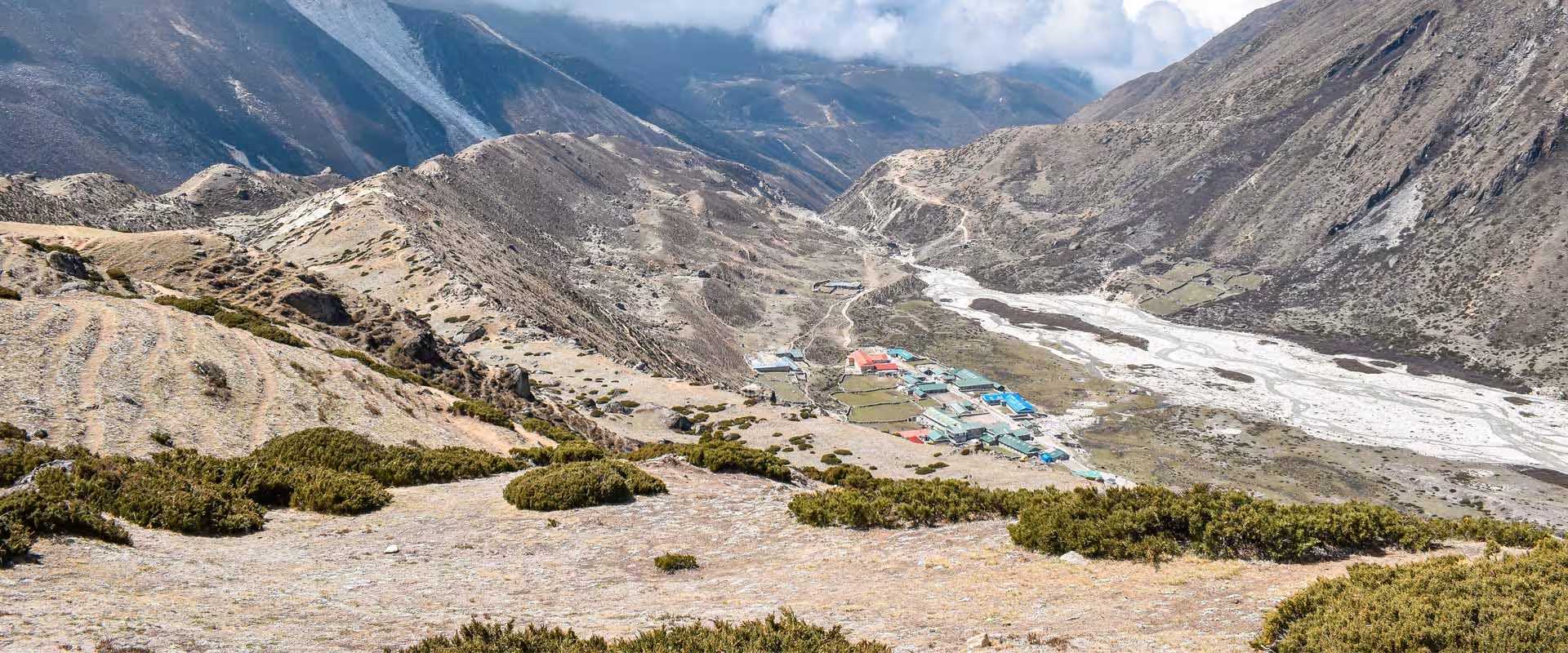

So, what is Pheriche and which trek does it fall under?
Pheriche is a high-altitude mountain village in Nepal's Everest region and is most closely associated with the Everest Base Camp Trek. It sits in the upper Khumbu Valley at an elevation of roughly 4,371 meters (14,340 feet), depending on the location and source used for the elevation measurement.
For trekkers heading toward Everest Base Camp, Pheriche is one of the settlements encountered after the trail has climbed well above the lower villages of the Khumbu. By this point, the landscape has changed dramatically: forests become sparse, the valley opens up, temperatures drop, and the effects of high altitude become much more noticeable.
Pheriche is actually famous for its Himalayan Rescue Association (HRA) medical aid post, which has provided high-altitude medical support and altitude-sickness education in the region for decades.
However, surrounded by spectacular Himalayan peaks and traditional stone houses, Pheriche is more than a medical stop or an overnight village. It offers trekkers a glimpse into life at one of the highest permanently inhabited areas of the Khumbu.
Where Does Pheriche Come on the Everest Base Camp Trek?
Coming from Lukla, trekkers generally spend several days gradually gaining elevation before reaching the Pheriche area.
A simplified route looks like this:
| Trekking destination | Approximate elevation |
| Lukla | 2,860 m |
| Phakding | 2,610 m |
| Namche Bazaar | 3,440 m |
| Tengboche | 3,860 m |
| Dingboche | 4,410 m |
| Pheriche | 4,371 m |
| Lobuche | 4,910 m |
| Gorakshep | 5,164 m |
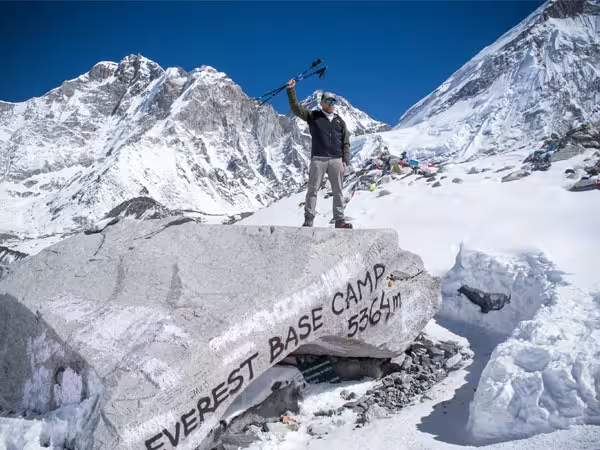
| Everest Base Camp | 5,364 m |
The important thing to notice is how quickly the environment changes as you progress higher. After Namche Bazaar, the trail climbs into an increasingly high-altitude environment. By the time you reach Pheriche, you are already above 4,000 meters.
That is one of the main reasons Pheriche matters.
It is not simply another village where trekkers stop for dinner and sleep. It is part of the section of the Everest Base Camp Trek where altitude becomes a major consideration.
What Is Pheriche Like?
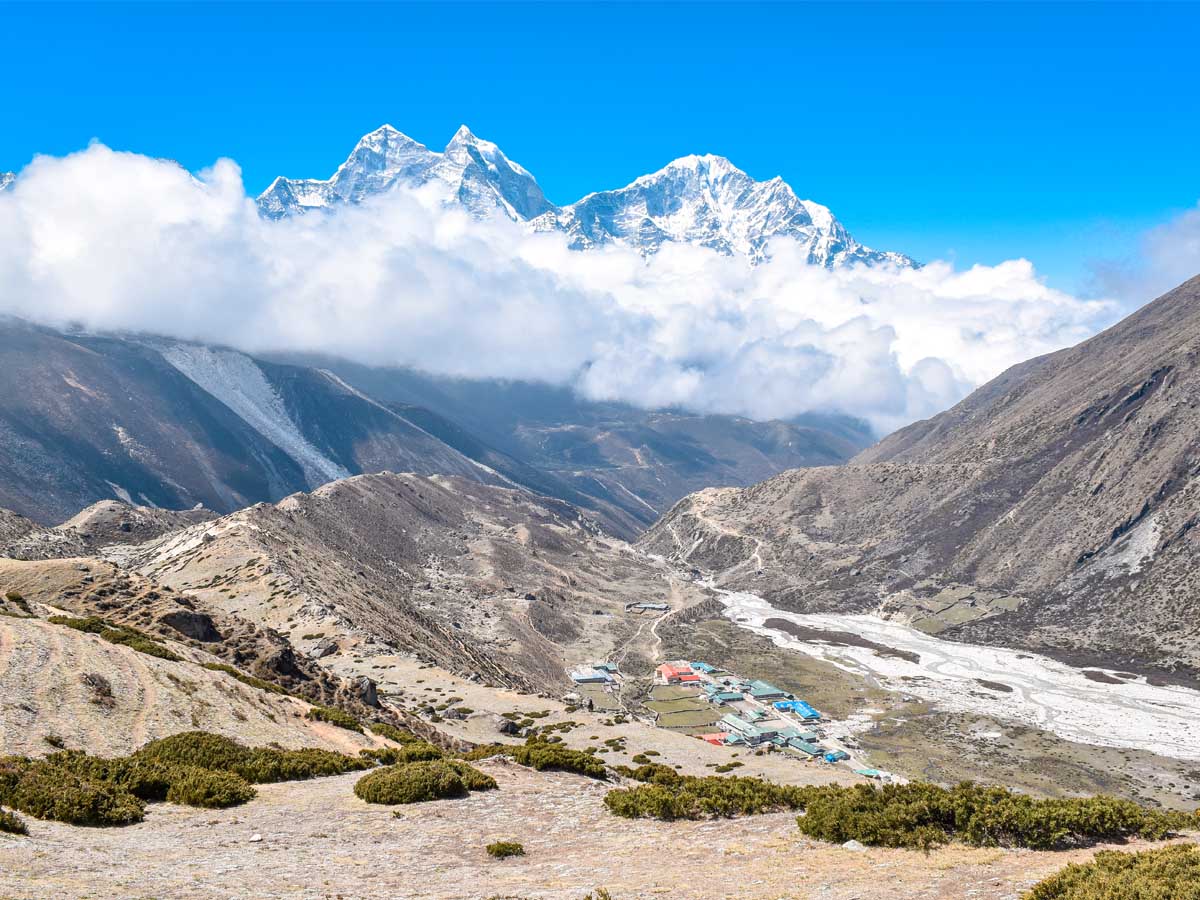
Pheriche is a small Himalayan settlement in the Khumbu region of northeastern Nepal, surrounded by some of the most dramatic mountain scenery in the Everest region.
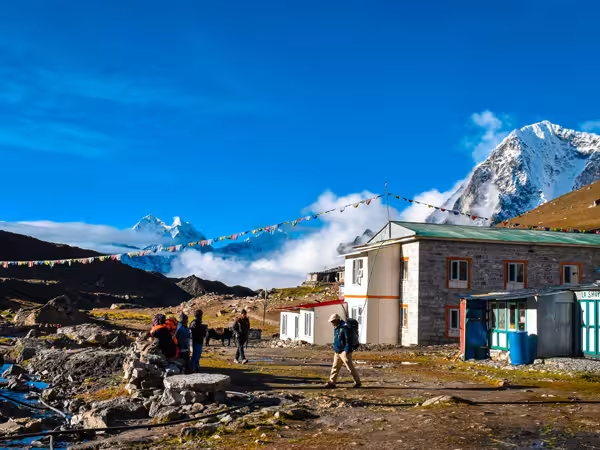
One of the defining features of Pheriche is its open, high-altitude landscape. Unlike the forested trails found at lower elevations, the surroundings here are characterized by rocky terrain, sparse vegetation, stone-walled fields, and exposed mountain slopes.
Pheriche is also closely connected to the traditional lifestyle of the Khumbu's Sherpa communities. Stone-built houses, local lodges, teahouses, and small settlements reflect how people have adapted to the demanding Himalayan environment. Yak herding has traditionally played an important role in the local economy, while trekking tourism now provides accommodation, meals, and other essential services to hikers, guides, and porters traveling toward Everest Base Camp.
Another distinctive feature of Pheriche is its connection to high-altitude medicine and mountain safety. The village is home to a medical aid post operated by the Himalayan Rescue Association (HRA), an organization known for its work in preventing and treating altitude-related illnesses. Because Pheriche sits above 4,000 meters, the clinic plays an important role in educating trekkers about altitude sickness and providing medical assistance during the main trekking seasons.
Life in Pheriche revolves around the rhythm of the mountains and the seasonal flow of trekkers. Visitors generally spend their time resting at teahouses, exploring the surrounding trails, enjoying mountain views, and preparing for the next stage of their journey. With its traditional Himalayan character, exposed alpine terrain, and important role in trekking and mountain safety, Pheriche offers a distinctive glimpse into life in the high-altitude Khumbu region of Nepal.
Why Is Altitude Important in Pheriche?
Altitude sickness is one of the biggest concerns for trekkers reaching Pheriche.
Acute Mountain Sickness (AMS) can affect anyone, regardless of age, fitness level, or previous trekking experience.
Common symptoms can include:
- Headache
- Nausea
- Loss of appetite
- Dizziness
- Fatigue
- Difficulty sleeping
- Shortness of breath during exertion
Mild symptoms do not necessarily mean that an expedition has to end, but they should never be ignored.
More serious altitude-related illnesses can become life-threatening. Symptoms that become severe
or worsen despite rest require immediate attention and may require descent to a lower elevation.
This is why trekking slowly and allowing your body to acclimatize is much more important than trying to maintain a fast pace.
The Nepal Tourism Board recommends gradual ascent above 2,500 meters, generally limiting increases in sleeping altitude and incorporating acclimatization days into high-altitude itineraries.
By the time you reach Pheriche, your body has already experienced a substantial increase in elevation from Lukla and Namche Bazaar.
Pheriche Clinic and Hospital: Is There Medical Help?
If you search for Pheriche clinic, Pheriche hospital, or Pheriche medical clinic, you will usually find information about the Himalayan Rescue Association medical aid post.
It is more accurate to describe this facility as a high-altitude medical aid post or clinic rather than a large conventional hospital.
The Himalayan Rescue Association has operated its medical facility in Pheriche since the early years of its work in Nepal. The Pheriche aid post was established in 1973, with a dedicated clinic facility established later.
The purpose of the clinic is especially important because Pheriche is located in a remote high-altitude environment where access to advanced medical care can be difficult.
During the main trekking seasons, medical professionals provide assistance to trekkers suffering from altitude-related problems and other illnesses.
The facility also plays an educational role. Altitude-sickness awareness and prevention are particularly important because recognizing symptoms early can prevent a manageable problem from becoming a medical emergency.
Is the Pheriche Clinic Open All Year?
Trekkers should not assume that the Pheriche medical facility operates with the same staffing and services throughout the entire year.
The HRA's high-altitude aid posts are associated primarily with the main trekking seasons. If you are traveling during an unusual season, check current operating arrangements before relying on the facility.
And even when the clinic is operating, it should not be considered a replacement for proper travel insurance.
A trekking insurance policy should specifically cover high-altitude trekking and emergency evacuation, including helicopter evacuation where applicable.
Pheriche and Acclimatization
Acclimatization is the process by which your body gradually adapts to reduced oxygen availability at higher elevations.
A well-designed Everest Base Camp itinerary does not simply try to reach the highest possible point as quickly as possible. Instead, it builds in time for the body to adjust.
This is why places such as Namche Bazaar and Dingboche are commonly used for acclimatization.
Pheriche can also form part of an acclimatization strategy, depending on the itinerary.
One common approach is to spend an acclimatization day around Dingboche while ascending, then stay in Pheriche during the return journey after visiting Everest Base Camp.
There is no universal itinerary that is perfect for everyone. The appropriate schedule depends on the individual's health, previous altitude experience, trekking pace, and overall route.
The important principle is simple:
Do not treat altitude as a race.
Difference Between Pheriche and Dingboche
Pheriche and Dingboche sit at nearly the same altitude in Nepal’s Khumbu region, so the difference between them is not how high they are, but how each village sits within the Himalayan landscape and how life has developed around it.
For trekkers, these differences become clearer when looking beyond elevation and considering the villages’ surroundings, daily life, and place on the Everest Base Camp route.
Pheriche vs. Dingboche: Key Differences
| Feature | Pheriche | Dingboche |
| Approximate altitude | Around 4,371 m (14,340 feet) | Around 4,410 m (14,470 ft) |
| Landscape and setting | Known for its broad, open valley and exposed, windswept surroundings | Lies in the Imja Valley, with mountain slopes and stone-walled agricultural plots shaping the landscape |
| Village character | A quieter-feeling high-altitude settlement where the open terrain and trekking lodges define much of the experience | A well-known trekking stop with a cluster of lodges and a strong connection to acclimatization itineraries |
| Medical significance | Known for the Himalayan Rescue Association’s seasonal aid post, which provides high-altitude medical support during the trekking season | Does not have the same widely recognized HRA aid-post role as Pheriche |
| Traditional land use | The open valley and limited high-altitude growing season reflect the challenges of farming at this elevation | Stone-walled fields are a particularly noticeable feature, traditionally helping protect cultivated land in the harsh mountain environment |
| Trekking-route role | Commonly included on the return journey, depending on the itinerary | Frequently used as an acclimatization stop on the ascent toward Lobuche and Everest Base Camp |
Why Do Trekkers Often Visit Dingboche on the Way Up and Pheriche on the Way Back?
Many Everest Base Camp itineraries use Dingboche as an acclimatization stop because its surrounding terrain offers options for gradual exploration at altitude. Trekkers may spend an additional night there and take a short hike, depending on their itinerary, fitness, and how they are responding to the altitude.
Pheriche often features on the return journey because trekking routes can form a loop through the two settlements. However, this is not a fixed rule: some itineraries use Pheriche on the ascent, and others use Dingboche on the descent. The route depends on the trekking plan rather than a universal local custom.
Ultimately, neither village is automatically better. Dingboche stands out for its acclimatization-hike options and cultivated Imja Valley setting, while Pheriche is especially recognized for its open landscape and medical-support role. Experiencing both gives trekkers a fuller understanding of life in the high Khumbu beyond the famous mountain views.
Mountains You Can See From Pheriche
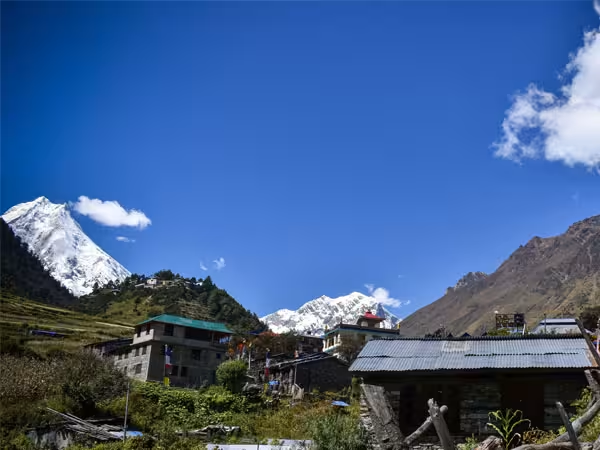
Pheriche is surrounded by spectacular Himalayan peaks.
Among the mountains visible from the area are:
- Ama Dablam
- Thamserku
- Kangtega
- Taboche
- Other peaks of the Khumbu Himalaya
Ama Dablam is particularly prominent and is one of the most recognizable mountains in the Everest region.
For photographers, Pheriche provides an excellent combination of traditional stone buildings, prayer flags, yak pastures and enormous Himalayan peaks.
Accommodation in Pheriche
Accommodation in Pheriche on the Everest Trail is primarily made up of teahouses, trekking lodges and guesthouses.
The standard is generally simpler than hotels in Kathmandu or larger towns, but the facilities are designed around the needs of trekkers.
Most lodges provide:
- Private or shared rooms
- Dining areas
- Hot meals
- Tea and coffee
- Basic electricity
- Charging facilities
- Hot showers at some properties
- Wi-Fi at some lodges
One example is Himalaya Lodge is a place where sublime trails guest stays at Pheriche, which provides accommodation and trekking services in the village.
As with most accommodation along the Everest Base Camp route, availability can become limited during peak trekking seasons. If you are traveling as part of an organized trek, your trekking company will generally arrange accommodation in advance.
Note: Independent trekkers should consider booking ahead during busy periods, particularly if traveling with a larger group.
Pheriche Weather and Climate
Pheriche has a cold, high-altitude Himalayan climate, with chilly mornings and nights even during the main trekking seasons. Spring and autumn are generally the most popular times to visit, while winter brings harsher cold and the monsoon can reduce visibility.
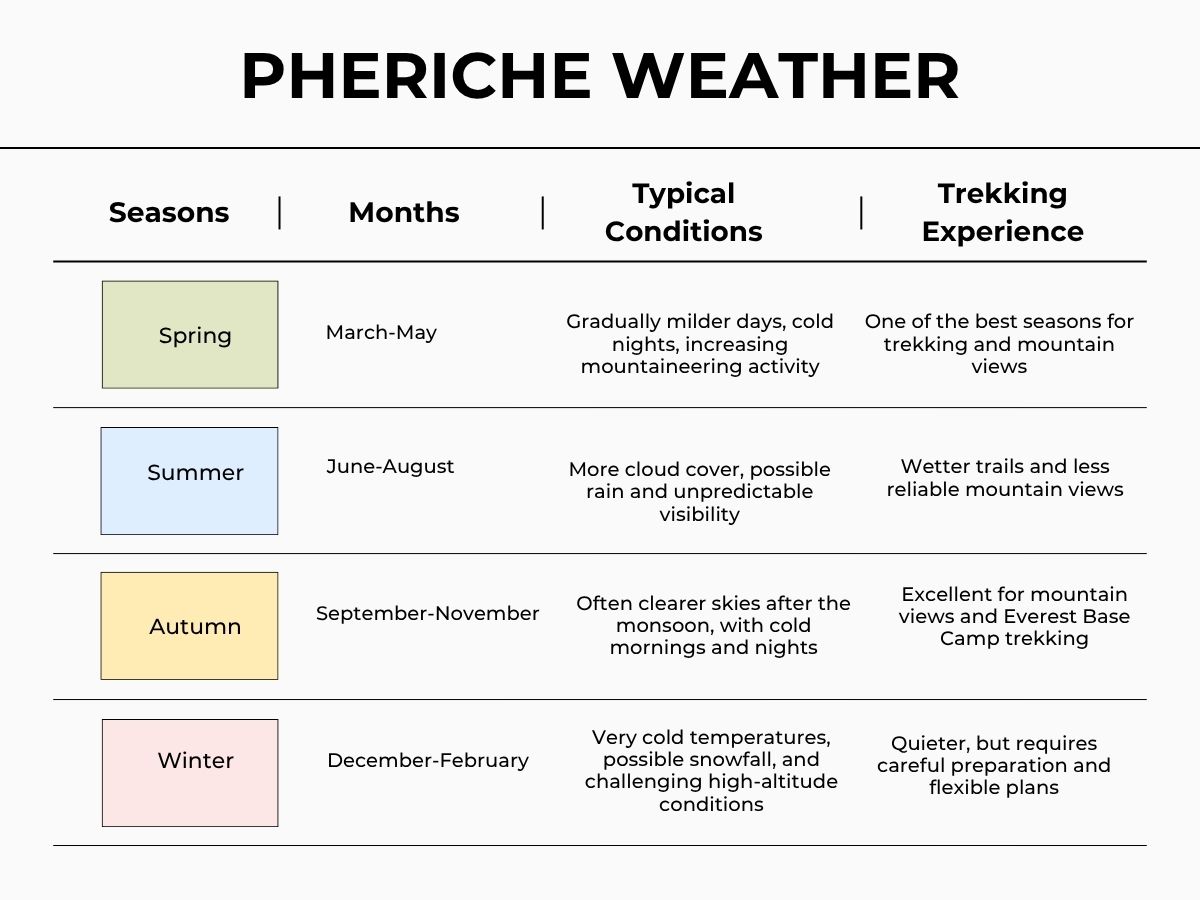
Note: Spring and autumn generally offer the most favorable trekking conditions. Regardless of the season, pack warm layers and prepare for sudden weather changes at high altitude.
Things to Do in Pheriche
Pheriche is not a destination with a long list of conventional tourist attractions. The experience is about the environment, mountains, and high-altitude culture.
1. Enjoy the Mountain Views
The surrounding Himalayan peaks are the main attraction. Clear mornings are particularly good for photography.
2. Explore the Village
Take a slow walk around the stone houses, lodges, and surrounding trails. Because of the altitude, avoid turning exploration into a strenuous hike.
3. Learn About Altitude
If the HRA aid post is operating during your visit, altitude-related education can be extremely valuable.
Understanding the symptoms of altitude sickness can help you make better decisions during the remainder of your trek.
4. Experience Local Sherpa Culture
Spend time in the teahouses, talk with local residents, and learn about how communities have adapted to life in the high Himalayas.
5. Photograph the Landscape
Pheriche's combination of stone buildings, prayer flags, open valleys, and huge mountain peaks makes it one of the more photogenic stops on the Everest Base Camp route.
Is Pheriche Worth Visiting?
Yes, especially if you are trekking to Everest Base Camp.
Pheriche may not have the commercial energy of Namche Bazaar or the iconic status of Everest Base Camp, but that is exactly what makes it special.
It represents the high-altitude heart of the Everest trek.
The village is where the landscape becomes dramatically more alpine, the mountains feel closer, and altitude becomes an unavoidable part of the experience.
Its Himalayan Rescue Association medical aid post also gives Pheriche an important role in mountain safety.
For trekkers, Pheriche provides more than accommodation.
It is a place to slow down, observe the environment, understand the realities of high-altitude trekking and appreciate the communities that have made life possible in one of the world's most challenging environments.
Final Thoughts: Why Pheriche Matters on the Everest Base Camp Trek
Pheriche is easy to overlook when planning an Everest Base Camp Trek.
It does not have the worldwide recognition of Everest Base Camp, the bustling atmosphere of Namche Bazaar or the famous monastery of Tengboche.
Yet Pheriche plays an important role in the journey.
It is a high-altitude village where the landscape changes, the air becomes noticeably thinner and the realities of trekking in the Himalayas become much more apparent.
It is also home to an important medical aid post that has supported trekkers and mountain communities for decades.
Whether you reach Pheriche while heading toward Everest Base Camp or pass through it on your return to Namche Bazaar, the village provides an opportunity to experience the quieter side of the Khumbu.
The stone houses, open valley, grazing animals, traditional Sherpa culture and towering Himalayan peaks create an atmosphere that is difficult to replicate anywhere else.
And perhaps most importantly, Pheriche reminds trekkers that the Everest Base Camp Trek is not simply about reaching a destination.
FAQs
What is Pheriche famous for?
Pheriche is famous for its location on the Everest Base Camp Trek, its high-altitude Himalayan environment, spectacular mountain views, and the Himalayan Rescue Association medical aid post.
Which trek does Pheriche fall under?
Pheriche is primarily associated with the Everest Base Camp Trek in Nepal's Khumbu region. It can also be visited as part of other Everest-region trekking and mountaineering routes.
What is the Pheriche altitude?
Pheriche is generally listed at approximately 4,371 meters (14,340 feet) above sea level, depending on the measurement point.
Is there a Pheriche hospital?
Pheriche has a Himalayan Rescue Association medical aid post rather than a large conventional hospital. It provides important medical support for altitude-related illnesses and other problems during the main trekking seasons.
Is there a Pheriche medical clinic?
Yes. The Himalayan Rescue Association operates a medical aid post in Pheriche that provides high-altitude medical assistance and education.
Is Pheriche dangerous?
Pheriche itself is not inherently dangerous, but its elevation above 4,000 meters means altitude sickness and other high-altitude risks must be taken seriously.
How far is Pheriche from Namche Bazaar?
The distance between Pheriche and Namche Bazaar is generally around 14–20 km, depending on the route and measurement method. The journey commonly takes approximately 6–8 hours.
How far is Gorakshep from Pheriche?
The Gorakshep-to-Pheriche section is commonly around 11–14 km, although the total distance can be considerably longer if Kala Patthar is included in the same day's itinerary.
Can you stay overnight in Pheriche?
Yes. Pheriche has several teahouses, guesthouses and trekking lodges that accommodate Everest-region trekkers.
Is Pheriche higher than Namche Bazaar?
Yes. Pheriche is more than 4,000 meters above sea level, while Namche Bazaar is approximately 3,440 meters.
Is Pheriche higher than Dingboche?
No. Dingboche is generally around 4,410 meters, while Pheriche is usually listed around 4,240–4,371 meters. The exact difference depends on the elevation source and measurement point.
What is the best time to visit Pheriche?
Spring and autumn are generally the most popular seasons because weather and mountain visibility are often more favorable. Winter is much colder, while the monsoon can bring cloud and precipitation.
Need Help? Call Us
Need Help? Call Us+977 9851183278