If you are planning an Everest Base Camp helicopter tour, you may already be wondering where you will sit.
It is a reasonable question. A helicopter cabin is small, and your position can change what you see through the windows. The front passenger seat is usually the one people ask about first because it gives you a wide forward view of the route. But seating on an Everest helicopter flight is not simply about choosing the best view. Passenger weight, aircraft configuration, baggage, fuel and high altitude performance all have to be considered. The pilot and flight crew make the final decisions based on the aircraft and conditions on the day.
Here is what I would want to know before booking an EBC helicopter tour.
Quick Answer: Which Seat Is Best?
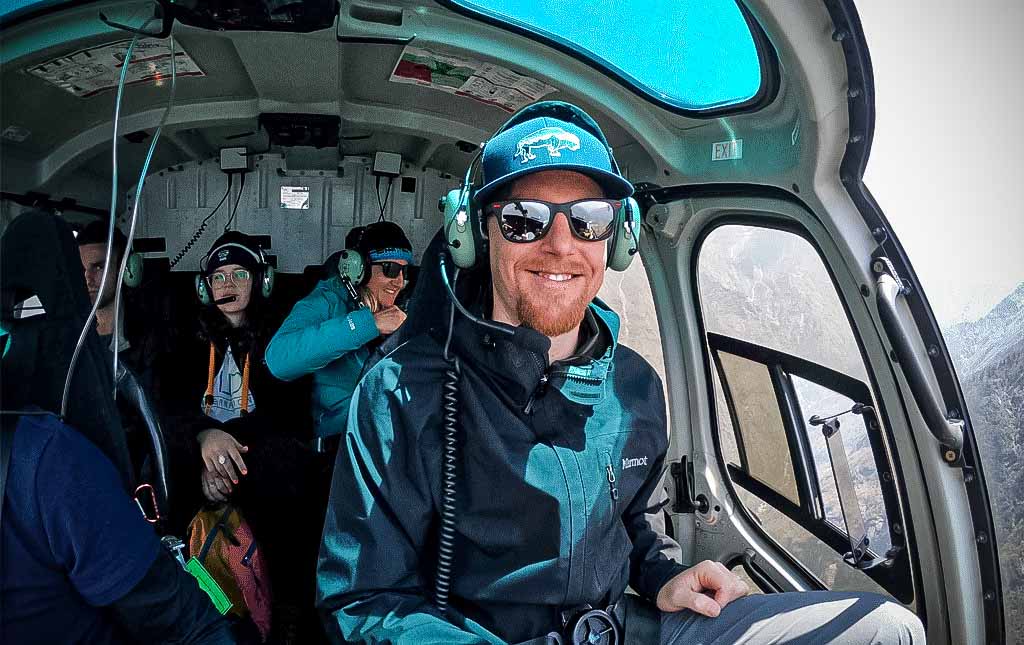
If your priority is the forward view, I would ask about the front passenger seat.
It gives you a clear view ahead as the helicopter moves through the Khumbu and can be particularly enjoyable for photography.
However, I would not book an Everest helicopter tour assuming that the front seat is guaranteed. Seating can depend on the aircraft configuration, passenger load and operational requirements.
A side window can also give you an excellent view of the Himalayas. So, if I were booking the flight, I would ask for the front seat but would not treat it as a deal breaker. The weather, visibility and safe operation of the flight matter much more.
Can You Choose the Front Seat?
You can ask for the front passenger seat, but helicopter seating is not the same as choosing a seat on a commercial aircraft. The pilot and crew may need to arrange passengers according to the aircraft's configuration, weight and balance requirements and the conditions of the flight.
Passenger at front seat in Everest Base Camp Helicopter Tour
Some helicopter operators in Nepal may also rotate passengers through the front position when the operating situation allows it. However, this should not be presented as a standard guarantee for every Everest helicopter flight. If the front seat is important to you, mention your preference when booking. The operating crew can then consider the request when arranging the flight. The final decision, however, belongs to the pilot and crew.
Front Seat vs Window Seat: Which Would I Choose?
Both can be good, but they offer slightly different experiences.
Seat
Best for
What to expect
Front passenger seat
Forward views and photography
Excellent view ahead, but not guaranteed
Side window seat
Mountains and landscape
Strong views across the Khumbu
Other passenger position
Overall sightseeing
The experience still depends heavily on weather and visibility
If I had to choose, I would ask for the front seat.
But I would be perfectly happy with a good window position during the high altitude section. Once the helicopter reaches the Khumbu, the scenery outside the cabin is the main attraction. I would not risk turning a safe and well-managed flight into a discussion about getting a particular seat.
Are EBC Helicopter Seats Window Seats?
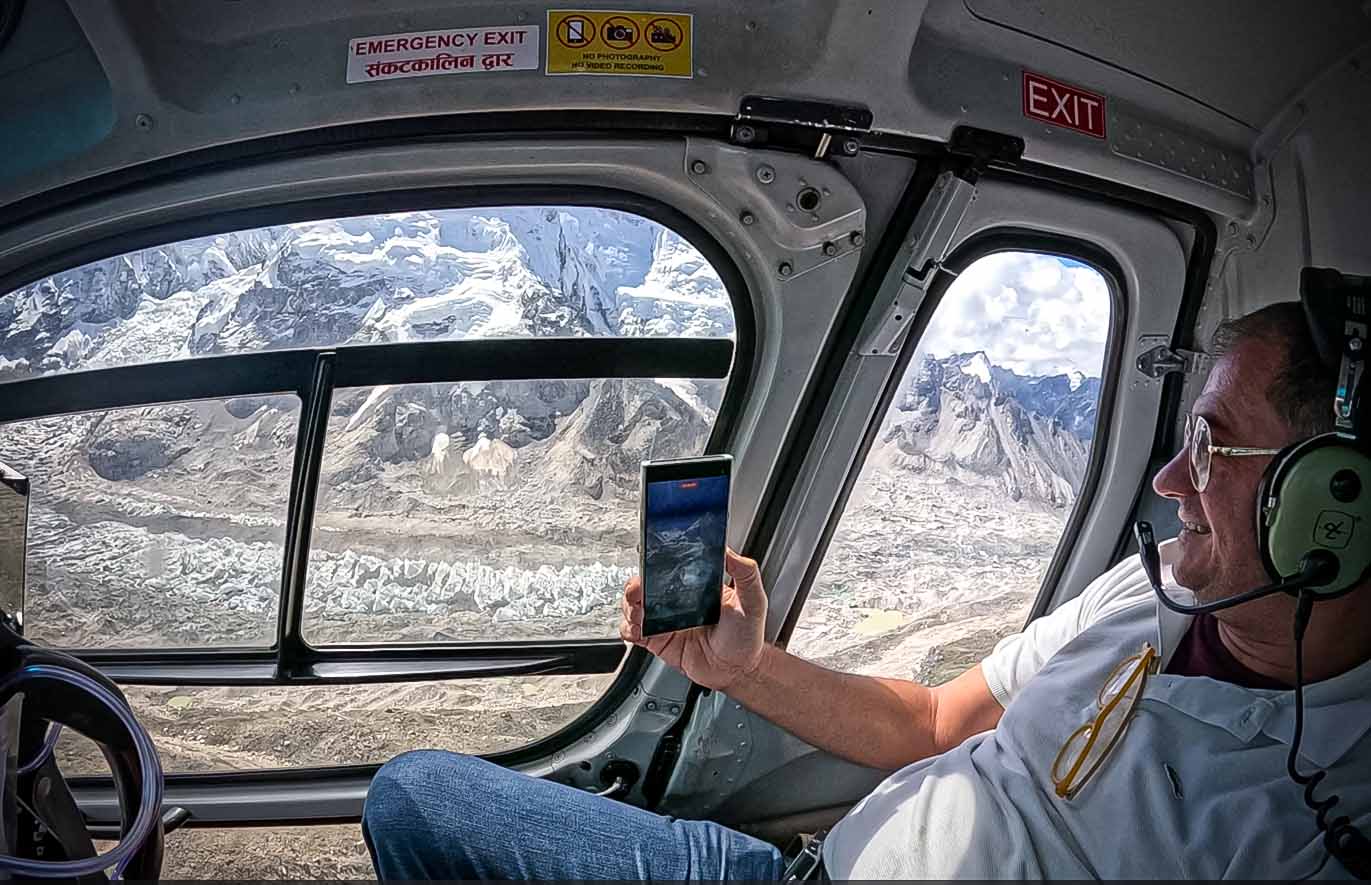
Yes, passengers on the Everest Base Camp helicopter tour get window seats, particularly during the high-altitude section covering Everest Base Camp and Kala Patthar. If passenger rotation is required at Pheriche, seating may be rearranged so that passengers can enjoy window views during the scenic high-altitude flight.
Passenger Capturing Glacier View at window seat in EBC Helicopter Tour
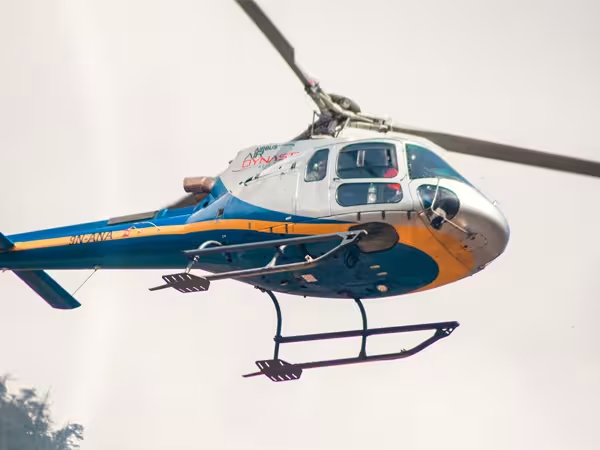
The Airbus H125, which is commonly used for high altitude helicopter operations in Nepal, is designed with a spacious cabin and good outward visibility.
Why Does Passenger Weight Affect Seating?
You may be asked for your body weight before an Everest helicopter flight. There is a practical reason for this. The aircraft needs to be loaded within its operating limits. Passenger weight, baggage and fuel all contribute to the helicopter's overall load and balance.
This becomes particularly important in the Everest region because the helicopter is operating at increasingly high elevations. As altitude increases, the available aircraft performance changes. The pilot therefore needs accurate information about the people and baggage being carried.
So if you are asked for your weight, give an accurate figure. It is not about deciding who gets the best seat. It is part of planning the flight safely.
Why Can Passengers Be Split at Pheriche?
Pheriche is an important point on an Everest helicopter route because the flight is moving into much higher terrain. At higher elevations, the helicopter has less useful payload available. Depending on the aircraft, passenger weights, fuel requirements and conditions, the pilot and crew may therefore need to divide passengers into smaller groups for the highest section.
This is commonly described as a shuttle arrangement. For a traveller, it can feel like an extra step in the journey. In reality, it is simply a way of managing the aircraft's payload and performance as the altitude increases.
If your group is divided at Pheriche, do not assume something has gone wrong with your booking. The pilot and crew are making the decision based on the conditions and the aircraft's operating requirements.
Will My Seat Change During the Flight?
It can. The seating arrangement at the beginning of the flight does not necessarily have to remain identical throughout the entire journey.
If passengers are divided for the higher section, the crew may need to rearrange the passenger allocation. The aircraft may also be configured differently depending on the number of people travelling and the particular helicopter being operated.
If the crew asks you to change seats, follow their instructions. Do not move around the cabin yourself simply because you see a better view on the other side. The pilot and crew are responsible for maintaining the appropriate passenger arrangement during the flight.
Is the Front Seat Better for Photography?
It can be, particularly if you enjoy photographing the route ahead.
The front passenger position gives you a broad forward perspective as the helicopter moves towards the higher parts of the Khumbu. You can see the terrain opening ahead rather than only looking sideways.
But the side windows can be just as valuable.
Mountains such as Ama Dablam, Lhotse, Nuptse and Everest are not all positioned directly in front of the helicopter throughout the flight. The best angle depends on the route, aircraft direction and visibility.
So I would not spend the entire flight worrying about whether you got the perfect seat. Keep your camera ready, but remember that clear weather is far more important than your exact position inside the cabin.
What Can You See From the Helicopter?
The landscape changes quickly as the helicopter moves towards Everest.
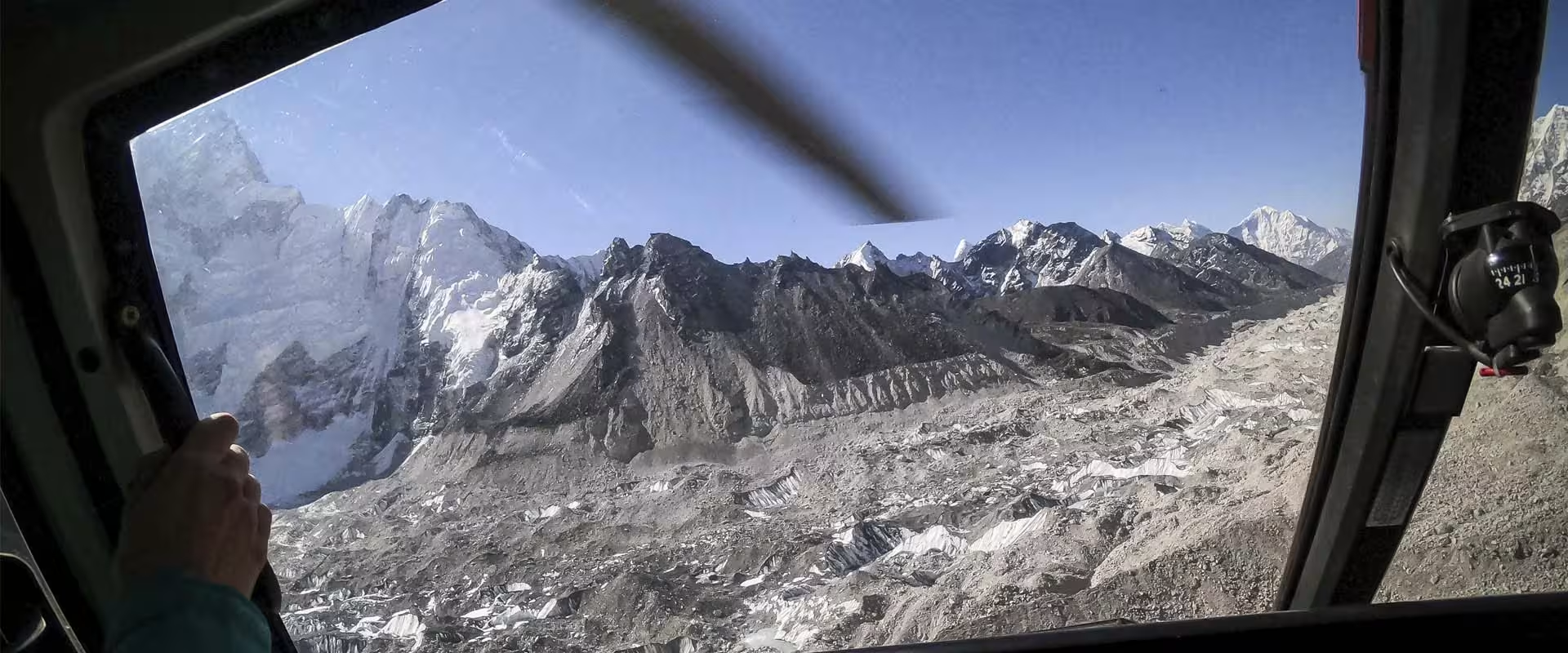
The flight begins around the Kathmandu Valley before the terrain gradually becomes more mountainous. As you enter the Khumbu, the valleys narrow and the surrounding peaks become much more dramatic. Further along the route, you can see the high Himalayan landscape around the Everest region, including glaciers and major peaks.
Depending on the itinerary and operating conditions and the package you choose, the flight may also include the Kala Patthar landing for 10-15 minutes, giving you a remarkable perspective towards Everest and the surrounding mountains.
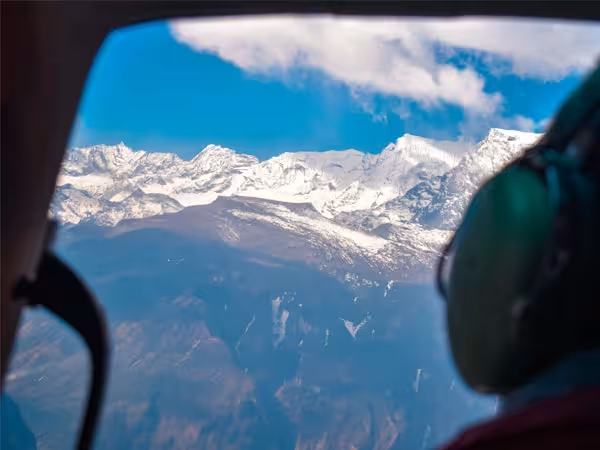
This is why even a side window can be an excellent seat. You are not looking at a single landmark for the entire flight. The landscape is changing around you.
Can I Change Seats During the Flight?
Only if the crew allows it. You should not move between seats while the helicopter is operating simply to get a better photograph or view.
The cabin is a confined space, and passenger movement can affect the planned arrangement. This becomes even more important during takeoff, landing and high altitude operations.
If the pilot or crew decides that a seat change or rotation is appropriate, they will tell you when it can happen. Until then, stay in your assigned position. It is a simple rule, but an important one.
Does a Private Charter Give You the Front Seat?
A private helicopter charter gives your group more control over the overall experience, but it does not remove the aircraft's operating limitations.
If you are travelling privately, you can discuss your preferred seating arrangement before the flight. There may be more flexibility when everyone in the helicopter belongs to the same group.
Even then, the pilot remains responsible for the aircraft and its passengers. Passenger weight, baggage, fuel, aircraft configuration and altitude still have to be considered.
So I would describe the front seat on a private charter as more flexible, not automatically guaranteed.
What Should I Ask Before Booking?
If seating matters to you, I would ask these questions before confirming an Everest helicopter tour:
Which helicopter is normally used for the flight?
Can I request the front passenger seat?
How is passenger seating arranged at higher altitude?
Can passengers be split into shuttle groups at Pheriche?
How is passenger weight handled before departure?
What happens if weather affects the planned route or landing?
You do not need to interrogate the operator. A straightforward conversation before the trip can tell you exactly what to expect and prevent disappointment on the day.
What I Would Prioritise When Booking an EBC Helicopter Tour
If I were choosing an Everest helicopter tour, I would put the front seat fairly low on my list. My priorities would be:
First, safe operation.
The pilot should be able to change the plan when weather, visibility or aircraft performance requires it.
Second, clear communication.
I would like to know how passenger allocation, high altitude sections and possible shuttle arrangements are handled.
Third, good visibility.
A window position is important because seeing the Himalayas is the whole point of taking the flight.
Finally, the front seat.
I would ask for it, but I would not let it decide which operator I book. The front seat is a bonus. The Himalayan view is what I am actually there for.
Final Thoughts
The front passenger seat is probably the position most travellers want on an Everest helicopter flight.
I would ask for it too.
But I would not make it the deciding factor when choosing an Everest Base Camp helicopter tour. The exact seating arrangement can depend on the aircraft, passenger load and the conditions on the day.
More importantly, the pilot and crew need the freedom to arrange passengers, change the seating plan or split the group when the high altitude section requires it.
If you end up in the front, enjoy the forward view. If you are beside a side window, enjoy the mountains. And if the pilot changes the arrangement for safety, take that as part of flying in the Everest region rather than something going wrong.
After all, the best seat is ultimately the one from which you can safely watch the Himalayas unfold outside the window.
Frequently Asked Questions
Can I request the front seat on an Everest helicopter?
Yes. You can request it when booking, but the pilot and operating crew make the final seating decision based on the aircraft and flight conditions.
Is the front seat the best seat for an EBC helicopter tour?
It is usually the best position for a forward view, but a side window can provide excellent views of Everest and the surrounding Himalayan landscape.
Why do helicopter operators ask for passenger weight?
Passenger weight is needed to calculate the aircraft's load and balance and to plan the flight within its operating limits.
Why might passengers be split at Pheriche?
The helicopter is operating at much higher altitude, where available payload and aircraft performance become more limited. The pilot and crew may therefore use smaller passenger groups for the highest section.
Can I change seats during the flight?
Only when the pilot or crew permits it. You should remain in your assigned seat unless the crew gives you different instructions.