Everest Base Camp Trek Cost Breakdown
The Sublime Trails package starts at US$1,350 per person, but the total cost of your trip depends on the expenses you add around the trek.
| Expense |
Included in Sublime Trails package? |
| 14-day guided trek |
Yes |
| Kathmandu accommodation |
Yes |
| Tea-house accommodation |
Yes |
| Kathmandu–Lukla–Kathmandu flight |
Yes |
| Sagarmatha National Park fee |
Yes |
| Khumbu local government fee |
Yes |
| Guide |
Yes |
| Porter |
Yes |
| Breakfast, lunch and dinner during trek |
Yes |
| Safe drinking water |
Yes |
| International airfare |
No |
| Travel and rescue insurance |
No |
| Nepal visa |
No |
| Personal trekking gear |
Partly |
| Tips |
No |
| Wi-Fi and charging |
No |
| Personal snacks and drinks |
No |
| Extra costs from personal delays |
No |
The important point is that US$1,350 is the trek-package cost, not the complete cost of an international trip to Everest Base Camp.
What Does the Everest Base Camp Trek Actually Cost?
There are three useful numbers to think about when planning an EBC trip:
1. The trek package:
This is the amount paid to the trekking company for the organized Everest Base Camp experience.
2. The pre- and post-trek costs:
These include your international flight, visa, insurance, and anything you need to buy or rent before starting the trek.
3. Your personal spending:
This covers things such as snacks, drinks, charging, Wi-Fi, laundry, souvenirs and tips.
The first number is relatively easy to identify. The second and third are where travelers often underestimate their total budget.
That is why two people can book the same EBC itinerary and still return home having spent noticeably different amounts.
What Is Included in the US$1,350 Sublime Trails Package?
The standard Sublime Trails itinerary is designed as a 14-day Kathmandu-to-Kathmandu trek, with 11 days on the trail.
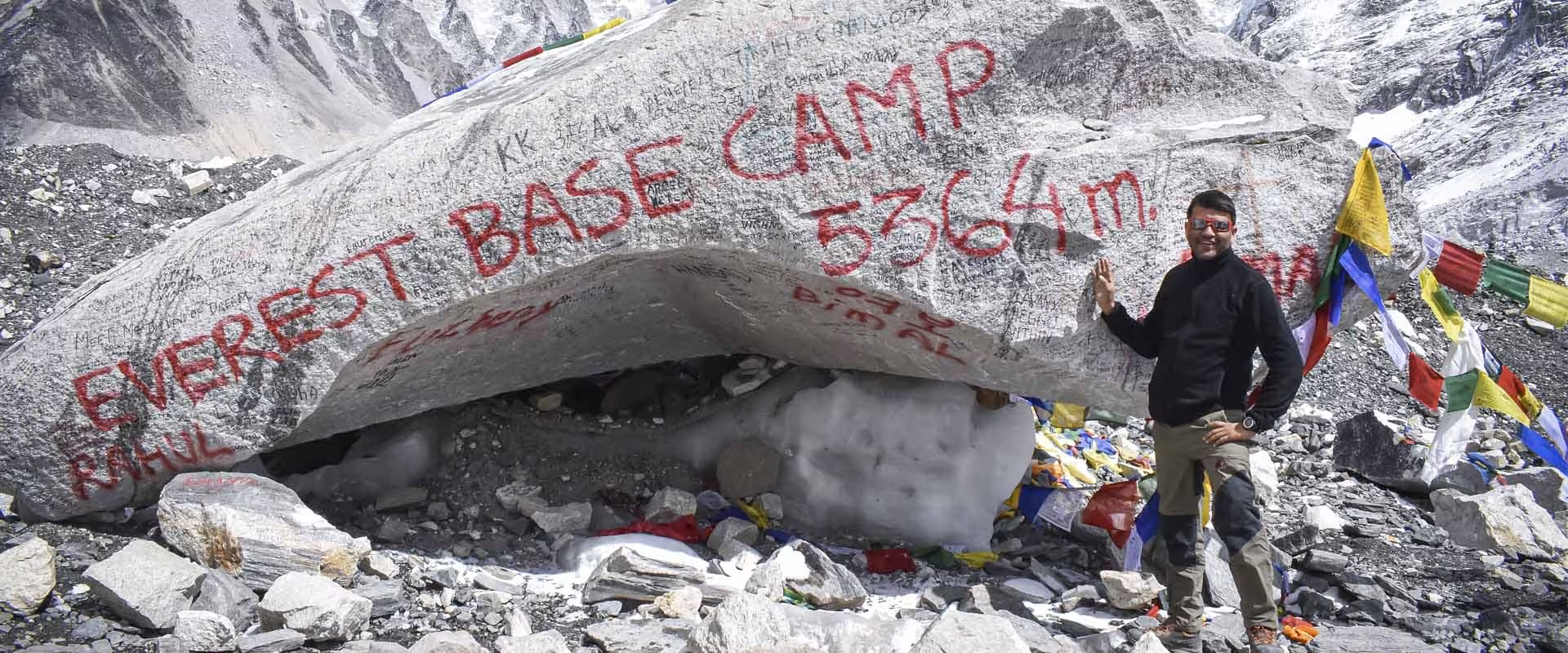
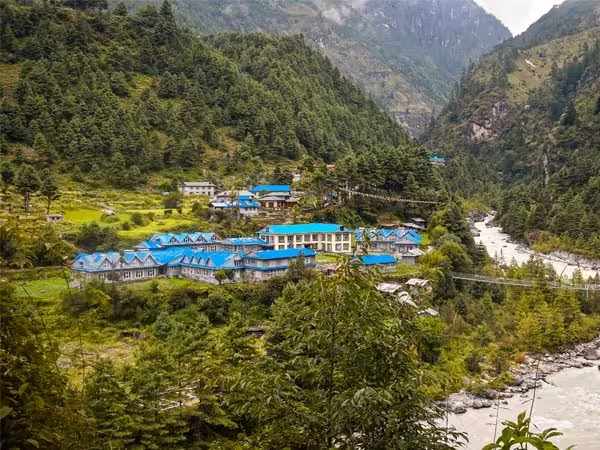
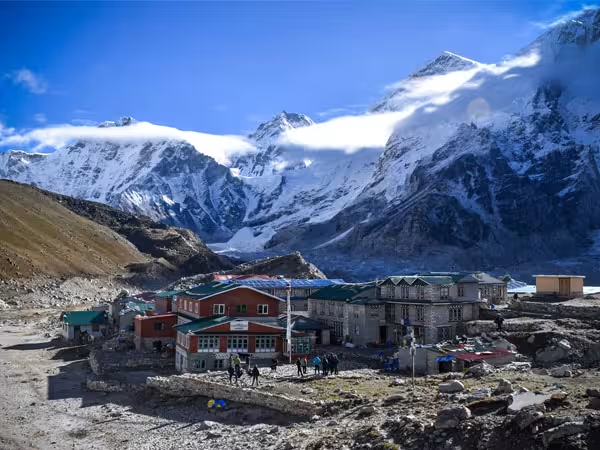
The route begins with the flight to Lukla and follows the classic Everest route through Phakding, Namche Bazaar, Tengboche, Dingboche, Lobuche and Gorak Shep before reaching Everest Base Camp at 5,364 meters. The itinerary also includes an early-morning climb to Kala Patthar at approximately 5,545 meters.
Two important acclimatization stops are built into the itinerary at Namche Bazaar and Dingboche.
From a budgeting perspective, this matters because the package is not simply paying for transportation to Base Camp. The price covers the infrastructure needed to spend almost two weeks traveling through the Khumbu.
Accommodation, meals, guide services, porter support, permits, domestic flights and other logistics are bundled into the package.
Sublime Trails also provides a down jacket, sleeping bag, and duffel bag, which means you do not necessarily need to purchase every major piece of cold-weather equipment before arriving in Nepal.
The Biggest Cost Outside the Trek Package: Your International Flight
For most international travelers, the flight to Nepal will be one of the largest expenses outside the EBC package.
The cost depends heavily on where you are flying from, the airline, your travel dates and how early you book.
This is why it would be misleading to add one fixed airfare figure to every Everest Base Camp budget.
Someone flying from India or Southeast Asia may spend considerably less than someone traveling from North America or Europe. Likewise, peak-season airfare can be different from shoulder-season pricing.
The important thing is to treat your international airfare as a separate budget category.
Your domestic mountain flight is different: the regular Kathmandu/Ramechhap–Lukla–Kathmandu flight is included in our package.
Does the EBC Package Include Flights to Lukla?
Yes. The standard package includes the regular flight between the Kathmandu/Ramechhap area and Lukla.
However, mountain flight logistics can change depending on the season and operating conditions. During busy trekking periods, flights may operate via Ramechhap, which means travelers may need to travel by road from Kathmandu before taking the flight to Lukla.
This is one reason it is important to leave some flexibility around your international flights.
Weather can affect flights in the Everest region. If your Lukla flight is delayed, your trekking company can help manage the logistics, but additional personal accommodation or expenses caused by delays may not be part of the package.
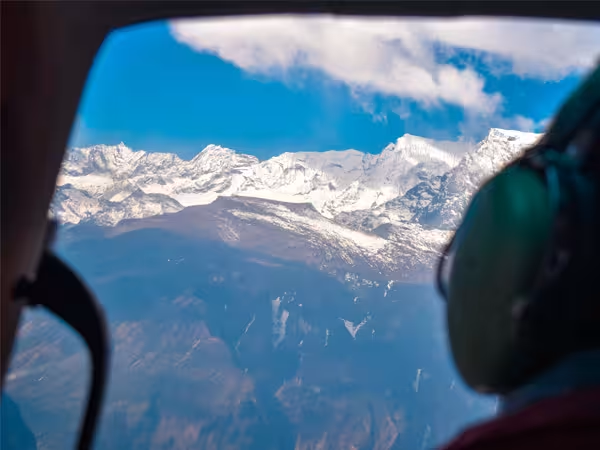
We offer a Kathmandu-to-Lukla direct helicopter option at US$500 per person, subject to availability, as an optional service rather than part of the standard trek price.
Permits: A Cost You Don't Have to Add Separately
Permits are essential for the Everest Base Camp route, but they are already handled within the package.
The current Nepal Tourism Board information lists the Sagarmatha National Park entry fee for foreign visitors at NPR 3,000. The Everest region also has the Khumbu Pasang Lhamu Rural Municipality entrance fee.
Nepal Tourism Board also states that trekkers on the Everest Base Camp route must be accompanied by a licensed guide.
Because these costs and documentation are handled as part of the organized trek, you do not need to build them into your personal spending budget on top of the advertised package price.
That is one advantage of comparing packages by total inclusions rather than headline price alone.
Accommodation: How Much More Will You Spend?
Accommodation during the standard trek in Everest region is already included.
The itinerary combines Kathmandu hotel accommodation with mountain lodges and traditional teahouses along the trail. Accommodation is generally based on twin sharing.
However, mountain accommodation is different from staying in a conventional city hotel.
As you climb higher, facilities become more basic and certain comforts may cost extra.
Wi-Fi, charging and some other services can require additional payment. Extra nights in Kathmandu or elsewhere caused by personal itinerary changes are also outside the standard package.
We offer optional upgrades as well. For example, an electric blanket for nine nights is abailable at US$150 per blanket.
These are not mandatory expenses. They are examples of how your final budget can change depending on the level of comfort you want.
Food on the Everest Base Camp Trek
Food is one area where the standard package takes a large part of the uncertainty out of your budget.
Breakfast, lunch and dinner during the trek are included.
The package also covers safe boiled drinking water, up to the stated daily allowance, and fresh seasonal fruit.
Typical meals on the Everest trail include dal bhat, Sherpa stew, thukpa, noodles, fried rice, pasta, soup and potato dishes.
What you need to budget separately are the things outside the included meals and water service.
That could mean:
- Coffee and tea
- Soft drinks
- Chocolate and snacks
- Bottled water
- Alcohol
- Specialty food
- Extra food outside the planned itinerary
None of these is likely to be the biggest expense of your trip individually. But over 10 or more trekking days, small purchases can add up.
Travel Insurance Should Be Part of Your EBC Budget
Travel insurance is not included in the US$1,350 package. For Everest Base Camp, this should not be treated like an optional add-on.
The trek reaches 5,364 meters at Base Camp and approximately 5,545 meters at Kala Patthar, so your insurance needs to be suitable for high-altitude trekking. Travel and rescue insurance that includes appropriate high-altitude helicopter evacuation coverage are essential in emergency cases. The exact price depends on your nationality, age, travel dates, coverage level and insurer, so there is no single insurance price that applies to every trekker. Instead of choosing the cheapest policy, check what the policy actually covers.
In particular, look for:
- High-altitude trekking coverage
- Emergency medical treatment
- Helicopter evacuation
- Trip interruption
- Trip cancellation
- Repatriation where applicable
A low-cost policy that excludes high-altitude evacuation is not an appropriate comparison for an EBC trip. Check our guide to travel insurance for more information if you dont have clue about which travel insurance to choose from your region or country.
How Much Does Trekking Gear Add to the Cost?
This is another category where your personal circumstances make a big difference. If you already own suitable trekking clothing and equipment, your additional gear budget may be relatively small.
If this is your first high-altitude trek, however, you may need to buy or rent several items.
We provide some major items, including:
- Down jacket
- Sleeping bag
- Duffel bag
- Trekking T-shirt
You will still need personal items such as suitable trekking boots, base layers, gloves, socks, sunglasses, sun protection and other clothing. The good news is that much of the remaining trekking equipment can be rented in Kathmandu. So before spending hundreds of dollars buying equipment you may never use again, check what is already supplied by your trekking company and what can be rented.
Tips: The Expense That Is Easy to Forget
Tips are not included in the trek package.
You should therefore decide on your tipping budget before starting the trek rather than treating it as a last-minute expense.
Your guide and porter are responsible for a large part of the day-to-day trekking experience, including route logistics, carrying support and assistance throughout the journey.
There is no single mandatory tip amount that applies to every traveler. Your decision can depend on the service you received, group size and your own budget.
The important thing for cost planning is simply to include tips as a separate line in your EBC budget.
Wi-Fi, Charging, Showers and Other Small Expenses
This is where your “small” expenses can become a surprisingly noticeable part of your spending.
As you move higher into the Everest region, services such as charging, Wi-Fi and hot showers can cost extra.
You may also spend money on:
- Snacks
- Drinks
- Laundry
- Toiletries
- Souvenirs
- Personal shopping
- Phone services
You do not need to spend heavily on these things.
But if you use paid Wi-Fi every evening, charge several devices, take frequent hot showers and buy snacks throughout the trek, your personal spending will be higher than that of a traveler who keeps things simple.
What Happens If Your Trek Costs More Than Expected?
The biggest unexpected costs are usually related to time and transportation, rather than food.
For example, if weather disrupts a mountain flight, you may need an additional night in Kathmandu or Ramechhap.
Similarly, if you request an itinerary change, arrive late, miss a flight because of your own schedule, or decide to extend your stay, those costs can fall outside the package.
This is why a small contingency fund is worth including in your budget. You do not necessarily need to spend it. It is there so that an unexpected hotel night or transportation change does not become a financial problem.
A Realistic Way to Build Your Everest Base Camp Budget
Instead of looking for one universal “EBC cost,” build your budget in layers.
Your fixed trek cost
Start with the published Sublime Trails package:
US$1,350 per person
This covers the core 14-day guided trek and major trekking logistics.
Add your unavoidable personal costs
Then budget separately for:
International airfare + travel insurance + Nepal visa
The exact amount depends on your nationality, departure city and insurance provider.
For travelers who need a tourist visa, Nepal's Department of Immigration currently lists US30for15days,US50 for 30 days and US$125 for 90 days. Some nationalities and categories are exempt, so check the current immigration requirements for your passport.
Add your personal trekking budget
Set aside money for:
Tips + snacks + drinks + Wi-Fi + charging + laundry + souvenirs
This amount is completely dependent on your habits.
Add a contingency
Finally, keep some money available for:
Flight disruption + additional accommodation + unexpected transportation or personal expenses
This is the part of the budget you hope not to use.
Is a Cheaper Everest Base Camp Package Actually Cheaper?
Not necessarily.
A US1,200packagemayinitiallyappearcheaperthanaUS1,350 package.
But what happens if the cheaper package excludes domestic flights, permits, meals, airport transfers or porter support?
You may end up paying those costs separately.
That is why the right way to compare Everest Base Camp trekking companies is to put their packages side by side and ask:
What is included in the price I am actually paying?
Look at:
- Flights
- Permits
- Accommodation
- Meals
- Guide
- Porter
- Airport transfers
- Trekking equipment
- Drinking water
- Emergency support
- Flight disruption assistance
Only after comparing those items does the headline price become meaningful.
How Much Cash Should You Take on the EBC Trek?
You do not need to carry your entire trip budget in cash.
Your major package expenses are paid through the booking process, while many of your personal expenses can be planned separately.
However, it is sensible to have access to enough money for daily personal spending and an emergency reserve.
Keep in mind that card and ATM access becomes less convenient as you move deeper into the Everest region. Having appropriate cash available for small purchases, charging, Wi-Fi, drinks and other personal expenses can make the trek easier.
The exact amount depends on how much you plan to spend, so a daily personal budget plus a separate emergency reserve is more useful than one universal cash figure. Normally people carry around 200 to 250 USD equivalent to Nepalese Ruppes as their personal budget.
So, What Will You Actually Pay for Everest Base Camp?
The simplest answer is:
Your EBC trip cost = trek package + international travel + insurance + visa + personal expenses + contingency.
With Sublime Trails, the US$1,350 starting price covers the core 14-day trekking experience, including the major logistics needed to get you from Kathmandu to Lukla, through the Khumbu and back.
But that is only one part of your overall travel budget.
The final amount you spend depends largely on the things outside the package: where you fly from, what insurance you choose, whether you need to buy or rent equipment, how much you spend on the trail, how much you tip and whether your trip encounters delays or changes.
That is the number you should calculate before booking.
Final EBC Cost Checklist
Before paying for your trek, make sure your budget accounts for:
- Sublime Trails trek package: from US$1,350
- International flights: variable
- Nepal visa: where applicable
- Travel and rescue insurance: variable
- Personal trekking gear: variable
- Tips: personal budget
- Snacks and drinks: personal budget
- Wi-Fi and charging: personal budget
- Laundry and souvenirs: optional
- Extra accommodation: contingency
- Flight disruption or other unexpected costs: contingency
The value of a transparent Everest Base Camp budget is not knowing one magic number. It is knowing which costs are already covered, which ones are yours, and where unexpected spending can occur. That way, when you compare EBC packages, you are comparing the actual trip—not just the number printed on the booking page. To see a complete cost breakdown for the classic route, check out our 14-Day Everest Base Camp Trek Itinerary to review daily inclusions, tea house accommodations, and clear pricing options.