Where Is Manaslu Base Camp Located?
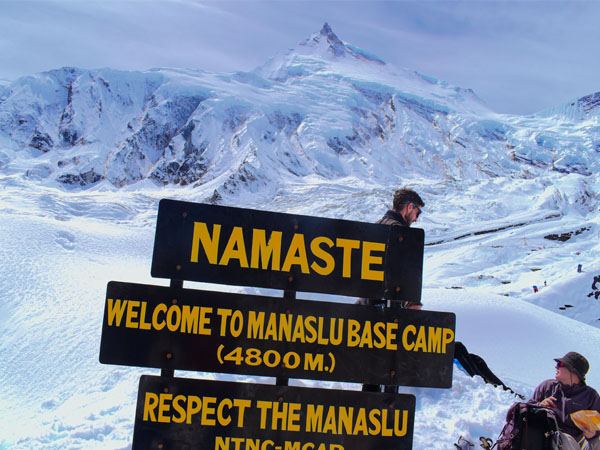
Manaslu Base Camp lies on the northern side of Mount Manaslu in the Manaslu Conservation Area, Gorkha district, north-central Nepal. It sits above Samagaun, a traditional settlement that serves as an important overnight stop on the Manaslu Circuit Trek.
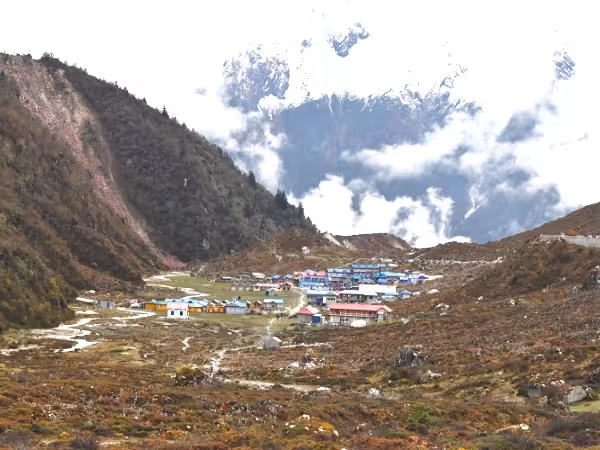
The base camp is surrounded by high mountain terrain, glaciers, and rocky moraine slopes. Its position provides close views of Mount Manaslu and the surrounding Himalayan peaks.
Unlike the main circuit route, which continues from Samagaun toward Samdo, the base camp trail follows a separate route toward the mountain. Trekkers normally return to Samagaun after completing the excursion.
How high is Manaslu Base Camp?
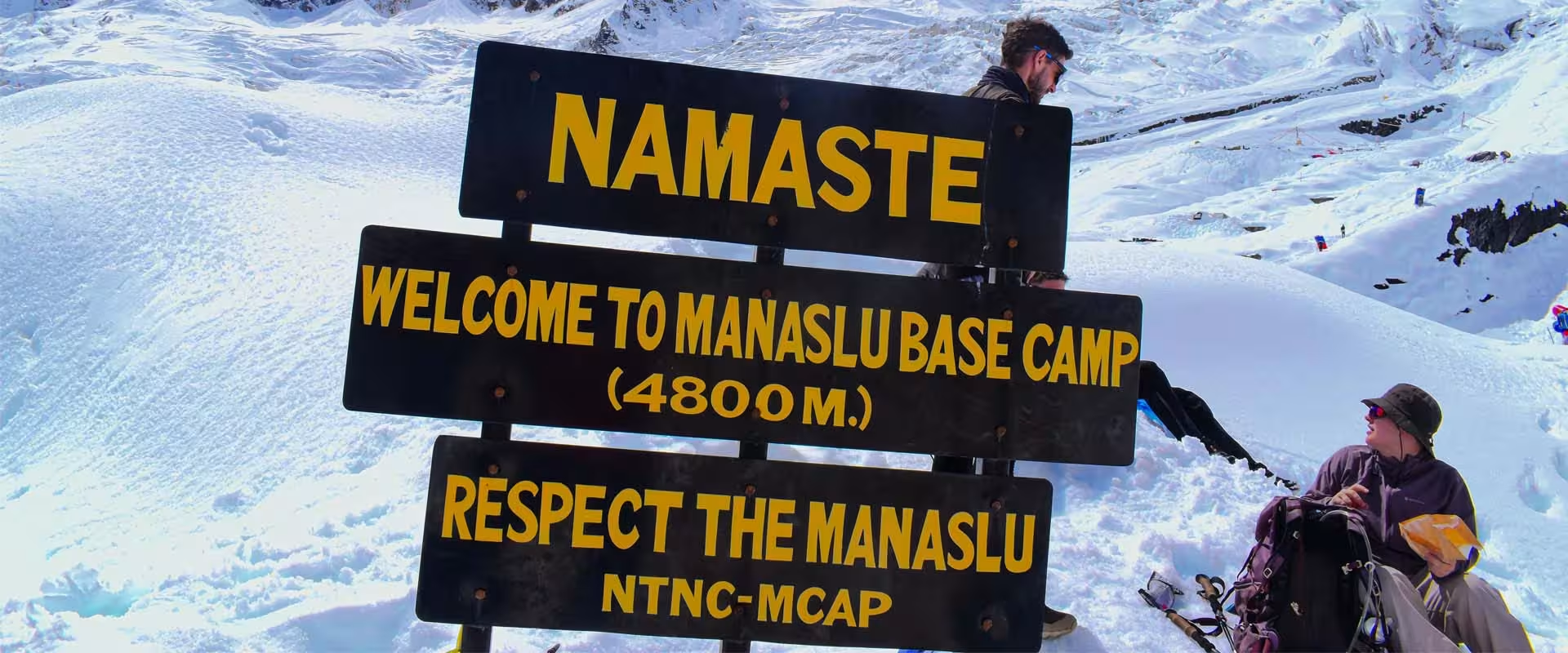
Manaslu Base Camp is commonly placed at approximately 4,800 meters (15,748 feet) above sea level. However, the exact altitude can differ depending on the expedition camp location and the point reached by trekkers.
The hike begins in Samagaun at approximately 3,530 meters (11,581 feet). This means trekkers can gain around 1,270 meters in elevation during the ascent.
That is a substantial climb for one day, especially at high altitude. The reduced oxygen availability makes walking more demanding than it would be at lower elevations.
The base camp altitude also makes acclimatization important. Trekkers should not attempt the hike simply because they have reached Samagaun. Their physical condition, previous altitude exposure, and symptoms should guide the decision.
Where is Samagaun in relation to Mount Manaslu?
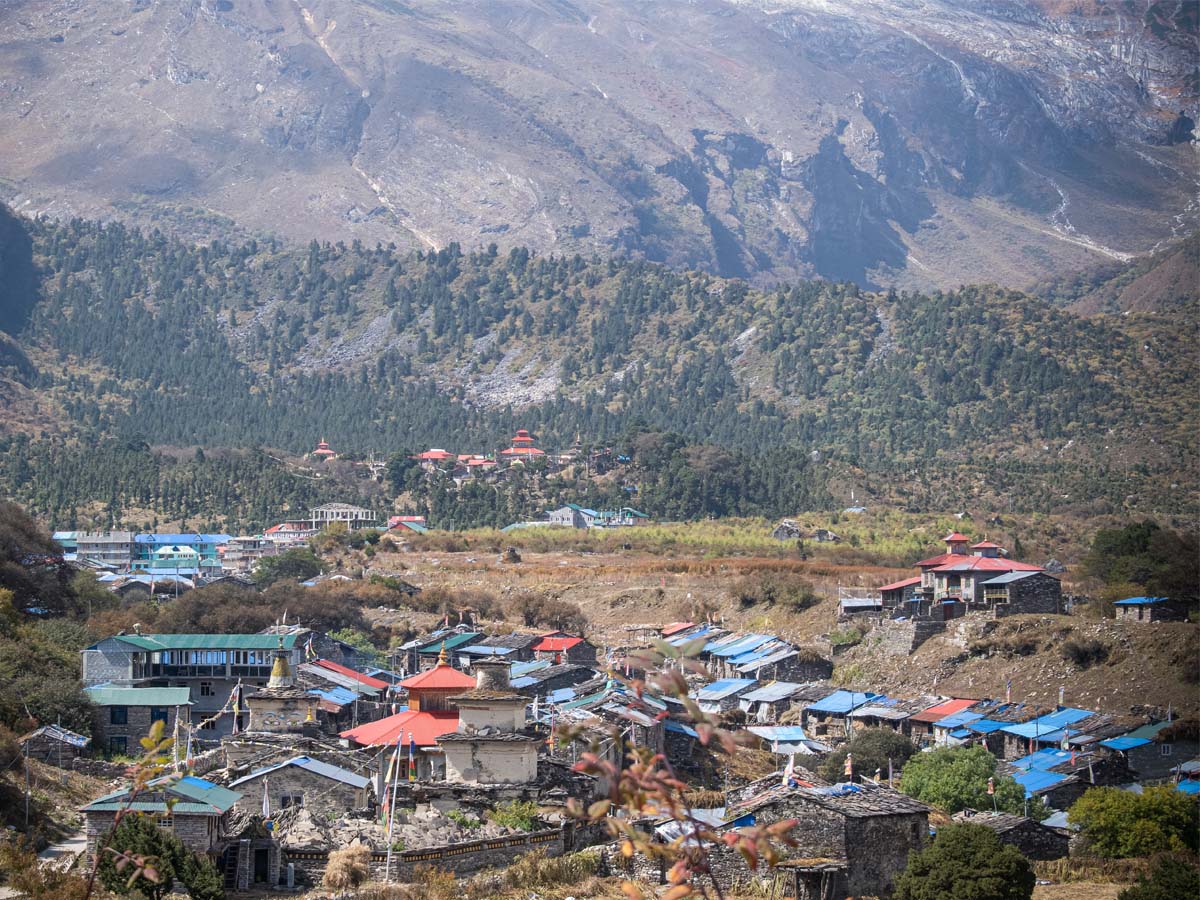
Samagaun, also written as Sama Gaun or Samagaon, is a traditional mountain settlement at approximately 3,530 meters. It lies beneath Mount Manaslu and serves as the main starting point for the base camp excursion.
The village is an important stop on the Manaslu Circuit. Trekkers usually spend additional time here before continuing toward Samdo and the Larkya La Pass.
Its location makes it suitable for several acclimatization hikes. Birendra Lake offers a shorter outing, while Pungyen Gompa and Manaslu Base Camp require more walking and elevation gain.
Samagaun also provides an opportunity to experience the local Nubri culture. Stone houses, monasteries, prayer flags, and traditional agricultural practices reflect the region's strong Tibetan cultural influence.
Is Manaslu Base Camp part of the Manaslu Circuit Trek?
Manaslu Base Camp is a side trip rather than a compulsory stop on the standard Manaslu Circuit route.
The main trekking trail reaches Samagaun and then continues toward Samdo. Trekkers who want to visit base camp take an additional excursion from Samagaun and return to the village before continuing their circuit.
This distinction matters when planning the itinerary. The excursion requires additional time and energy, even when it fits into an existing acclimatization day.
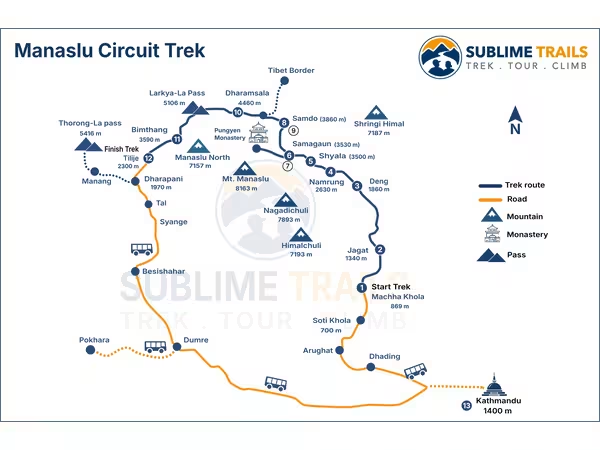
The wider circuit follows the Budhi Gandaki Valley through villages such as Machha Khola, Jagat, Deng, Namrung, and Lho before reaching Samagaun. After the village, the route continues toward Samdo, Dharmashala, and Larkya La Pass.
For a complete overview, see our Manaslu Circuit Trek.
How to Reach Manaslu Base Camp from Samagaun
Reaching Manaslu Base Camp requires several days of trekking through the Manaslu region. Most visitors approach it as part of the Manaslu Circuit Trek.
The final section begins in Samagaun and follows a steep mountain trail toward the Manaslu Glacier. Trekkers normally complete the excursion in one long day and return to Samagaun for the night.
The route is relatively straightforward to follow with an experienced guide. However, trail conditions can change with snow, ice, weather, and glacier activity.
What is the route from Samagaun to Manaslu Base Camp?
The hike begins from Samagaun and heads north toward the mountain. Initially, the trail passes through the village outskirts and gradually climbs toward Birendra Lake.
After reaching the lake area, the terrain becomes steeper and more exposed. The route continues upward across rocky slopes and moraine toward the base camp.
A simplified route looks like this:
- Samagaun – approximately 3,530 m.
- Birendra Lake – approximately 3,690 m.
- Upper slopes and rocky moraine – elevation varies.
- Manaslu Base Camp area – approximately 4,800 m.
- Return to Samagaun along the same general route.
The final approach is more demanding than the initial walk. Trekkers encounter loose stones, uneven surfaces, and potentially snowy sections.
How long does the Manaslu Base Camp hike take?
The Manaslu Base Camp hike generally takes around 7–8 hours for a round trip from Samagaun. This includes walking time and reasonable breaks, although individual schedules vary.
The ascent usually takes longer than the descent because trekkers must climb more than 1,000 meters while adjusting to thinner air.
A practical planning estimate is:
| Route |
Approximate duration |
| Samagaun to Birendra Lake |
45–90 minutes |
| Birendra Lake toward upper moraine |
1.5–2.5 hours |
| Upper moraine to base camp |
1.5–2.5 hours |
| Return to Samagaun |
2–3 hours |
These are indicative ranges, not fixed timings. Snow, ice, weather, fitness, and the exact base camp location can affect the schedule.
Start early in the morning to allow enough time for the ascent and descent. Your guide should assess the weather and your condition before deciding how far to continue.
Can you visit Manaslu Base Camp without completing the full circuit?
Yes, it is possible to plan a trip specifically to reach Manaslu Base Camp without completing the entire circuit. However, you still need to trek through the Manaslu region to reach Samagaun.
There is no direct road connecting Kathmandu or the lower trailhead to the base camp. The journey involves several days of walking through mountain villages.
A shorter trip can follow the initial Manaslu Circuit route to Samagaun, include the base camp excursion, and return through the same valley.
However, the full circuit offers a more varied trekking experience. It includes the high-altitude villages beyond Samagaun and the crossing of Larkya La Pass.
For travelers with enough time, the full circuit provides a broader experience of the Manaslu region.
What Can You See on the Manaslu Base Camp Hike?
The Manaslu Base Camp hike offers more than a close view of the mountain. Its route passes through different landscapes, from the traditional surroundings of Samagaun to glacial lakes and exposed alpine terrain.
As you gain elevation, vegetation becomes sparse and the landscape increasingly rocky. The views also change, revealing more of the glaciers and surrounding peaks.
These are the main attractions along the hike.
Mount Manaslu and its surrounding peaks
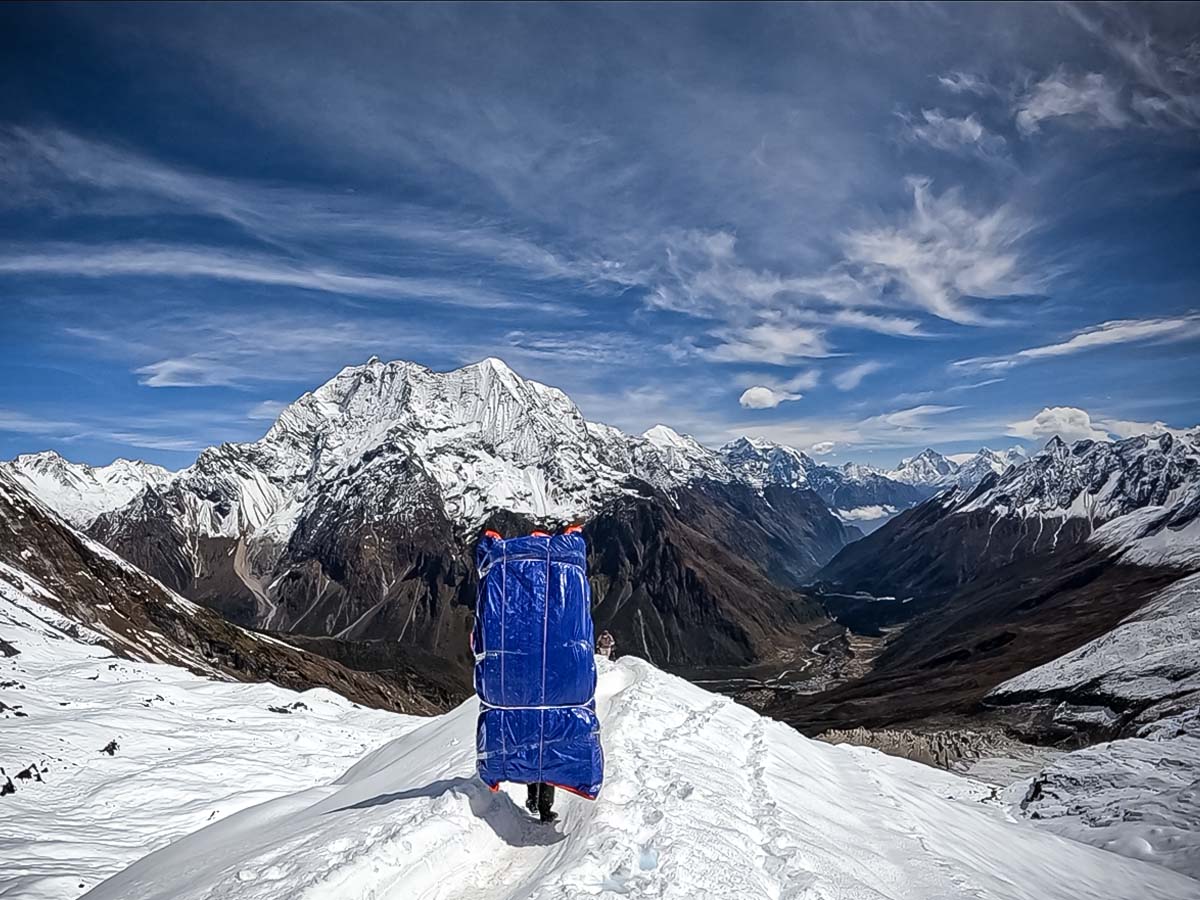
The main attraction is Mount Manaslu, which rises to 8,163 meters above sea level. It is the eighth-highest mountain in the world and one of Nepal's most recognizable Himalayan peaks.
The mountain dominates the landscape above Samagaun. Its enormous slopes, snow-covered ridges, and glaciers become more prominent as trekkers approach base camp.
The views depend heavily on weather conditions. Clear mornings often provide better visibility, while clouds and snowfall can obscure the mountain.
Trekkers can also see other peaks in the Manaslu range. These mountain views make the excursion worthwhile for photography and landscape enthusiasts.
Birendra Lake and the Manaslu Glacier
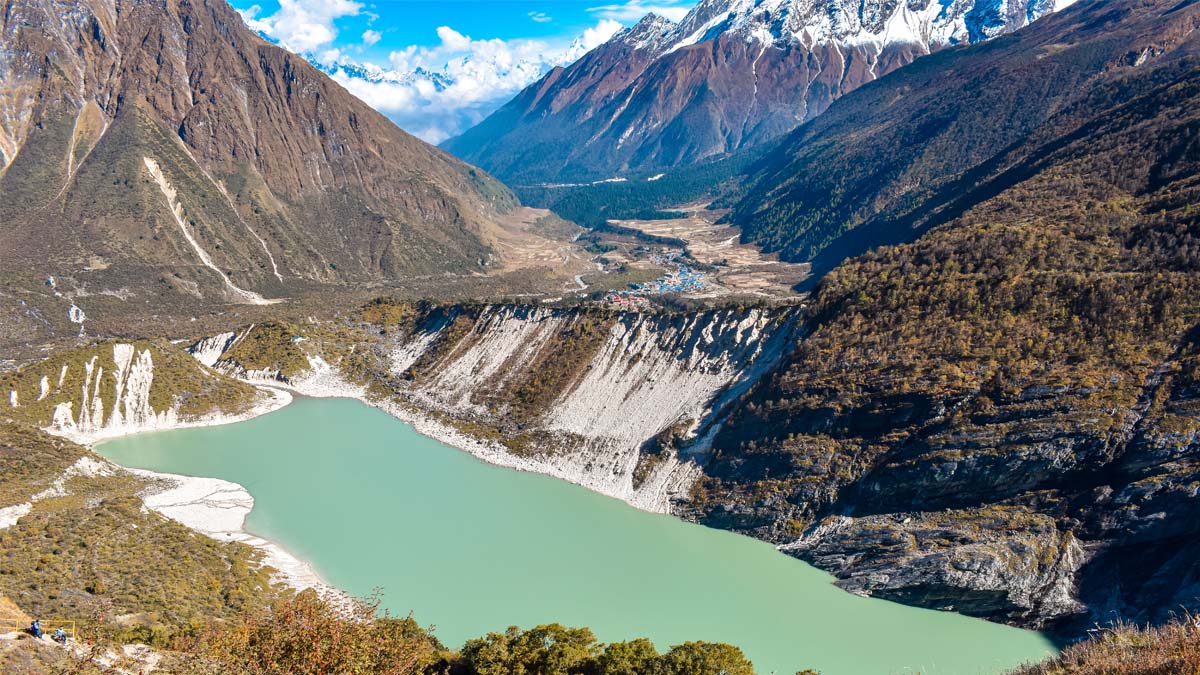
Birendra Lake, also known as Birendra Tal, is one of the most recognizable landmarks near Samagaun.
This glacial lake sits below the Manaslu Glacier and is a popular short excursion from the village. Its blue-green water contrasts with the surrounding rocky landscape.
The lake is an important reference point on the way toward Manaslu Base Camp. Trekkers pass its vicinity before continuing onto steeper terrain.
Some visitors choose to stop at Birendra Lake rather than continue to base camp. This is a reasonable alternative for those who want a shorter outing or need more time to acclimatize.
The lake is also worth visiting separately if the base camp hike proves too demanding.
Rocky moraines and high-altitude landscapes
Beyond Birendra Lake, the landscape changes considerably. Forests and grassy sections give way to open slopes, loose stones, and glacial moraine.
Moraines are deposits of rock and sediment left behind by glaciers. They form an important part of the landscape surrounding Manaslu Base Camp.
Walking across this terrain requires careful footing. Loose stones and uneven surfaces can make the trail tiring, particularly during the descent.
The higher sections also expose trekkers to stronger winds and colder temperatures. Snow and ice may cover parts of the route depending on the season.
Although the scenery becomes less vegetated, the views of the surrounding mountains and glacier become more impressive.
Mountaineering activity at base camp
Manaslu Base Camp serves as a staging area for mountaineering expeditions attempting to climb Mount Manaslu.
During climbing seasons, expedition teams establish tents and organize their equipment here. The camp supports climbers before they move toward higher camps on the mountain.
The atmosphere can therefore differ from an ordinary trekking destination. Depending on the season, visitors may see expedition tents, climbing equipment, and teams preparing for their summit attempts.
However, base camp is not always occupied. The number of expeditions and their activities vary from year to year.
Trekkers should respect expedition operations and avoid entering private camp areas without permission.
How Difficult Is the Manaslu Base Camp Hike?
The Manaslu Base Camp hike is strenuous, particularly because of its elevation gain and high-altitude conditions. It does not involve technical climbing, but that does not make it an easy walk.
Trekkers must climb from approximately 3,530 meters to around 4,800 meters in one day. At this elevation, reduced oxygen availability affects walking speed, endurance, and recovery.
Previous trekking experience is helpful, but proper acclimatization is more important than simply walking fast or having strong legs.
How fit do you need to be?
You should be comfortable walking for several consecutive hours on uneven mountain trails before attempting Manaslu Base Camp.
Good cardiovascular endurance helps you maintain a steady pace during the climb. Strong legs also make steep sections and the return descent easier.
A useful preparation plan includes:
- Regular walking and hiking on uneven terrain.
- Uphill training with gradual increases in elevation.
- Stair climbing to strengthen your legs.
- Cardiovascular exercise such as cycling, swimming, and running.
- Longer weekend hikes with a light backpack.
Start training several weeks before your trek. Increase the duration and intensity gradually rather than attempting difficult workouts immediately.
However, physical fitness cannot prevent altitude sickness. Even experienced mountaineers can develop symptoms when ascending too quickly. For a detailed information check our instruction from experts on how to train for manaslu region trekking,
Is altitude sickness a concern?
Yes. Altitude sickness is one of the main concerns during the Manaslu Base Camp hike.
The route reaches approximately 4,800 meters, where the available oxygen pressure is considerably lower than at sea level. This can affect even healthy and physically fit trekkers.
Common symptoms of acute mountain sickness (AMS) include:
- Headache.
- Nausea or vomiting.
- Dizziness.
- Unusual tiredness.
- Difficulty sleeping.
- Loss of appetite.
More serious conditions include high-altitude pulmonary edema (HAPE) and high-altitude cerebral edema (HACE). These require urgent medical attention and descent.
Follow a gradual ascent schedule and communicate any symptoms to your guide. Never continue climbing when you have symptoms of altitude sickness.
Why is acclimatization in Samagaun important?
Samagaun is an important acclimatization stop on the Manaslu Circuit because it gives your body additional time to adjust before the higher sections of the trek.
Most well-planned itineraries include an additional night here. Trekkers can use the day for a gentle village walk, a visit to Birendra Lake, or a longer excursion toward Pungyen Gompa or Manaslu Base Camp.
However, these activities have different physical demands. The base camp hike is a substantial climb, not a compulsory activity for every trekker.
The principle of climbing higher during the day and returning to sleep at a lower elevation can support acclimatization. However, a demanding excursion should only be attempted when your body has adjusted sufficiently.
If you have a headache, nausea, dizziness, or unusual fatigue, choose rest and discuss your symptoms with your guide.
Best Time to Visit Manaslu Base Camp and How to Prepare
The best seasons for the Manaslu Base Camp hike are generally spring and autumn. These periods offer suitable conditions for trekking in the Manaslu region, although mountain weather remains unpredictable.
Choosing the right season helps you enjoy clearer mountain views and more manageable trail conditions. However, preparation involves more than selecting travel dates. You also need suitable clothing, the required permits, and a realistic itinerary.
Which months are best for the hike?
Spring (March–May)
Spring is one of the most popular periods for trekking in the Manaslu region. Temperatures gradually rise, and the lower sections of the trail become more comfortable.
March can still bring cold temperatures and snow at higher elevations. Conditions generally become warmer as spring progresses.
April and May often provide good opportunities for mountain views, although afternoon clouds can develop.
Autumn (September–November)
Autumn is another excellent season for the Manaslu Base Camp hike.
The weather generally becomes more stable after the monsoon. September may still experience occasional rainfall, particularly early in the month.
October and November usually offer favorable trekking conditions, with cooler temperatures and good mountain visibility.
Winter (December–February)
Winter brings colder temperatures and increased snow at higher elevations. The trail toward base camp can become icy or difficult to navigate.
Some accommodation and trekking services may operate with limited availability. Winter visits require careful planning and appropriate cold-weather equipment.
Monsoon (June–August)
The monsoon season brings heavy rainfall to many parts of Nepal. Lower sections of the Manaslu trail can become muddy, slippery, and affected by landslides.
Cloud cover can also reduce mountain visibility.
Although some trekkers visit during this period, it is generally not the preferred season for the Manaslu Base Camp excursion.
What should you pack for the Manaslu Base Camp hike?
The right equipment makes the hike safer and more comfortable. Conditions can change quickly, so prepare for cold temperatures, strong winds, and possible snow.
Wear comfortable trekking boots that you have already used during training. New boots can cause blisters and discomfort during a long hiking day.
Carry only what you need for the excursion. A heavy backpack increases fatigue, particularly during steep climbs. For a detailed packing list, look over ultimate packing list for manaslu circuit trek.
What permits are required for Manaslu Base Camp?
Manaslu Base Camp lies inside the Manaslu Conservation Area and the Manaslu restricted trekking region. International trekkers therefore need the relevant permits for their itinerary.
The main permits include:
- Manaslu Restricted Area Permit (RAP): Required for trekking through the designated restricted area. Fees depend on the season and duration.
- Manaslu Conservation Area Permit (MCAP): Required for entering the conservation area.
- Annapurna Conservation Area Permit (ACAP): Required when the chosen itinerary enters the Annapurna Conservation Area on the exit section of the circuit.
- Chum Nubri Rural Municipality Entry Tax: Local development fee collected upon entering the municipality area.
The ACAP requirement depends on your route. It should not automatically be presented as a permit needed for every Manaslu Base Camp excursion.
Permits should be arranged before entering the restricted area through the appropriate authorized process. Always check our manual for lastest requrirement for manaslu circuit trek permit.
Should you hire a guide for the Manaslu Base Camp hike?
A licensed guide is essential for planning and completing this excursion responsibly. Manaslu is a restricted trekking region, and visitors must follow the applicable government permit and guide requirements.
A knowledgeable local guide helps with route decisions, weather assessment, altitude-related concerns, and communication with local communities.
The trail above Samagaun can be difficult to navigate when visibility is poor or snow covers sections of the route. An experienced guide can assess whether conditions are suitable for continuing.
At Sublime Trails, our trekking team plans the Manaslu itinerary around gradual altitude gain, appropriate acclimatization, and the condition of each trekker. The decision to continue toward base camp should always depend on safety and the conditions on the day.
Final Thoughts: Manaslu Base Camp
Manaslu Base Camp is one of the most rewarding side excursions on the Manaslu Circuit Trek. It brings trekkers closer to Mount Manaslu and offers a different perspective of the surrounding glaciers, mountains, and high-altitude landscapes.
The journey begins in Samagaun, where trekkers have an opportunity to acclimatize before attempting the climb. From there, the trail passes Birendra Lake and continues across rocky terrain toward the Manaslu Glacier and base camp.
Although the hike does not require technical mountaineering skills, it demands good preparation. The elevation gain, thin air, and uneven trail make it a strenuous day excursion. Proper acclimatization, suitable equipment, and guidance from an experienced trekking professional are important.
Spring and autumn generally provide the best conditions. However, weather and trail conditions can change quickly, particularly above 4,000 meters.
If you are planning the Manaslu Circuit, consider including Manaslu Base Camp when your itinerary and physical condition allow it. It adds another dimension to the journey and gives you more time to appreciate the mountain that defines this region. Contact us to book your trip without hassle.
At Sublime Trails, we believe that understanding the route and respecting the mountain environment are essential parts of a successful Himalayan trek. Manaslu Base Camp is not simply another destination to reach. It is an opportunity to experience the landscape surrounding one of the world's highest mountains.
Author bio
About the author: The Sublime Trails team shares practical trekking knowledge from 13 years of organizing Himalayan adventures in Nepal. Our guides and trekking professionals contribute local experience, route information, and practical advice to help travelers prepare for their journeys.