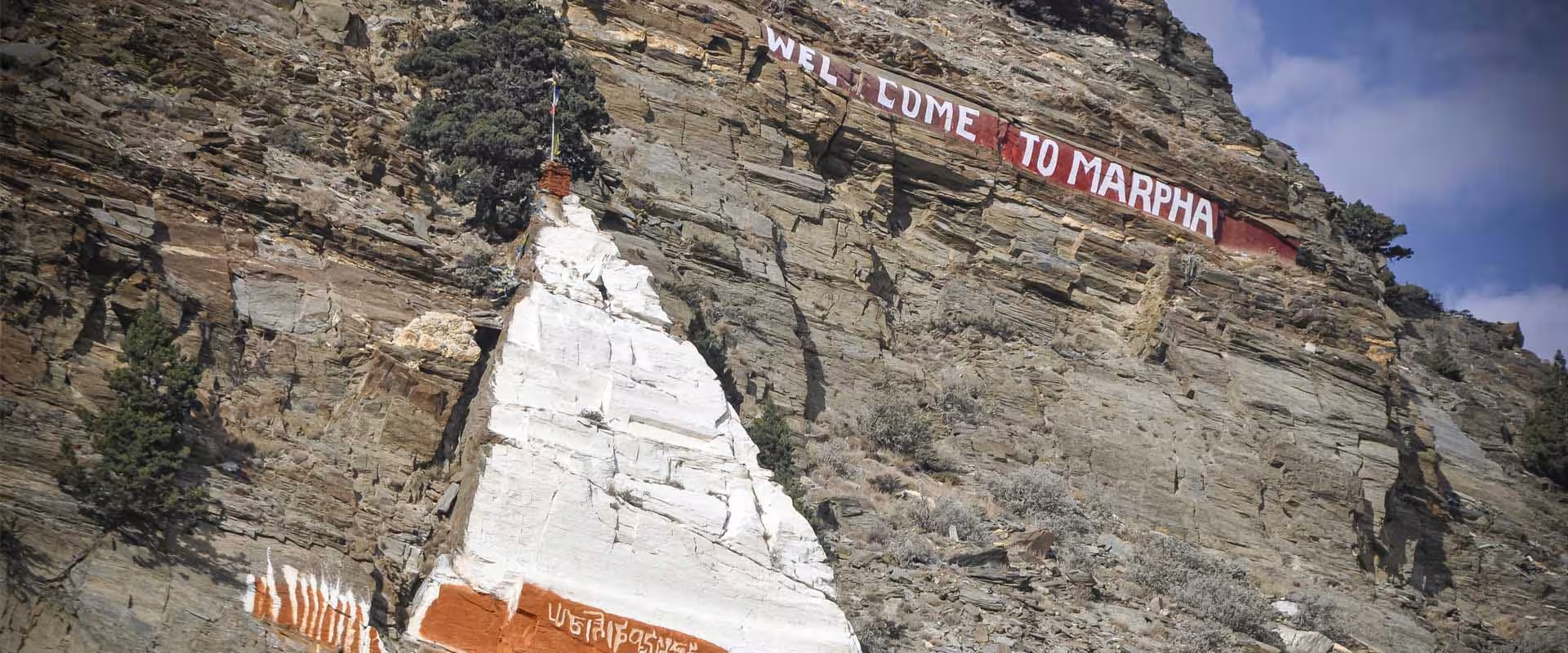
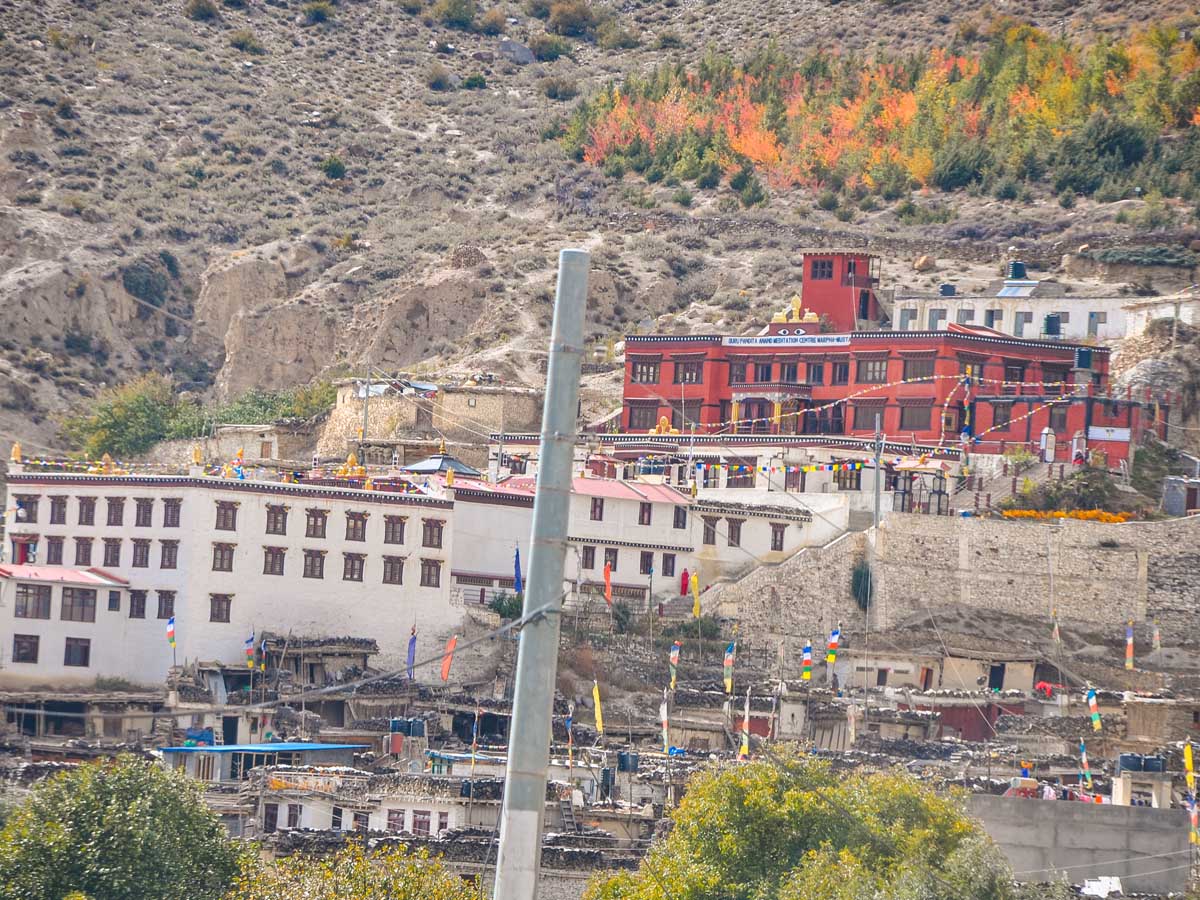
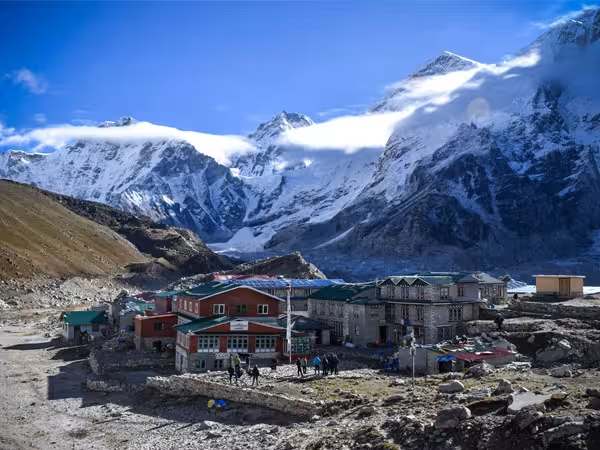
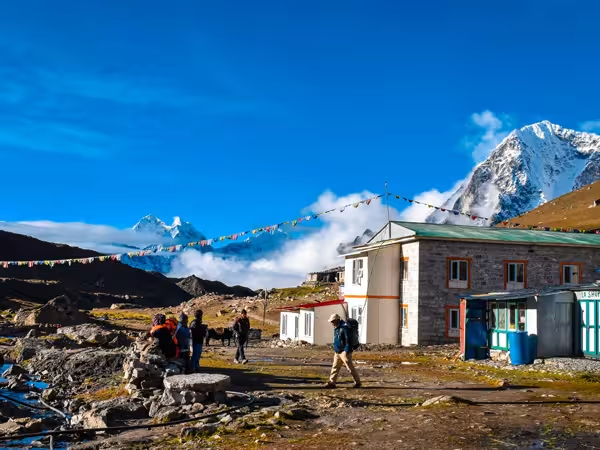
Marpha village Nepal sits at about 2,650 metres (8,700 feet) in the Kali Gandaki valley of Mustang, roughly two hours' walk below Jomsom. Whitewashed stone houses line paved lanes, apple trees fill every spare patch of ground, and a monastery looks down on it all from the hillside. Trekkers on the Annapurna Circuit and the Jomsom trek reach it after long days on the trail, and it is an easy place to rest.
This guide covers where Marpha is, what to see, the best time to visit, and how to get there from the foreign countries. It also shows how the village fits into a longer Annapurna trek.
In This Guide
Where Is Marpha Village Nepal?
Why Marpha Is Called the Apple Capital of Nepal
Things to Do in Marpha
Thakali Food and What to Taste
Best Time to Visit Marpha, Mustang
How to Get to Marpha
Marpha on the Annapurna Circuit
Where to Stay in Marpha
Practical Tips Before You Go
Marpha Village Nepal FAQ
Where Is Marpha Village Nepal?
Marpha is in Mustang District, in the Annapurna region of western Nepal. It sits on the Kali Gandaki river between Tukuche to the south and Jomsom to the north. The river runs below the peaks of Dhaulagiri and Nilgiri through a gorge often described as the deepest on earth.
Marpha belongs to Lower Mustang, the Thak Khola section of the valley. Upper Mustang, the remote region north of Kagbeni, is a separate restricted area with its own permit rules. The two are easy to confuse, so check which one an itinerary actually covers.
The village name says something about its people. In the Thakali language, mar means hardworking and pha means people. The Thakali traded salt between Tibet and the plains of Nepal for centuries. Today tourism, mule rearing and farming support the village.
Why Marpha Is Called the Apple Capital of Nepal
Nepalis call Marpha the apple capital of the country, and the title fits. The Temperate Horticulture Development Center, based in the village, introduced new apple varieties and growing methods. Orchards spread from there. Nearly every household now grows apples in some form.
The fruit reaches the table in many ways: fresh, dried, as jam, as cider, and as brandy. Apple pie is so common in the teahouses that the Jomsom trek has picked up the nickname "the Apple Pie Trek." In autumn you will see apples drying on rooftops.
The orchards are under pressure, though. In Kunjo, a village south of Marpha, apple trees have disappeared, partly because of a warming climate. Dialogue Earth reports that production has moved upstream toward cooler, higher ground, and Marpha is one of the places it has moved to.
Things to Do in Marpha
Whitewashed houses in Marpha village Nepal
Walk the Stone-Paved Lanes
The old core of Marpha is a grid of flagged lanes, with flat-roofed houses built around courtyards and a drainage channel running underneath. The main road passes a few hundred metres away, so the lanes stay quiet. The hills also shelter the village from the afternoon wind that tears through the rest of the gorge.
Climb to the Monastery
A Nyingma monastery stands above the village and is open to visitors. The walk up is short, and the view over the rooftops and the river valley is the best in town. Leave your shoes where asked, and check before taking photos inside.
Cross the River to Chhairo Gompa
On the southern edge of the village, across the Kali Gandaki, you will find Chhairo Gompa. It was the first Nyingma monastery established in Mustang District. A Tibetan refugee settlement sits nearby, and many of the souvenir shops in Marpha are run by its residents.
Visit the Orchards and the Distilleries
Walk between the orchards in any season. In September and October you can watch the harvest, and the Temperate Horticulture Development Center has run an apple-picking festival in late September, with a small entry fee. Dates and fees change from year to year, so confirm locally. The distilleries lie toward the southern end of the village, where the houses thin out. Marpha brandy is the classic souvenir.
If you have time, hike up to Old Marpha, the earlier settlement above the present village. It gives a sense of how the place looked before the orchards.
Thakali Food and What to Taste
The local cooking is Thakali, and Thakali dal bhat is worth ordering at least once. Beyond that, the menu is mostly apples. Try the pie, the cider and the dried slices, which travel well in a daypack.
Brandy deserves a warning. Alcohol hits harder at altitude, and it can make poor sleep and headaches worse if you are still acclimatizing. Save it for the end of your stay, and buy a bottle to take home instead.
Best Time to Visit Marpha, Mustang
Autumn (September to November). This is the harvest, and the best season overall. The apple harvest runs from late August to early November, with picking at its peak in September and October. Skies are clear after the monsoon, and the mountain views are at their sharpest.
Spring (March to May). The trees blossom and the trails are busy.
Winter (December to February). Nights are cold and the trails are quiet. Flights depend on the weather, so keep a spare day.
Summer (June to August). The monsoon limits views and can disrupt flights and roads. Mustang sits in a rain shadow, so it is drier than the southern side of the Annapurnas, but delays are still likely.
Marpha fills up in the peak trekking months, March to May and October to December. Book rooms ahead if you are travelling then.
How to Get to Marpha
By air and on foot. Getting to Marpha village Nepal from the foreign countries means flying into Kathmandu, then taking a domestic flight to Pokhara. From Pokhara, a flight to Jomsom takes about 20 minutes. From Jomsom, Marpha is a two-hour walk downhill, or a short jeep ride. Strong winds usually stop departures from Jomsom after about 11 am, so flights run in the morning. Build in a spare day for cancellations.
By road. The Beni to Jomsom road is now open to 4WD vehicles. Operators typically allow around eight hours from Pokhara to Marpha, and it is a long day on a mountain road.
On foot along the valley. Marpha to Kagbeni is a walk of about five to six hours. Many trekkers combine it with Jomsom and Muktinath.
Marpha on the Annapurna Circuit
Marpha sits on the final stretch of the Annapurna Circuit. Trekkers who cross Thorong La and visit Muktinath come down the Kali Gandaki valley through Jomsom to reach it. If you are weighing routes, see our guided Annapurna Circuit Trek. Itineraries that include Tilicho Lake often finish in this valley as well.
A road now runs through much of the valley. That means a route can mix walking with jeep sections, and the balance differs from one itinerary to the next. Ask how much of your trek is on foot before you book. If you want the walking-focused version, compare it with our Annapurna Circuit Trek 10 Days.
Where to Stay in Marpha
Marpha has teahouses and guesthouses along its lanes, and some sit inside apple gardens. Rooms are simple. Many have hot water, and some offer Wi-Fi, though both can be unreliable. Lodges fill quickly in March to May and October to December, so reserve early in those months.
Practical Tips Before You Go
A few things are worth sorting out before you visit Marpha village Nepal.
Altitude. At 2,650 metres, Marpha is moderate. But flying from Pokhara, at around 800 metres, to Jomsom, at about 2,700 metres, is a fast gain. Take the first day easy, drink plenty of water, and add a rest day if you get a headache.
Permits. Marpha lies inside the Annapurna Conservation Area, so trekkers need the conservation area permit. Fees and rules change. Confirm the current requirements with the Annapurna Conservation Area Project and the Nepal Tourism Board before you travel.
Cash. Carry Nepali rupees for the valley. Card payment is not reliable.
Temple etiquette. Walk clockwise around chortens and mani walls, keeping them on your right.
Clothing. Pack layers and sun protection. Mornings are cold, and afternoons can be windy and dry.
Marpha Village Nepal FAQ
How high is Marpha village?
About 2,650 metres (8,700 feet). Sources vary by a few tens of metres depending on where in the village they measure.
How far is Marpha from Jomsom?
About two hours on foot, and less by jeep. The walk follows the river valley.
How many days should I spend in Marpha?
One night is enough for the lanes, the monastery and a meal. Two nights let you visit the orchards, Chhairo Gompa and Old Marpha without hurrying.
Is Marpha in Upper Mustang?
No. Marpha is in Lower Mustang. Upper Mustang is a separate restricted area that needs its own permit.
Do I need a permit to visit Marpha?
Yes, the Annapurna Conservation Area permit. Check current fees and rules before you travel.
When is the apple harvest in Marpha?
From late August to early November, with the peak in September and October.
Plan Your Trip to Marpha Village Nepal
If you would rather walk into Marpha than fly past it, start with our Annapurna Circuit Trek. You can also send us an enquiry, and we will help you pick a route and a season.