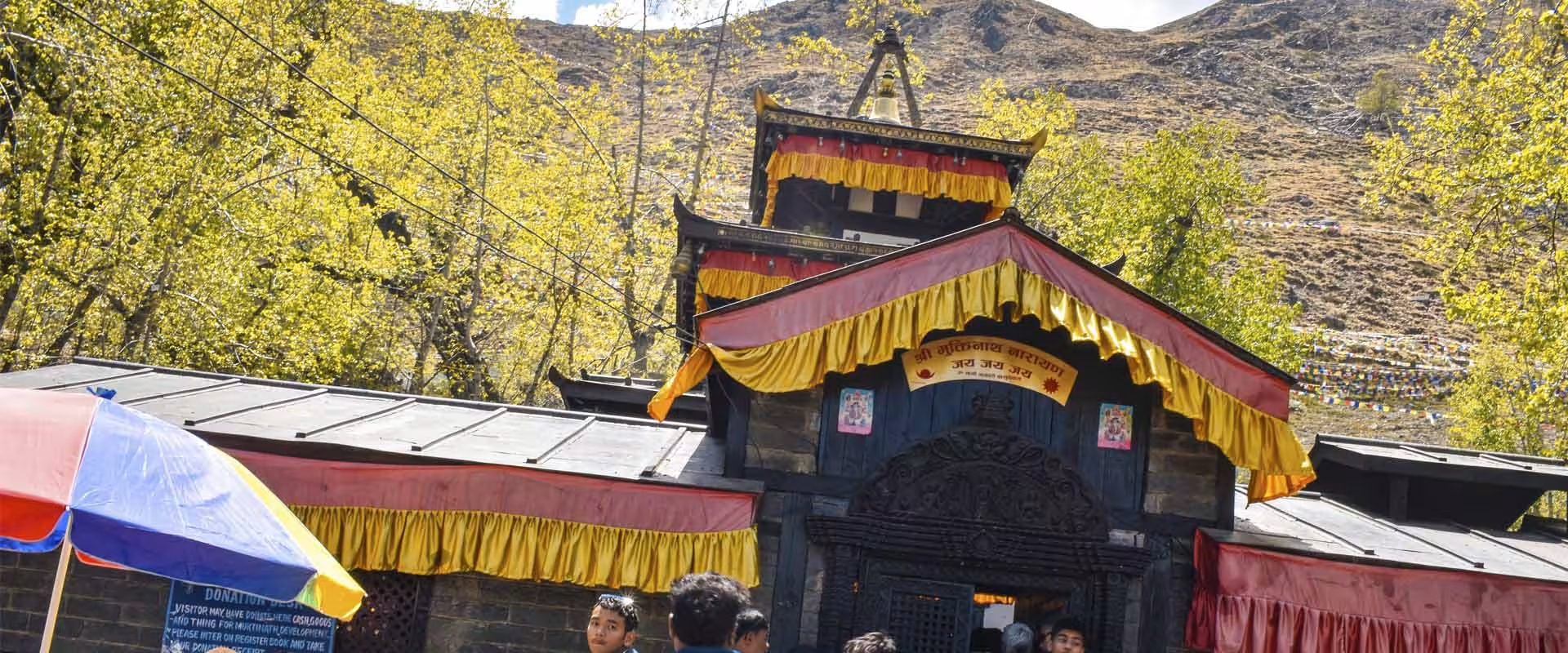
Muktinath is one of the most important pilgrimage and trekking destinations in Mustang, Nepal, sitting at around 3,800 metres in the Annapurna region. For us at Sublime Trails, Muktinath is more than a famous temple on a trekking map.On our Annapurna Circuit and Tilicho Lake itineraries, it becomes part of a much bigger journey through high mountain passes, dry Himalayan valleys, traditional villages and culturally important settlements.
After the higher sections of the route, the landscape around Muktinath feels noticeably different. The green valleys become drier. The mountains appear more exposed. The influence of Tibetan Buddhist culture becomes more visible. At the same time, pilgrims continue arriving at Muktinath for reasons that have little to do with trekking. That combination is what makes this place interesting.
If you are planning to visit Muktinath, this guide explains where it is, why it matters, how it fits into the Annapurna Circuit and Tilicho Lake Trek, what you can see, when to visit and what to know before you go.
Where Is Muktinath in Mustang, Nepal?
Muktinath is located in Mustang District in north-central Nepal, within the wider Annapurna region. The site sits at approximately 3,800 metres above sea level, making it one of the higher destinations visited on many Annapurna itineraries.
Geographically, Muktinath sits on the Mustang side of the Himalayas, where the landscape becomes much drier than the valleys farther south. That change is easy to notice when travelling through the Annapurna region. Lower sections of the journey can include forests, rivers and greener hills.
As you move towards Manang and eventually cross into Mustang, the landscape becomes increasingly rugged and dry. Muktinath sits within this distinctive trans-Himalayan environment.
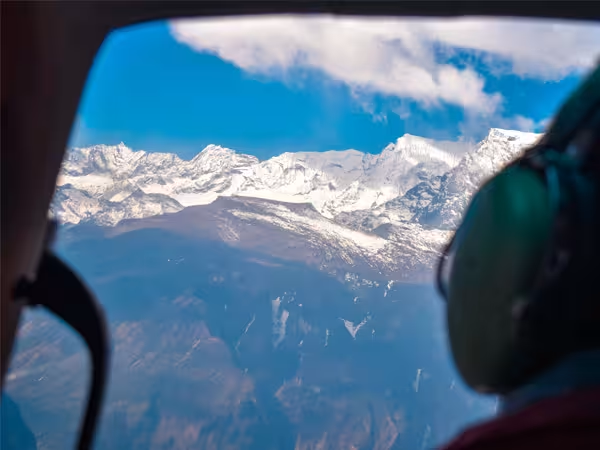
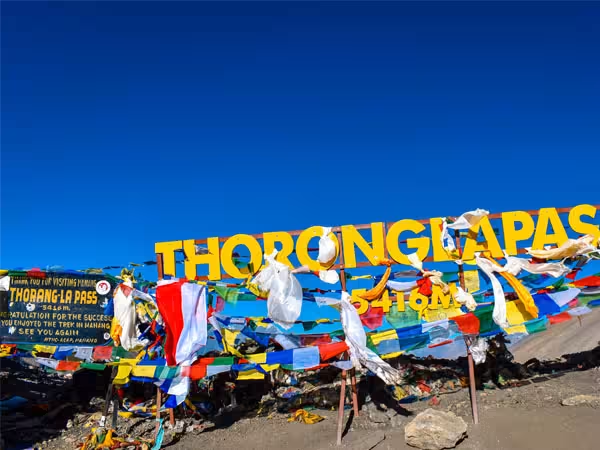
The location also explains why Muktinath is closely connected with the Annapurna Circuit Trek. Trekkers traditionally reach Muktinath after crossing Thorong La Pass, which stands at approximately 5,416 metres.
From Muktinath, the route continues towards the Kali Gandaki Valley, with places such as Kagbeni and Jomsom forming important stops depending on the itinerary. This geographical position gives Muktinath a role beyond its religious importance. It connects several very different parts of the Annapurna region.
You can experience the high mountain environment around Thorong La and then descend into the dry landscapes of Mustang. That transition is one of the reasons I would not describe Muktinath simply as a temple destination. It is a place where the geography and culture of the region come together.
Why Is Muktinath Famous?
Muktinath is famous for its religious importance to both Hindus and Buddhists and for its location on the Annapurna Circuit. For Hindu pilgrims, Muktinath is an important sacred site associated with Lord Vishnu. The area is traditionally known as Mukti Kshetra, a name connected with the idea of liberation.
The site is also associated with shaligram, naturally occurring fossil stones found in the Kali Gandaki River and considered sacred in Hindu tradition. For Buddhists, the site is known as Chumig Gyatsa, commonly associated with the meaning “Hundred Waters.” This shared religious importance is one of the defining characteristics of Muktinath.
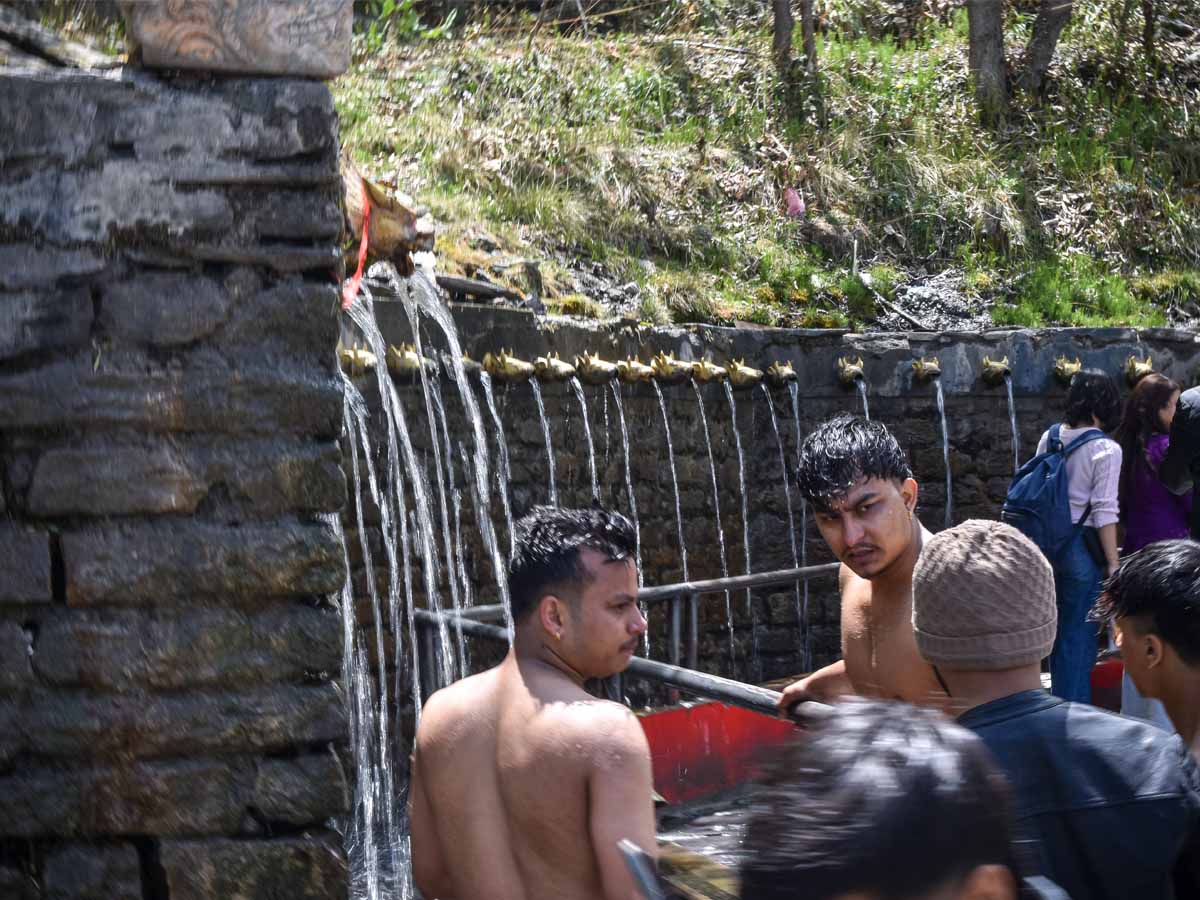
The site is not simply visited by trekkers who happen to pass through the area. Pilgrims travel considerable distances to worship here. Inside the wider complex, you can see the famous 108 water spouts, where pilgrims traditionally bathe as part of their religious practice. Nearby, Jwala Mai Temple is also an important religious site.
Local People Taking Bathe at 108 Water Spout at Muktinath
The natural flame associated with the temple adds another distinctive feature to the area. When visiting, I think it helps to understand that these are active religious spaces. The best way to experience them is not to rush through with a camera. Take some time to observe. Follow local instructions.
Give pilgrims enough space to carry out their rituals. Ask before photographing people. Those small choices make a significant difference when visiting a place that is important to local communities and pilgrims.
Muktinath on the Annapurna Circuit Trek
Muktinath is one of the most recognisable destinations on the Annapurna Circuit Trek. On the traditional route, trekkers travel through the Marsyangdi Valley, gradually gain altitude, cross Thorong La and then descend towards Muktinath. The experience changes considerably after the pass.
Before Thorong La, the route takes you through the high valleys of the Annapurna region. After crossing the pass, you begin descending towards Mustang. The landscape becomes drier and more open. For many trekkers, reaching Muktinath after the pass feels like a major milestone.
You have completed one of the highest and most demanding sections of the journey, but the route still has plenty to offer. From Muktinath, the journey can continue towards Kagbeni, Jomsom and the Kali Gandaki Valley, depending on the itinerary. This is where I think the route becomes particularly interesting.
The Annapurna Circuit is not one continuous type of landscape. It takes you through forests, river valleys, high mountain terrain and eventually the dry Mustang environment. Muktinath represents that transition particularly well. If you are choosing an Annapurna itinerary, I recommend checking exactly how Muktinath is included.
Some itineraries may involve more walking around the area, while others may use road transport for part of the journey. The number of nights spent in Muktinath can also vary. Rather than choosing a package simply because it lists “Muktinath,” check the daily itinerary and transport arrangements. That tells you what your actual experience will look like.
Muktinath and the Tilicho Lake Trek
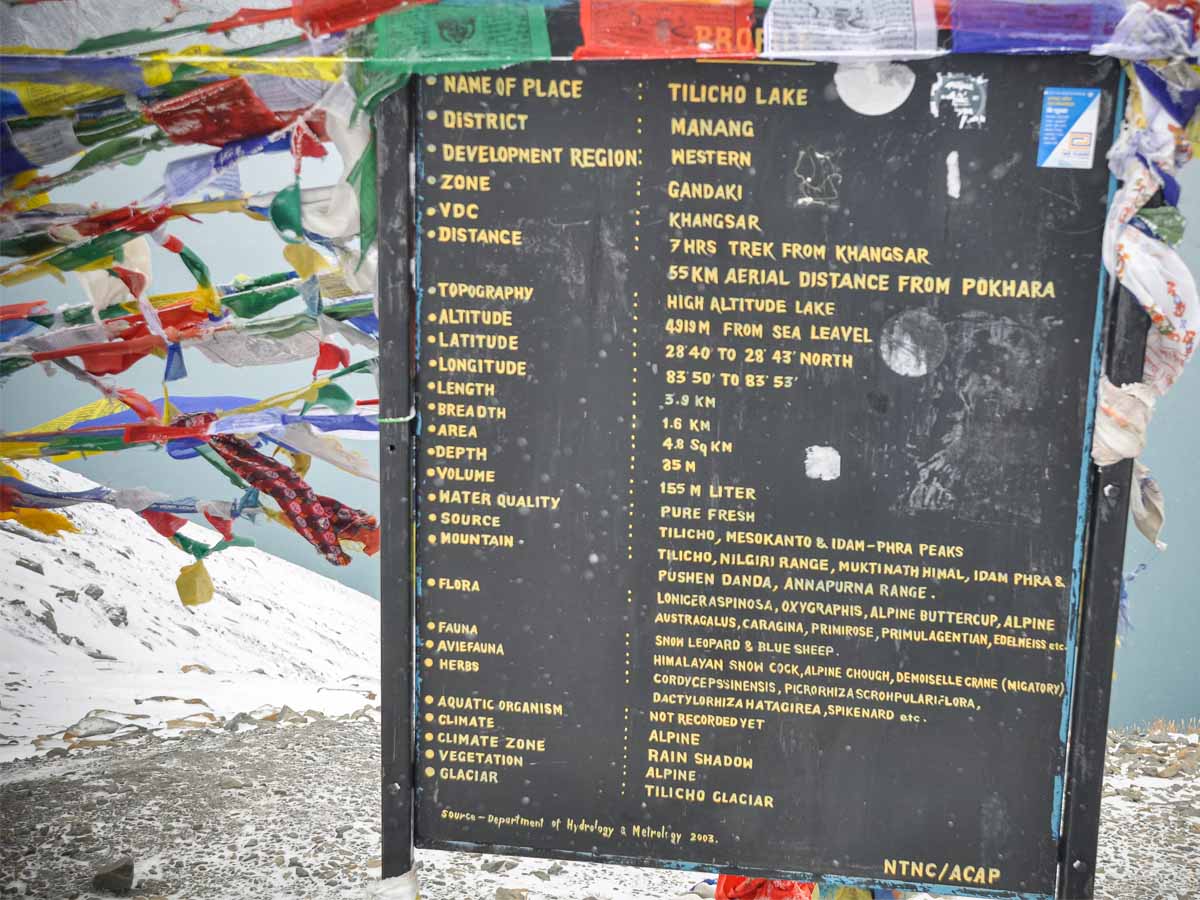
Muktinath can also form part of a Tilicho Lake and Annapurna itinerary. For trekkers combining Tilicho Lake with the Muktinath side of the Annapurna route, the two destinations offer very different experiences. Tilicho Lake takes you into a high-altitude alpine environment.
Muktinath brings you into a culturally significant pilgrimage area surrounded by the dry landscapes of Mustang. That contrast is one of the strengths of combining them. Tilicho Lake trek is about altitude, mountains and the dramatic setting of one of the world's high lakes. Muktinath adds religious heritage, local culture and the distinctive landscape of the Kali Gandaki region.
The journey between these environments is part of the experience. It also means you should pay attention to the overall itinerary rather than looking at Muktinath in isolation. A route that includes Tilicho Lake involves significant elevation changes. If the itinerary also includes Thorong La, you will spend time at considerably higher elevations before descending towards Muktinath.
That makes acclimatization and sensible pacing important. At Sublime Trails, we look at these destinations as parts of one journey rather than separate attractions. The purpose of combining them is not simply to add more names to an itinerary. It is to experience different sides of the Annapurna region within the same trek.
If you are comparing trekking packages, check whether the itinerary genuinely includes Tilicho Lake, Muktinath and the required acclimatization days. Those details matter much more than the headline number of destinations.
What Can You See and Do in Muktinath?
Muktinath is compact enough to explore without needing a long list of activities. The main experience comes from visiting the religious complex and taking time to appreciate the surrounding landscape.
Visit Muktinath Temple
The Muktinath Temple is the centre of the pilgrimage site. Its religious importance attracts both Hindu and Buddhist visitors. If you visit, follow the instructions around the temple and respect ongoing religious practices.
See the 108 Water Spouts
The 108 water spouts are among the most recognisable features of Muktinath. Pilgrims traditionally bathe beneath the water as part of their religious practice. As a traveller, you can observe the tradition without participating.
Visit Jwala Mai Temple
Jwala Mai is another important site near Muktinath. The temple is associated with a naturally occurring flame and holds significance for both Hindu and Buddhist visitors.
Explore the Surrounding Landscape
Do not spend your entire visit looking only at the temple. The landscape around Muktinath is part of the attraction. The dry slopes, rocky mountains and wide Himalayan views create a completely different atmosphere from the greener sections of the Annapurna route.
Notice the Local Architecture
The settlements around Muktinath provide an opportunity to see the architectural and cultural influences of the Mustang region. Stone buildings, monasteries, prayer flags and traditional settlement patterns become increasingly noticeable as you travel through the area.
You do not need to rush through these details. Sometimes a slow walk and a conversation with your guide can tell you more about the area than another checklist of attractions.
What Is the Muktinath Experience Like After Thorong La?
Reaching Muktinath after Thorong La is different from arriving by road or as part of a short pilgrimage trip. When you have spent several days trekking towards the pass, the descent towards Muktinath feels like a change of chapter. The high mountain crossing is behind you. The terrain begins to open. The air and landscape feel different. You start seeing more of the dry Mustang environment.
For many trekkers, this is one of the most memorable transitions on the Annapurna Circuit. It is also why I prefer to look at Muktinath as part of the route rather than as an isolated destination. The meaning of the place changes depending on how you arrive. After several days of walking, reaching the temple area can feel like a genuine milestone.
At the same time, the religious significance remains independent of trekking. Pilgrims do not arrive because they have completed a mountain pass. They arrive because Muktinath has meaning within their faith.
As trekkers, we are visitors in a place that has existed as a pilgrimage destination for generations. The best experience comes from recognising that. Take photographs where appropriate. Avoid disturbing ceremonies. Give people space. And listen when your guide explains the significance of what you are seeing. Those simple things turn a quick stop into a much more meaningful visit.
Muktinath, Kagbeni and Jomsom: What Is the Difference?
Muktinath, Kagbeni and Jomsom are often mentioned together because they are connected by routes through the lower Mustang region. However, they are not the same type of destination.
Muktinath is primarily known for pilgrimage and religious heritage. Kagbeni is known for its historic settlement and strong Buddhist cultural character. Jomsom is an important settlement and transport centre in Mustang. Understanding that difference helps when planning your itinerary.
Muktinath
Muktinath is centred around its sacred religious complex. The temple, water spouts and Jwala Mai are the main attractions. It also holds an important position on the Annapurna Circuit after Thorong La.
Kagbeni
Kagbeni has a distinctly historic atmosphere. Its traditional buildings, narrow lanes and Buddhist cultural influences make it one of the more interesting settlements in the Kali Gandaki region. It also has an important geographical position near routes leading towards Upper Mustang.
Jomsom
Jomsom has a more practical role. It is an important administrative and transport centre in the region. Travellers may pass through Jomsom when continuing through the Kali Gandaki Valley or using transport connections.
For this reason, I recommend looking carefully at the exact itinerary when someone says a trek “includes Mustang.”
Does it include Muktinath?
Does it continue to Kagbeni?
Does it pass through Jomsom?
Does it involve walking or road transport?
Those details can create very different experiences.
How Do You Get to Muktinath?
There are several ways to reach Muktinath, depending on the itinerary. The traditional trekking approach is through the Annapurna Circuit. Trekkers cross Thorong La and descend towards Muktinath.
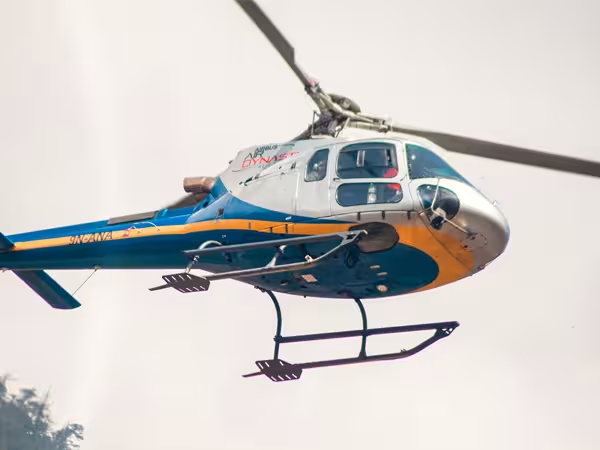
Other travellers reach the area using road transport or a combination of flight and road travel through the lower Mustang region. Jomsom is an important transport point, although mountain flights are affected by weather and operating conditions. Road travel also depends on local conditions.
For that reason, I would avoid treating a stated travel time as guaranteed. Mountain transport does not always behave like transport in a city. Weather can change. Road conditions can change. Flights can be delayed or cancelled.
If you are travelling with Sublime Trails, the package itinerary should be your main reference for understanding which transport sections are included.
Common approaches include:
Route option
Typical use
Trek via Thorong La Pass
Annapurna Circuit
Road transport
Shorter or transport-assisted itineraries
Flight to Jomsom + road
Time-sensitive travel when flights operate
Combined trekking and transport
Many modern Annapurna itineraries
If your priority is experiencing the journey rather than simply reaching Muktinath, the trekking approach offers a very different experience from travelling directly by road.
What Is the Best Time to Visit Muktinath?
The best time depends on the wider route you are travelling. For trekking in the Annapurna region, spring and autumn are generally popular trekking seasons.
Spring usually covers March, April and May.
Autumn generally covers September, October and November.
These periods are popular because trekking conditions are often favourable and mountain visibility can be good. However, there is no completely predictable season in the Himalayas. Weather can change quickly.
Spring
Spring brings warmer conditions at lower elevations and increasing vegetation. The lower Annapurna sections can be particularly attractive during this period.
Autumn
Autumn follows the monsoon season and is another major trekking period. October can be particularly busy, so accommodation and transport planning can be important.
Winter
Winter brings colder conditions at higher elevations. Snow and freezing temperatures can affect high mountain sections, including areas around Thorong La. If your itinerary includes a high pass, winter conditions should be considered carefully.
Monsoon
Much of Nepal experiences substantial rainfall during the monsoon. Mustang is different because parts of the region sit in the rain shadow of the Himalayas. However, that does not mean the entire journey is unaffected by monsoon conditions.
If your trek begins in wetter parts of the Annapurna region, rainfall can still influence roads and trails before you reach Mustang. That is why I recommend considering the complete route when choosing your travel dates.
What Should You Know About Muktinath's Altitude?
Muktinath sits at approximately 3,800 metres, so altitude should be taken seriously. The important question is not simply how high Muktinath is. It is how quickly you gain altitude before reaching it. A trekker who has spent several days gradually gaining elevation will have a different experience from someone travelling rapidly from a low-altitude location.
This is particularly relevant for itineraries that include Tilicho Lake and Thorong La. Both involve significant elevation. Common symptoms associated with altitude sickness can include headache, dizziness, nausea, tiredness and difficulty sleeping.
More serious altitude-related illness requires immediate attention. I always encourage trekkers to tell their guide when they feel unwell rather than trying to hide symptoms.
A few practical habits are useful:
Maintain a steady walking pace.
Follow the planned acclimatization schedule.
Drink regularly.
Eat enough throughout the day.
Avoid unnecessary rapid altitude gains.
Tell your guide about unusual symptoms.
Keep warm at higher elevations.
Follow your guide's safety instructions.
Altitude is not something to compete over. A trekker who walks more slowly can still have a successful trek. The goal is to reach Muktinath safely and enjoy the journey rather than simply arrive as quickly as possible.
What Should You Pack for Muktinath?
I recommend packing for the entire Annapurna itinerary, rather than packing specifically for Muktinath. The route can move through several different climates.
You may experience warm conditions in lower valleys and freezing temperatures around the highest sections. A layering system works well because you can adjust your clothing throughout the day.
Clothing
Base layers
Warm insulating layer
Windproof or waterproof outer layer
Trekking trousers
Warm hat
Gloves
Trekking socks
Comfortable trekking boots
Useful equipment
Sunglasses
Sunscreen
Water bottle or hydration system
Headlamp
Power bank
Small personal first-aid kit
Backpack rain cover
Small daypack
Practical items
Nepalese rupees
Identification documents
Personal medication
Toiletries
Phone and charging equipment
If your itinerary includes Tilicho Lake and Thorong La, prioritise clothing and equipment suitable for cold and exposed conditions. I also recommend testing your boots before the trek. The same applies to your backpack and other frequently used equipment.
A product that feels comfortable in a shop may feel very different after several hours of walking. Good preparation does not mean carrying everything. It means carrying what you are likely to need and knowing how to use it.
What Should You Know Before Visiting Muktinath?
A few practical details can make the visit easier.
Respect the religious site
Muktinath is an active pilgrimage destination.
Follow local instructions and avoid interrupting religious activities.
Expect changing weather
Keep your warm and waterproof layers accessible.
Do not bury them at the bottom of your backpack.
Prepare for limited infrastructure
Mountain settlements do not offer the same facilities as Kathmandu or Pokhara.
Internet, electricity and other services can vary.
Carry local currency
Cash remains useful for smaller purchases, particularly when connectivity or digital payment options are limited.
Keep some flexibility
Road and flight conditions can change.
A flexible schedule is useful when travelling in mountainous areas.
Listen to your guide
Your guide knows the local route and current conditions. If weather, trail conditions or altitude affect the plan, the itinerary may need to change. A good trekking experience is not about following a printed schedule at any cost. It is about making sensible decisions when conditions change.
Is Muktinath Worth Including in an Annapurna Trek?
Muktinath adds something different to the Annapurna experience. The mountains are obviously a major reason people travel through this region. But the journey is also about the communities, religious traditions and landscapes along the route. Muktinath brings those elements together.
If you are already travelling through the Annapurna Circuit, its location after Thorong La makes it a natural part of the journey. If you are combining Tilicho Lake with Muktinath, the contrast becomes even clearer. Tilicho introduces you to a high-altitude alpine environment.
Muktinath introduces you to a sacred cultural site surrounded by the dry landscape of Mustang. For travellers interested in both trekking and culture, that combination can make the itinerary more varied. However, I would not recommend choosing an itinerary simply because it lists more destinations.
Look at how the journey is actually structured.
Check the walking days.
Check the altitude profile.
Check the acclimatization schedule.
Check where transport is used.
Then decide whether the route matches the experience you want.
Final Thoughts on Muktinath Mustang Nepal
Muktinath is one of those destinations where the journey and the destination are closely connected.
Its temple and pilgrimage traditions give it religious importance.
Its location gives it significance within the Annapurna Circuit.
Its surrounding landscape introduces trekkers to the dry, trans-Himalayan character of Mustang.
And its position after Thorong La makes it a memorable point in a longer Himalayan journey. For trekkers following a Sublime Trails Annapurna Circuit or Tilicho Lake itinerary, Muktinath is not simply another name added to the route.
It represents a change in the landscape and atmosphere of the trek. If you are planning your own journey, take time to look beyond the headline destinations.
Check the actual route.
Understand the altitude changes.
Know where transport is used.
Allow enough time for acclimatization.
And most importantly, understand that Muktinath is a living religious site, not simply a tourist attraction.