
Taking your first helicopter tour can feel exciting and slightly unfamiliar at the same time. You may wonder what takeoff feels like, whether the helicopter will be noisy, what you should wear, and how much movement you can expect during the flight. These questions become even more important when your first helicopter experience takes you into the Himalayas. If you are planning an Everest Base Camp helicopter tour, knowing what to expect can make the experience much more relaxed from the moment you arrive at the airport.
First Helicopter Tour in Nepal: Things to Know Before You Fly
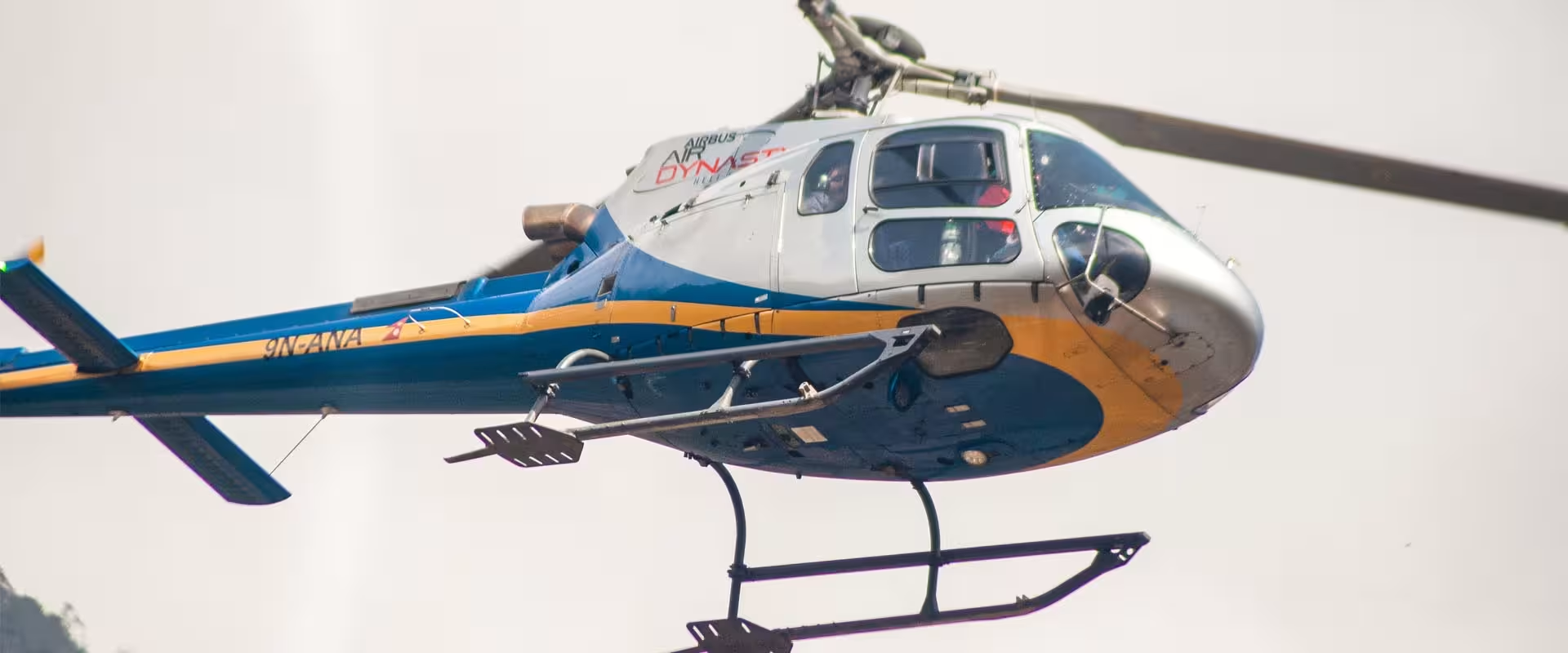
What Is a First Helicopter Tour Really Like?
A helicopter tour feels different from a regular aeroplane journey because the aircraft does not need a runway to take off. You will hear the rotor become louder, feel some vibration, and then notice the helicopter gradually lifting from the ground. The first few seconds can feel unusual, but most passengers quickly adjust once the aircraft settles into flight. After that, the experience becomes less about the mechanics of flying and more about watching the landscape open up below you.
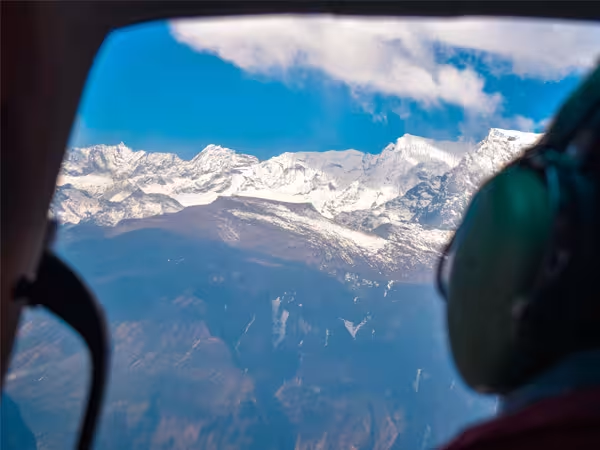
For an Everest helicopter tour, that change in scenery is a major part of the experience. The flight begins around Kathmandu before moving towards the hills and valleys of the Khumbu region. As you gain altitude, the landscape becomes increasingly rugged, and the Himalayan peaks begin to dominate the horizon. Instead of watching the same view through a small aeroplane window, you get a much closer sense of the terrain around you.
What Happens Before Your Helicopter Takes Off?
Your helicopter experience starts before you board the aircraft. You will normally need to complete check-in procedures, confirm your booking, provide the required identification and follow the operator's instructions before boarding. Depending on the flight, passenger and baggage weight may also need to be confirmed because aircraft balance and performance are important considerations. Give yourself enough time at the airport so you are not rushing through these steps immediately before departure.
You will also receive a safety briefing before the helicopter leaves. Pay attention to instructions about your seatbelt, headset, boarding procedure and how to approach or leave the aircraft. If you have never flown in a helicopter before, this is the best time to ask questions about anything that concerns you. Once the flight begins, following the crew's instructions is much more important than trying to work out the procedures yourself.
What Does Helicopter Takeoff Feel Like?
The takeoff is probably the part first-time passengers think about most. Unlike an aeroplane, a helicopter can lift directly from the ground, so you do not experience a long acceleration along a runway. You may notice vibration and hear the rotor become considerably louder as the aircraft prepares to rise. Once the helicopter is airborne and stabilised, the initial sensation usually becomes much easier to handle.
If you feel nervous, give yourself a few moments before reaching for your camera or phone. Look outside and let your eyes adjust to the movement and changing perspective. The landscape can appear to move differently from what you are used to seeing from an aeroplane. Within a short time, many first-time passengers stop thinking about the aircraft and start concentrating on the view.
What Should You Expect on an Everest Base Camp Helicopter Tour?
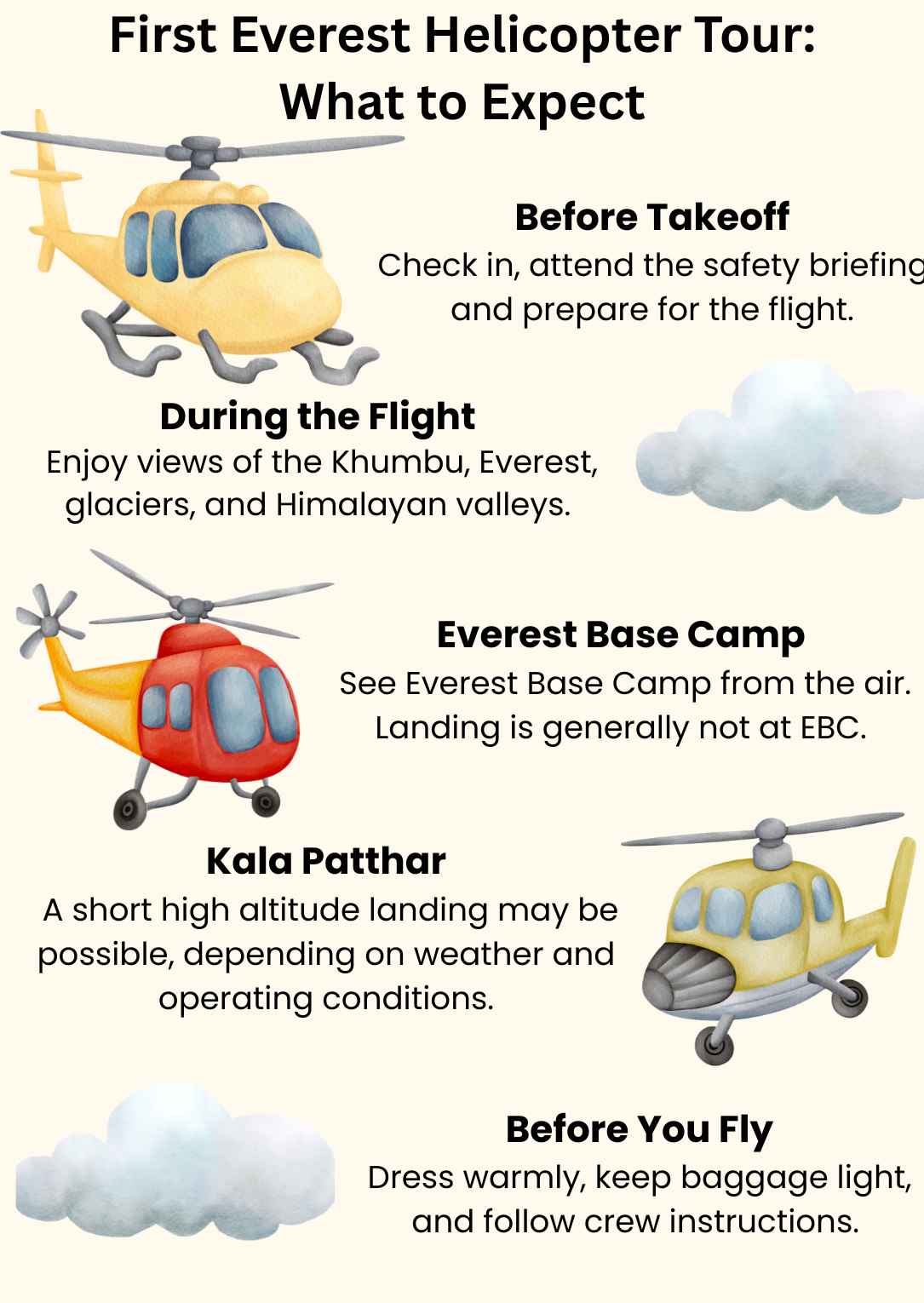
An Everest Base Camp helicopter tour is different from a short sightseeing flight because the journey takes you deep into the Himalayan landscape. A typical route from Kathmandu heads towards Lukla and continues through the Khumbu region before reaching the Everest area. Depending on the itinerary and operating conditions, passengers can experience an aerial view of Everest Base Camp and a high-altitude landing at Kala Patthar before beginning the return journey. If you are considering an Everest Base Camp helicopter tour, understanding these different stages of the journey can help you know what to expect before you fly.
This is also why I recommend keeping realistic expectations about the flight. You may have a carefully planned itinerary, but mountain aviation does not work like a fixed sightseeing bus route. Clouds can move into valleys, visibility can change and landing conditions can become unsuitable. A responsible pilot will always make the final decision based on what is safe on the day.
Can a Helicopter Land at Everest Base Camp?
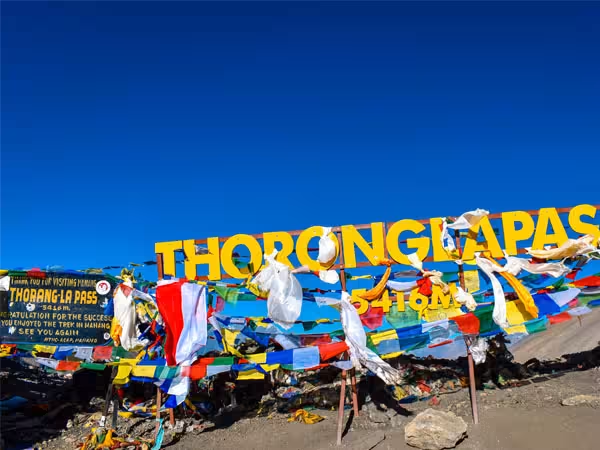
One of the most common questions from first-time passengers is whether the helicopter actually lands at Everest Base Camp. In practice, Everest Base Camp is generally experienced as an aerial flyover rather than a standard helicopter landing point on these sightseeing tours. A high-altitude landing is commonly associated with Kala Patthar, which provides an impressive viewpoint towards Everest and the surrounding peaks. Understanding this difference before your trip helps you arrive with realistic expectations.
The distinction also matters because the two locations are at different elevations and serve different purposes during the tour. Kala Patthar sits at roughly 5,545 metres, making it an extremely high-altitude environment even if you are only there for a short stop. The landing is therefore not designed as an extended stay or hiking session. You should follow the crew's instructions, move slowly and make the most of the short time available.
What Should You Wear on Your First Everest Helicopter Tour?
Your clothing can make a noticeable difference to your experience, particularly if your helicopter tour includes a stop at Kala Patthar. Kathmandu may feel comfortable when you leave, while conditions at high altitude can be dramatically colder. I recommend wearing warm layers and carrying an insulated jacket, gloves, a warm hat and comfortable footwear. Sunglasses and sunscreen are also useful because strong sunlight and snow glare can be intense at high elevations.
The key is to dress in layers rather than relying on one heavy item of clothing. You can adjust your clothing as the temperature changes throughout the journey. Avoid bringing unnecessary loose accessories and keep your personal belongings secure around the aircraft. The crew's instructions should always take priority when you are approaching, boarding or leaving the helicopter.
Where Should You Sit in a Helicopter?
The window seat is naturally the most desirable position for a scenic helicopter tour. From there, you can look directly across the Himalayan landscape rather than trying to see around another passenger. However, seating can sometimes depend on passenger weight, aircraft balance and operational requirements, so you should not assume that every seat can be selected freely. If having a particular seating arrangement is important to you, ask about it before your flight.
Photography is another reason passengers care about seating. The helicopter gives you opportunities to photograph mountains, valleys, glaciers and villages from perspectives that are difficult to experience on the ground. Keep your camera or phone secure and avoid moving around the cabin simply to get a better angle. A good photograph is worth taking, but it is never worth distracting yourself from the crew's instructions.
Can You Take Photos During the Helicopter Flight?
You will have plenty of opportunities to take photographs during an Everest helicopter tour, but the best approach is to balance photography with actually experiencing the flight. Keep your phone or camera charged and clean the lens before departure because fingerprints can become surprisingly noticeable against bright mountain scenery. Window reflections can also affect photographs, particularly when shooting through the helicopter glass. Taking a few deliberate photographs and then putting the camera away can help you enjoy the scenery rather than experiencing the entire flight through a screen.
Do not forget that the landscape changes quickly. A mountain that is partly hidden from one side of the aircraft may become completely visible a few minutes later. Instead of taking dozens of almost identical photographs, watch the valleys, ridges and peaks as the helicopter moves through the region. Some of the best memories from a helicopter tour are the views you experience rather than the photographs you bring home.
What Happens If the Weather Changes?
Weather is one of the most important factors to understand before booking a helicopter tour in Nepal. Himalayan weather can change quickly, and clouds, wind or poor visibility can affect both the route and the possibility of landing at a particular location. This means that a flight may be delayed, changed, rescheduled or cancelled when conditions are not suitable. The final decision should always be based on aviation safety rather than a passenger's preferred itinerary.
I recommend leaving some flexibility in your travel schedule if your trip depends on a helicopter flight. A little extra time can make a major difference if weather causes a delay. You should also be cautious of any itinerary that treats a specific landing or mountain view as an absolute guarantee. In the Himalayas, conditions can change faster than your plans.
How Should You Prepare for High Altitude?
An Everest helicopter tour can take you from Kathmandu to an extremely high elevation in a relatively short period. That means you should not treat a high-altitude landing in the same way as a normal sightseeing stop in the city. Kala Patthar, for example, is more than 5,500 metres above sea level, so even a short visit can feel physically demanding for some passengers. Move slowly, avoid unnecessary exertion and follow the crew's instructions during the stop.
You should also understand that a helicopter tour is not the same as trekking to Everest Base Camp. Trekkers spend days gradually gaining elevation, while helicopter passengers can reach the high Himalayas much more quickly. Because of that difference, it is sensible to keep the high-altitude stop short and avoid treating it as an opportunity for strenuous activity. If you have concerns about how altitude may affect you, discuss them with an appropriate medical professional before travelling.
Is Your First Helicopter Tour Safe?
It is completely normal to feel nervous before your first helicopter flight. The best way to approach that concern is to understand that helicopter operations depend on trained crews, aircraft procedures, weather assessments and aviation safety requirements. You should listen carefully to the safety briefing and follow every instruction given by the crew. Most importantly, never assume that a pilot should continue a flight simply because you have already booked and paid for it.
This becomes particularly important in the Everest region. Mountain weather and terrain create conditions that are very different from ordinary low-altitude sightseeing flights. If the pilot decides that a landing or particular route is not appropriate, that decision should be respected. The view can wait; safety cannot.
What Should You Know About Baggage and Weight?
Baggage restrictions are another detail that first-time passengers sometimes overlook. Helicopters have limited space, and passenger and baggage weight can affect aircraft performance and balance. Your operator may therefore place restrictions on the amount or type of baggage you can carry. Check the requirements before arriving at the airport rather than discovering a problem during check-in.
For a short Everest helicopter tour, you usually do not need to carry everything you would take on a multi-day trek. Keep your essentials with you and avoid unnecessary items. Your camera, phone, identification, medication if required and warm clothing should be more useful than a large bag full of extras. Light and organised luggage also makes the boarding process easier.
11 Practical Tips for Your First Helicopter Tour
Your first helicopter tour does not require complicated preparation, but a few simple decisions can make the experience smoother. If you are heading towards Everest, prepare for changing weather, cold conditions and a short high-altitude stop. I would also leave some flexibility in your schedule because mountain flights do not always operate exactly as planned. Most importantly, listen to your crew and focus on enjoying the journey.
- Arrive early: Give yourself enough time for check-in, passenger verification and the safety briefing without rushing.
- Dress for the destination: Kathmandu can be comfortable while the Everest region is extremely cold, especially around Kala Patthar.
- Wear layers: Layers make it easier to adjust to changing temperatures throughout the journey.
- Keep your baggage light: Bring only what you need because helicopter cabins have limited space and baggage restrictions may apply.
- Charge your phone and camera: You will want enough battery for photographs, navigation and communication throughout the trip.
- Listen to the safety briefing: Pay attention to instructions about seating, seatbelts, boarding and leaving the helicopter.
- Do not move around unnecessarily: Stay in your assigned seat and follow the crew's instructions during the flight.
- Move slowly at high altitude: If your tour includes Kala Patthar, avoid running or unnecessary physical activity during the short stop.
- Expect weather changes: Clouds, wind and visibility can affect the route, timing or landing, so keep some flexibility in your schedule.
- Protect your camera and belongings: Keep personal items secure and be careful when photographing through the helicopter window.
- Enjoy the view without your camera: Take your photographs, but also put your phone away for a few moments and experience the Himalayas directly.
If you are still deciding whether an Everest helicopter flight is right for you, you can also read 20 Things You Should Know Before Booking an Everest Base Camp Helicopter Tour. That guide covers the important considerations before booking, while this article focuses on what you can expect during your first helicopter experience.
Conclusion
Your first helicopter tour in Nepal can feel unfamiliar at first, but knowing what to expect removes much of the uncertainty. From the initial safety briefing and vertical takeoff to the changing Himalayan landscape, every part of the journey has its own character. If you are taking an Everest Base Camp helicopter tour, you should also understand the realities of high-altitude flying, including changing weather, short landing times and the difference between viewing Everest Base Camp from the air and landing at Kala Patthar. Go prepared, listen to your crew and leave enough flexibility for the mountains to have the final say.
A helicopter tour is not simply a faster way to see Everest. It gives you a completely different perspective of the Khumbu, from the valleys below to the peaks rising above you. The experience becomes much more enjoyable when you stop worrying about what might happen and understand how the journey actually works. Prepare well, keep your expectations realistic and give yourself time to appreciate the view.
Frequently Asked Questions
1. Is a helicopter tour suitable for someone flying for the first time?
Yes, you do not need previous helicopter experience to take a helicopter tour. The crew provides instructions before boarding and explains the basic safety procedures you need to follow. The aircraft may feel unfamiliar during the first few minutes, particularly because of the rotor noise and vibration. Once you become comfortable, you can focus on the scenery and enjoy the flight.
2. What should I expect on my first Everest Base Camp helicopter tour?
You can expect an early start, airport check-in, a safety briefing and a scenic flight towards the Everest region. Depending on the itinerary and conditions, the journey can include an aerial view of Everest Base Camp and a landing at Kala Patthar. Weather and aviation conditions can affect the route or landing arrangements. Your pilot will make the final operational decision based on safety.
3. Can I take photographs during a helicopter tour?
Yes, photography is one of the main attractions of a scenic helicopter flight. Keep your camera or phone secure and follow the crew's instructions while taking photographs. Window reflections can sometimes affect your images, so keeping the lens close to the glass may help. Just remember to spend some time looking at the mountains without a screen between you and the view.
4. Is it cold during an Everest helicopter tour?
Conditions depend on the time of year, weather and your exact flight route, but high-altitude areas around Kala Patthar can be extremely cold. Kathmandu and the Everest region can also have very different temperatures on the same morning. Wear warm layers and carry suitable cold-weather clothing if your itinerary includes a high-altitude landing. It is better to have an extra layer available than to find yourself unprepared.
5. What happens if my Everest helicopter tour is affected by bad weather?
Poor visibility, strong winds, cloud cover or other unsuitable conditions can cause a flight to be delayed, changed, rescheduled or cancelled. Helicopter operations in the Everest region must respond to actual mountain conditions rather than a fixed sightseeing schedule. Your pilot and operator should always prioritise safety when deciding whether to fly or land. If your schedule allows some flexibility, weather-related changes become much easier to manage.
Need Help? Call Us
Need Help? Call Us+977 9851183278